
Back in 2015, the FDA stopped using the old A, B, C, D, X letters on drug labels for pregnancy and breastfeeding. If you’re still looking for those letters, you won’t find them. They’re gone. And that’s actually a good thing - but only if you know how to read the new labels. The old system made it look like a grade school report card: A was safe, X was dangerous, and everything else was a gray zone. But in reality, those letters gave false confidence. A drug labeled B didn’t mean it was risk-free. C didn’t mean it was risky - it just meant there wasn’t enough data. That’s why the FDA replaced it with something more honest: detailed, narrative labels that tell you what’s actually known.
What’s in the New Pregnancy Label? Three Sections You Must Know
Today, every prescription drug approved after June 30, 2015, has a standardized section called Use in Specific Populations. Inside that section, you’ll find three subsections: Pregnancy, Lactation, and Females and Males of Reproductive Potential. You don’t need to read all of it at once, but you do need to know what each part says.
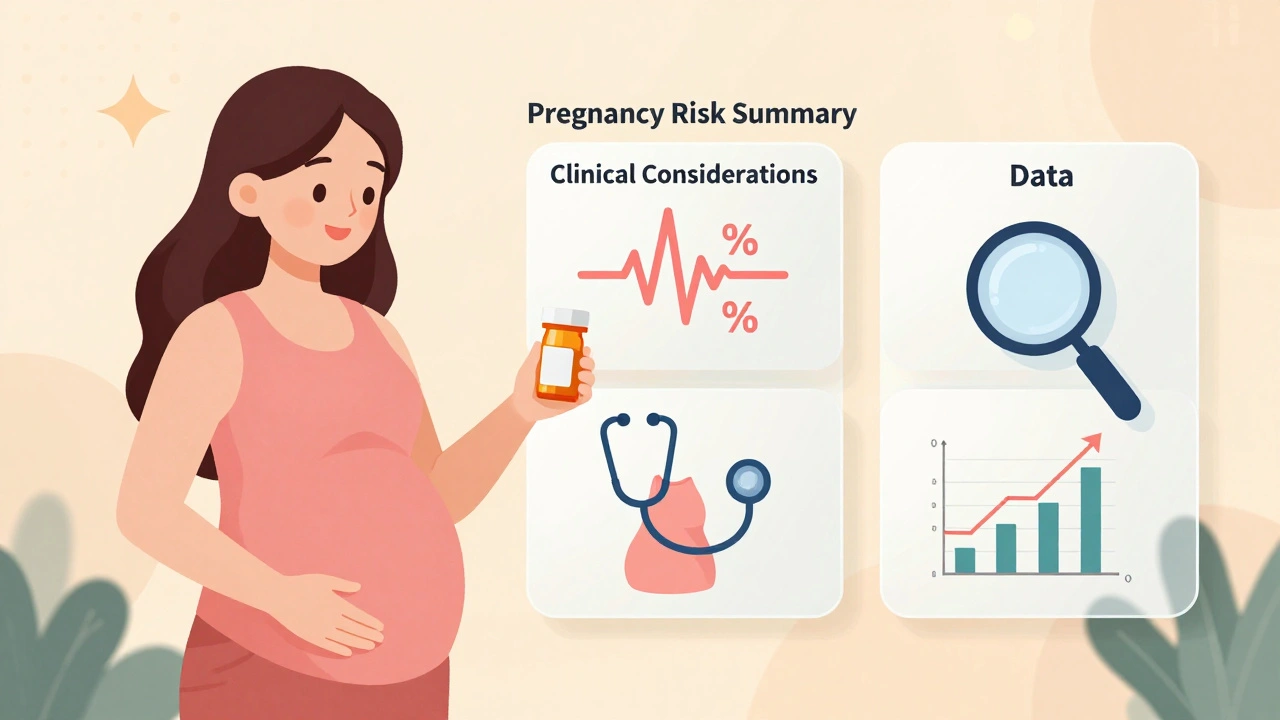
Pregnancy (8.1) is broken into three parts:
- Risk Summary - This tells you the actual risk of birth defects or miscarriage linked to the drug. It doesn’t say “probably safe.” It says, “In studies of 1,200 pregnant women, 2.1% had babies with heart defects compared to a background risk of 3%.” That’s specific. It also tells you if the risk changes depending on which trimester you took the drug. For example, some medications are riskier in the first 8 weeks than later on.
- Clinical Considerations - This is the “what to do” part. It tells you whether you need to monitor the baby’s growth, adjust the dose, or avoid the drug entirely at certain points. It might say, “Use only if benefit justifies potential fetal risk,” or “Monitor fetal echocardiogram at 20-22 weeks.”
- Data - This is where the science lives. It lists the studies: how many women were included, whether they were pregnant by choice or accident, if the data came from registries or case reports. It tells you if the study was small, if there were confounding factors, and what the confidence intervals were. This isn’t fluff - it’s the proof behind the summary.
What About Breastfeeding? The Lactation Label Explained
The Lactation (8.2) section is often overlooked, but it’s just as important. It doesn’t say “safe to breastfeed” or “avoid.” It gives you numbers.
Look for these key details:
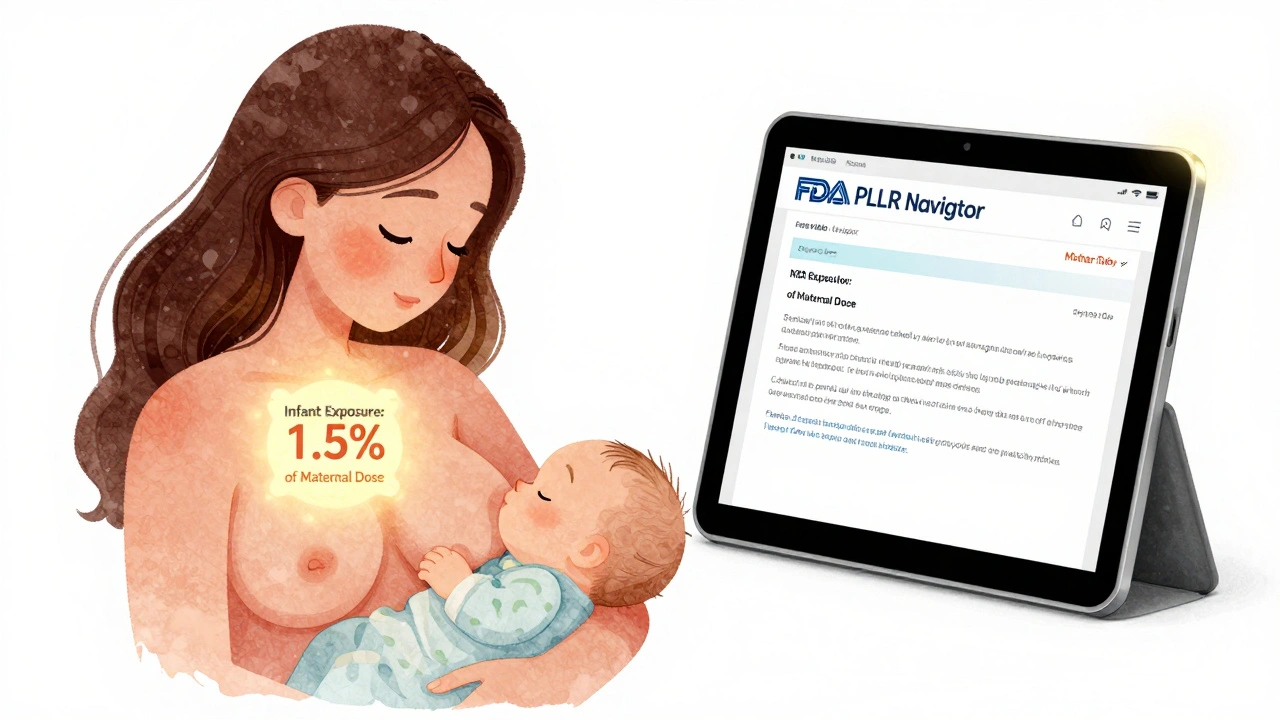
- Drug levels in breast milk - It might say, “Infant exposure is estimated at 0.8% of the maternal weight-adjusted dose.” That’s a concrete number. If it’s under 10%, the risk is usually low. If it’s over 20%, you need to think harder.
- Infant effects - Does the drug cause drowsiness? Poor feeding? Liver issues? The label will say if any of these were reported in infants exposed through milk.
- Timing of dosing - Some drugs are safer if you take them right after breastfeeding, so the baby gets the lowest amount. The label might recommend: “Take dose immediately after nursing to minimize infant exposure.”
For example, sertraline - a common antidepressant - shows infant exposure at about 1-5% of the mother’s dose, with no reported adverse effects in over 1,000 breastfed infants. That’s why it’s often the first choice for nursing mothers. On the other hand, drugs like lithium or certain chemotherapy agents show high milk transfer and potential toxicity - and the label says so clearly.
Why the Old Letter System Failed
Before 2015, you’d see a little letter next to the drug’s name: A, B, C, D, or X. Here’s what those meant - and why they were misleading:
- A - Only 1-2% of drugs had this. It meant human studies showed no risk. But even then, it didn’t say how many women were studied.
- B - Animal studies showed no risk, but human data was limited. Most doctors assumed this meant “safe,” but that’s not what it said. It meant “we don’t know enough.”
- C - Risk can’t be ruled out. About 70% of drugs fell here. That’s not a warning - it’s a lack of data.
- D - Evidence of human risk. About 10% of drugs. Still used in emergencies, like seizures or depression.
- X - Contraindicated. Less than 1%. Like isotretinoin for acne - causes severe birth defects.
The problem? Doctors and patients treated these like grades. A = good, C = bad. But C didn’t mean “dangerous.” It meant “we don’t have good data.” And that’s not the same thing. The new labels fix this by forcing manufacturers to say exactly what’s known - and what’s not.
How Clinicians Are Adapting (And Where You Can Get Help)
Many doctors and pharmacists struggled at first. A 2018 study found 62% of OB/GYNs found the new labels harder to use than the old letters. Why? Because now you have to read paragraphs, not just glance at a letter. It takes time. But over time, things improved.
Here’s what’s helping:
- Teratology Information Services - Organizations like MotherToBaby and TERIS offer free, expert advice. You can call or chat online. They interpret the labels for you and give you real-world context.
- PLLR Navigator App - The FDA’s free app lets you search any drug and pull up the exact pregnancy and lactation sections. No more flipping through thick manuals.
- Electronic Health Records (EHRs) - Most modern systems now highlight the key points from the label in a pop-up when you prescribe. Not perfect, but getting better.
Pharmacists now spend 5-7 extra minutes per prescription counseling patients on pregnancy and breastfeeding risks. That’s because patients are asking more questions. And that’s a good thing. You’re supposed to ask.
What to Do When You’re Prescribed a New Drug
If you’re pregnant, planning to be, or breastfeeding - here’s your simple checklist:
- Ask for the full label - Not just “Is this safe?” Ask, “Can I see the Pregnancy and Lactation section?”
- Find the Risk Summary - Look for numbers: percentages, relative risks, background rates. If it says “no increased risk,” that’s powerful. If it says “risk cannot be ruled out,” ask what that means in real terms.
- Check the Clinical Considerations - Is there monitoring needed? Is there a safer time to take it? Are there alternatives?
- For breastfeeding - Look for infant exposure percentage. Under 10%? Usually low concern. Over 20%? Ask if there’s a safer option.
- Use MotherToBaby or TERIS - They’re free, confidential, and staffed by specialists. Call them. Don’t guess.
Don’t rely on Google. Don’t rely on old advice from a friend. The science has changed. The labels have changed. Your decision should too.
What’s Changing in 2025?
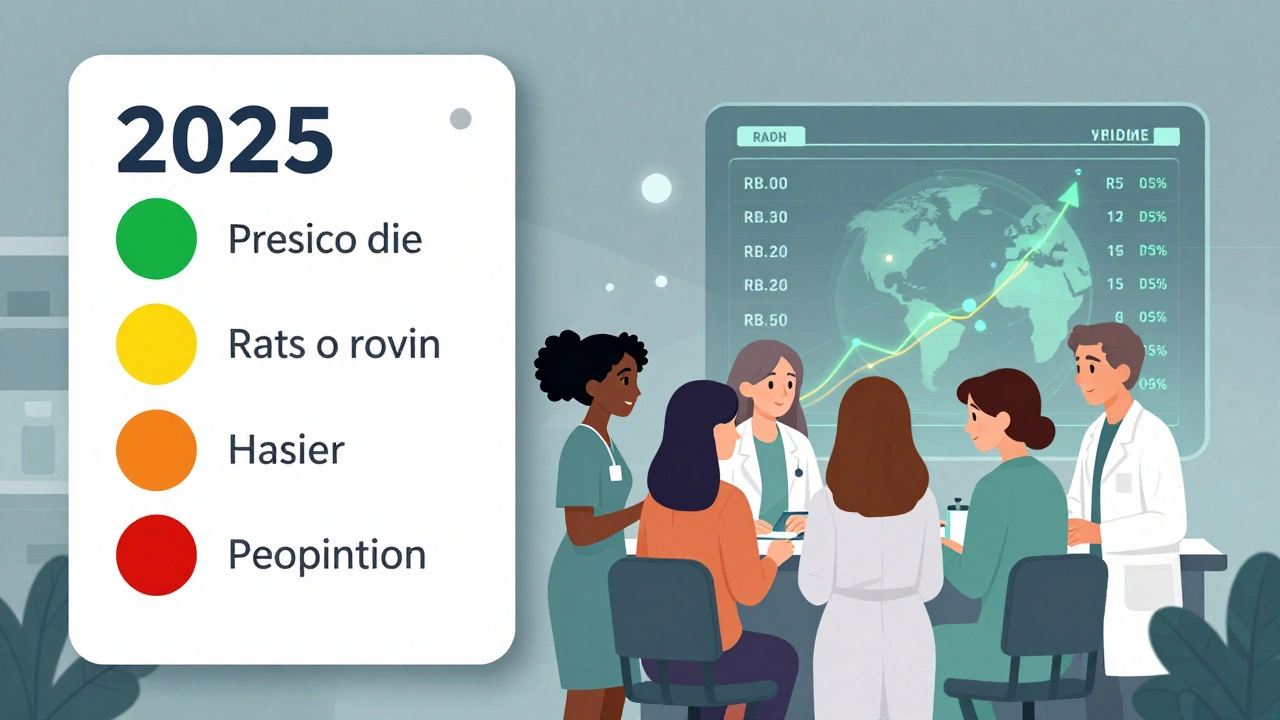
The FDA is working on even clearer labels. By 2025, all pregnancy-related drug labels will be updated - and they’re adding visual risk icons. Think traffic light colors: green for low risk, yellow for caution, red for high risk - alongside the narrative text.
They’re also pushing for more diverse data. Right now, only 15% of pregnancy registry participants are Black or Hispanic, even though those groups make up 30% of U.S. pregnancies. That’s a gap. Future labels will reflect that.
And if you’re taking a drug for mental health, epilepsy, or autoimmune disease - you’re likely on a medication with updated labeling. These are the areas where the benefits of treatment often outweigh the risks. The new labels help you and your provider weigh them properly.
Final Thought: It’s Not About Fear - It’s About Informed Choice
The goal isn’t to scare you away from medicine. It’s to help you understand what you’re taking - and why. Many women need antidepressants, seizure meds, or blood pressure drugs during pregnancy. Stopping them can be more dangerous than staying on them.
The new labeling gives you the facts. You don’t have to be a doctor to understand them. You just need to know where to look - and who to ask.
Are the old pregnancy letter categories still on drug labels?
No. The FDA banned the A, B, C, D, X letter system in 2015. All drugs approved after June 30, 2015, use the new narrative format. Drugs approved before that date were required to update their labels by December 2017, and full compliance was completed by 2020. If you still see letter categories on a label, it’s outdated. Always check the FDA’s website or use the PLLR Navigator app to verify the current labeling.
What does "infant exposure as a percentage of maternal dose" mean?
It tells you how much of the drug your baby gets through breast milk compared to how much you’re taking. For example, if you take 100 mg of a drug and your baby receives 2 mg through milk, that’s 2% of your dose. Generally, exposure under 10% is considered low risk. Above 20% raises concern, especially if the drug is known to affect infants. The label will also say if any side effects were seen in babies - like drowsiness or poor feeding.
Is it safe to take antidepressants while pregnant or breastfeeding?
Many antidepressants are considered safe during pregnancy and breastfeeding - but it depends on the drug. Sertraline and nortriptyline have low infant exposure (under 5%) and no major safety concerns in studies of thousands of babies. Paroxetine has a slightly higher risk of heart defects in early pregnancy, so it’s often avoided. The new labels show these details clearly. Stopping antidepressants abruptly can increase the risk of relapse, which is more dangerous than the medication itself for both mother and baby. Always consult your provider and use MotherToBaby for personalized advice.
Why do some drug labels say "risk cannot be ruled out"?
This means there isn’t enough human data to say the drug is safe or unsafe. It’s not a warning - it’s an admission of uncertainty. For example, many newer biologics used for autoimmune diseases have very limited data in pregnancy because pregnant women are often excluded from clinical trials. In these cases, doctors rely on registry data, animal studies, and real-world reports. The label is being honest: we don’t know for sure. But that doesn’t mean you can’t take it - it means you and your provider need to weigh the benefits against the unknowns.
Can I trust pregnancy exposure registries?
Yes - and they’re more reliable than ever. Before 2015, registries were optional. Now, every drug label must list if one exists. These registries track outcomes for thousands of pregnancies - collecting data on birth defects, preterm birth, and infant development. By 2022, over 25,000 pregnancies were being tracked annually, up from just 5,000 before the rule. Registries like those for lamotrigine, fluoxetine, and insulin have provided the most reliable safety data we have. Participation is voluntary and confidential. If your drug has a registry, consider joining - your data helps future moms.
This is such a load of corporate BS. They took away the simple letters and replaced them with 10 pages of jargon so pharmacists can charge more for consultations. I've seen moms panic over 'risk cannot be ruled out' when the actual data shows zero cases in 5,000 births. They're not helping-they're profit-maximizing with confusion.
I love that the new labels are more honest... but honestly? Most doctors still don't know how to read them. I had my OB glance at a label and say, 'Oh, it's a C, so we'll avoid it.' I had to pull up the FDA page on my phone and show her the actual risk summary. It's progress... just painfully slow.
The old system was flawed, sure, but the new one is worse because it assumes everyone has a PhD in pharmacology. I'm a single mom working two jobs. I don't have time to parse statistical confidence intervals and infant exposure percentages. They give me a pill and say 'it's fine'-and that's all I need. Now I have to become a data scientist just to take my antidepressant. This isn't empowerment-it's exhaustion disguised as transparency.
Let’s be real-this whole system is a distraction. The FDA doesn’t care about pregnant women. They’re just trying to cover their backs after the thalidomide scandal and the opioid crisis. If they really wanted safety, they’d ban all non-essential meds during pregnancy. Instead, they give us 3 paragraphs of fine print so they can say, 'We warned you.' And don’t get me started on the 'diverse data' push-this is just virtue signaling. The trials still exclude 90% of real-world patients.
You people are missing the point entirely. This isn’t about readability-it’s about accountability. The old letter system was a lie wrapped in simplicity. The new format forces manufacturers to disclose actual data, not vague categorizations. If you can’t handle reading a paragraph, maybe you shouldn’t be making medical decisions. This is basic science literacy. If you can’t read a label, you’re not a patient-you’re a liability.
I've been a nurse for 22 years... and I still think this is a disaster. Why? Because now every woman walks in with printouts from MotherToBaby, convinced she's an expert because she read a 200-word summary. They argue with their OB-GYN like they're debating philosophy. The label says 'risk cannot be ruled out'-so they refuse the medication. But they don't understand that 'cannot be ruled out' is not the same as 'likely to harm.' The system is creating more fear than safety.
I'm a Black mom from Atlanta and I want to say this: I’m so glad they’re pushing for more diverse data. My cousin had a baby with a heart defect after taking a drug labeled 'C'-and no one ever told her the study data was all from white women in Minnesota. When I found out, I cried. This change? It’s not just about labels. It’s about justice. If you’re not advocating for better representation in these studies, you’re part of the problem.
I mean, it’s cute how everyone thinks this is such a breakthrough. But let’s be honest-this is just the pharmaceutical industry’s PR spin. They’re not trying to help moms-they’re trying to avoid lawsuits. The new labels are so complex that if something goes wrong, they can say, 'We provided all the information.' And yet, no one actually reads it. The real solution? Ban all non-essential drugs during pregnancy. Period. End of story.
As a pharmacist in Vancouver, I’ve seen this shift firsthand. The PLLR Navigator app is a game-changer-especially for rural patients who don’t have access to teratology specialists. I spend 5 minutes walking them through the risk summary and clinical considerations, and suddenly they’re not terrified-they’re informed. One woman was about to refuse her epilepsy med because she thought it was 'Category C.' I showed her the data: 98% of infants had no issues. She cried. Then she hugged me. This isn’t bureaucracy. It’s care.
The fundamental flaw in this entire paradigm is the assumption that empirical data alone can guide moral decisions. A risk percentage does not account for the sanctity of life, the weight of maternal autonomy, or the metaphysical burden of choice. To reduce pregnancy to a statistical model is to dehumanize the very essence of reproductive experience. The FDA may have replaced letters with paragraphs, but they have not replaced wisdom with data.
This whole thing is a joke. I work in a hospital. I’ve seen women stop life-saving meds because they saw 'risk cannot be ruled out' and panicked. Then they end up in the ER with a seizure or a stroke because they thought the label was a warning instead of a description. The system isn’t helping-it’s creating medical disasters. And now we’re adding traffic light icons? Are we turning pregnancy into a video game? Green = good, red = bad? This isn’t science. It’s Disney.
I just want to say thank you to whoever wrote this. My wife was terrified when she got pregnant and needed an antidepressant. We spent weeks googling, crying, and arguing. Then we found the PLLR app and read the lactation section on sertraline. It said: 'No adverse effects reported in over 1,000 infants.' That one line changed everything. We didn’t need a PhD. We just needed clear, honest words. This isn’t perfect-but it’s the first time the system actually tried to speak to us like humans.