
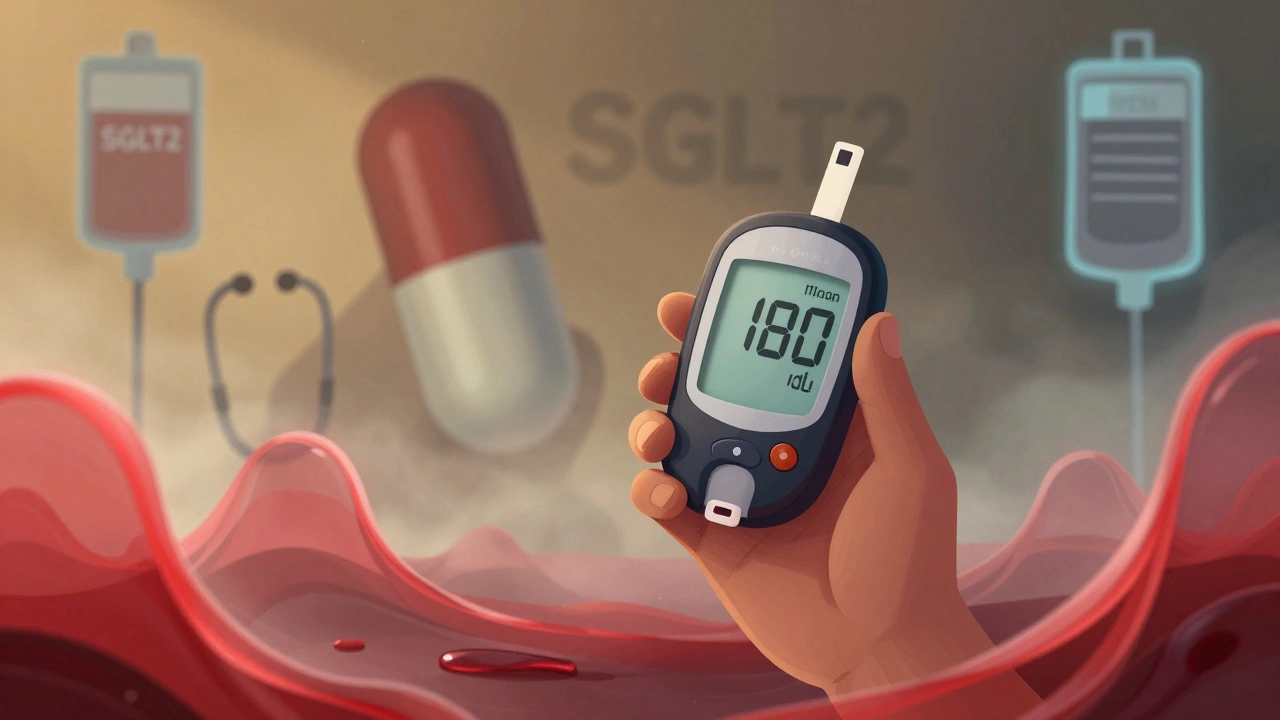
Euglycemic DKA Risk Assessment Tool
Euglycemic DKA Assessment
This tool helps you assess your risk of euglycemic DKA (Diabetic Ketoacidosis with normal blood sugar) if you're taking SGLT2 inhibitors like Farxiga, Jardiance, or Invokana.
Remember: Normal blood sugar does NOT mean you're safe from DKA when taking SGLT2 inhibitors. You need to check for ketones when you feel unwell.
Most people think diabetic ketoacidosis (DKA) means high blood sugar. That’s what you’re taught in medical school. That’s what the glucose meter shows. But what if your blood sugar is normal - even low - and you’re still in DKA? That’s euglycemic DKA, and it’s hiding in plain sight among patients taking SGLT2 inhibitors like Farxiga, Jardiance, and Invokana.
Between 2015 and 2023, over 1.7 million people in the U.S. were prescribed these drugs. And while they’re great for weight loss and heart protection, they come with a dangerous twist: DKA without the high glucose. Emergency rooms are seeing more cases. And too often, doctors miss it because the numbers look fine. That’s deadly.
What Is Euglycemic DKA - And Why Does It Happen?
Euglycemic DKA isn’t a new disease. It’s just a new way DKA shows up. Classic DKA happens when insulin drops, the body burns fat for fuel, and ketones flood the blood. Blood sugar soars past 250 mg/dL. Easy to spot.
But with SGLT2 inhibitors, the story changes. These drugs force your kidneys to pee out extra glucose. That lowers blood sugar - sometimes too much. But here’s the catch: your body still doesn’t have enough insulin to stop fat breakdown. At the same time, glucagon (the hormone that tells your liver to make sugar) goes up. So you get ketones building up - but your glucose stays between 100 and 250 mg/dL. That’s euglycemic DKA.
It’s not just type 1 diabetics. About 20% of cases happen in people with type 2 diabetes who’ve never had DKA before. And it’s not rare. Studies show SGLT2 inhibitor users have a 7-fold higher risk of DKA than those not on these drugs. In 2023, 41% of all SGLT2-related DKA cases were euglycemic - up from 28% in 2015. Awareness is improving, but the trap is still there.
The Symptoms Are the Same - But the Glucose Lies
If you’re on an SGLT2 inhibitor and feel sick, don’t assume it’s just a stomach bug. The symptoms of euglycemic DKA are almost identical to classic DKA:
- Nausea and vomiting (85% of cases)
- Abdominal pain (65%)
- Deep, fast breathing (Kussmaul respirations)
- Extreme tiredness or confusion
- General malaise - like you’ve been hit by a truck
You might not smell fruity. You might not be dehydrated enough to look pale or dry. And your glucose meter? It says 180 mg/dL. So you think, ‘I’m fine.’ That’s the trap. That’s when people wait too long. And that’s when things turn critical.
In one 2015 study, 13 cases of SGLT2-related DKA were missed because doctors trusted the glucose reading. One patient died. Another needed ICU care for days. All had normal glucose levels.
How Doctors Diagnose It - And Why Glucose Alone Isn’t Enough
The diagnosis isn’t about glucose. It’s about three things:
- Metabolic acidosis (blood pH below 7.3)
- Bicarbonate below 18 mEq/L
- Ketones in blood or urine - even if glucose is under 250 mg/dL
That’s it. No hyperglycemia needed. The gold standard is measuring beta-hydroxybutyrate in blood. Levels over 3 mmol/L mean you’re in DKA. Urine ketone strips can help, but they’re less reliable - especially if you’re well-hydrated. They might show negative even when ketones are dangerously high.
Don’t rely on white blood cell counts either. Many patients have high WBCs - but that’s from stress and dehydration, not infection. Mistaking it for sepsis leads to wrong treatments.
And here’s something many don’t know: lactic acid can also rise in euglycemic DKA. That means you need to rule out other causes of acidosis - like alcohol, sepsis, or kidney failure. But if you’re on an SGLT2 inhibitor and have acidosis, assume it’s DKA until proven otherwise.

Emergency Care: What Happens in the ER
Once diagnosed, treatment follows the same path as classic DKA - but with key differences.
Fluids first. Start with 0.9% saline at 15-20 mL/kg in the first hour. But don’t overdo it. You’re not dehydrated like a classic DKA patient - your body is already low on glucose, not just water.
Insulin is still needed. Start at 0.1 units/kg/hour. But here’s the big change: you need to add dextrose much earlier. In classic DKA, you wait until glucose hits 200-250 mg/dL before adding sugar to the IV. In euglycemic DKA, you add it when glucose drops below 200 mg/dL - sometimes even sooner. Why? Because your body is already running on empty. Too much insulin without glucose can crash your sugar into dangerous territory.
Potassium is critical. Even if your blood potassium looks normal, your total body potassium is low. You lose it in urine because of glycosuria. By the time you’re in the ER, you’re already depleted. Give potassium early and often. Watch EKGs closely.
Stop the SGLT2 inhibitor. Immediately. Don’t wait. Don’t ask if it’s ‘really’ needed. It’s the trigger. Keep it stopped until you’re fully recovered and the cause is clear.
Who’s at Risk - And How to Prevent It
You don’t have to be a type 1 diabetic to get this. But certain situations raise the risk:
- Illness (infections, flu, COVID-19)
- Surgery or major stress
- Pregnancy
- Drinking alcohol
- Very low-carb diets or fasting
Even a single missed meal during a cold can trigger it. In fact, 70% of cases happen during acute illness. That’s why the American Diabetes Association says: if you’re on an SGLT2 inhibitor and you’re sick - even with mild symptoms - test your ketones. Don’t wait for high blood sugar.
And here’s the hard truth: SGLT2 inhibitors are not approved for type 1 diabetes. But 8% of type 1 patients are still prescribed them off-label. Their DKA risk? Between 5% and 12%. That’s not a small number. If you’re type 1 and on one of these drugs, you need to be extra vigilant.
Prevention is simple:
- Stop the drug during illness, surgery, or fasting
- Keep eating carbs - don’t go low-carb
- Check ketones with blood strips if you feel unwell - even if glucose is normal
- Never ignore nausea or vomiting just because your sugar is ‘okay’
The FDA now requires every SGLT2 inhibitor package to say: ‘Stop taking this medicine and get help right away if you have symptoms of ketoacidosis - even if your blood sugar is normal.’ That’s not just a warning. It’s a lifesaving instruction.
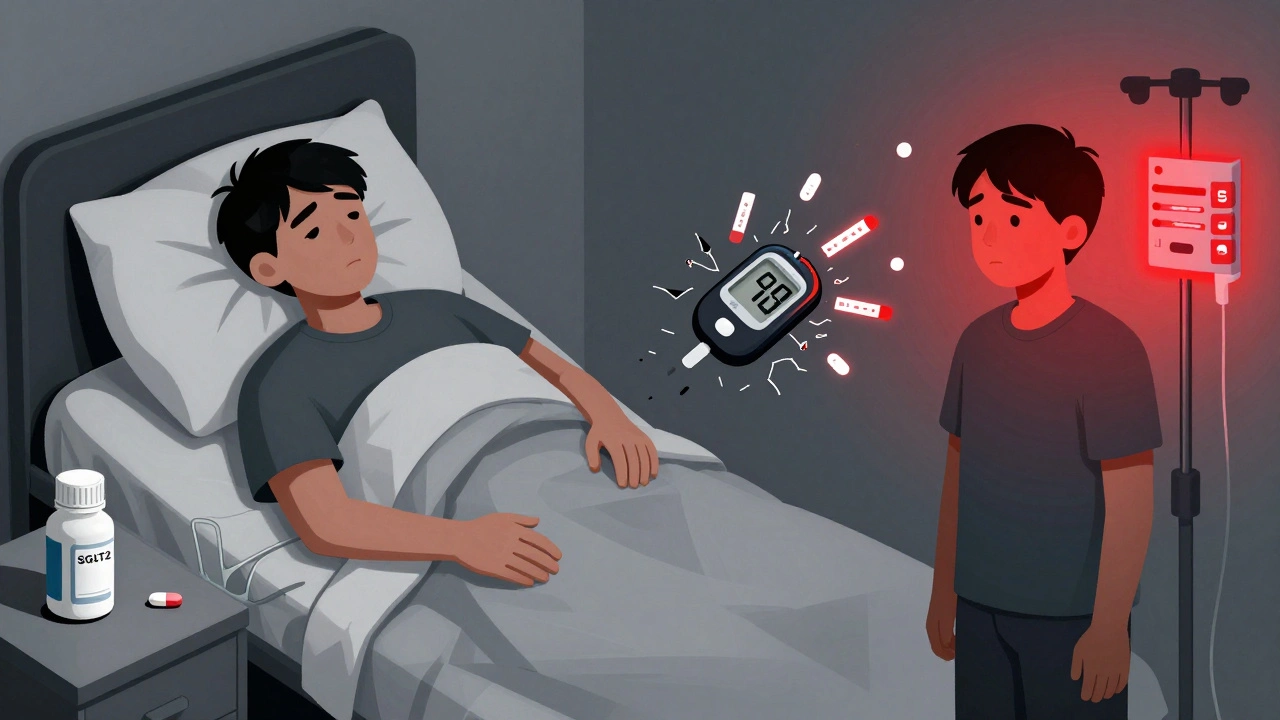
What’s Next? New Tools to Catch It Sooner
Researchers are working on better ways to predict this before it hits. A 2023 study found that the ratio of two ketone types - acetoacetate to beta-hydroxybutyrate - can rise 24 hours before symptoms appear. If this test becomes routine, we might catch EDKA before the ER.
Another study is testing a risk score that combines HbA1c swings and C-peptide levels. Early results show it can identify high-risk patients with 82% accuracy. That could mean personalized advice: ‘You’re at higher risk - avoid fasting and check ketones every time you’re sick.’
But right now, the best tool is awareness. And action.
Bottom Line: Don’t Trust the Glucose Meter
SGLT2 inhibitors are powerful tools. But they’ve changed the rules of DKA. What used to be obvious - high sugar, ketones, acidosis - is now a silent killer. Normal glucose doesn’t mean safe. It means you need to look deeper.
If you’re on one of these drugs and feel off - even a little - test your ketones. Don’t wait. Don’t assume. Don’t let the numbers fool you.
If you’re a clinician - and a patient walks in with nausea, vomiting, or abdominal pain and is on an SGLT2 inhibitor - order a serum beta-hydroxybutyrate test immediately. Don’t wait for glucose to rise. Don’t wait for vomiting to get worse. Don’t wait for a textbook case. This isn’t textbook. It’s real. And it’s deadly if missed.
The key isn’t avoiding these drugs. It’s knowing how they work - and when to be afraid.
Can you get euglycemic DKA if you have type 2 diabetes?
Yes. About 20% of euglycemic DKA cases occur in people with type 2 diabetes who have never had DKA before. SGLT2 inhibitors are commonly prescribed for type 2 diabetes, and the risk isn’t limited to type 1 patients. Even those with good insulin production can develop this condition under stress, illness, or low-carb diets.
Is euglycemic DKA more dangerous than regular DKA?
It’s not necessarily more dangerous in terms of severity, but it’s more likely to be missed. Because blood sugar isn’t high, patients and doctors often delay treatment. That delay can lead to worse outcomes - including coma or death. The risk isn’t in the condition itself, but in the delay of diagnosis.
Should I stop taking my SGLT2 inhibitor if I’m sick?
Yes. If you’re sick with an infection, vomiting, or not eating, stop your SGLT2 inhibitor. Talk to your doctor about when to restart. These drugs increase ketone production when your body is under stress. Continuing them during illness can trigger euglycemic DKA - even if your glucose seems normal.
Can I check ketones at home? How?
Yes. Use a blood ketone meter - the same kind used for type 1 diabetes. Urine strips are unreliable because they can be negative even when ketones are high, especially if you’re well-hydrated. Blood ketone levels above 0.6 mmol/L are elevated; above 3.0 mmol/L mean DKA. Keep test strips on hand if you’re on an SGLT2 inhibitor.
Why don’t all doctors know about euglycemic DKA?
Because it wasn’t widely recognized until 2015. Most medical training still teaches DKA as ‘high sugar + ketones.’ Many clinicians still equate normal glucose with safety. But since 2017, the FDA and ADA have issued strong warnings. Awareness is growing, but outdated thinking still causes delays. Always bring up the possibility if you’re on an SGLT2 inhibitor and feel unwell.

Just had a patient come in last week with nausea and vomiting - glucose was 190, so we didn’t think twice. Turned out her beta-hydroxybutyrate was 4.2. We missed it. Scary stuff.
As an endo, I’ve seen this 3x in the last year. The biggest trap? Assuming ‘normal glucose = safe.’ We’re still teaching DKA like it’s 2005. Time to update the playbook.
i had no idea this was a thing 😳 my uncle’s on farxiga and got super sick last winter - they thought it was the flu. turns out he was in dka. he’s lucky he made it.
This is why I always tell my patients: if you’re on an SGLT2i and feel off, grab a ketone strip. Even if your sugar’s ‘fine.’ I keep them in my fridge next to the yogurt. Better safe than sorry 😊
Let’s be real - this isn’t a medical mystery. Pharma pushed these drugs hard. Now they’re burying the risks under ‘off-label use’ and ‘rare cases.’ 1.7 million people? That’s not rare. That’s a scandal.
Oh here we go. Another ‘medical emergency’ created by Big Pharma’s marketing team. Next they’ll say aspirin causes invisible brain leaks. People need to stop panicking over numbers and start thinking for themselves.
Thank you for this comprehensive overview. The distinction between euglycemic and classic DKA is critical, yet consistently underemphasized in clinical training. I have shared this with my residents.
So... you’re saying we should stop prescribing these drugs to *everyone*? Because one in five type 2 patients might get a ‘silent’ DKA? That’s fearmongering. What about the cardiovascular benefits? The weight loss? The data is *overwhelmingly* positive - this is just one edge case.
As a nurse practitioner, I’ve started including ketone checks in my sick-day protocols for all SGLT2 users. Even if they’re asymptomatic. Prevention > reaction. It’s changed my practice.
This is exactly the kind of information that should be in every patient’s discharge summary. Not just a footnote. People need to know this before they leave the clinic.
My guy’s on Jardiance. He’s a type 2, doesn’t even use insulin. Last week he got dizzy after skipping dinner. We checked ketones - 1.8. He panicked, went to the ER. They told him it was ‘just dehydration.’ He’s still mad. This needs to be common knowledge.
Stop waiting for symptoms to get worse. If you’re on an SGLT2 inhibitor and you’re sick - even a little - check your ketones. Right now. Don’t wait for the doctor. Don’t wait for the meter to scream. Your life isn’t a guessing game.
Just wanted to add - if you’re fasting or doing keto, be extra careful. One patient I saw went into euglycemic DKA after a 36-hour fast. He thought he was being ‘healthy.’ The ketone strip saved his life. Always test. Always ask. Always trust your gut over the glucose reading.
Thank you for writing this. I’m a type 1 on Farxiga off-label. My endo says it’s ‘fine.’ But I’ve been checking ketones daily since I read this. I’m not taking chances. If you’re type 1 and on one of these - you’re playing with fire. Don’t wait for someone else to tell you to be careful. Be your own advocate.