
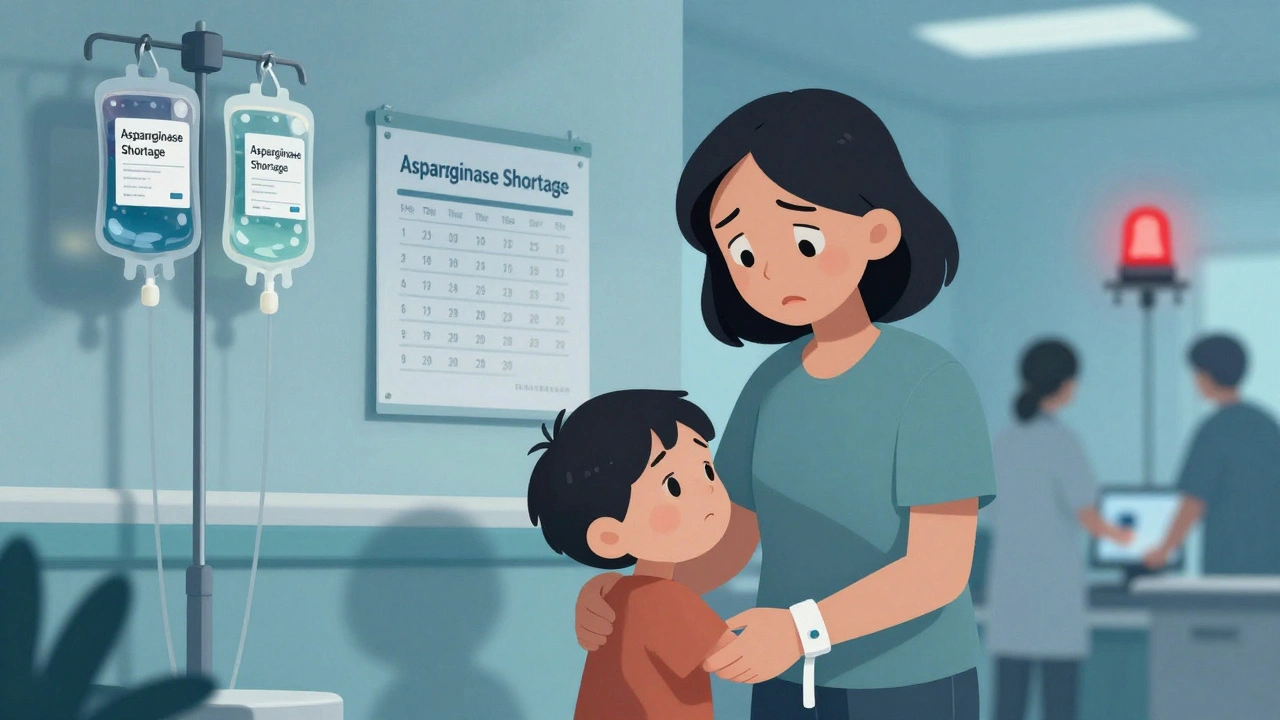
When a patient needs a life-saving drug and it’s simply not there, the consequences aren’t theoretical-they’re immediate, personal, and sometimes deadly. In 2025, over 250 drugs remain in short supply across the U.S., from basic IV saline to critical cancer treatments. This isn’t a temporary hiccup. It’s a systemic breakdown that’s reshaping how care is delivered-and who gets it.
What Happens When a Drug Disappears?
Imagine you’re a parent whose child has acute lymphoblastic leukemia. The standard treatment includes asparaginase, a drug that’s been in short supply for years. When it runs out, doctors have to delay treatment by 7 to 14 days. That’s not just a scheduling issue. It’s a window where cancer cells multiply unchecked. The same thing happens with heparin, the blood thinner used in every cardiac surgery. When it’s unavailable, hospitals scramble to find alternatives that increase procedure time by 22%, raise the risk of clots, and force staff to relearn protocols under pressure. These aren’t rare cases. In 2023, 65% of pharmacy directors reported canceled or delayed procedures because of drug shortages. Nearly a third saw direct harm to patients-adverse events tied to substitutions, dosing errors, or missed treatments. Oncology, antimicrobials, and anesthesia drugs are hit hardest. One in four shortages involves cancer drugs. One in three involves antibiotics. When vancomycin or meropenem disappears, hospitals start using older, more toxic alternatives. Patients get sicker. Recovery takes longer. Some don’t recover at all.The Hidden Cost of Running Out
It’s easy to think of drug shortages as a pharmacy problem. But the ripple effects hit every corner of care. Hospitals spent nearly $900 million in 2023 just on extra labor to manage shortages. That’s not the cost of the drugs themselves-it’s the cost of staff working extra hours to track down alternatives, train teams, update systems, and call other hospitals begging for a vial. Pediatric facilities are hit hardest. They need special formulations-smaller doses, sugar-free versions, liquid forms that don’t exist for most adult drugs. One hospital reported monitoring 70 shortages at once. For kids, that means delays in chemotherapy, missed vaccines, or going without sedatives for MRIs. Staff spend 25% more time managing shortages in pediatric units than in general hospitals. Patients aren’t just waiting-they’re skipping doses, cutting pills in half, or not filling prescriptions at all. A 2024 study found that 43% of medication errors were directly linked to shortages. That’s up from 38% in 2019. One pharmacist in Ohio told a reporter she had to tell a diabetic patient to use insulin from a 2018 vial because the new one wasn’t available. The patient didn’t know the difference. Neither did the system.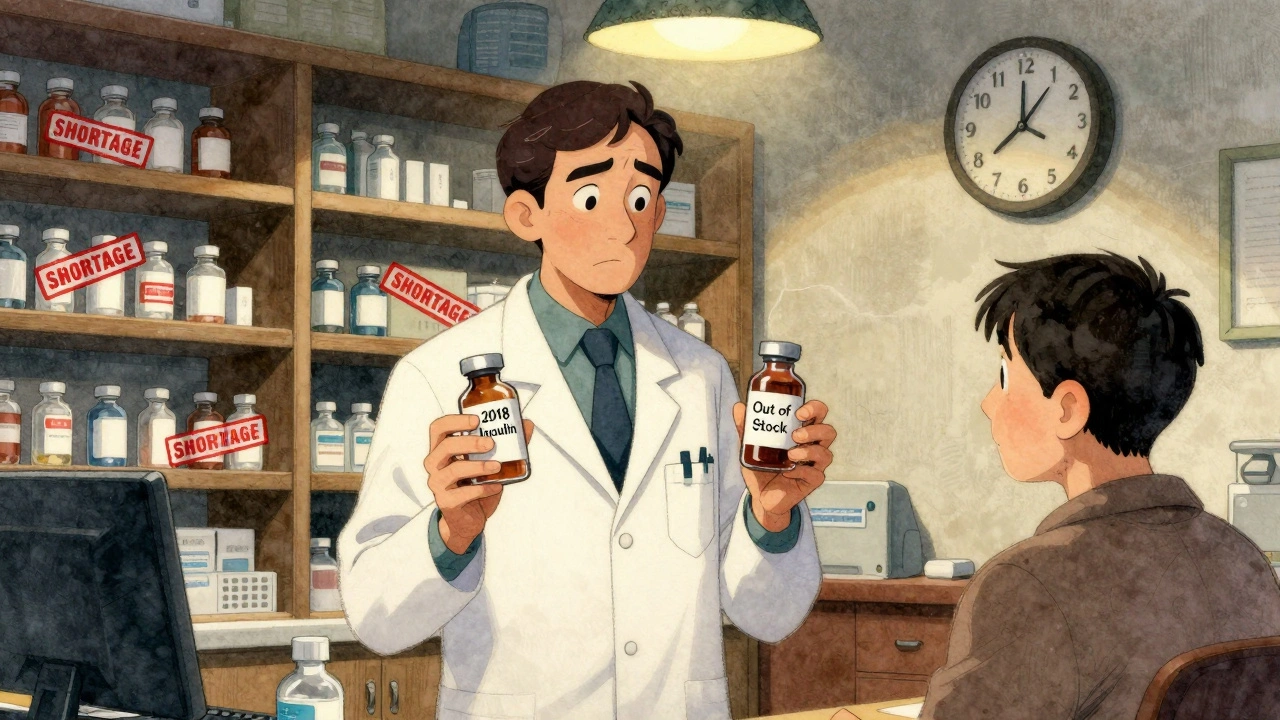
Why This Keeps Happening
Most shortages aren’t caused by pandemics or natural disasters. They’re caused by business decisions. Eighty-three percent of current shortages involve generic drugs-medications that cost pennies but are made by companies with thin margins. If a factory in India or China has a quality control issue, production halts. There’s no backup. No redundancy. No profit incentive to keep extra stock on hand. The supply chain is a single-threaded rope. One factory makes 90% of the heparin in the U.S. One plant produces 70% of the IV saline. When either fails, the entire country feels it. Raw material shortages account for 21% of disruptions. Manufacturing failures, another 32%. And 47%? Global logistics. A shipping delay in China can mean a hospital in Wisconsin runs out of a drug three weeks later. The FDA started requiring manufacturers to report potential shortages six months in advance in 2023. That helped. But many companies still delay reporting-either because they’re hoping the problem fixes itself, or because they fear losing market share if they admit a shortage is coming.What’s Being Done-and What’s Not
Some hospitals have created shortage management teams. They monitor alerts, test alternatives, and train staff. Group purchasing organizations like Vizient help hospitals pool orders and avoid bidding wars. Since 2023, these networks have saved clients $300 million in avoided inventory costs. But these are band-aids. The real fix requires changing how the system works. Right now, drug makers have no financial reason to make low-margin generics in multiple locations. They make them in one place, at the lowest cost, and call it done. If that plant shuts down? Too bad. The Biden administration’s 2023 supply chain order pushed for more domestic production of critical drugs. Some companies are responding. By 2027, 78% of hospital systems plan to increase onshoring of key medications. That’s progress. But it’s slow. And expensive. Building a new sterile injectable facility in the U.S. costs over $100 million. Meanwhile, patients are paying more. Out-of-pocket costs for medications during shortages jump by an average of 18.7%. For Medicare patients, that’s life or death. One study estimated that 1.1 million could die over the next decade because they can’t afford their prescriptions.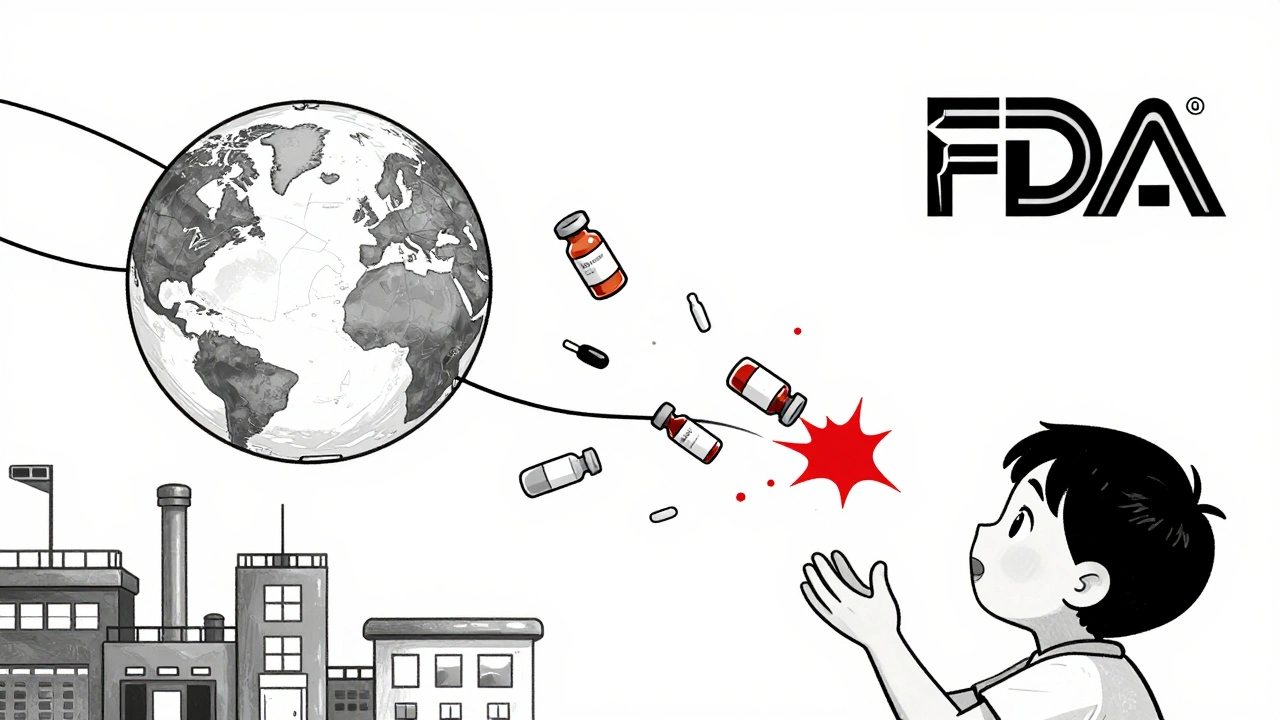
What Patients Can Do
You can’t fix the system alone. But you can protect yourself.- Ask your pharmacist: Is this drug in short supply? If they say yes, ask what alternatives exist-and whether they’re safe for you.
- Don’t wait until your last pill to refill. Order early, especially for chronic conditions like epilepsy, heart disease, or diabetes.
- Keep a written list of your medications, including generic names. If your brand is out, your doctor might find a different generic that works.
- Call your insurance company. Some have emergency override programs for shortage-related cost spikes.
- Report problems. If you’ve been denied a prescription or had to skip doses, tell your doctor. Document it. These stories matter.
The Bigger Picture
Drug shortages aren’t just about pills. They’re about trust. When a patient learns their chemotherapy is delayed because a factory in another country had a power outage, they stop believing the system has their back. When a nurse has to choose between two patients because there’s only one dose of epinephrine left, that’s not medicine-it’s triage. The number of active shortages has dropped since its peak in early 2024-from 323 to 253. That’s a small win. But we’re still at nearly double the level of 2021. The system is still broken. And until we fix the economic incentives, the supply chain fragility, and the lack of accountability, this crisis will keep coming back. Patients shouldn’t have to fight for the drugs they need. Care shouldn’t be rationed because of corporate profit margins. We know how to fix this. We just haven’t chosen to yet.Why are generic drugs the most commonly in short supply?
Generic drugs make up 83% of current shortages because they’re low-margin products. Manufacturers produce them in one or two facilities to cut costs, with no backup. If a factory shuts down for quality issues or supply delays, there’s no alternative supplier. Unlike brand-name drugs, generics don’t have patent protection or high profits to justify building extra capacity.
Can drug shortages cause real harm to patients?
Yes. Studies show 31% of hospitals reported adverse events directly linked to shortages. Patients have died from delayed cancer treatments, suffered infections from substituted antibiotics, or had strokes because anticoagulants weren’t available. Medication errors have jumped 43% since 2019 because staff are forced to use unfamiliar alternatives under pressure.
Are there any drugs that have been in short supply for years?
Yes. Asparaginase (used for leukemia), nelarabine (for T-cell cancers), and heparin (a blood thinner) have had shortages lasting up to five years. IV saline bags, once considered a basic commodity, have been in and out of shortage since 2018. These aren’t obscure drugs-they’re essential for life-saving care.
How do shortages affect children differently than adults?
Children often need special formulations-liquid doses, sugar-free versions, or smaller vials that aren’t made for adults. Many generics aren’t produced in pediatric forms at all. This forces hospitals to split adult pills or dilute injections, increasing dosing errors. Pediatric facilities spend 25% more staff time managing shortages than general hospitals.
What’s being done to fix this problem?
The FDA now requires manufacturers to report potential shortages six months in advance. Some hospitals use real-time monitoring tools and group purchasing networks to share supplies. A few companies are moving production back to the U.S. But these are partial fixes. Without financial incentives for manufacturers to build redundancy and diversify supply chains, shortages will keep happening.

My mom’s on chemo and they kept switching her drugs last year-she got sick every time. Just because some CEO decided to save $0.02 per pill. It’s not healthcare, it’s gambling with lives.
As a nurse in a pediatric oncology unit, I see this every single day. Kids get their chemo delayed because the liquid asparaginase is out. We have to dilute adult vials and pray the math is right. I cried after shift yesterday. This isn’t normal. We need to fix this. 🙏
Been tracking shortages since 2020. The FDA’s reporting rule helped, but only if companies actually report. Most wait until the last minute-then blame ‘supply chain issues.’ Meanwhile, nurses are doing triage in the ER. This is systemic failure, not bad luck.
Why do we even make generics anymore? Just let pharma charge what they want. People whine about prices but they’re the ones who want cheap drugs. Now they’re mad when the cheap stuff runs out? Classic
Let’s be real-this is all China’s fault. We outsourced our medicine to a country that doesn’t even care if people die. We need to ban imports of all generic drugs and build factories here. America First. Period. 🇺🇸
It’s not just about drugs… it’s about the collapse of meaning, the erosion of care as a sacred act… when you’re forced to choose between two patients because one vial of epinephrine remains… you realize… the system… has already… died…
yeah i mean… like… why dont we just make all the drugs in the usa? like… duh? its not that hard… right? i mean… i read an article once…
It is quite evident that the current pharmaceutical supply chain architecture exhibits profound structural vulnerabilities, particularly regarding the over-reliance on monolithic manufacturing nodes and the absence of fiscal disincentives for redundancy. One must consider the opportunity cost of capital allocation in low-margin generics versus value-based innovation.
I’ve been in this field for 22 years. I’ve seen shortages come and go. But what’s different now is the scale-and the silence. Hospitals are terrified to speak up because they fear losing contracts. Pharmacies don’t want to panic patients. And patients? They’re just trying to survive. We need a national database where every shortage is tracked in real time-with consequences for non-reporting. Not just a form you fill out six months late.
From India, I’ve seen how factories here get shut down for minor violations. But the U.S. still imports 80% of its generics. We need global standards-not just American fixes. Maybe a WHO-managed backup supply pool? We can do this if we stop blaming and start building together. 💪
Let’s not pretend this is just about money. It’s about power. The people who control the supply chains don’t care if you live or die-they care about quarterly earnings. Until we treat essential medicines like public infrastructure-not commodities-we’re just rearranging deck chairs on the Titanic.
My daughter had a seizure last month because the generic phenytoin was out. We had to wait 11 days. The pharmacy said ‘we’re waiting on a shipment from Mexico.’ Eleven days. For a drug that’s been around since 1938. This isn’t a glitch. It’s negligence. And it’s happening to millions.
They’re hiding something. Why does every shortage happen right after a new CEO takes over? Why do the same factories keep failing? And why is the FDA always ‘investigating’ but never punishing? This isn’t incompetence-it’s a cover-up. Big Pharma is letting drugs run out to push people toward expensive new ones. I know it. I’ve seen the emails.
Just filled my dad’s heart med and the pharmacist said ‘this is the last one for a month.’ I cried in the parking lot. We’re not asking for luxury-we’re asking to not die because a factory in China had a power outage. Please just fix this.