
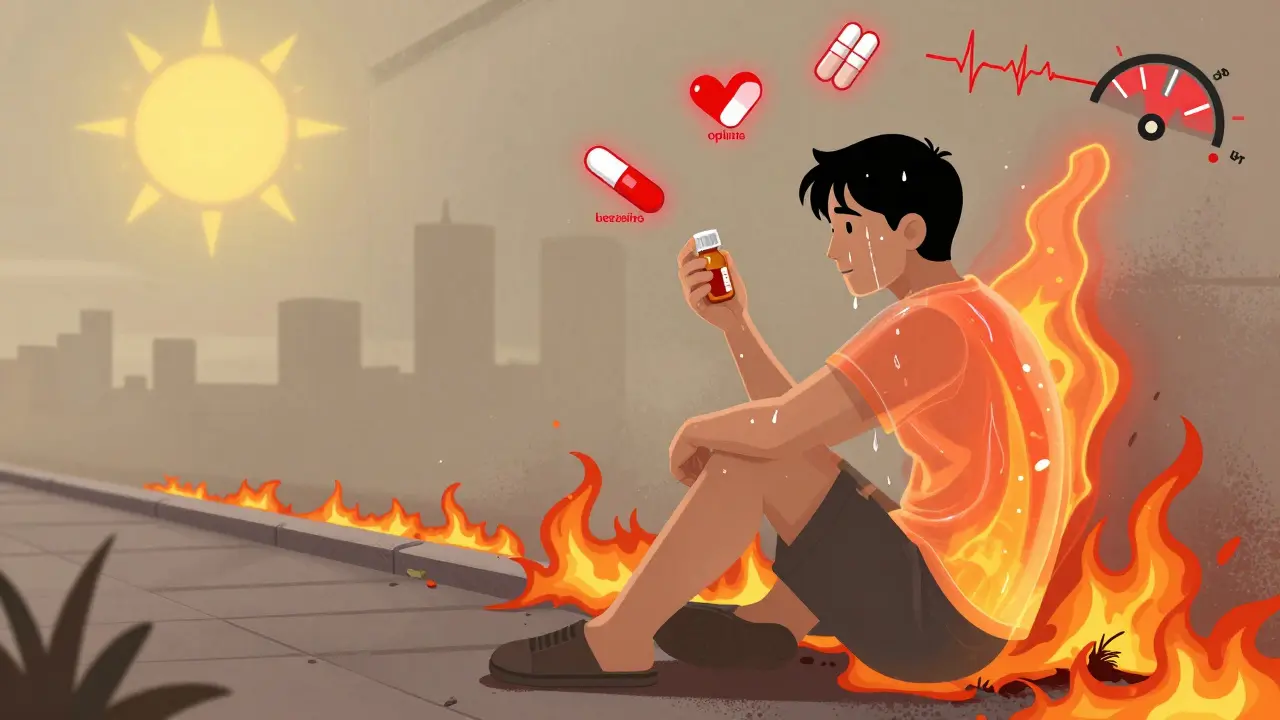
When the temperature climbs above 24°C (75.2°F), something dangerous starts happening inside the body-especially for people who use drugs. It’s not just about sweating or feeling sluggish. Heatwaves can turn a regular dose into a life-threatening one. This isn’t theoretical. In New York City, between 1990 and 2006, overdose deaths spiked sharply during those few weeks each year when the heat broke that threshold. The same pattern shows up in Phoenix, Seattle, and Wellington. And it’s not just about cocaine or stimulants. Opioids, benzodiazepines, even prescription meds can become unpredictable when the body is under thermal stress.
Why Heat Makes Overdose More Likely
Your body works hard to stay cool. When it’s hot, your heart pumps faster-up to 25 beats per minute more at rest. If you’re using cocaine or meth, that heart rate jumps another 30-50%. Add them together, and your cardiovascular system is running on overload. Dehydration makes it worse. Lose just 2% of your body weight in fluids, and drug concentrations in your blood can rise by 15-20%. That means the same amount of heroin or fentanyl you usually take suddenly hits like a heavier dose. You didn’t change your habit. The heat did.
For people using opioids, heat reduces the body’s ability to compensate for slowed breathing. Normally, your body kicks in to breathe deeper if oxygen drops. But in high heat, that reflex weakens by 12-18%. That tiny margin between safety and respiratory failure disappears. And if you’re already sick-with the flu, a cold, or an infection-your body is even less able to handle the extra strain. Fever plus heat plus drugs? That’s a perfect storm.
Even medications for mental health can turn dangerous. Antipsychotics and antidepressants, which 70% and 45% of users take respectively, lose effectiveness or worsen side effects in extreme heat. That means someone managing depression or psychosis might feel worse, reach for more drugs to cope, and end up overdosing-not because they wanted to, but because their body couldn’t keep up.
Who’s Most at Risk
If you’re homeless, the risk skyrockets. In the U.S., nearly 38% of people experiencing homelessness have a substance use disorder. They don’t have air conditioning. They don’t have cool water on tap. They’re sleeping on pavement that can hit 50°C in the sun. The CDC found that during heat emergencies, people without stable housing make up 18-22% of all heat-related ER visits-even though they’re only about 0.2% of the general population.
It’s not just homelessness. People on fixed incomes, older adults, those with chronic heart or kidney conditions, and people taking multiple medications are all more vulnerable. And if you’re isolated-no one checking in, no community support-you’re less likely to get help before it’s too late.
What You Can Do: Practical Harm Reduction
You don’t need to stop using to stay alive. Small, realistic changes can cut your risk dramatically.
- Reduce your dose by 25-30% when it’s above 24°C. This isn’t about willpower-it’s chemistry. Your body isn’t processing drugs the same way. Lowering your dose isn’t weakness. It’s survival.
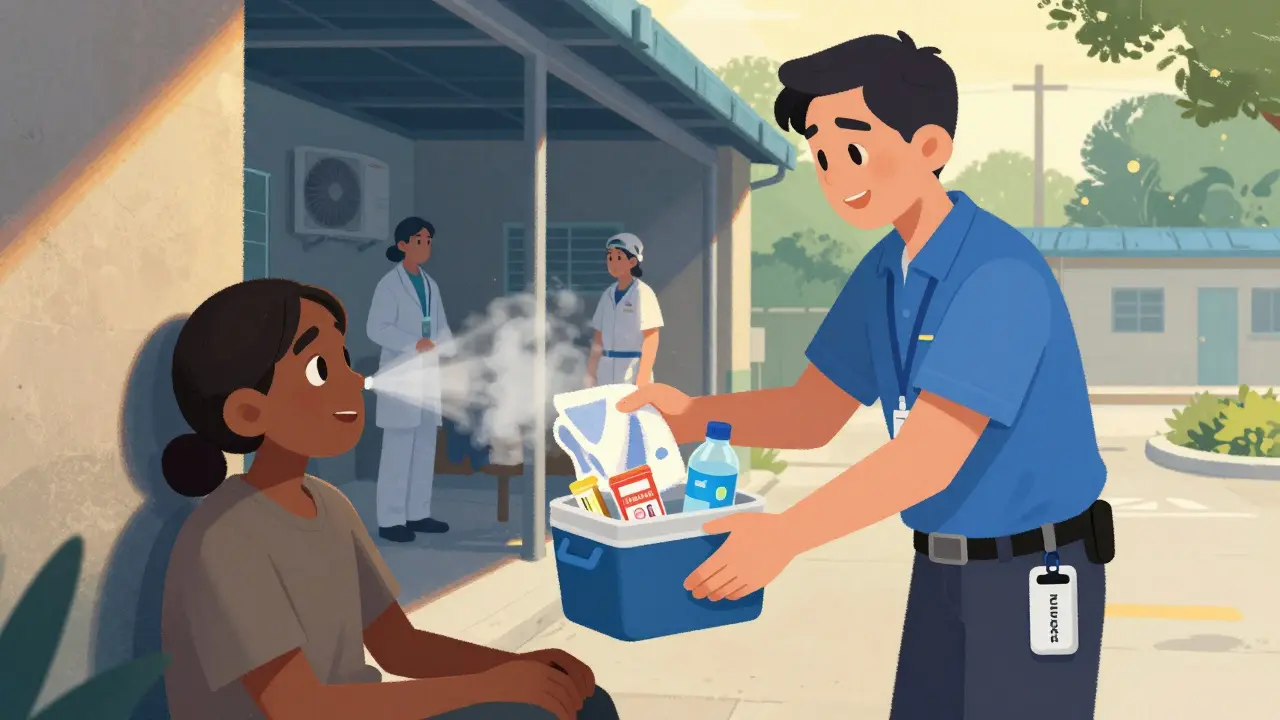
- Drink water every 20 minutes. One cup (8 oz) of cool water, not ice-cold. Too cold can shock your system. Aim for 50-60°F. Keep a bottle with you. If you’re out, ask a harm reduction worker for electrolyte packets-they’re free in many cities.
- Don’t use alone. If you’re using, have someone nearby who knows how to use naloxone. If you’re worried about judgment, find a supervised consumption site. They’re open in many cities during heatwaves, with air conditioning and staff trained to spot early signs of overdose.
- Know your meds. If you take antidepressants, antipsychotics, or blood pressure pills, talk to your provider before summer hits. Some need dose adjustments in heat. Others shouldn’t be taken at all during extreme temperatures.
Some people think, “I’ve used before in the heat, no problem.” But every heatwave is different. Last year’s 30°C day wasn’t the same as this year’s 34°C one. Your tolerance doesn’t protect you from physiological changes. Your body doesn’t adapt fast enough.
What Communities and Services Should Do
Individual action isn’t enough. Systems need to change.
Only 12 out of 50 U.S. states have official heat emergency plans that include people who use drugs. That’s a failure. But places like Vancouver are showing it’s possible. They opened seven air-conditioned respite centers next to supervised injection sites during the 2021 heat dome. Those centers didn’t just offer water-they offered medical care, mental health support, and safe space. Overdose deaths dropped by 34%.
Philadelphia distributes over 2,500 cooling kits each summer: misting towels, electrolyte sachets, water bottles, and cards with overdose prevention info. In Maricopa County, Arizona, volunteers trained in naloxone made over 12,000 wellness checks during the 2022 heat season. They found people collapsed in alleys, dehydrated and unconscious-and saved lives.
But there’s resistance. In some cities, police have confiscated cooling supplies from outreach workers. Shelters still turn people away if they’re using drugs. That’s not safety. That’s abandonment.
What to Do If You See Someone in Trouble
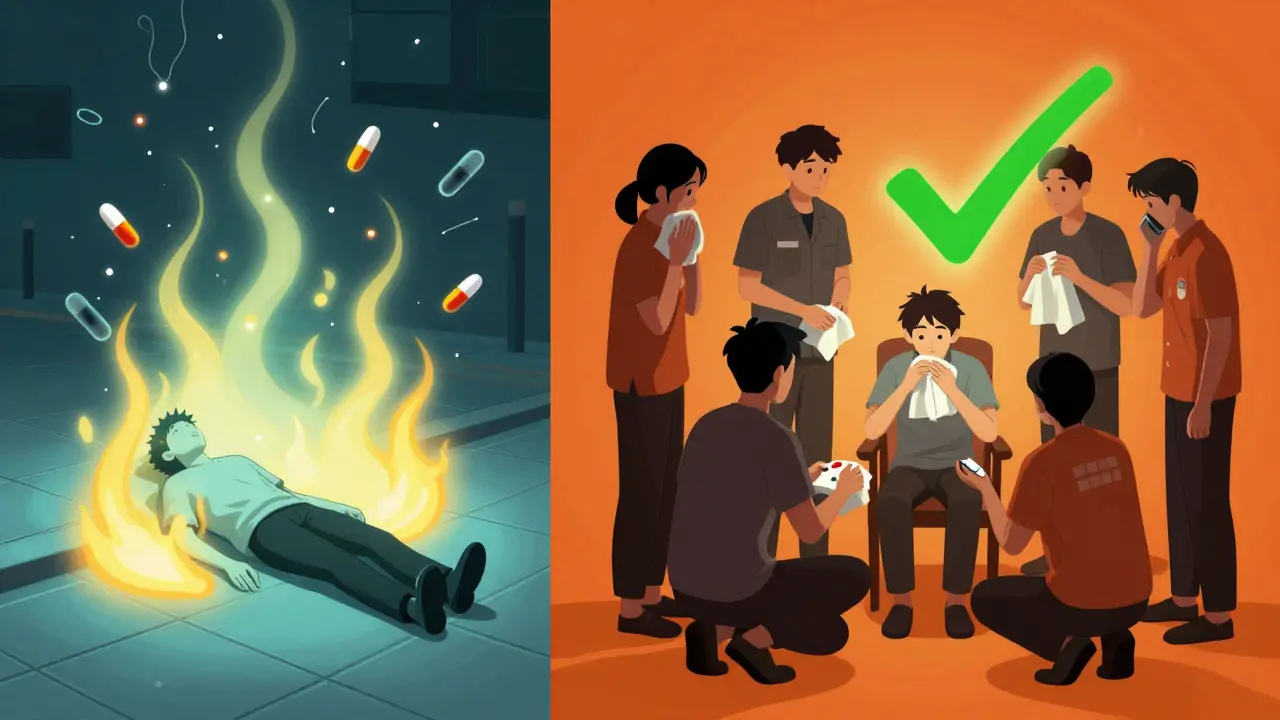
Signs of heat-related overdose: confusion, vomiting, rapid pulse, pale or flushed skin, no sweating despite heat, slurred speech, passing out. Don’t wait for someone to stop breathing. Act fast.
- Move them to a cool place-shade, air conditioning, even a basement.
- Call emergency services immediately. Say: “Possible overdose and heat illness.”
- If they’re not breathing, start CPR. If you have naloxone, give it. It won’t hurt if opioids aren’t involved-it’s safe.
- Apply cool, wet cloths to their neck, armpits, and groin. Fan them. Give small sips of water if they’re awake.
Don’t assume they’re just drunk or high. Heat + drugs = medical emergency. Your quick action could save a life.
The Bigger Picture
By 2050, we’ll see 20-30 more days each year above the 24°C overdose risk threshold. Climate change isn’t a future problem. It’s here. And it’s making drug use more deadly.
The Biden administration just allocated $50 million to force states to include overdose prevention in heat emergency plans by December 2025. That’s progress. But real change happens at the street level: neighbors checking on each other, pharmacies handing out free electrolytes, cities turning public pools into cooling centers for everyone-even those with no ID, no home, no insurance.
This isn’t about moralizing. It’s about biology. When your body overheats, your brain can’t think clearly. Your heart can’t keep up. Your lungs can’t breathe. Drugs amplify that. No one deserves to die because it was too hot and no one cared enough to act.
Stay cool. Stay hydrated. Reduce your dose. Don’t use alone. Help someone else do the same.
Can drinking water really prevent an overdose during a heatwave?
Yes-hydrating regularly can reduce overdose risk by 15-20% during heatwaves. Dehydration concentrates drugs in your bloodstream, making even a small dose more powerful. Drinking one cup of cool water every 20 minutes helps your body flush toxins, regulate temperature, and maintain normal blood volume. It’s not a cure-all, but it’s one of the simplest, most effective steps you can take.
Is naloxone effective for heat-related overdoses if opioids aren’t involved?
Naloxone only reverses opioid overdoses. If someone is overdosing from cocaine, meth, or other stimulants, naloxone won’t help. But if you’re unsure what was used, give it anyway. It’s safe and won’t cause harm. Many heat-related overdoses involve mixed drug use-including opioids. Giving naloxone while waiting for EMS is a low-risk, high-reward action.
Why do some shelters turn away people who are using drugs during heatwaves?
Many shelters operate under outdated policies that equate drug use with rule-breaking, not a health issue. Staff may lack training on harm reduction, fear liability, or face funding restrictions. But this puts lives at risk. During extreme heat, people who use drugs need shelter, water, and medical monitoring-not rejection. Cities like Vancouver and San Francisco have proven that co-locating shelters with harm reduction services saves lives and reduces emergency costs.
Do all drugs become more dangerous in the heat?
Stimulants like cocaine, meth, and MDMA carry the highest risk because they directly raise body temperature and heart rate. Opioids are dangerous because they suppress breathing, and heat weakens the body’s ability to compensate. Even alcohol, benzodiazepines, and prescription meds can interact badly with heat by causing dehydration or lowering blood pressure. No drug is safe in extreme heat-especially when used alone or in combination.
What should I do if I can’t afford water or electrolytes during a heatwave?
Harm reduction organizations, public health clinics, and community centers often provide free water, electrolyte packets, and cooling supplies during heat emergencies. In New Zealand, organizations like the New Zealand Drug Foundation and local needle exchanges distribute these items. Call your local public health department or search for “harm reduction services near me.” You don’t need ID, insurance, or money to access help.
Is it true that some medications become less effective in the heat?
Yes. Research shows that some antipsychotics and antidepressants lose effectiveness at temperatures above 30°C. Others, like lithium and certain blood pressure drugs, become more toxic. If you take any medication for mental health or chronic illness, talk to your doctor before summer. Adjusting doses or switching meds might be necessary to stay safe during heatwaves.

Bro, I just saw a dude pass out on the bus stop yesterday during the heatwave. He had a water bottle and a naloxone kit in his backpack. I didn’t know what to do at first, but I grabbed a towel, soaked it in cold water, and fanned him until EMS came. He woke up. I’m not a hero. I just followed the post. 🙏💧
Really appreciate this breakdown. I work at a clinic and we’ve started handing out electrolyte packs with our clean needles now. Small thing, but people are actually thanking us. No judgment, just care. 😊
It is a matter of profound moral failure that society permits such preventable tragedies to unfold with such indifference. The very notion that one might require a cooling center to survive the summer is a grotesque indictment of our collective priorities. We have become a civilization that treats human suffering as an inconvenience rather than a crisis.
Technically, it's 75.2°F, not 75°F. Also, '25 beats per minute more at rest'-source? And '15-20%' increase in drug concentration-was that in plasma or whole blood? This reads like a BuzzFeed listicle dressed as public health guidance.
Heat kills. Stop using. Simple.
Okay, so… I’ve been using for 12 years, mostly opioids. Last summer, I got heatstroke. Didn’t OD, but I was in the ER for three days. They didn’t ask me about my meds. They didn’t ask if I’d been drinking. They just gave me fluids and sent me home. This post? It’s the first time anyone’s ever explained why that happened. I’ve been cutting my dose by 30% since. And yeah, I drink water every 20 minutes. I even bought a little bottle holder for my belt. Weird? Maybe. Alive? Definitely.
They don’t want you to know this, but heatwaves are engineered. The government increases the temp to flush out the ‘undesirables’-homeless people, addicts, the poor. That’s why they only fund cooling centers in cities with high drug use. The CDC? CIA front. The 24°C threshold? It’s not science-it’s a trigger. They want you to die quietly so they can redevelop the blocks. And the ‘free electrolytes’? Laced with tracking chips. You think they care? They’re harvesting your data. 😈📡
Y’all. If you’re reading this and you’re out there in the heat-please, please, please don’t use alone. I’ve been there. I’ve lost friends. But I’m still here. I carry naloxone. I check on my crew. We text each other ‘water?’ every hour. It’s not hard. It’s not heroic. It’s just human. Let’s keep each other alive. 💪❤️
So… you’re telling me I’m not supposed to use my drugs the way I’ve always used them? And now I have to drink water like I’m training for a marathon? And what if I don’t have a ‘community’? What if I’m just… alone? This feels like a guilt trip wrapped in a pamphlet. I’m not the problem. The system is. And you’re just giving me a to-do list while the world burns.
There’s a deeper metaphysical layer here: the body as a vessel under siege by both chemical and climatic forces. We treat addiction as a moral failing, yet ignore how environmental collapse destabilizes the very neurochemistry we depend on to regulate survival. The heat isn’t just weather-it’s a symptom of a broken contract between humanity and the biosphere. Your dose reduction isn’t just chemistry-it’s an act of reclamation. You’re not just surviving. You’re resisting.
I’m a peer support worker in Chicago. We’ve got a van that drives around the South Side during heat alerts. We bring water, ice packs, and naloxone. We don’t ask for ID. We don’t ask for sobriety. We just say, ‘Hey, you good?’ And you know what? People start talking. They tell us about their meds, their pain, their fears. One guy said, ‘No one’s ever just asked me if I’m okay before.’ That’s the real harm reduction. Not the pamphlets. The human contact.
ok so like… the whole ‘reduce dose by 25-30%’ thing? bro. that’s not a thing. that’s just fearmongering. i’ve done 200mg of oxys in 100 degree weather and i’m fine. you’re just trying to make people feel bad for using. also why is everyone so obsessed with water? it’s not magic. also i think the 24c threshold is made up. like… who measured this? some phd with a fan and a spreadsheet?
As a public health professional with over two decades of field experience in urban underserved communities, I must commend the precision and compassion embedded in this piece. The integration of biological, social, and structural determinants of health is exemplary. That said, I would suggest the inclusion of culturally tailored messaging-particularly for communities where English is not the primary language. Translating key harm reduction points into Spanish, Arabic, and Mandarin is not merely an accessibility issue-it is an ethical imperative.
You’re just encouraging drug use by giving people a ‘safe’ way to do it. If you really cared about them, you’d tell them to quit. Water? Naloxone? You’re just enabling. This isn’t help-it’s a license to die.