
Sulfonylurea Safety Calculator
Which Sulfonylurea Is Safest For You?
Answer a few questions to see which medication has the lowest hypoglycemia risk based on your age and kidney function.
Your Personalized Risk Assessment
Glyburide
Avoid if over 65 or eGFR < 60
Glipizide
Safest option for most
Glimepiride
Consider only if glipizide ineffective
Recommendation
Important Safety Notes
When you’re managing type 2 diabetes, not all sulfonylureas are created equal. You might think they’re all the same-just pills that push your pancreas to make more insulin. But the truth is, choosing the wrong one could land you in the emergency room with dangerously low blood sugar. The difference between glyburide and glipizide isn’t just price or brand. It’s safety. It’s sleep. It’s whether you wake up shaky and confused-or just fine.
Why Sulfonylureas Still Matter
Sulfonylureas have been around since the 1950s. They’re old, cheap, and effective. For about $4 a month, they can drop your A1C by 1.5% to 2%. That’s better than most generic blood pressure pills. In places where insulin and newer drugs cost hundreds a month, sulfonylureas are lifelines. But here’s the catch: they’re also the most common cause of severe hypoglycemia among oral diabetes meds.The American Diabetes Association still lists them as a second-line option after metformin. But they’ve added a big warning: not all sulfonylureas are equal. Some are far riskier than others. And if you’re over 65, have kidney trouble, or skip meals, that difference could be life-changing.
The Hypoglycemia Divide: Long-Acting vs. Short-Acting
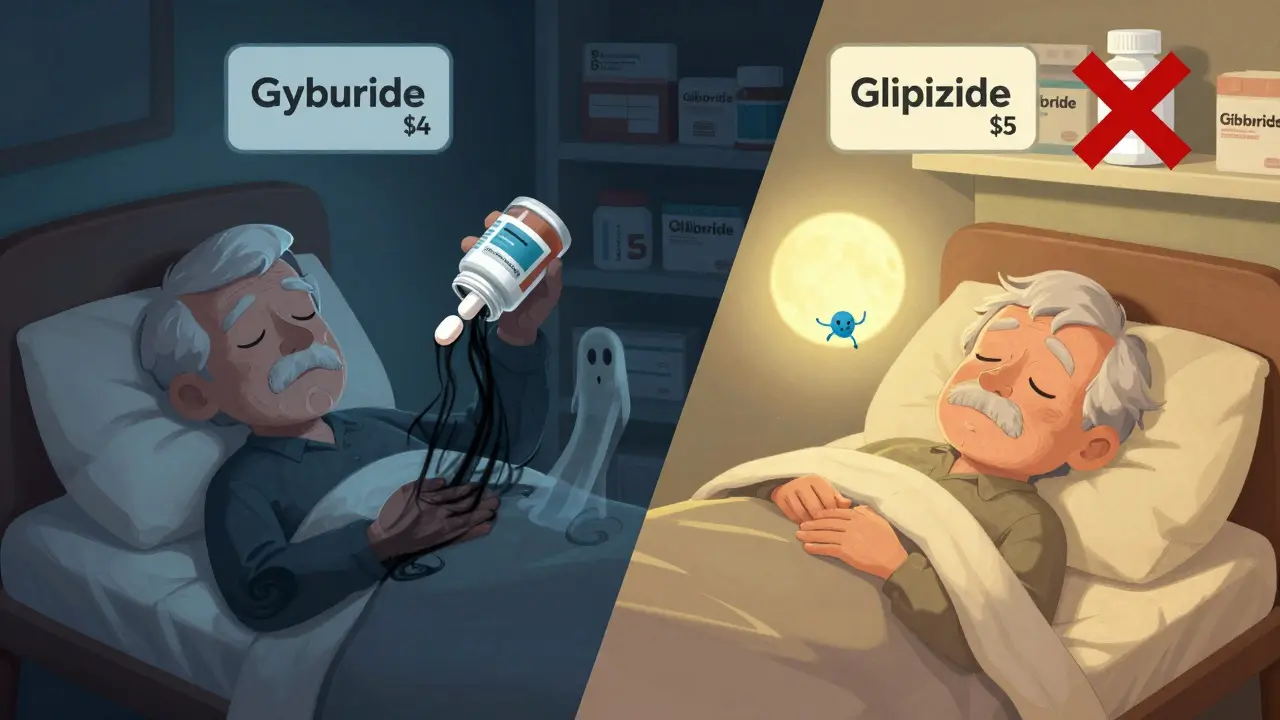
Not all sulfonylureas work the same way. Some stick around in your body for hours-sometimes all day. Others come and go quickly. That’s the key.Glyburide (also called glibenclamide) is the most dangerous. It has a half-life of 10 hours, and its metabolites stick around even longer. That means even if you eat dinner at 6 p.m., it’s still pushing your insulin at 2 a.m. That’s when your body should be winding down. The result? Nighttime lows. Unpredictable crashes. Emergency room visits.
A 2017 study in Diabetes Care found people on glyburide had nearly three times the risk of severe hypoglycemia compared to those on shorter-acting options. The FDA’s adverse event database shows glyburide accounts for nearly 70% of all sulfonylurea-related hypoglycemia reports-even though it’s only prescribed about one-third of the time. That’s not a coincidence. That’s a red flag.
Compare that to glipizide. It’s gone in 2 to 4 hours. It doesn’t hang around. You take it 30 minutes before breakfast or dinner, it does its job, and then it leaves. No midnight insulin surges. No surprises. A 2019 analysis in the American Journal of Managed Care showed glipizide caused less than half the hypoglycemia events of glyburide-4.2 episodes per 1,000 patient-years versus 12.1.
What About Glimepiride and Gliclazide?
Glimepiride sits in the middle. It’s longer-acting than glipizide but not as risky as glyburide. Studies show about 7.8 hypoglycemia events per 1,000 patient-years. Still higher than glipizide, but lower than glyburide. It’s sometimes used as a compromise-especially if someone needs once-daily dosing.Gliclazide is another option, though it’s not available in the U.S. It’s considered more “pancreas-specific,” meaning it targets insulin release more precisely and doesn’t affect other organs as much. In countries where it’s used, it’s often preferred for older adults. A 2023 trial (SURE-DM3) is now comparing gliclazide directly to glipizide in elderly patients. Results won’t be out until late 2025, but early data looks promising.
Who Should Avoid Glyburide Completely?
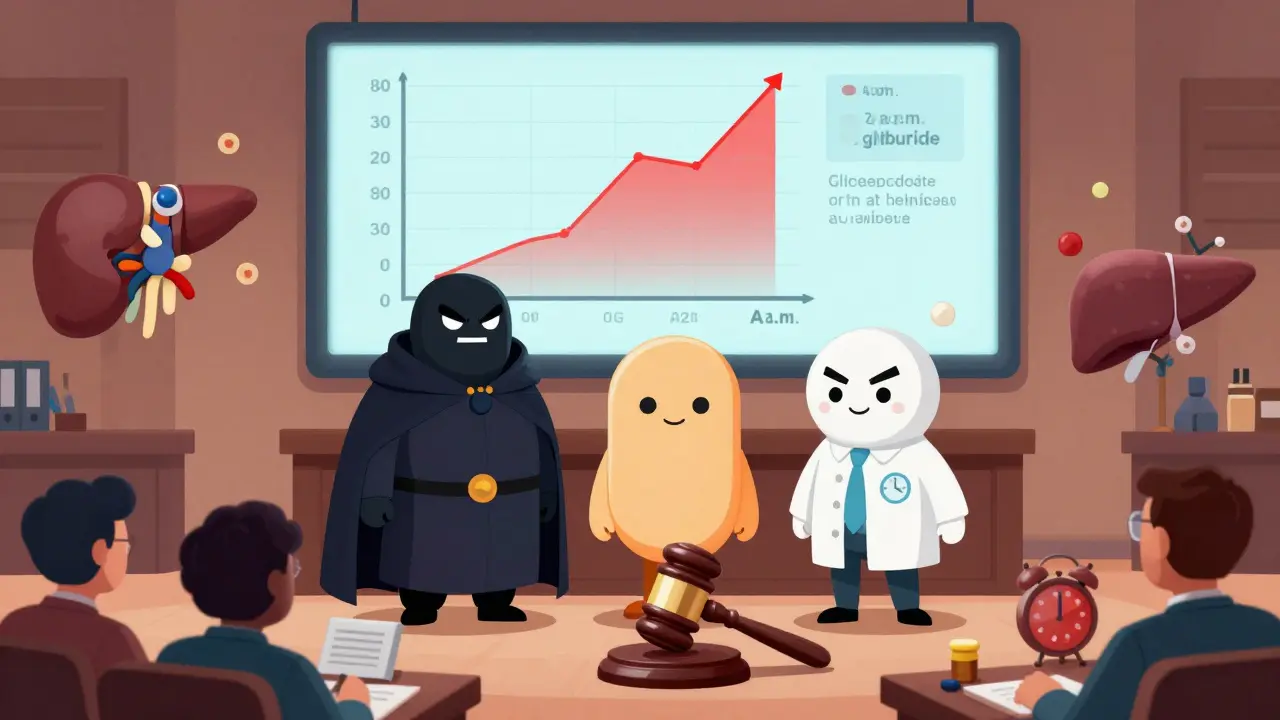
The American Geriatrics Society says it plainly: avoid glyburide in adults 65 and older. That’s not a suggestion. It’s a guideline backed by data from over 17,000 patients. Why? Because as you age, your kidneys slow down. Your liver can’t clear drugs as fast. Your appetite changes. You might skip meals. You might forget to check your blood sugar.Glyburide doesn’t care. It keeps working. And when your body can’t clear it, it builds up. One Reddit user, age 72, wrote: “I spent three days in the hospital after my kidney function dropped. My endocrinologist admitted he never should’ve prescribed glyburide.” That’s not rare. A 2024 audit of 500,000 Medicare patients found nearly 30% of those over 80 were still on glyburide-despite clear warnings.
Even if you’re younger, if you have kidney disease, irregular meals, or a history of lows, glyburide is a bad fit. The National Kidney Foundation says: avoid glyburide if your eGFR is below 60. Glipizide? You can use it until your eGFR drops below 30.
Real People, Real Stories
On the American Diabetes Association’s forum, a thread titled “Switching from glyburide to glipizide” had 87 responses. Sixty-three people said they had fewer lows after the switch. One wrote: “I was having 2-3 severe lows a month on glyburide. Since switching to glipizide, I’ve had zero.”Another user, who’d been on glyburide for 10 years, said she started waking up drenched in sweat, heart racing, confused. Her husband would find her on the floor. She didn’t know what was happening. After switching to glipizide, she slept through the night for the first time in years.
These aren’t outliers. They’re the rule.
How to Use Sulfonylureas Safely
If you’re on a sulfonylurea, here’s what you need to do:- Start low, go slow. Glipizide at 2.5 mg once a day is a safe starting point. Glyburide? Even 1.25 mg is too much for many older adults.
- Take it with food. Never take it on an empty stomach. Even glipizide can cause lows if you skip a meal.
- Know the 15-15 rule. If you feel shaky, sweaty, or dizzy-eat 15 grams of fast-acting sugar (glucose tabs, juice, candy), wait 15 minutes, check your blood sugar. Repeat if needed.
- Check your kidneys. Get an eGFR test at least once a year. If it drops, your dose may need to change-or your drug may need to change.
- Watch for interactions. Antibiotics, NSAIDs, and even some herbal supplements can boost sulfonylurea effects. Talk to your pharmacist.
And if you’re hospitalized? Your dose should be cut in half. Hospitals are high-risk zones for lows. The Society of Hospital Medicine says 4.5 hypoglycemia events happen per 100 people admitted on sulfonylureas. That’s why they mandate dose reduction.
Is There a Better Option?
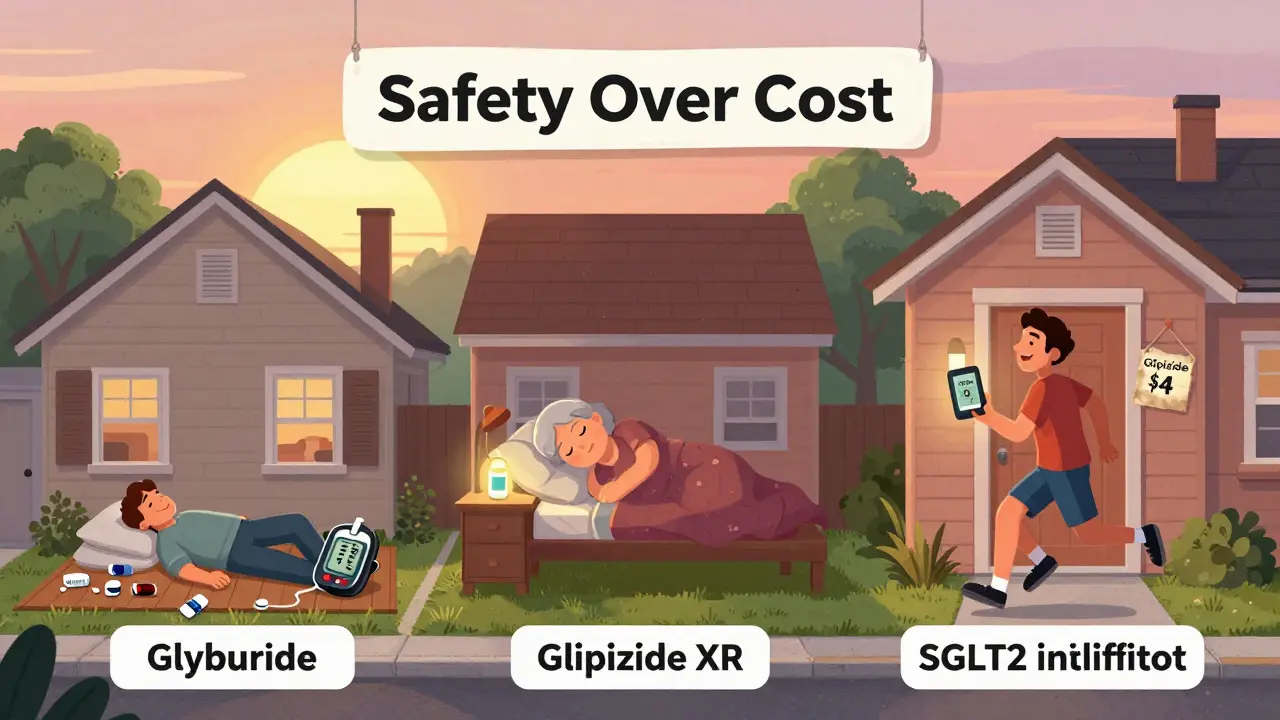
Yes. SGLT2 inhibitors and GLP-1 agonists have lower hypoglycemia risk-sometimes 3 to 4 times lower. But they cost $400 to $600 a month. For many people, that’s not an option.That’s why glipizide still matters. It’s not perfect. But compared to glyburide? It’s a night-and-day difference. The American Diabetes Association’s 2024 Standards of Care now say: prefer glipizide over glyburide or glimepiride when a sulfonylurea is needed.
And there’s new hope: a longer-acting form of glipizide called Glucotrol XL was approved in 2023. It releases the drug slowly, cutting hypoglycemia risk by 32% compared to the regular version. It’s not perfect, but it’s a step forward.
Bottom Line: Choose Wisely
Sulfonylureas aren’t going away. They’re too cheap, too effective for too many people. But you have to choose the right one. If you’re over 65, have kidney issues, or have had a low blood sugar episode before-glipizide is your safest bet. Glyburide? Avoid it. Glimepiride? Only if glipizide doesn’t work.It’s not about which drug is strongest. It’s about which one lets you live without fear.
Which sulfonylurea has the lowest risk of hypoglycemia?
Glipizide has the lowest hypoglycemia risk among commonly used sulfonylureas in the U.S. Studies show it causes about half the severe low blood sugar events compared to glyburide. Its short half-life (2-4 hours) means it doesn’t linger in the body, reducing nighttime and fasting lows. Glimepiride is intermediate, while glyburide carries the highest risk.
Why is glyburide considered dangerous for older adults?
Glyburide has a long half-life and produces active metabolites that stick around for up to 24 hours. In older adults, kidney and liver function decline, making it harder to clear the drug. This leads to drug buildup, causing unpredictable and prolonged hypoglycemia-even if meals are skipped. The American Geriatrics Society’s Beers Criteria explicitly recommends avoiding glyburide in adults 65+ due to this risk.
Can I switch from glyburide to glipizide safely?
Yes, switching from glyburide to glipizide is common and often improves safety. Start with glipizide 2.5 mg once daily, taken 30 minutes before breakfast. Your doctor will likely reduce or stop glyburide gradually. Monitor blood sugar closely for the first week-some people experience temporary highs as their body adjusts. Most report fewer lows within days to weeks.
Do I need to worry about hypoglycemia if I’m on glipizide?
Yes, glipizide still carries hypoglycemia risk-it’s just lower than glyburide. You’re still forcing your pancreas to release insulin. Skipping meals, drinking alcohol, exercising more than usual, or having kidney issues can trigger lows. Always carry glucose tabs and know the 15-15 rule. Glipizide is safer, not risk-free.
Is glipizide covered by insurance?
Yes. Glipizide is a generic drug and is covered by nearly all insurance plans, including Medicare Part D. At most pharmacies, a 30-day supply costs around $4-$6. It’s one of the most affordable diabetes medications available, making it a practical choice for long-term use.
What’s the future of sulfonylureas in diabetes treatment?
Sulfonylureas are declining in use among younger patients, replaced by safer drugs like SGLT2 inhibitors and GLP-1 agonists. But they’ll remain vital in low-resource settings and for older adults who can’t afford newer meds. Glipizide and its extended-release form (Glucotrol XL) are expected to maintain market share, while glyburide use continues to drop. Global sales are projected to fall to $1.8 billion by 2027-but affordability keeps them relevant, especially in countries where 75% of diabetes patients live.
If you’re on a sulfonylurea, ask your doctor: “Is this the safest option for me?” Don’t assume all pills in this class are the same. The difference between glipizide and glyburide isn’t just medical-it’s personal. It’s your sleep. Your safety. Your peace of mind.

Glipizide changed my life. No more midnight panic attacks. Zero lows in 8 months. 🙌
I can't believe glyburide is still being prescribed to seniors. My mom was on it for three years-she had three ER trips before we switched her to glipizide. The doctor said, 'It's fine,' until she almost didn't wake up. Now she sleeps like a baby. This isn't just medical advice-it's a matter of dignity.
People who still take glyburide are either ignoring the science or just lucky. I've seen too many grandpas collapse because some doc thought 'it's cheap so it's fine.' Nope. It's not a bargain if you're in the ICU at 3 a.m. Stop being cheap with people's lives.
I work in geriatric care and every time someone comes in with a glyburide-induced low, I cringe. Glipizide is the clear winner for safety. Even glimepiride is better than glyburide-but glipizide? It's the sweet spot. We’ve switched over 40 patients in the last year. No more 3 a.m. calls from nursing homes. Just quiet nights.
It's fascinating how a drug from the 1950s still holds so much power. We think we're advanced, but we're still using tools designed for a world without kidney function tests, without continuous glucose monitors, without awareness of metabolic aging. Glipizide isn't just safer-it's a reminder that sometimes the oldest solutions, when refined, are the most human.
my cousin switched from glyburide to glipizide and now he actually eats dinner without fear. no more sweating at night, no more checking his sugar 5 times before bed. he says he feels like he got his life back. cheap and safe? yes please.
Let’s be real-sulfonylureas are the last bastion of affordable diabetes care. But we can’t keep pretending glyburide is acceptable. Glipizide isn’t just better-it’s the minimum standard. If your doctor still pushes glyburide, ask for a second opinion. Or better yet, bring this post. It’s all in the data. No drama. Just facts. And lives.
i had a friend who passed out at the grocery store because of glyburide. she didn't even know she was low until her husband found her. now she takes glipizide and she's back to gardening. i just wish more people knew this stuff
It's interesting how the medical community clings to outdated practices because of cost, yet the human cost is so much higher. I've seen patients on glyburide become terrified of eating. That’s not living. That’s surviving. Glipizide restores agency. It’s not just pharmacology-it’s psychology.
It’s frankly irresponsible that glimepiride is even considered a 'compromise.' The data is unequivocal: glipizide is superior in every clinically meaningful metric. The fact that some physicians still prescribe glyburide to patients over 65 is not just negligent-it’s a violation of the standard of care. If your provider is still using glyburide, they are not keeping up with the literature.
Glipizide = peace of mind. 💛 My dad’s been on it for two years. No more 3 a.m. panic. No more 'I felt like I was dying' stories. He even started cooking again. He says, 'I didn’t realize how much I was holding my breath.' This isn’t just a drug change-it’s a life reset.
so glyburide is the diabetes version of a rusty ladder? yeah. i get it. glipizide is the one with the safety harness. who knew a $4 pill could be the difference between a nap and an ambulance?
Everyone’s so focused on glipizide vs glyburide but nobody talks about how the whole sulfonylurea class is fundamentally flawed-it forces your pancreas to burn out. You’re just delaying the inevitable insulin shot. And yes, glipizide is less dangerous, but it’s still a band-aid on a broken engine. We’re celebrating minor improvements while ignoring the fact that we should’ve moved on decades ago.
my doc switched me from glyburide to glipizide last year. i was skeptical. but after 2 weeks? no more shaky hands at night. i sleep through the whole thing now. best $4 i ever spent.
As a healthcare professional in India, I must note that glyburide is still widely used due to availability and lack of awareness. But glipizide is increasingly accessible in urban centers. The real issue is education. Many patients don’t know the difference, and prescribers are often undertrained. This post should be translated and shared in clinics across South Asia.