
Medication Eye Safety Checker
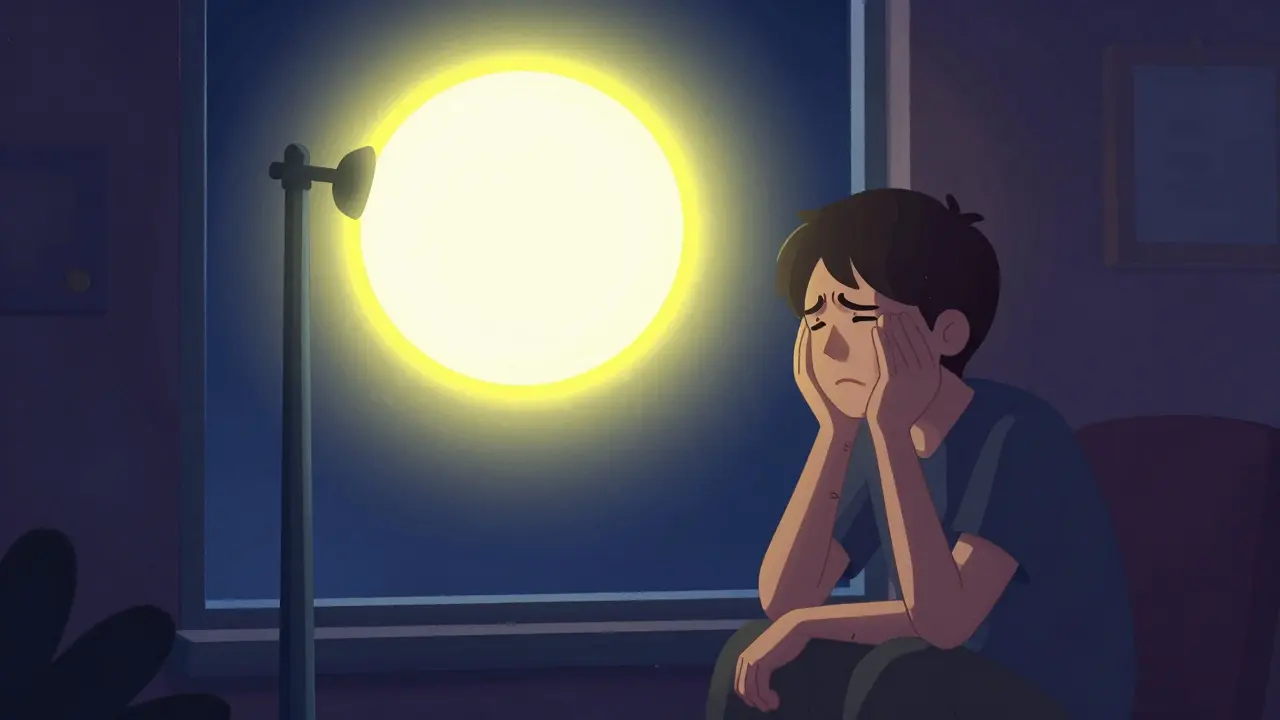
Have you ever noticed that streetlights suddenly look like glowing orbs with fuzzy edges? Or maybe the sun feels less like warmth and more like a physical assault on your eyes? If you’ve started a new medication recently, these aren’t just quirks of aging. They might be photophobia, or light sensitivity, and visual halos caused by what’s in your pill bottle.
We often think of side effects as nausea or drowsiness. We rarely expect our vision to change. But thousands of people experience painful light sensitivity and blurry halos because of common drugs-from painkillers to heart medications. The scary part? Some of this damage is permanent if you don’t catch it early. Let’s break down which meds cause this, why it happens, and how to protect your sight without stopping necessary treatments.
The Hidden Culprits: Which Medications Affect Your Eyes?
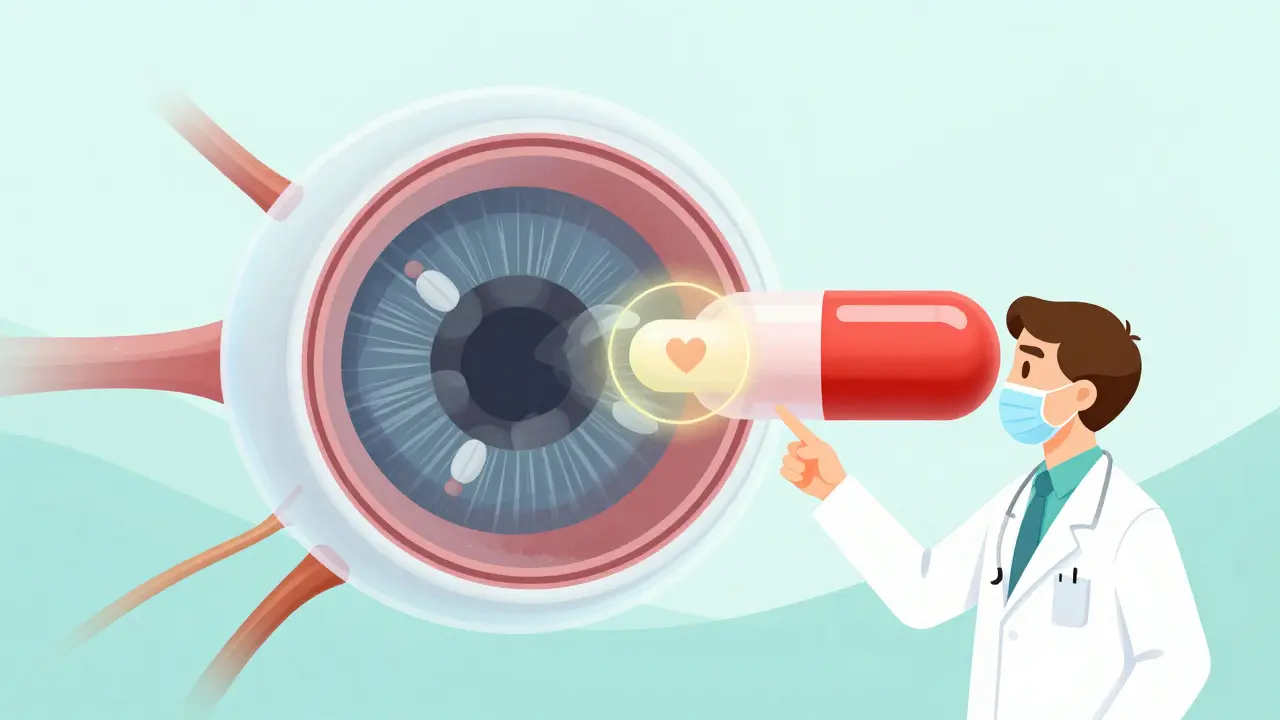
You wouldn’t guess that a drug for arthritis could hurt your retina, right? Yet, hydroxychloroquine (Plaquenil) is one of the biggest offenders. Used widely for lupus and rheumatoid arthritis, it can accumulate in the retinal pigment epithelium. According to the American Academy of Ophthalmology, toxicity risk jumps significantly after five years of use. The damage is silent at first-95% of cases show no symptoms until it’s too late. That’s why annual eye exams are non-negotiable for long-term users.
Then there’s amiodarone (Cordarone), a common treatment for irregular heartbeats. It’s famous for causing yellowish halos around lights. About 10% of patients report this. It’s usually harmless and reversible if you stop the drug, but it makes night driving terrifying. One patient on Reddit described halos around streetlights becoming "unbearable" within three weeks, forcing them to quit driving at night entirely.
Don’t overlook everyday drugs either. Non-steroidal anti-inflammatory drugs (NSAIDs) like ibuprofen and naproxen can trigger painful light sensitivity in about 1% of users. While rare, it’s enough to ruin a day. And if you’re taking erectile dysfunction meds like sildenafil (Viagra), be aware they can cause sudden color vision changes and light sensitivity due to effects on the optic nerve.
| Medication Class | Specific Drug Examples | Primary Visual Symptom | Risk Level / Notes |
|---|---|---|---|
| Antimalarials | Hydroxychloroquine (Plaquenil) | Retinal damage, blurred vision | High risk after 5+ years; irreversible |
| Antiarrhythmics | Amiodarone (Cordarone) | Halos around lights | Moderate; usually reversible |
| NSAIDs | Ibuprofen, Naproxen | Painful light sensitivity | Low incidence (~1%); temporary |
| Erectile Dysfunction | Sildenafil (Viagra) | Color vision changes, light sensitivity | Mild; resolves after dose clears |
| Antibiotics | Fluoroquinolones | Photophobia, corneal issues | Variable; higher risk with prolonged use |
Why Does This Happen? The Science Behind the Sensitivity
It’s not magic; it’s biology. When you take certain medications, they don’t just stay in your stomach. They travel through your bloodstream and interact with delicate tissues in your eyes. For instance, some drugs alter the cornea’s surface or change how the retina processes light signals.
Think of your brain’s thalamus as a gatekeeper for sensory information. In conditions like migraine-induced photophobia, or when triggered by certain drugs, this gatekeeper gets stuck open. The brain becomes hypersensitive to light stimuli. Researchers call this "thalamic hyperactivity." It explains why bright lights feel physically painful rather than just annoying.
Other drugs, like antipsychotics such as chlorpromazine, can deposit pigments directly onto the cornea and lens. Over time, this causes cloudiness and dryness, leading to blurry vision and increased glare. It’s similar to cataracts, but caused by chemistry instead of age. Understanding these mechanisms helps you realize that eye symptoms are valid medical concerns, not just "in your head."
Immediate Action Plan: Protecting Your Vision Now
If you’re already experiencing halos or light pain, waiting isn’t an option. Here is your step-by-step safety protocol:
- Book a Comprehensive Eye Exam Immediately. Don’t wait for your annual checkup. Tell your optometrist exactly which medications you are taking. Ask specifically for a spectral-domain OCT scan if you’re on hydroxychloroquine or tamoxifen. These scans detect microscopic changes before you notice them.
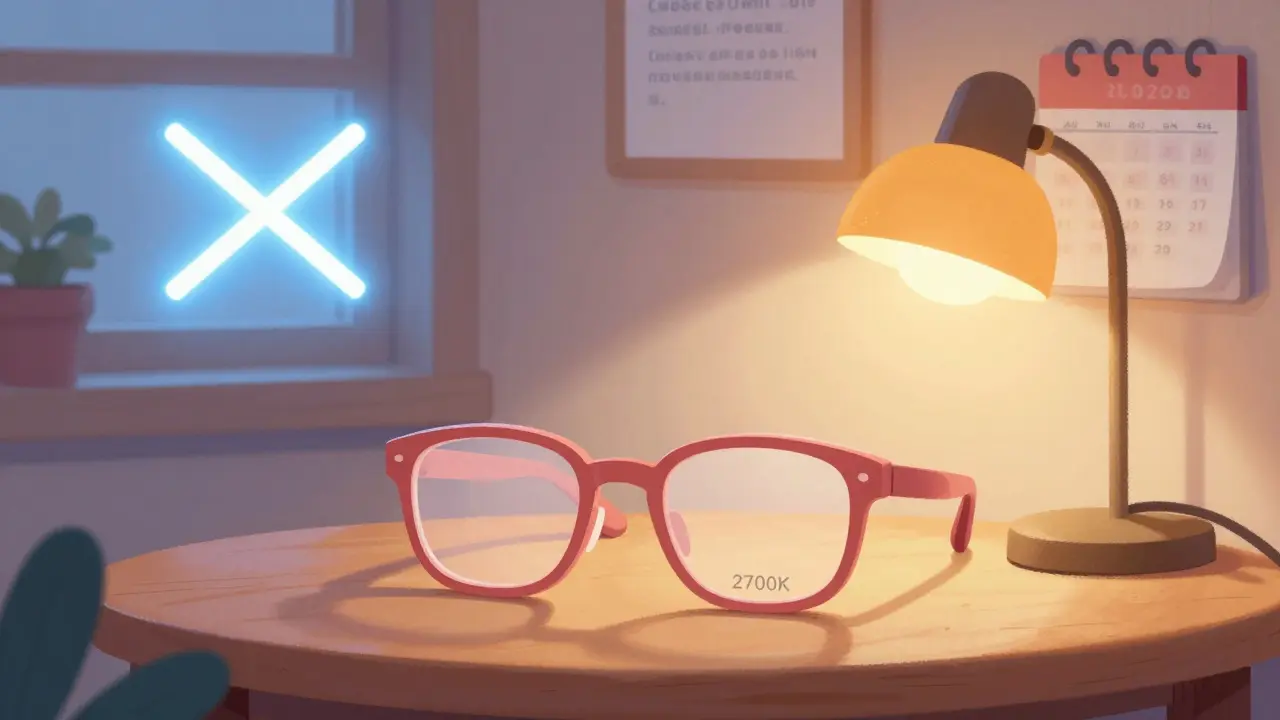
- Invest in FL-41 Tinted Glasses. Regular sunglasses block UV rays, but they don’t filter the specific wavelengths that trigger neural pain. FL-41 lenses are rose-tinted filters clinically proven to reduce light sensitivity by 50-70%. They block the blue-green light spectrum that aggravates photophobia. Users report being able to return to office work within days of wearing them.
- Adjust Your Home Lighting. Harsh white LEDs are enemies of sensitive eyes. Switch to warm-toned bulbs (2700K-3000K color temperature). Dimmers are your best friend. Keep ambient lighting low and use task lamps only where needed. Avoid direct overhead fluorescent lights if possible.
- Follow the 20-20-20 Rule. Every 20 minutes, look at something 20 feet away for 20 seconds. Do this in dimmed lighting. This gives your optic nerve a chance to reset and reduces cumulative stress from screen glare.
Remember, never stop taking prescribed medication without talking to your doctor. Suddenly quitting amiodarone or hydroxychloroquine can have severe health consequences. Instead, manage the side effect while keeping your primary condition under control.
Long-Term Monitoring: Who Needs Extra Care?
Not all risks are equal. If you fall into high-risk categories, you need a stricter monitoring schedule. The National Eye Institute recommends yearly exams for anyone on high-dose hydroxychloroquine regimens. For ethambutol, used to treat tuberculosis, monthly vision testing is crucial during treatment because optic nerve damage can happen quickly.
Chemotherapy patients also face unique challenges. Drugs like vemurafenib can cause blistering sunburns on exposed skin and eyes even through windows. Total UV protection indoors and outdoors is mandatory. Wear wraparound sunglasses and wide-brimmed hats whenever you’re near glass.
Data shows that proactive monitoring works. A study tracking over 2,400 hydroxychloroquine users found that strict adherence to eye exam guidelines reduced severe retinal toxicity from 7.3% to just 1.2% over five years. That’s an 83% reduction in permanent damage. Knowledge truly is power here.
When to Call the Doctor: Red Flags
Some symptoms require emergency attention. If you experience sudden loss of peripheral vision, severe eye pain, or rainbow-colored halos accompanied by nausea, seek help immediately. These could be signs of acute angle-closure glaucoma, a condition where fluid builds up rapidly in the eye. Certain medications can trigger this. Treatment within 24-48 hours is critical to prevent blindness.
Also watch for persistent color vision changes. If reds start looking brown or greens look gray, document it. Take photos of colored objects to track shifts over time. Bring these examples to your ophthalmologist. Early detection of optic neuropathy allows doctors to adjust dosages before permanent nerve damage occurs.
Can light sensitivity from medication go away?
In many cases, yes. For drugs like NSAIDs or erectile dysfunction pills, symptoms typically resolve within days of stopping or lowering the dose. However, for medications like hydroxychloroquine, retinal damage is irreversible. Prevention through regular eye exams is the only way to avoid permanent vision loss.
What are FL-41 glasses, and do they really help?
FL-41 glasses are specialized rose-tinted lenses that filter out specific blue-green wavelengths of light known to trigger photophobia. Clinical studies show they reduce light sensitivity symptoms by 50-70%. They are particularly effective for migraine-related light sensitivity and medication-induced photophobia, allowing users to function in normal lighting conditions.
How often should I get eye exams if I'm on Plaquenil?
The American Academy of Ophthalmology recommends a baseline eye exam within the first year of starting hydroxychloroquine. After five years of use, you should have annual comprehensive exams including visual fields and spectral-domain OCT scans. If you are on high doses or have kidney disease, start annual exams immediately.
Are halos around lights always dangerous?
Not always. Halos caused by amiodarone are usually benign and reversible. However, sudden halos combined with eye pain, headache, or nausea can signal acute angle-closure glaucoma, which is a medical emergency. Always consult an eye doctor to rule out serious conditions.
Can I drive if I have medication-induced halos?
It depends on severity. If halos make streetlights or headlights indistinct, night driving is unsafe. Many patients report needing to stop night driving temporarily. Use polarized sunglasses during the day to reduce glare. Consult your doctor and possibly an occupational therapist for a formal driving assessment if symptoms persist.

Another day another list of side effects nobody reads.
i read the whole thing because i take amiodarone and yeah those halos are real scary at night
didnt know it was reversible though so thanks for that info
It is wonderful to see such detailed information shared openly. Many people suffer in silence thinking their vision changes are just part of getting older or stress related. Knowing that there are specific tools like FL-41 glasses can be a game changer for quality of life. We should all look out for each other's health needs more often.
The article implies causation where correlation may exist in some cases. The mechanism of thalamic hyperactivity is oversimplified for lay consumption. Furthermore the claim about hydroxychloroquine toxicity being silent until too late ignores modern screening protocols which detect early biomarkers. This fear mongering approach undermines patient trust in necessary pharmacotherapy.
oh my gosh this is super helpful because i have lupus and been on plaquenil for years but never thought to ask for the oct scan specifically
my optometrist just does the regular chart test every time which feels useless now
im definitely booking an appointment tomorrow and bringing this article with me so they know what im talking about
thanks for breaking down the jargon into something we can actually use to advocate for ourselves
Please remember that I am not a doctor and this is just personal experience sharing. It is important to consult your healthcare provider before making any changes to your medication regimen or eye care routine. Safety first always.
While the average person might find this useful, those who understand pharmacology will note the lack of nuance regarding individual metabolic differences. The suggestion to simply buy rose-tinted glasses is a band-aid solution for a complex neuro-ophthalmological issue. One should not rely on internet advice over professional medical consultation.
This is a fantastic resource for anyone navigating chronic illness. It empowers patients to ask better questions during their appointments. Remember that you are the expert on your own body and symptoms. Do not let doctors dismiss your visual disturbances as imaginary. Keep advocating for yourself and support others in doing the same. Your vision is precious and worth protecting.
I completely agree with the points raised here; especially regarding the importance of regular monitoring! It is truly heartening to see such comprehensive advice available to the public. Please do share this with anyone who might benefit from it!
This is incredibly insightful information regarding photophobia management strategies! As someone dealing with migraine comorbidities, the mention of FL-41 lenses resonates deeply with my clinical observations. The neuro-optical pathways involved in light sensitivity are often misunderstood by general practitioners. Implementing these protective measures can significantly enhance daily functional capacity for affected individuals.
good tips here. i had the halos with viagra once and it was weird but went away after a few hours. glad its usually temporary for most stuff.