
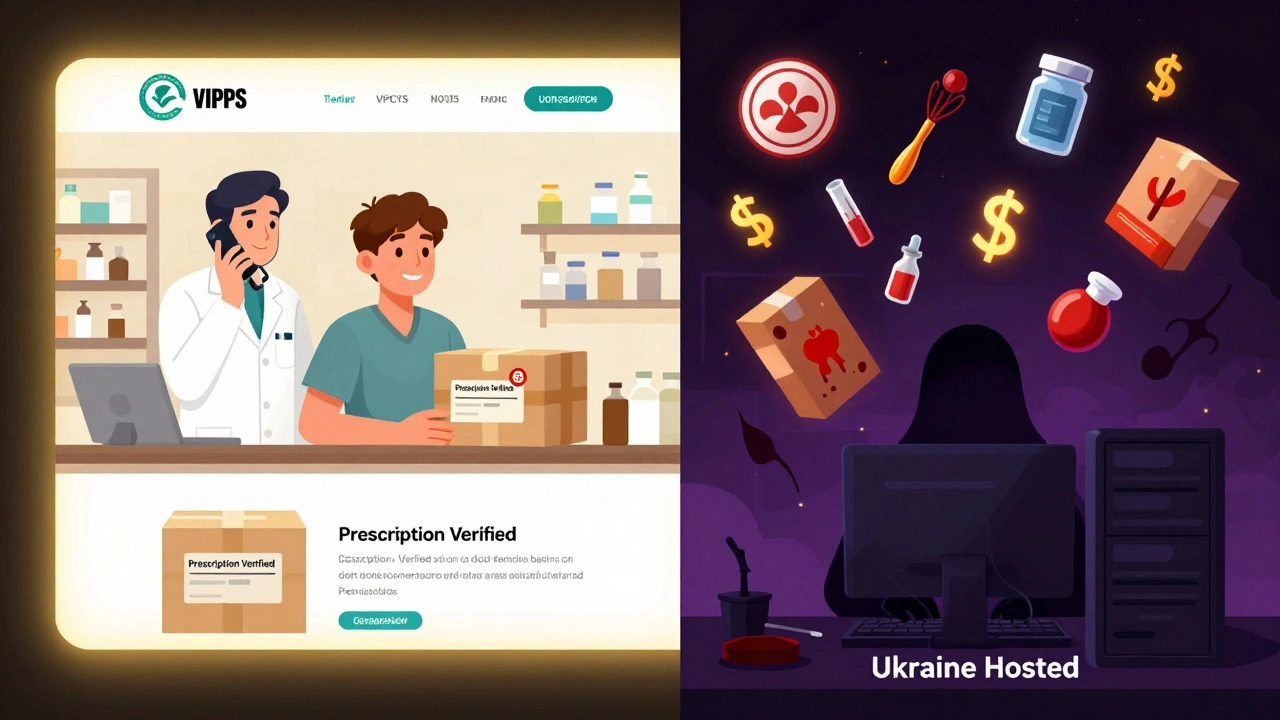
Buying medicine online sounds simple-click, pay, wait, get pills delivered. But what if those pills are fake? Or worse, dangerous? In 2025, rogue online pharmacies are more sophisticated than ever. They look real. They have professional websites, fake reviews, and even copy the logos of trusted regulators. And they’re selling everything from Viagra to insulin-without a prescription, without oversight, and without regard for your health.
What Makes an Online Pharmacy Legit?
A legitimate online pharmacy doesn’t just sell drugs. It follows the law. It protects you. In the U.S., that means being accredited by the Verified Internet Pharmacy Practice Sites (VIPPS) a program run by the National Association of Boards of Pharmacy (NABP) that verifies online pharmacies meet strict U.S. safety and licensing standards. In the UK, it means being registered with the General Pharmaceutical Council (GPhC) the official regulator for pharmacists and pharmacies in Great Britain. In the EU, it means displaying the EU Common Logo a mandatory, clickable seal that links to the pharmacy’s official authorization status.Legit sites require a valid prescription for controlled medications. They list a physical address you can verify. They have a licensed pharmacist on staff you can call or message. Their prices are fair-not suspiciously low. And they don’t spam you with emails offering "discounts" on Cialis or OxyContin.
Red Flag #1: No Prescription Required
This is the biggest, most obvious warning sign. If a website lets you buy any prescription drug-whether it’s antibiotics, insulin, blood pressure meds, or opioids-without a prescription, it’s illegal. Period.A 2023 study by the NIH found that 98.2% of rogue pharmacies don’t require prescriptions. Legitimate ones? 100% do. Even during the height of the pandemic, when telehealth was booming, no real pharmacy skipped the prescription step. If a site says, "No doctor visit needed," run. You’re not saving time-you’re risking your life.
Red Flag #2: No Physical Address or Fake One
Legit pharmacies have a real, verifiable address. Not a PO box. Not a virtual office in Delaware. A physical location where you could walk in and ask questions.Reginfo.gov’s 2021 analysis showed that 67.7% of rogue pharmacies list a location that doesn’t match their server’s actual location. You might see a "New York" address, but the website is hosted in Ukraine. Use a free tool like whois or IP location lookup to check. If the domain registration is in a country with no pharmaceutical oversight-like Russia, India, or parts of Southeast Asia-that’s a red flag.
Red Flag #3: Too-Good-to-Be-True Prices
You see a bottle of 100 tablets of Lipitor for $15? That’s not a deal. It’s a trap.Legitimate pharmacies operate with real costs: licensing, staff, storage, shipping, and compliance. A 30-day supply of brand-name Lipitor in the U.S. costs around $150-$200 without insurance. If a site offers it for $20, it’s either expired, counterfeit, or laced with something dangerous. A 2021 study found 76.4% of rogue pharmacies use deep discounts to lure customers. Don’t be fooled. You’re not saving money-you’re gambling with your health.
Red Flag #4: No Licensed Pharmacist Available
When you buy medicine online, you should be able to talk to a real pharmacist. Not a chatbot. Not a form. A licensed professional who can answer questions about side effects, interactions, or dosage.According to the FDA and NABP, this is non-negotiable. Yet, 93.1% of rogue pharmacies don’t have one. If you can’t find a phone number, email, or live chat option for a pharmacist, walk away. If they say, "Our AI assistant can help," that’s a lie. No AI can replace a licensed pharmacist’s training.
Red Flag #5: Fake Certification Logos
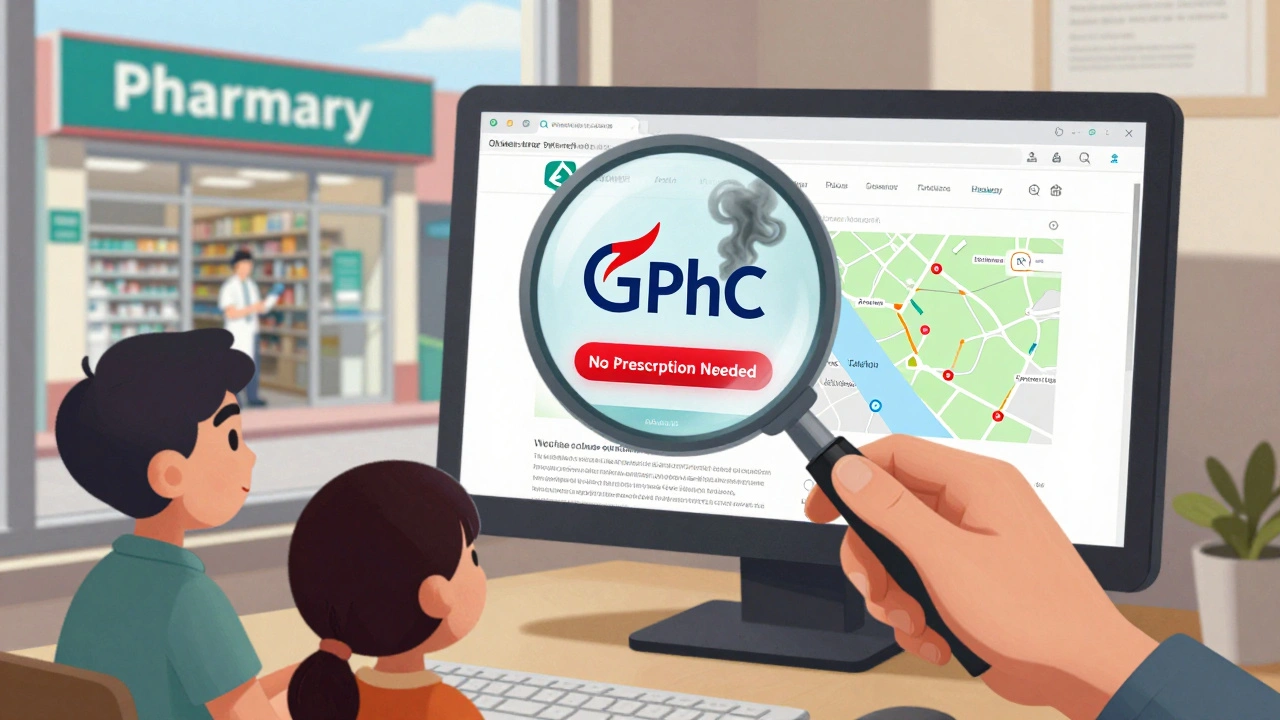
You see a VIPPS seal? A LegitScript badge? A GPhC logo? Click it. If it doesn’t take you to the official verification page, it’s fake.A 2023 JMIR study found that 41.8% of rogue pharmacies use counterfeit seals. They copy the design, the colors, even the font. But they don’t link to the real database. For example, clicking a fake VIPPS logo might take you to a page that says, "This site is verified," but it’s hosted on the same server as the pharmacy. Real VIPPS links go to nabp.pharmacy. Real GPhC links go to gphc.gov.uk. Always check the URL.
Red Flag #6: No Contact Information
A legitimate pharmacy gives you multiple ways to reach them: phone, email, physical address. A rogue one? They hide. Often, the "Contact Us" page is just a form with no response. Sometimes, the phone number is disconnected. Sometimes, the email bounces.According to the same study, 89% of rogue sites lack verifiable contact info. If you can’t find a way to speak to a human-especially a pharmacist-don’t buy. You need someone to call if you have a reaction. No contact = no safety net.
Red Flag #7: Shipping from Outside Your Country
A U.S.-based pharmacy should ship from within the U.S. A UK pharmacy should ship from the UK or EU. If you’re in New Zealand and the pharmacy ships from Nigeria, that’s a problem.84.6% of rogue pharmacies operate internationally to avoid regulation. They ship worldwide because they don’t care about your country’s laws. Worse, they bypass customs inspections. Your package might be intercepted, but if it gets through, you have no legal recourse if it’s fake or harmful. The FDA has documented cases of patients getting pills with no active ingredient-or worse, rat poison, fentanyl, or lead.
Red Flag #8: Unsolicited Emails or Pop-Ups
If you’ve never visited a pharmacy site but suddenly get an email saying, "Your prescription is ready!"-it’s a scam.Legit pharmacies don’t cold-call or spam. They don’t buy lists of email addresses. Rogue ones do. They target people searching for Viagra, weight loss pills, or anxiety meds. A 2021 Reginfo.gov report found 68.9% of rogue pharmacies use spam to drive traffic. If you didn’t ask for it, don’t click. Delete it. Block it. Report it.
Red Flag #9: No SSL or Fake Security
You see the padlock in your browser? Good. But that doesn’t mean the site is safe. SSL encryption just means your payment info is sent securely. It doesn’t mean the medicine is real.78% of rogue pharmacies use SSL-but they still sell fake drugs. The padlock is just a distraction. Look for the real signs: prescription requirement, pharmacist contact, physical address. Don’t trust the padlock alone.
Red Flag #10: No Transparency About Where Drugs Come From
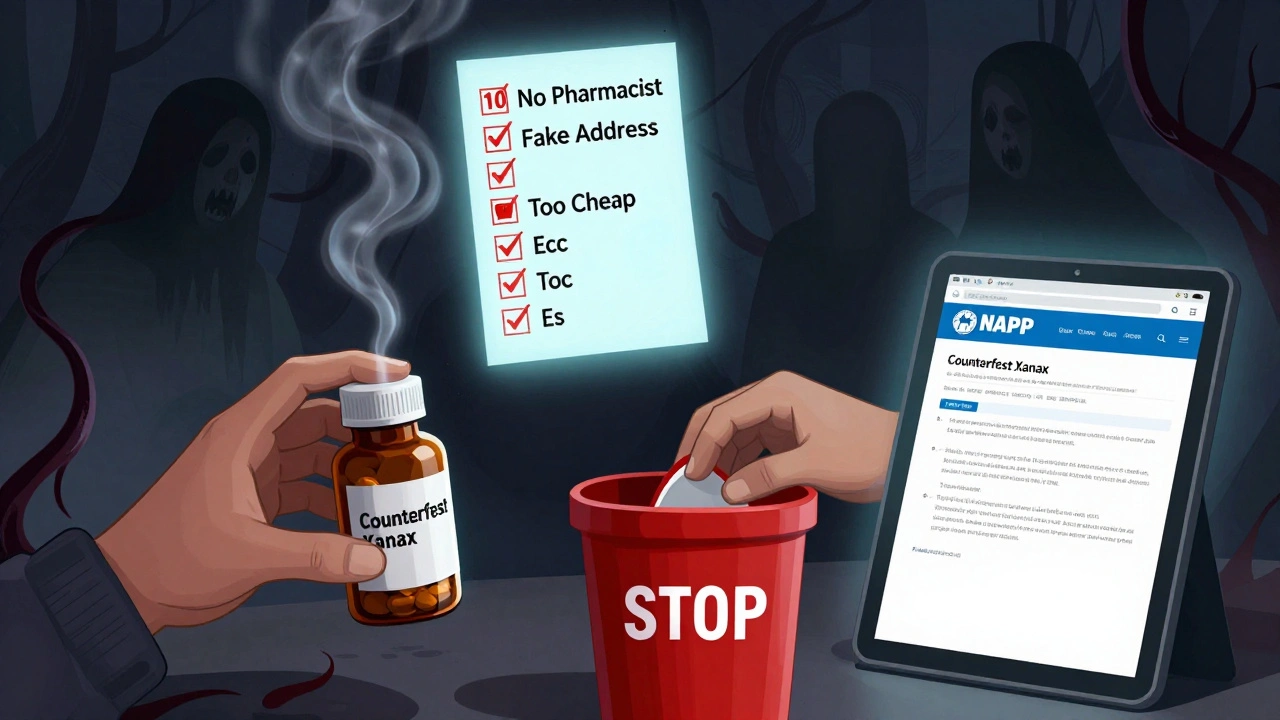
Legit pharmacies disclose their suppliers. They source from licensed distributors. Rogue ones? They buy from unknown wholesalers in China, India, or Eastern Europe. Sometimes, they even repackage expired meds from landfills.The FDA has found counterfeit pills with wrong dosages-10 times the intended amount of oxycodone, or none at all. One patient in Ohio died after taking a fake Xanax that contained fentanyl. That’s not a statistic. That’s a real person. And it happens every week.
How to Verify a Pharmacy for Real
Here’s what to do before you click "Buy Now":- Check the NABP VIPPS a U.S.-based verification program for online pharmacies database: nabp.pharmacy/vipps
- In the UK, search the GPhC Register official list of licensed UK pharmacies by name or postcode
- In the EU, look for the EU Common Logo mandatory online pharmacy seal linked to national regulators and click it
- Call the pharmacy. Ask to speak to a pharmacist. If they hesitate, hang up.
- Google the pharmacy’s address. If it’s a warehouse, a residential home, or doesn’t exist-walk away.
What Happens If You Buy From a Rogue Pharmacy?
You might get nothing. Or you might get pills that don’t work. Or worse-you might get something that kills you.The FDA has documented cases where fake medications contained:
- Paint thinner instead of insulin
- Asbestos in weight-loss pills
- Fentanyl in counterfeit Xanax
- Antifreeze in antibiotics
And if you get sick? Good luck getting help. Rogue pharmacies vanish. They use cryptocurrency. They don’t have customer service. You’re out of money, out of medicine, and out of options.
What to Do If You’ve Already Bought From a Rogue Site
Stop taking the pills. Immediately. Then:- Call your doctor or go to the ER if you feel unwell.
- Report the site to your country’s health regulator: FDA (U.S.), MHRA (UK), or Medsafe (New Zealand).
- Report it to the NABP’s Rogue Rx program.
- Don’t pay with credit card if you can avoid it-use a service that offers chargebacks.
- Warn others. Post about it on community forums or social media.
Final Thought: Your Health Isn’t a Bargain
Online pharmacies can be safe. But only if you know how to spot the difference. Don’t let convenience blind you. Don’t let a low price trick you. And never, ever skip the prescription step.Real medicine comes with real responsibility. If a site doesn’t respect that, it doesn’t deserve your trust.

I used to buy supplements from a site that looked legit until my blood pressure spiked after a bottle of "premium magnesium." Turned out it had trace lead. Never again. Always check the VIPPS seal-even if the site looks professional, if it doesn't link to NABP, it's a gamble with your organs.
It is imperative to underscore that the proliferation of unregulated pharmaceutical e-commerce platforms constitutes a dire public health emergency. The absence of statutory oversight permits the dissemination of substances laced with neurotoxic compounds, thereby placing the citizenry at unacceptable risk. One must exercise due diligence by verifying regulatory accreditation through official channels, as the consequences of negligence are not merely financial, but existential.
people act like fake meds are some new thing but my grandpa got fake viagra in 2008 and it gave him a heart attack. we thought it was just bad luck. turns out half the "pharmacies" back then were just dudes in basements. nothing's changed, just the websites look nicer now.
Thank you for this vital information. Many individuals, particularly in developing nations, rely on online pharmacies due to limited access to healthcare. It is essential that awareness campaigns be expanded to include multilingual resources and local community outreach to prevent tragic outcomes. Your article serves as a beacon of clarity in a landscape clouded by deception.
Let’s be real-everything’s controlled anyway. The FDA? The NABP? All of it’s a front. The real pharmacies are owned by the same corporations that make the fake ones. You think they care if you die from fake insulin? They just want you hooked on their overpriced brand-name stuff. The whole system’s rigged. Don’t trust any of it.
Wait-so you’re saying I can’t just buy my Adderall from a site that says "No Prescription Needed"? That’s basically the whole point of the internet, isn’t it? Convenience. If I’m willing to risk it, why does it matter what some government agency thinks?
Red flag #1: No prescription. That's it. Everything else is noise.
why do we even need pharmacies at all? if you know your body and the dosage, why not just order from a guy on telegram? the system is built to keep you dependent. real freedom is self-reliance.
Why are we trusting some American agency to tell us what’s safe? The FDA’s been corrupt since the 80s. Meanwhile, India and Thailand have been making life-saving meds for decades. You think your $200 Lipitor is better than the $15 version from a pharmacy with a .in domain? You’re being played.
I’ve spent the last three years researching online pharmacies after my mom got sick from a counterfeit blood thinner she bought from a site that looked exactly like CVS’s. I contacted every regulatory body I could find, dug into domain registration records, called every listed phone number-even ones that bounced-and talked to pharmacists in five countries. The truth is, it’s not just about the logos or the address-it’s about the culture of the site. Legit ones have a tone of care. Rogue ones are transactional, rushed, pushy. You can feel it. And if you’re ever unsure? Call a real pharmacist at a local pharmacy and ask them to look up the site. They’ve seen it all. I wish someone had told me that before I lost three months of my mom’s life.
Just ordered my thyroid med from a site that had the EU logo. Clicked it-took me straight to the Dutch health registry. Paid $30 for a 90-day supply. Took 10 days to arrive. No issues. Sometimes the internet works.