
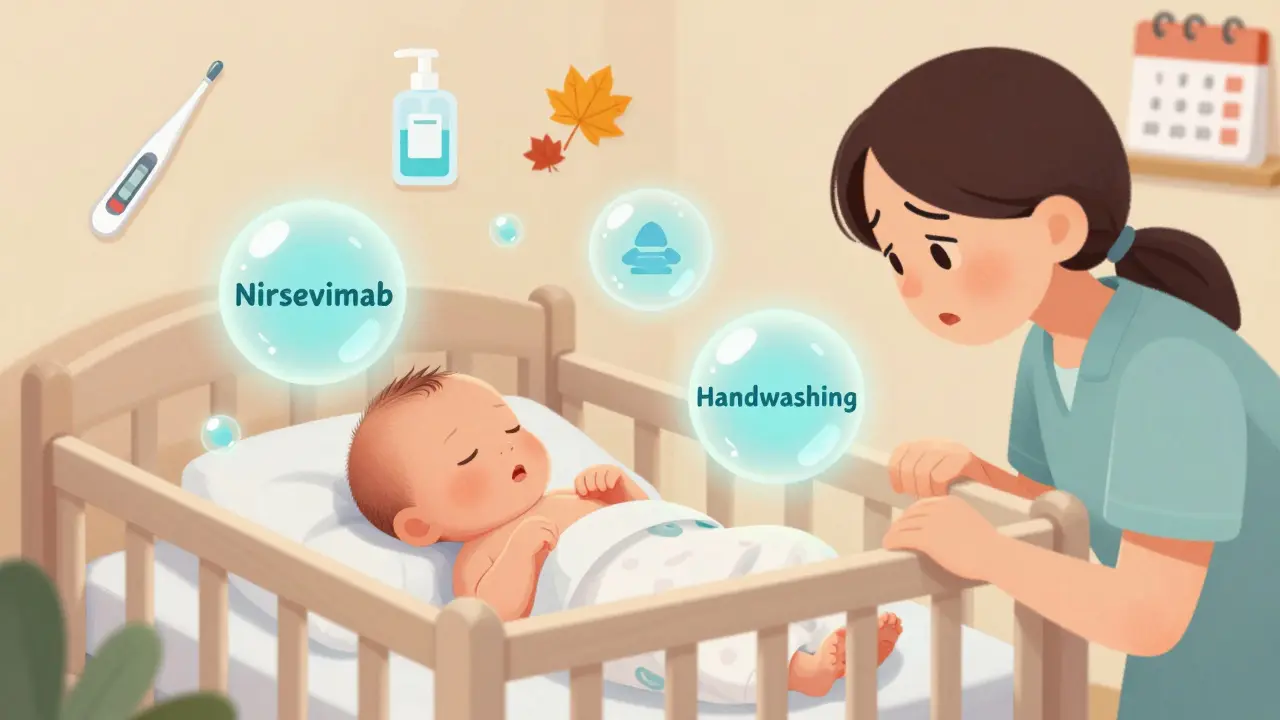
Every year, as the weather turns colder, a quiet but powerful virus starts to spread - RSV. It doesn’t always make headlines, but it’s behind most cases of bronchiolitis in babies and a growing number of hospitalizations in older adults. For parents of newborns or adult children caring for aging parents, understanding RSV isn’t just helpful - it can be lifesaving.
What Is RSV, Really?
RSV stands for Respiratory Syncytial Virus. It’s not some rare bug - it’s one of the most common viruses on the planet. Nearly every child gets it by age 2. Most adults get it at least once as an adult, too. It’s not just a cold. While it starts with a runny nose and cough, it can quickly move into the lungs, especially in the very young and the very old.
First identified in 1956, RSV has been around longer than we thought. But only in the last decade have we fully grasped how dangerous it can be. In 2023, the CDC confirmed RSV causes more than 80,000 hospitalizations in U.S. children under 5 each year - and about 160,000 in adults over 65. Globally, it kills over 100,000 children under 5 annually, mostly in places without access to oxygen or intensive care.
Why Infants Are at Highest Risk
Babies under 6 months are the most vulnerable. Their airways are tiny. Their immune systems haven’t learned how to fight this virus yet. When RSV hits, it can cause bronchiolitis - inflammation of the small airways in the lungs - or pneumonia.
Here’s what parents should watch for:
- Fast, shallow breathing - more than 60 breaths per minute
- Chest pulling in with each breath (retractions)
- Noisy breathing or wheezing
- Poor feeding - refusing bottles or breastfeeding
- Lethargy - unusually sleepy, hard to wake up
One in 30 infants under 6 months ends up in the hospital with RSV. Premature babies, those born before 29 weeks, are 3 to 5 times more likely to need intensive care. Babies with heart or lung conditions face even higher risks - up to 20 times more likely to be hospitalized.
And it’s not just the infection itself. Kids who get severe RSV before age 2 are 4 times more likely to develop asthma by age 7. Their lung function can stay weaker into their teens. This isn’t a one-time illness - it can leave a mark.
Older Adults Don’t Get a Pass
Many think RSV is just a kids’ virus. It’s not. In adults over 65, RSV causes more hospitalizations than flu in some years. The CDC estimates 6,000 to 14,000 deaths annually in this group.
Why is it so bad for older adults? Their immune systems weaken with age. Chronic conditions like COPD or heart failure make things worse. One study found that 78% of hospitalized seniors had their existing heart or lung disease made significantly worse by RSV.
Signs in older adults are often mistaken for a bad cold:
- Worsening shortness of breath
- New or increased cough
- Fever (though not always present)
- Confusion or dizziness
- Loss of appetite or energy
Seniors over 75 stay in the hospital nearly 3 times longer than younger adults with RSV. One in three ends up in the ICU. And after discharge, 42% can’t do simple tasks like bathing or dressing without help. For many, this is the beginning of a long decline.
How RSV Spreads - And How to Stop It
RSV is contagious. Really contagious. It spreads through droplets when someone coughs or sneezes. But it also lives on surfaces - doorknobs, toys, phones - for up to 10 hours. You can get it by touching a contaminated surface and then your face.
People are contagious for 3 to 8 days. Babies and people with weak immune systems can spread it for weeks. That means even if someone seems better, they might still be shedding the virus.
Here’s what actually works to stop transmission:
- Wash hands with soap for 20 seconds - that’s the time it takes to sing "Happy Birthday" twice. This cuts transmission by up to 50%.
- Avoid kissing babies if you have a cold, even a mild one.
- Use EPA-registered disinfectants on high-touch surfaces (doorknobs, light switches, remote controls). They reduce surface virus by over 90%.
- Keep sick people away from infants and elderly relatives. If you’re coughing, stay home.
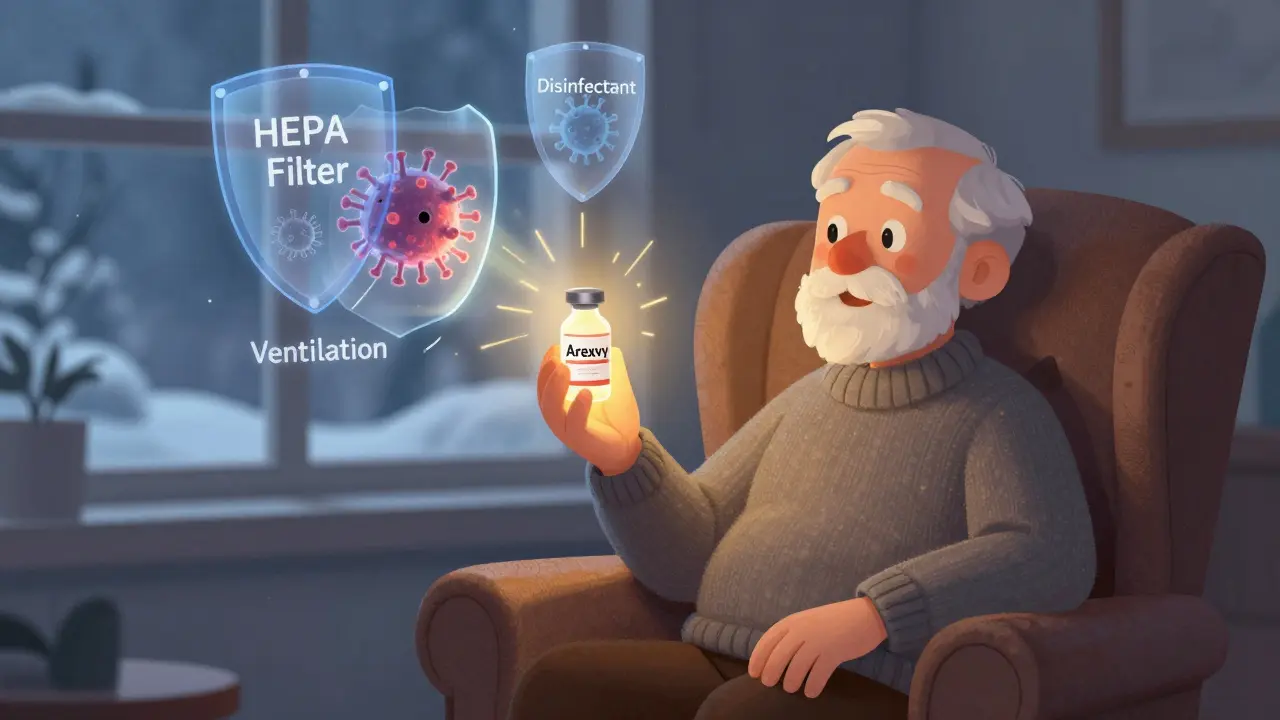
- Improve ventilation. Open windows, use fans, or run air purifiers with HEPA filters.
The New Tools: Vaccines and Antibodies
For decades, the only prevention for high-risk babies was a monthly shot called palivizumab. It helped, but it was expensive and required five doses over the RSV season.
In 2023, everything changed.
For babies: The FDA approved nirsevimab (Beyfortus™), a single-dose injection given before the RSV season. It protects for about 5 months - long enough to cover the worst months. Clinical trials showed it cuts hospitalizations by 75%. In 2023, the CDC recommended it for all infants under 8 months entering their first RSV season.
For older adults: Two vaccines were approved in 2023:
- GSK’s Arexvy - 82.6% effective at preventing lower respiratory disease in adults 60+
- Pfizer’s Abrysvo - 66.7% effective in the same group
Both are single-dose shots given in the arm. The CDC now recommends shared decision-making: talk with your doctor if you’re 60 or older, especially if you have heart or lung disease.
And there’s more: Abrysvo is also approved for pregnant people between 32 and 36 weeks. When given then, it passes protection to the baby before birth - cutting severe RSV by 81.8% in the first 6 months of life.
What’s Still Missing
These tools are groundbreaking. But they’re not everywhere.
In the U.S., access is improving - but not universal. In low-income countries, less than 1% of at-risk infants get any protection. The cost of these new treatments is still a barrier. Arexvy lists for $295 in the U.S. - far beyond what most families in rural Kenya or Papua New Guinea can afford.
Even here, many doctors aren’t yet familiar with the new guidelines. Parents might not know about nirsevimab. Seniors might think RSV isn’t serious for them. That’s changing - slowly.
What You Can Do Right Now
You don’t need a vaccine or a prescription to protect someone you love. Here’s your action list:
- If you’re pregnant and 32-36 weeks along - ask your OB about Abrysvo.
- If you have a baby under 8 months - ask their pediatrician about nirsevimab. It’s given once, before the season starts.
- If you’re over 60 - talk to your doctor about the RSV vaccine. Especially if you have asthma, COPD, or heart failure.
- Wash your hands. Always. Before touching a baby or elderly person.
- Disinfect surfaces weekly - especially during fall and winter.
- Stay home if you’re sick. Even if it’s just a sniffle.
RSV isn’t going away. But we now have the tools to stop it from killing. The next step isn’t waiting for science - it’s using what we already have.
Can RSV be treated with antibiotics?
No. RSV is a virus, so antibiotics won’t help. Treatment is supportive - oxygen, fluids, and sometimes hospitalization. Antibiotics are only used if a bacterial infection develops on top of RSV, like an ear infection or pneumonia.
Is RSV only a winter problem?
In temperate places like New Zealand, the U.S., or Europe, RSV usually peaks between December and February. But in tropical regions, it can circulate year-round or peak during rainy seasons. Always be cautious during colder months - and don’t ignore symptoms just because it’s not "flu season."
Can you get RSV more than once?
Yes. You can get RSV multiple times in your life. The first infection is usually the worst. Later ones tend to be milder, like a cold. But in older adults or people with weakened immune systems, even repeat infections can be serious.
How do I know if my baby needs emergency care?
Call 911 or go to the ER if your baby has blue or gray lips or fingernails, is breathing faster than 60 breaths per minute, can’t drink or keep fluids down, is unusually limp or hard to wake, or has sunken eyes or a dry diaper for 12+ hours. These are signs of severe dehydration or oxygen lack.
Do masks help prevent RSV?
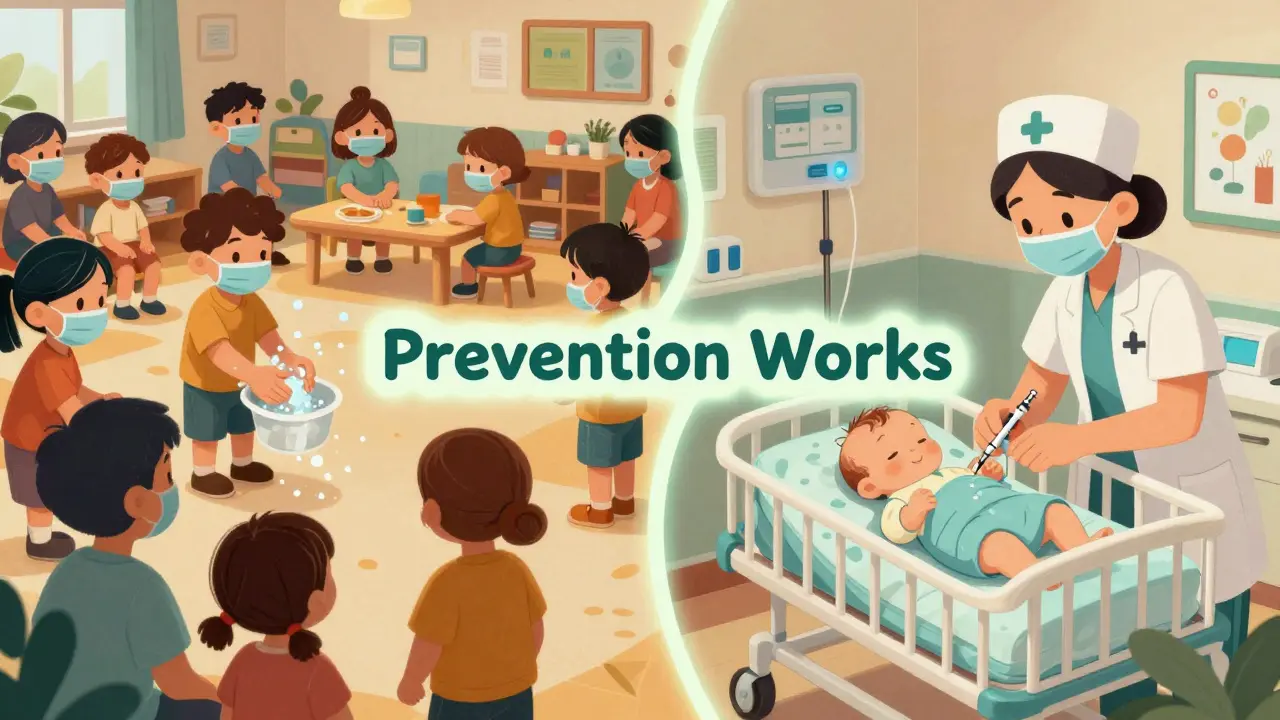
Yes - especially in crowded places or around high-risk people. Masks reduce droplet spread. They’re not 100%, but they’re better than nothing. For babies, it’s safer to limit visitors than to rely on masks alone.
RSV is wild man. My cousin’s kid got it last winter and we thought it was just a cold. Then she started breathing like a broken bellows. Took her to the ER at 3am. They said it was RSV. Never heard of it before. Now I wash my hands like I’m about to perform surgery. 🤒
The article mentions nirsevimab as a breakthrough. But let’s be real - most pediatricians still don’t know how to administer it. I work in a clinic in rural Ohio. We got our first shipment in March. Only 12 babies got it. The rest? Parents didn’t even know it existed. This isn’t science - it’s bureaucracy with a vaccine label. And don’t get me started on the cost. $295? Try $2950 if you’re uninsured. This is a profit-driven facade dressed as public health.
Yessss! Finally some real info! 🙌 I got the RSV shot for my 72-year-old dad last month. He’s got COPD. We’ve been so scared every fall. Now? He’s actually excited to go out and play chess at the senior center. I cried. Not because I’m emotional - because this vaccine is a freaking miracle. 💪❤️
Just want to add - handwashing isn’t just about soap. It’s about timing. 20 seconds? Nah. Do it until you finish humming "Happy Birthday" twice AND the chorus of "Sweet Caroline". That’s 30 seconds. Better. Also, disinfecting remotes? YES. Those things are germ jungles. I wiped mine yesterday. Felt like a warrior.
You know what’s worse than RSV? People who think vaccines are enough. I live in Delhi. My uncle’s grandson got RSV last year. No access to oxygen, no ICU, no vaccine. He died in a hallway. The article talks about "global impact" like it’s a statistic. But for us? It’s a funeral. No one in the West even knows how bad it is. You think your kid’s safe? You’re just lucky. Luck isn’t policy.
I read this whole thing. Honestly? Too long. And why are they promoting vaccines like it’s a cult? I’ve had RSV three times. Never been hospitalized. My kids? Fine. Stop fearmongering. Maybe we just need to stop treating every sniffle like a plague.
The human condition is defined by vulnerability. RSV is merely a mirror reflecting our biological fragility. We build hospitals. We invent antibodies. We chant hygiene mantras. But in the end, we are dust. The virus does not care about your insurance. It does not care if you are rich or poor. It simply is. And we? We are temporary. The real question is not how to prevent RSV - but how to accept impermanence. We are all just waiting for the next breath to be our last.
In India, we have a word for this - "bhookh". Hunger. Not just for food. For care. For attention. For medicine. You talk about vaccines in the US like they’re candy. Here? We fight for a single vial. My cousin’s daughter got RSV. No oxygen. No hospital. She died on the floor. Your article says "100,000 children die". But you don’t say their names. You don’t say their mothers cried themselves to sleep. You don’t say it was because of a system that forgot them.
I’m an ER nurse. Last week, a 3-month-old came in with RSV. Mom was crying. Dad was on FaceTime with his mom who’s in the ICU with RSV. Three generations. One virus. We gave oxygen, fluids, kept them warm. No meds. Just care. And you know what? That’s enough. The science is cool. But the real hero? The nurse who stayed 3 hours past shift because the baby wouldn’t stop crying. Not the vaccine. The human.
Let’s be honest - RSV isn’t a threat. It’s a marketing ploy. Big Pharma needed a new product. So they rebranded the common cold as a silent killer. Vaccines? Sure. But who’s really profiting? Look at the patents. Look at the lobbying. Look at the CDC funding shifts. This isn’t science. It’s a financial engine. And you’re all just feeding it with your fear.
I’m 34 weeks pregnant. Just got Abrysvo yesterday. My OB said it’s one of the best things I can do for my baby. I’m not scared anymore. I’m hopeful. And I’m telling everyone I know. If you’re pregnant - ask. If you’re over 60 - ask. If you have a grandbaby - wash your hands. Then wash them again. And then again. Because love? It’s not just a feeling. It’s a habit. And this habit? It saves lives.