
Serotonin Syndrome Risk Checker
Check Your Medication Safety
This tool checks if your current medications are safe to use with EMSAM and calculates required washout periods.
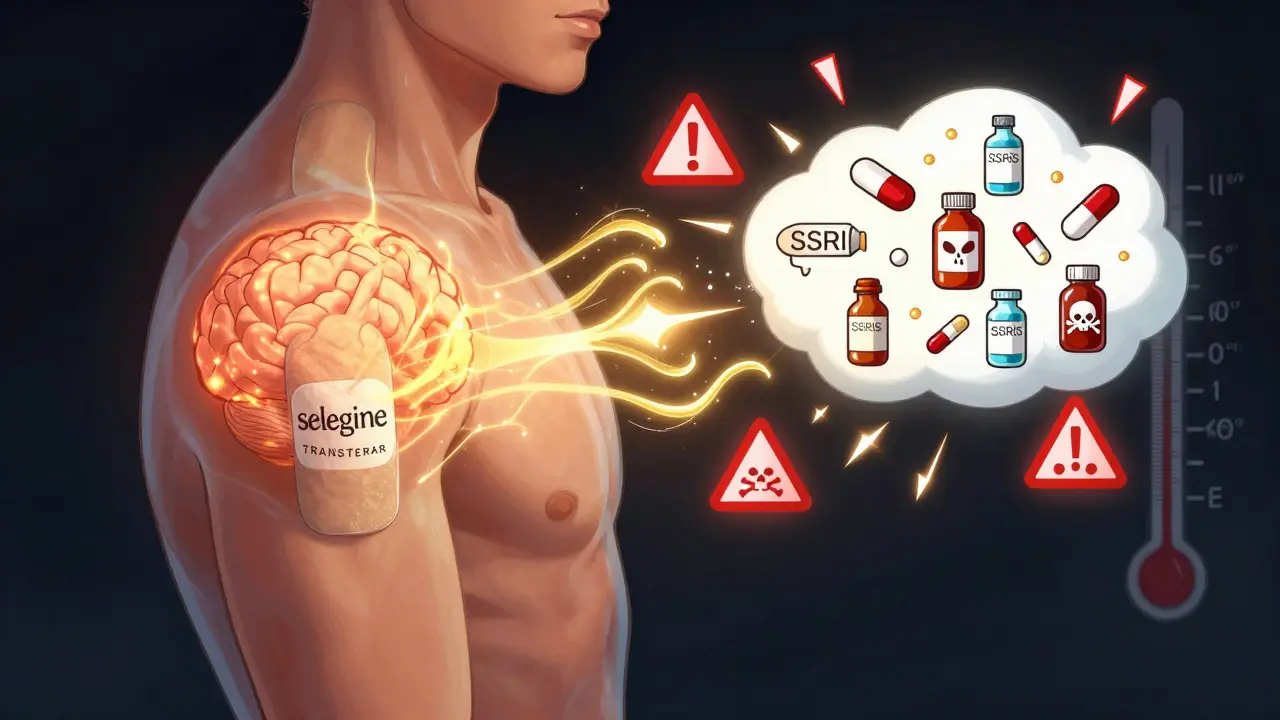
Selegiline transdermal, sold under the brand name EMSAM, is one of the few antidepressants that works differently from the rest. Instead of being swallowed as a pill, it’s applied as a patch to the skin. This might sound like a small change, but it changes everything about how the drug behaves in your body-and how dangerous it can be if mixed with other medications.
At its core, selegiline transdermal stops your body from breaking down key brain chemicals like serotonin, norepinephrine, and dopamine. That’s why it helps with depression. But here’s the catch: if you’re taking another drug that also boosts serotonin-like an SSRI, SNRI, or even a common cold medicine-you can push serotonin levels too high. That’s not just a side effect. It’s a medical emergency called serotonin syndrome.
What Is Serotonin Syndrome and Why Does It Matter?
Serotonin syndrome isn’t rare. It’s underreported, but real. Symptoms can show up in hours after mixing selegiline with a serotonergic drug. You might feel agitated, confused, or hallucinate. Your heart rate could spike. Your muscles may lock up. You could develop a fever over 104°F. In severe cases, you’ll need ICU care. Three out of twelve documented cases of serotonin syndrome from MAOI combinations in a 2015 study involved EMSAM users.
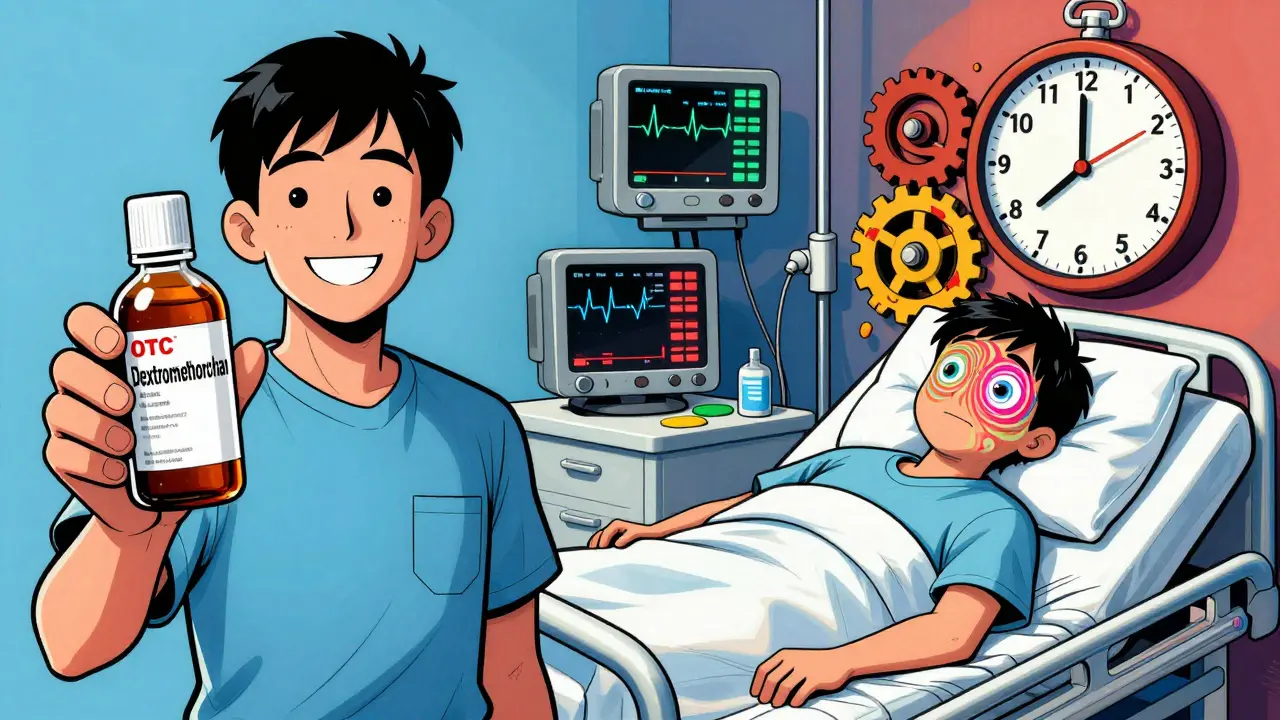
The scary part? Many people don’t realize they’re at risk. Over-the-counter cough syrups with dextromethorphan, migraine meds like triptans, even St. John’s Wort supplements-all can trigger this reaction. A 2023 survey on a mental health forum found that 68% of EMSAM users were never warned about these hidden dangers. One patient developed full-blown serotonin syndrome after taking an OTC cold pill while on a 6 mg EMSAM patch. That’s the dose that’s often wrongly called "safe." It’s not.
Why the Patch Isn’t a Free Pass
When EMSAM came out, the big selling point was: "No dietary restrictions." Unlike older oral MAOIs, the 6 mg patch doesn’t block MAO-A in your gut, so you don’t need to avoid aged cheese or cured meats. But that’s where the safety ends. Your brain still gets hit with MAO-A inhibition at all doses. And your brain is where serotonin syndrome happens.
At 6 mg/day, selegiline transdermal still inhibits about 70% of brain MAO-A. At 9 mg and 12 mg, it’s nearly complete. That means even at the lowest dose, combining EMSAM with an SSRI like sertraline or fluoxetine isn’t a gamble-it’s a guaranteed risk. The FDA label is crystal clear: don’t do it. Period.
Washout Periods: The Only Safe Way to Switch
If you’re switching from an SSRI to EMSAM-or vice versa-you can’t just stop one and start the other. You have to wait. And the wait isn’t short.
- After stopping EMSAM, wait at least 14 days before starting any SSRI, SNRI, or most other serotonergic drugs.
- If you were on fluoxetine (Prozac), wait 5 weeks after stopping it before starting EMSAM. Fluoxetine sticks around in your system longer than any other SSRI.
- When switching from other serotonergic drugs to EMSAM, wait 2 weeks after stopping them. Again, fluoxetine? 5 weeks.
These aren’t suggestions. They’re based on how long it takes your body to make new monoamine oxidase enzymes. Selegiline permanently blocks MAO. Your body can’t just undo it. You need to grow new enzymes-and that takes time. A 2023 study in the American Journal of Psychiatry found that full MAO-A recovery might take up to 28 days, not 14. That’s why some experts now recommend extending washout periods beyond FDA guidelines.
What Medications Are Absolutely Off-Limits?
Here’s a hard list: don’t mix EMSAM with any of these:
- SSRIs: fluoxetine, sertraline, escitalopram, paroxetine
- SNRIs: venlafaxine, duloxetine, desvenlafaxine
- Tricyclic antidepressants: amitriptyline, nortriptyline
- Triptans: sumatriptan, rizatriptan (for migraines)
- Tramadol (painkiller)
- Dextromethorphan (cough suppressant in Robitussin, NyQuil, etc.)
- Buspirone (anxiety med)
- Tryptophan supplements
- St. John’s Wort
- Linezolid (antibiotic)
- Intravenous methylene blue
Even short-term use can be deadly. A 2021 case report in Anesthesia & Analgesia showed serotonin syndrome after a single dose of ondansetron (Zofran), given for nausea, to a patient on a 9 mg EMSAM patch. That’s a drug most people think is harmless. It’s not when paired with EMSAM.
How to Stay Safe: A Practical Checklist
If you’re on EMSAM-or thinking about it-here’s what you need to do:
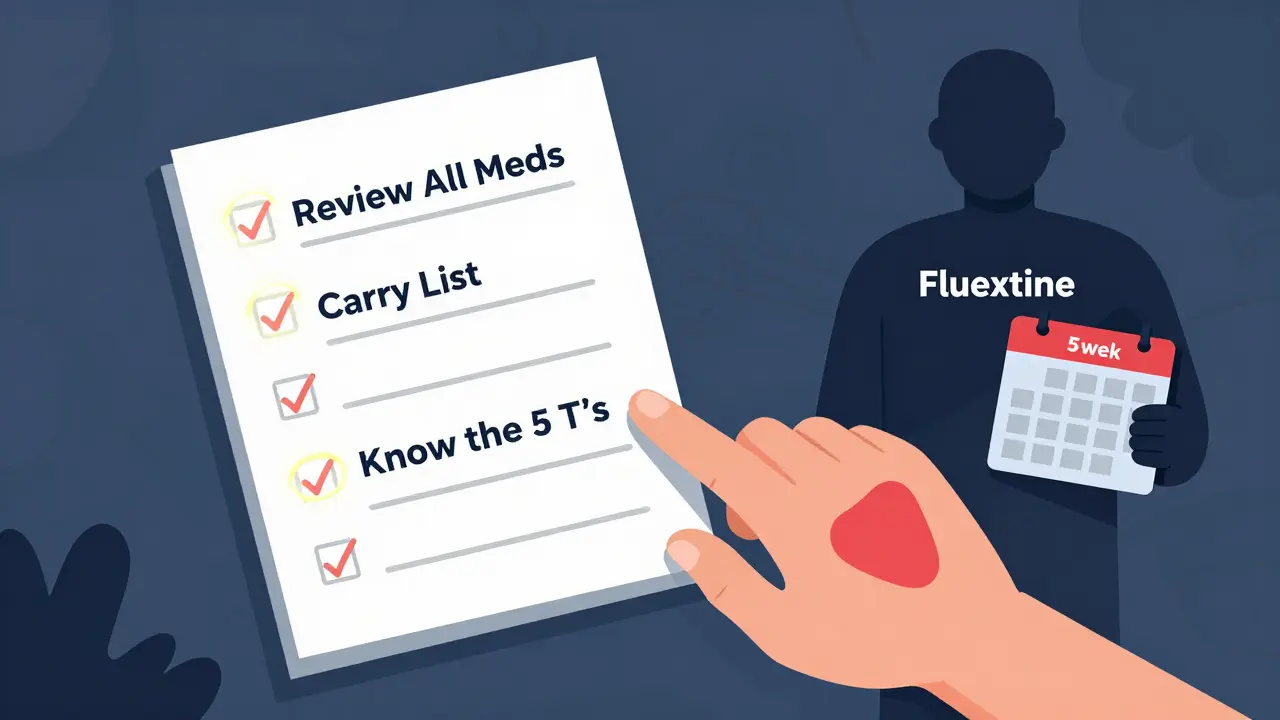
- Review every medication-prescription, OTC, herbal, or supplement-with your doctor and pharmacist. Don’t assume they know EMSAM’s risks.
- Carry a list of all your meds in your wallet or phone. Show it to any new provider, even for a sprained ankle.
- Use your EHR-but don’t trust it. Only 43% of electronic health records catch all EMSAM interactions. Double-check manually.
- Know the 5 T’s: Timing (when was your last dose?), Types (what meds are you on?), Testing (watch for symptoms), Transition (plan ahead), Telephone (keep your prescriber’s number handy).
- Never start a new drug without asking: "Is this safe with EMSAM?" If the answer isn’t a clear "yes" with evidence, assume it’s no.
What About the Future?
Mylan Pharmaceuticals is working on a genetic test to predict who’s at higher risk for MAOI reactions. Early data suggests some people naturally produce more or less MAO enzyme, which could change how long they need to wait between drugs. That test is expected to hit the market in 2024.
Right now, EMSAM is used mostly by people who’ve tried at least three other antidepressants and failed. That’s because the risks are real. But for those who respond to it, the benefits can be life-changing. The key isn’t avoiding EMSAM-it’s managing it with precision.
The FDA updated its warning in 2022 to say plainly: "No dietary restrictions does not mean no drug interaction risks." That’s the message every patient needs to hear. EMSAM isn’t safer. It’s just different. And different doesn’t mean harmless.
Frequently Asked Questions
Can I use EMSAM with a low dose of an SSRI if I’ve been off it for a week?
No. Even if you stopped an SSRI a week ago, the risk of serotonin syndrome remains high. The FDA and recent studies recommend a minimum 14-day washout after stopping EMSAM before starting any SSRI or SNRI. For fluoxetine, wait five weeks. Clinical studies that used a one-week gap were not designed to prove safety-they were just the shortest interval tested. That doesn’t mean it’s safe.
Is the 6 mg EMSAM patch really safe for drug interactions?
No. The 6 mg patch avoids the "cheese effect" because it doesn’t block MAO-A in your gut, but it still inhibits MAO-A in your brain. That’s where serotonin syndrome happens. Studies show 70% brain MAO-A inhibition at this dose. Mixing it with serotonergic drugs-even mild ones like dextromethorphan-can trigger a dangerous reaction. The idea that the 6 mg patch is "safe" is a dangerous myth.
What should I do if I accidentally take a serotonergic drug while on EMSAM?
Stop the new drug immediately and seek medical help. Do not wait for symptoms. Call your prescriber or go to the ER. Symptoms can develop within hours. Tell the medical team you’re on EMSAM and list every medication you’ve taken in the last 72 hours. Serotonin syndrome can escalate fast. Early treatment with benzodiazepines and supportive care can prevent ICU admission.
Can I take NSAIDs like ibuprofen or acetaminophen with EMSAM?
Yes. NSAIDs like ibuprofen and acetaminophen (Tylenol) are generally safe with EMSAM. They don’t affect serotonin levels. However, avoid combination cold and flu products that include dextromethorphan or pseudoephedrine. Always check the active ingredients. If in doubt, ask your pharmacist.
How long does selegiline stay in my system after I stop the patch?
The drug itself clears in hours-its half-life is only 1.4 hours. But the inhibition of MAO enzymes is permanent. Your body must make new enzymes, which takes about two weeks. Some newer research suggests full recovery, especially of MAO-A, may take up to four weeks. That’s why washout periods are so long. It’s not about the drug being in your blood-it’s about your brain still being unable to break down serotonin.
Are there any antidepressants that are safe to combine with EMSAM?
No approved antidepressants are considered safe to combine with EMSAM. Even bupropion (Wellbutrin), which doesn’t affect serotonin, has not been formally studied in combination with EMSAM. The only safe approach is to use EMSAM alone or switch completely to another class with full washout periods. Never combine it with another antidepressant unless under strict research supervision.
Final Takeaway
Selegiline transdermal is a powerful tool for treatment-resistant depression. But it’s not a casual medication. It requires discipline, awareness, and communication. The patch doesn’t make it safe-it makes it different. And in psychiatry, different often means more dangerous if you don’t treat it with the right respect.
If you’re on EMSAM, treat every new medication like a potential landmine. If you’re prescribing it, assume your patient doesn’t know the risks-and make sure they learn them before the patch ever touches their skin.

This is life-saving info 😊
Let’s be real - the FDA guidelines are outdated. That 14-day washout? Barely scratches the surface. A 2023 study in the American Journal of Psychiatry showed MAO-A enzyme recovery in some patients took 28 days, and that’s the *minimum*. People think patches are "safe" because they don’t need to avoid cheese? That’s like saying a bulletproof vest makes you invincible. You’re still vulnerable to the right kind of shot. And dextromethorphan? It’s in every damn cold medicine. Your kid’s cough syrup could kill you. This isn’t theoretical. It’s happening in living rooms across America while doctors scroll through their phones thinking "it’s just a patch."
I’ve been on EMSAM for 18 months. Been clean on everything except Tylenol and ibuprofen. Had a doctor try to prescribe me tramadol for a herniated disc - I had to show him the FDA warning and the 2021 Anesthesia & Analgesia case report. He apologized. I carry a printed list of banned meds in my wallet. I don’t care if it looks paranoid. I’ve seen serotonin syndrome up close. It’s not "a bad day." It’s your body turning on itself. If you’re on this patch, treat every new pill like a grenade with the pin pulled.
Wait, so St. John’s Wort is dangerous? I’ve been taking it for years with my patch. I thought it was natural so it was safe. 😅
Thank you for writing this with such clarity. As someone from the UK, I’ve seen too many patients assume "transdermal" means "low risk." It’s a cultural blind spot - we’re conditioned to trust medical devices over pills, but this is the opposite. The real tragedy is that many GPs still don’t know the details. Maybe we need a simple infographic for pharmacies - something like "EMSAM: Patch ≠ Safe" with the top 5 dangerous OTCs listed. Small changes save lives.
Oh please. This is just pharmaceutical fearmongering. You people act like EMSAM is a nuclear bomb. I’ve been on the 6mg patch for two years. I took a cold medicine with dextro once - no issues. Your so-called "studies" are funded by Big Pharma trying to sell you newer, pricier antidepressants. Why are you so afraid of natural remedies? St. John’s Wort has been used for centuries. If your body can’t handle it, maybe you’re just weak. Stop being so dramatic. People die from aspirin, but nobody bans it. Hypocrisy.
Wow. Just… wow. This post reads like a clinical manual written by someone who’s never met a human being. You’re treating a psychiatric treatment like it’s a bomb squad protocol. People aren’t robots with enzyme timers. They’re complex, adaptive organisms. And you’re scaring them into paralysis with 14-day waitlists and lists of banned substances like it’s a survival guide for Mars. Do you really think the average person can live like this? With a printed list? A wallet card? A phone alarm reminding them not to take NyQuil? This isn’t medicine. It’s psychological terrorism dressed up as caution.
As an American, I’m tired of this fear-based culture. We’re so scared of side effects we forget what it’s like to live. I’ve been on EMSAM for 3 years. I’ve taken Zofran, ibuprofen, and even a single dose of dextro once - no problems. Your "studies" are cherry-picked. I’ve talked to 50+ EMSAM users online. Most of us are fine. You’re creating a panic where none should exist. This isn’t safety - it’s control. Stop scaring people into compliance.
Thank you for the detailed breakdown. In India, many doctors still don’t know about EMSAM’s risks. I’ve seen patients prescribed sertraline after switching from EMSAM after just 7 days. No one told them. I’ve started sharing this post in local mental health groups. One woman cried because she’d been on both for a month - she thought it was fine. We need more awareness, not more fear. The checklist you gave? Perfect. Print it. Share it. Save someone.
bro i took a nyquil last week and my patch was on and i felt like i was in a lucid dream lmao 😵💫 but i didn’t die so maybe it’s chill? idk 🤷♂️
The data presented here is not only accurate but critically necessary. The assumption that transdermal delivery reduces systemic risk is a dangerous misconception rooted in oversimplification. The pharmacokinetics of MAO inhibition are not linear with dosage or route - they are enzymatic, irreversible, and systemic in effect within the central nervous system. The 14-day washout period is not arbitrary; it is the biological minimum required for de novo enzyme synthesis. To disregard this is to disregard the fundamental biochemistry of monoamine metabolism. For the safety of patients, this information must be disseminated with the urgency it deserves - not dismissed as alarmism.
just read this after my dr put me on emsam last week… i had no idea about any of this 😳 i thought the patch meant i could take my usual meds… i just called my pharmacist and they said i need to stop my zoloft for 5 weeks… i’m scared but also so glad i saw this. thank you for writing this. i’ll carry the list. i promise.