
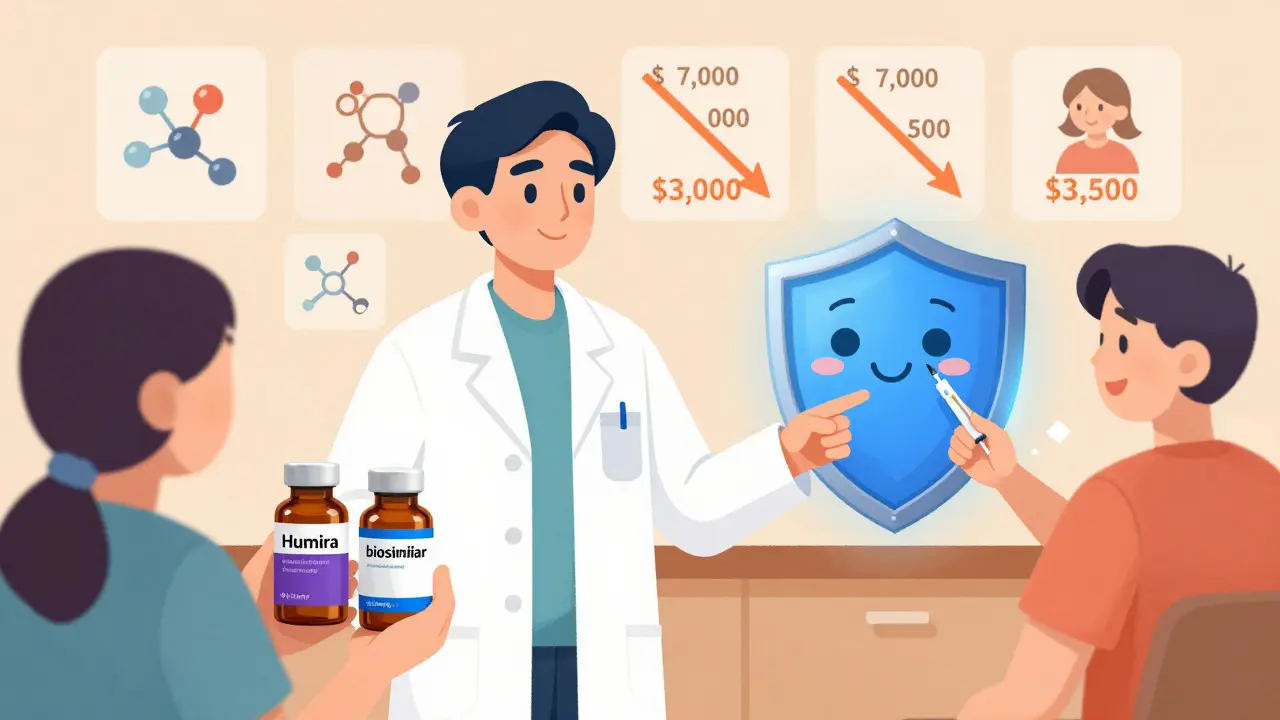
When a patient walks into the pharmacy with a prescription for a biologic drug like rituximab or adalimumab, the pharmacist doesn’t just fill the script. They’re the last line of defense against misinformation, the quiet advocate for cost-effective care, and the person who decides whether a patient stays on therapy-or stops because they’re scared of a change.
Biosimilars aren’t generics. That’s the first thing every pharmacist needs to make crystal clear. Generics are exact chemical copies of small-molecule drugs. Biosimilars are complex proteins made from living cells. Even with the same active ingredient, they can have tiny structural differences. But here’s the key: those differences don’t affect safety or effectiveness. The FDA requires biosimilars to show no clinically meaningful difference from the original biologic. Still, patients hear "similar" and think "inferior." That’s where pharmacists step in.
Why Pharmacists Are the Key to Biosimilar Adoption
Biologics make up just 2% of all prescriptions in the U.S., but they account for nearly half of all prescription drug spending. A single dose of Humira can cost over $7,000. The biosimilar version? Around $3,500. That’s not a small saving-it’s life-changing for patients on long-term therapy.
But adoption has been slow. Why? Because doctors are hesitant. Patients are confused. And pharmacy laws vary wildly from state to state. In 2021, a study from the US Oncology Network showed that when biosimilar substitution was left to physicians to initiate, adoption barely moved. But when pharmacists took over the process-automatically switching patients to the biosimilar after proper training-adoption jumped within months. The difference? Pharmacists were trained, empowered, and given the authority to act.
That’s not luck. It’s strategy. Pharmacists see the patient every time they refill. They notice when someone skips a dose because they’re worried about the new pill color. They hear the quiet fear: "Is this really the same?" They’re the ones who can explain that the FDA didn’t approve this drug lightly. That it went through 15 years of testing. That it’s used by millions in Europe with the same results.
Interchangeable vs. Non-Interchangeable: What’s the Difference?
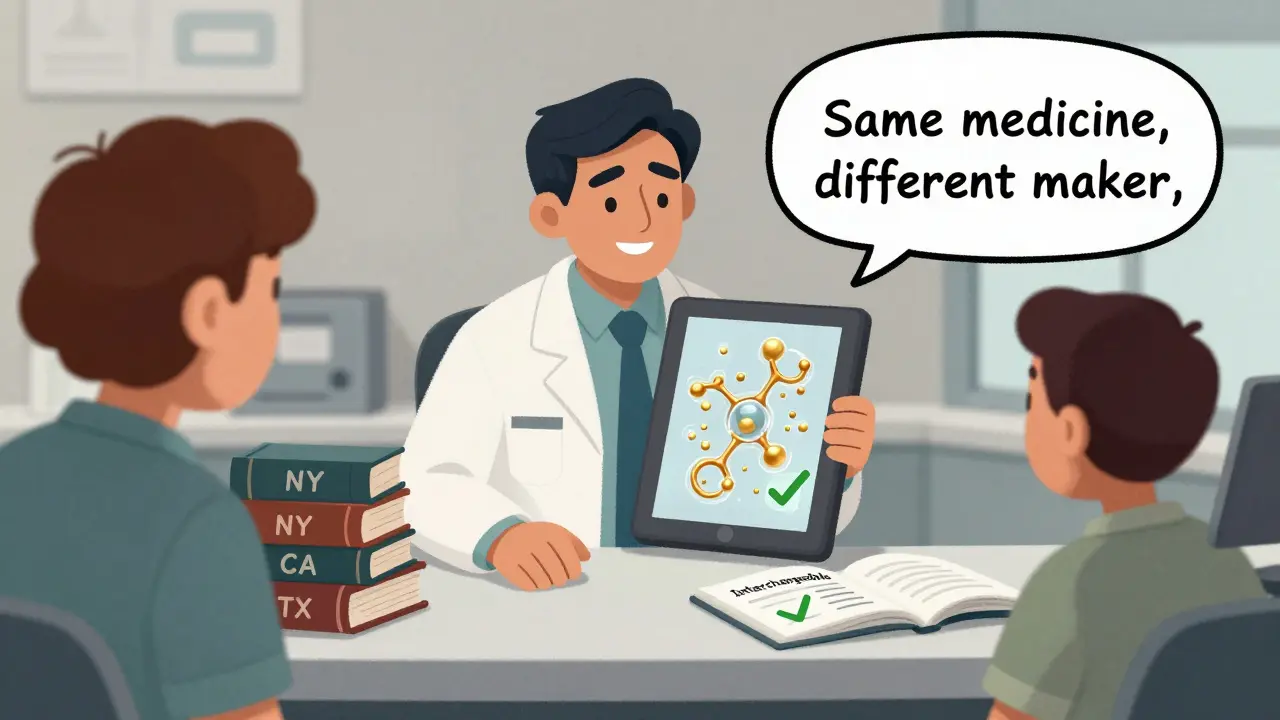
Not all biosimilars are created equal. The FDA has a special designation: interchangeable. That means the pharmacist can swap it for the brand-name drug without calling the doctor. It’s like generic substitution, but for complex biologics.
As of late 2023, only a handful of biosimilars have this status. Examples include infliximab-dyyb (Renflexis) and insulin glargine-yfgn (Semglee). Most others are biosimilars-but not interchangeable. That means the prescriber must specifically allow substitution. If the script says "dispense as written," the pharmacist can’t switch it, even if they want to.
That’s where the rules get messy. Forty-eight states have laws about biosimilar substitution. Some require the pharmacist to notify the prescriber. Some require patient consent. Some don’t allow substitution at all unless the drug is labeled interchangeable. In New Zealand, where I work, the Medicines Classification System allows pharmacists to substitute biosimilars under strict traceability rules-but only if the prescriber hasn’t blocked it.
Pharmacists need to know their state’s law cold. One wrong move-substituting without permission-can trigger a complaint, a lawsuit, or worse: a patient who loses trust in the whole system.
How to Counsel Patients Without Scaring Them
Patients don’t care about regulatory pathways. They care about whether they’ll feel sick. Whether the new drug will work. Whether they’re being used as a guinea pig.
Here’s what works: start with empathy. Don’t say, "This is a biosimilar." Say, "Your doctor prescribed this medicine to help with your arthritis. There’s a new version that works the same way but costs less. I’ve seen hundreds of patients switch to it without any issues. The FDA requires it to be just as safe and effective as the original. Would you like me to show you the data?"
Use visuals. Show them the FDA’s "9 Things to Know About Biosimilars" handout. Point out that the same hospital that uses the brand-name drug also uses the biosimilar. Tell them about the 2021 study where patients switched from Neulasta to its biosimilar-and their white blood cell counts stayed exactly the same.
And never ignore the physical change. A patient might be used to a purple pen injector. The biosimilar is blue. The vial is smaller. The label looks different. That’s enough to make someone stop taking it. Research shows patients are 21% more likely to discontinue treatment if the appearance changes. So don’t just hand them the new bottle. Say: "I know this looks different. It’s the same medicine, just made by a different company. I’ve checked the batch records. It’s approved for your exact condition. And if you feel any difference, we’ll call your doctor right away."
What Pharmacists Must Document
Substituting a biosimilar isn’t like swapping one generic for another. Traceability is non-negotiable. Every time a biosimilar is dispensed, the pharmacist must record:
- The exact product name and manufacturer
- The batch or lot number
- Whether substitution occurred
- Whether the patient was counseled
- Any adverse events reported
Why? Because if a patient has a reaction, the manufacturer needs to know which batch caused it. That’s how safety systems catch rare side effects. It’s also how regulators track whether switching between biosimilars and the originator causes problems. The IFPMA says this is essential. The FDA agrees. And if you don’t document it? You’re not just breaking protocol-you’re risking patient safety.
Electronic health records must capture this data automatically. If your pharmacy system doesn’t have a biosimilar substitution field? Push for it. It’s not optional anymore.
Why Physicians Resist-and How to Win Them Over
Some doctors still think biosimilars are "second-rate." One oncologist I know refused to allow substitution after a pharmacist switched his patient’s rituximab. He called it "a gamble." He didn’t know the patient had been on the biosimilar for 14 months with no flare-ups.
That’s the gap. Physicians aren’t trained in pharmacy practice. They don’t see the data. They hear anecdotes. They worry about liability.
The fix? Collaboration, not confrontation. Send them a one-page summary: "Here’s the clinical data on this biosimilar. Here’s the FDA’s approval status. Here’s how many patients we’ve switched successfully. Here’s the traceability protocol we follow."
At the US Oncology Network, they did something simple: mandatory e-learning for all staff. Doctors, nurses, pharmacists, financial counselors-they all took the same 30-minute course. Then they signed a form acknowledging the policy. After that, substitution became routine. No more angry calls. No more confusion. Just better care.
Where the System Still Fails
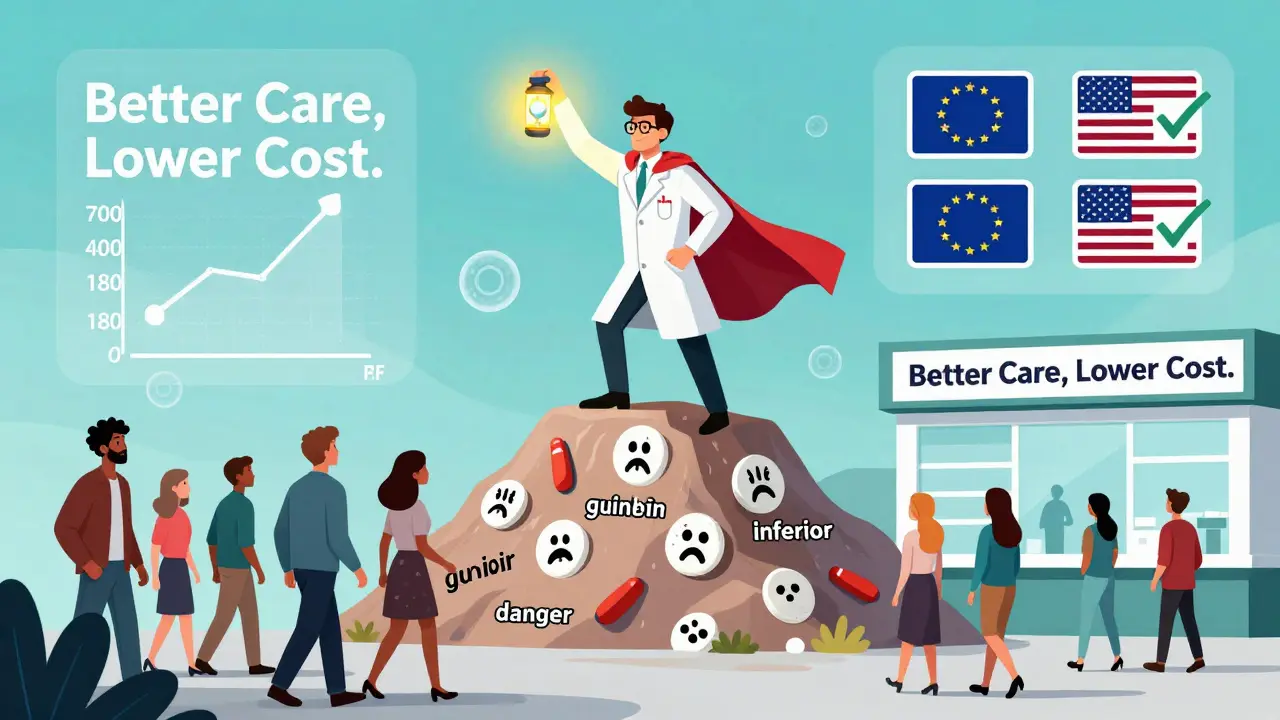
Biosimilars aren’t winning because of science. They’re winning because of systems. And right now, the systems are broken.
Payors still favor originator drugs through rebate deals. A pharmacy might get a $500 rebate for selling Humira but only $100 for the biosimilar. That’s not a mistake-it’s a business model. And pharmacists are stuck in the middle.
Then there’s the education gap. Only 43% of physicians have taken any biosimilar training. But 79% of pharmacists have. That’s not a coincidence. Pharmacists are the ones who go to conferences, sign up for CEUs, read the journals. They’re the experts. Yet they’re still treated like order-fillers.
And patients? Many still believe biosimilars are "cheap versions." They don’t know the FDA doesn’t approve them unless they’re proven identical in effect. They don’t know that the European Union has used biosimilars for over 15 years-with no increase in adverse events.
What’s Next for Pharmacists?
The future isn’t just about substitution. It’s about leadership.
Pharmacists will need to become specialists in biotherapeutics. Not just knowing which biosimilar to use, but understanding manufacturing processes, immunogenicity risks, long-term outcomes, and patient adherence patterns. Some hospitals are already creating "biosimilar coordinators"-pharmacists who train staff, manage substitution policies, and track outcomes.
And it’s working. At clinics that implemented pharmacist-led biosimilar programs, adoption rates rose by over 60% in a year. Patients stayed on therapy longer. Costs dropped. Providers were happier because they weren’t bogged down in paperwork.
This isn’t about saving money. It’s about saving time, reducing fear, and restoring trust. When a pharmacist takes the time to explain, to document, to follow up-they’re not just filling a prescription. They’re keeping someone healthy.
The science is solid. The savings are real. The only thing holding us back is hesitation. And that’s something a pharmacist can fix-with one conversation at a time.

so like... biosimilars are just the canadian version of generics? lol i thought they were the same thing. my cousin got switched to one and now she’s got rashes and says her knee hurts worse. who even approves this stuff??
Thank you for this thoughtful and meticulously researched piece. As a pharmacist in Ontario, I can attest that patient education is the cornerstone of successful biosimilar adoption. The emotional weight patients carry when switching medications is often underestimated. A calm, evidence-based conversation-paired with printed FDA materials-can transform fear into trust. We are not just dispensers; we are healers with access to data.
Let’s be real-this is just pharma’s way of offloading risk onto pharmacists while they pocket billions in rebates. You want to ‘save money’? Then stop letting insurers pay $500 rebates for Humira and nothing for the biosimilar. This isn’t healthcare reform-it’s accounting theater with a white coat.
I’ve seen this firsthand. My mom was scared to switch her adalimumab. I sat with her for 20 minutes, showed her the FDA page, and told her the hospital uses the same stuff. She’s been on the biosimilar for 8 months now. No problems. Just cheaper. That’s all she needed to hear.
Pharmacists: the only people who get yelled at for saving people money. 😂
"Oh no! You gave me the cheap one!"
Meanwhile, the drug company is laughing all the way to the bank with their $7K vials.
While the clinical evidence supporting biosimilars is robust, the regulatory and operational complexities remain formidable. The variance in state legislation necessitates a highly standardized, systematized approach to documentation and patient communication. Without uniform protocols, the integrity of therapeutic continuity is jeopardized.
Let me be clear: if you’re substituting a biosimilar without explicit physician consent, you’re not a pharmacist-you’re a rogue actor with a pharmacy license. The FDA doesn’t grant carte blanche because you ‘feel’ it’s safe. This isn’t a community center-it’s medicine. And medicine requires precision, not enthusiasm.
And don’t get me started on the ‘visual change’ argument. Patients are adults. They can read labels. If they panic because the pen is blue instead of purple, that’s not your fault-it’s their lack of education.
you think this is about science? nah. this is big pharma from america and europe forcing their cheap knockoffs on the rest of the world. they don't care if people get sick. they just want to kill the original drugs so they can control the market. i heard the usa banned these in 2018 but they let them back in because of lobbyists. you think your data is clean? think again.
One of the most powerful tools we have is simply saying: "I’ve helped over 200 patients make this switch, and not one has had a problem." That’s not just data-it’s human connection. And when you pair that with a printed handout, a quiet moment, and a willingness to follow up? That’s how you change lives. Keep doing this work. You’re making a difference.
Look. I’ve read the FDA guidelines. I’ve read the EMA guidelines. I’ve read the IFPMA white papers. And I’ve read the damn study from US Oncology. But here’s the truth nobody wants to say: pharmacists are being used as a political shield. The system doesn’t trust doctors to make these calls-so they push it onto us. And then they blame us when someone complains. It’s a setup. A beautiful, bureaucratic, profit-driven setup.
And don’t even get me started on the "traceability" nonsense. You think a batch number is going to save someone if their immune system reacts? Nah. That’s just paperwork to make regulators feel safe while the real issue-manufacturing variability-is swept under the rug.
Wow. Just… wow. You wrote a 2,000-word essay and didn’t once mention that 40% of biosimilar patients report increased anxiety during the switch. Or that the FDA’s "no clinically meaningful difference" standard is based on statistical thresholds that ignore individual variability. This isn’t advocacy-it’s propaganda dressed in lab coats.
My cousin in India gets her biosimilar adalimumab for $20 a month. Here in the US, it’s $3,500. And you’re arguing about blue pens? The real problem isn’t the pharmacist-it’s a system that lets one drug cost 175x more just because it’s branded. Fix the pricing. Then we can talk about counseling.