
Rebound Congestion Recovery Estimator
Enter how long you've used nasal decongestant sprays to estimate your recovery timeline and get personalized management tips.
Recommended Actions
- Use saline irrigation 2-3 times daily during worst symptoms
- Consider starting a steroid nasal spray (like Flonase) immediately
- Avoid all decongestant sprays completely
- Use a humidifier at night to ease breathing
- Don't go back to decongestant sprays - it resets the clock
Ever used a nasal spray for a stuffy nose, only to find your congestion came back worse than before? You’re not alone. This isn’t just bad luck-it’s a real medical condition called rhinitis medicamentosa, or rebound congestion. It happens when you use over-the-counter nasal decongestant sprays-like Afrin, Neo-Synephrine, or Xylometazoline-for more than three or four days. What starts as quick relief turns into a cycle: spray → relief → congestion returns → spray again. And each time, you need more to get the same effect. By the time you realize what’s happening, you’re stuck. But here’s the good news: it’s reversible. You just need to know how to break the cycle the right way.
How Nasal Decongestant Sprays Backfire
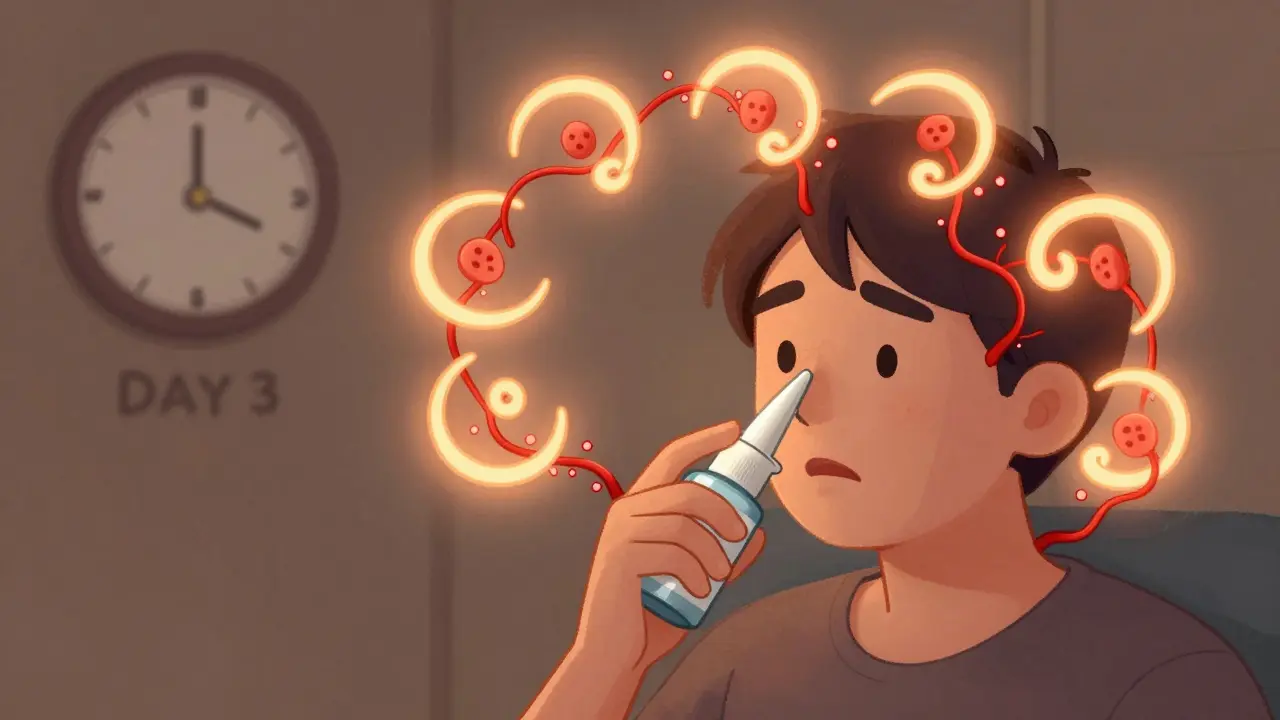
Nasal decongestant sprays work by shrinking swollen blood vessels in your nose. That’s why you feel clearer right after using them. But your body doesn’t like being told what to do forever. After a few days, those blood vessels start to rebel. They dilate even more than before, causing worse congestion than you had originally. This is called rebound vasodilation. It’s not an allergy. It’s not an infection. It’s a physical reaction to the medicine itself.Studies show that 92% of people who use these sprays for more than 10 days develop rebound congestion. And it’s not rare. Around 500,000 Americans are diagnosed with this condition every year. The nasal lining becomes red, swollen, and sometimes even granular or crusty. You might start breathing through your mouth, waking up with a dry throat, or snoring louder than ever. It’s frustrating because you’re doing everything right-using the medicine as directed-but the medicine itself is now the problem.
What Happens When You Stop
The only cure is to stop using the spray. But that’s easier said than done. When you quit cold turkey, your nose goes through withdrawal. Days 1 to 3 are usually the worst: you feel more blocked than ever. Some people describe it as being unable to sleep, feeling like they’re suffocating, or having constant pressure behind the eyes. This is normal. It doesn’t mean you’re getting sicker-it means your body is readjusting.Doctors have different advice on how to stop. The Mayo Clinic recommends stopping in one nostril first. Wait until that side clears up-usually within a week-then stop the spray in the other side. This gives your body time to adjust without being overwhelmed. Others, like the Cleveland Clinic, suggest gradually reducing use over several days instead of stopping all at once. Both approaches work. The key is consistency. If you go back to the spray even once during this phase, you reset the clock.
One Reddit user, who posted under the handle “AllergySufferer89,” said: “After 3 weeks of Flonase and no Afrin, my nose finally cleared up-the first week was hell but worth it.” That’s the pattern. The worst part is short. The relief lasts.
What to Use Instead
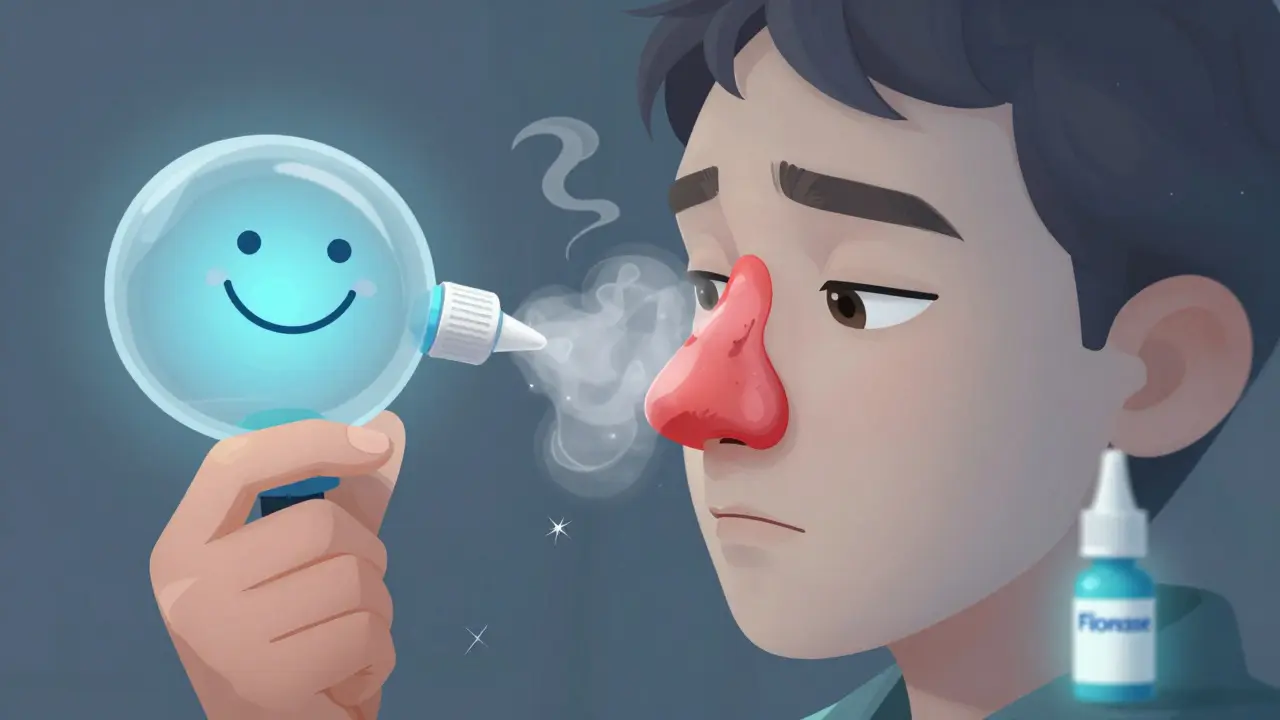
While your nose heals, you need alternatives that won’t make things worse. The most effective option is intranasal corticosteroids. These are prescription or over-the-counter sprays like Flonase (fluticasone) or Nasonex (mometasone). They don’t cause rebound congestion. Instead, they reduce inflammation in the nasal lining over time. Clinical trials show that 68-75% of people see major improvement after using them daily for 2-4 weeks during withdrawal.Saline nasal irrigation is another proven tool. Rinsing your nose with salt water-using a neti pot or squeeze bottle-helps flush out irritants and soothes irritated tissue. A 2022 review found that 60% of patients got noticeable relief just from daily saline rinses. It’s cheap, safe, and doesn’t interact with other meds. Use it every 2-3 hours during the worst days, then cut back to once or twice daily as you improve.
For severe cases, a short course of oral steroids like prednisone can help. A 2021 trial found that giving patients 0.5 mg per kg of body weight for five days led to an 82% reduction in congestion. But this isn’t for everyone-doctors usually reserve it for people with extreme symptoms or those who haven’t responded to other treatments.
What to Avoid
Don’t switch from nasal sprays to oral decongestants like pseudoephedrine (Sudafed). These work differently but still constrict blood vessels. They can raise your blood pressure, cause anxiety, or make it hard to sleep. A 2021 study from Massachusetts General Hospital found that 1 in 7 people with high blood pressure had dangerous spikes in pressure after taking them. If you have heart disease, glaucoma, or thyroid issues, these pills can be risky.Also avoid long-term use of any nasal spray-even steroid ones-without medical supervision. While they’re safe for months or years when used properly, using them incorrectly can lead to nasal polyps. Studies show that people who keep using decongestants for six months or longer have a 15% higher chance of developing these noncancerous growths in the nose, which can block airflow and need surgery to remove.
How to Prevent It From Happening Again
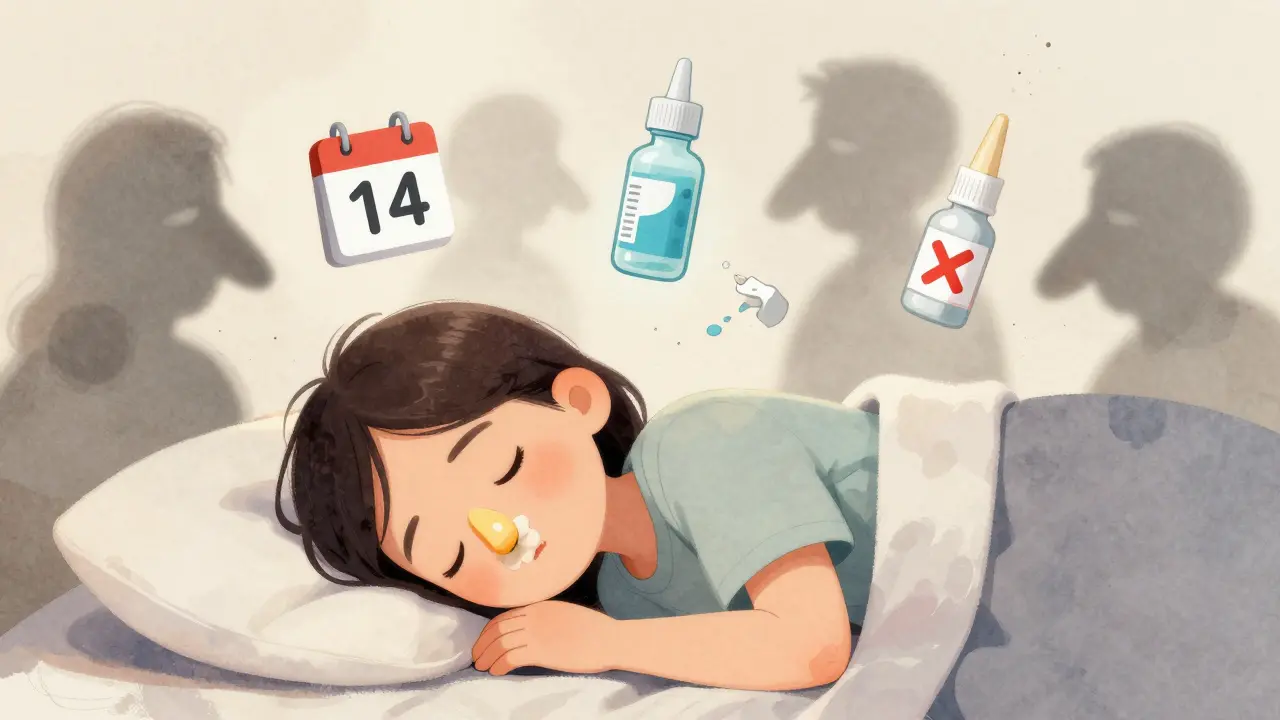
The best treatment is prevention. The FDA now requires all OTC nasal decongestant packages to have clear warnings: “DO NOT USE MORE THAN 3 DAYS.” But many people still miss it. The American College of Allergy, Asthma, and Immunology now recommends saline irrigation as the first step for any nasal congestion-not the spray.Here’s a simple rule: if your nose is stuffy, try salt water first. If that doesn’t help after a day or two, see a doctor. Don’t reach for the spray unless you’re prepared to use it for no more than 3 days. And if you’ve ever had rebound congestion before, keep a note in your phone or wallet reminding yourself: “Spray = temporary fix. Stop = long-term relief.”
Most people who follow the full plan-stop the spray, use steroids or saline, and stick with it-see big improvements within two weeks. One study found that patients who got counseling before quitting had a 7% relapse rate. Those who didn’t? 22% went back to the spray. Knowledge matters.
When to See a Doctor
You don’t need to suffer alone. See a doctor if:- Your congestion lasts longer than 10 days after stopping the spray
- You have facial pain, fever, or green/yellow discharge (could be a sinus infection)
- You’re having trouble sleeping or breathing
- You’ve tried everything and still feel blocked
A specialist can check for other causes-like allergies, deviated septum, or polyps-and help you make a plan that works for your body. They can also prescribe stronger steroid sprays or suggest newer treatments like azelastine (an antihistamine nasal spray) or low-dose capsaicin, both showing promise in recent trials.
There’s no shame in needing help. Millions of people have been trapped in this cycle. The fact that you’re reading this means you’re already on the path to fixing it.
Can nasal decongestant sprays cause permanent damage?
No, not permanently. Rhinitis medicamentosa is reversible. The nasal lining can heal fully once you stop the spray and give it time. However, if you keep using decongestants for months or years, you increase your risk of developing nasal polyps-noncancerous growths that can block your airway and may require surgery. The damage isn’t permanent, but delaying treatment makes recovery harder.
How long does rebound congestion last after stopping the spray?
Most people experience the worst symptoms for 3 to 7 days after stopping. Improvement usually starts around day 4, with significant relief by day 10-14. Full recovery can take up to 4 weeks, especially if you’ve been using the spray for months. Using intranasal corticosteroids or saline irrigation during this time can shorten the recovery window.
Is Flonase or Nasonex safe to use long-term?
Yes, when used as directed. Flonase (fluticasone) and Nasonex (mometasone) are corticosteroid sprays designed for daily, long-term use. Unlike decongestant sprays, they don’t cause rebound congestion. They reduce inflammation and are safe for months or even years. Some people use them year-round for allergies or chronic sinus issues. Always follow the label instructions and talk to your doctor if you’re unsure.
Can I use saline spray every day?
Absolutely. Saline nasal spray or irrigation is safe to use multiple times a day, every day. It’s just salt and water-it doesn’t contain medicine. It helps clear mucus, soothes dryness, and reduces irritation. Many people use it daily as part of their routine, especially in dry climates or during cold season. It’s one of the safest tools you can use to prevent congestion from coming back.
Why does my nose feel worse after using a decongestant spray for a week?
Because the spray causes rebound congestion. The medicine shrinks blood vessels to reduce swelling, but after repeated use, your body responds by making those vessels even more swollen than before. It’s like overworking a muscle until it becomes sore and tight. Your nose isn’t getting worse because you’re sick-it’s reacting to the medicine. Stopping the spray lets your body reset.
If you’ve been relying on nasal sprays for more than a few days, you’re not broken-you’re just caught in a common trap. The good news is, you can get out. It takes patience, but the relief is real. Start with saline, talk to your doctor about steroid sprays, and give yourself time. Your nose will thank you.

OMG I DID THIS FOR 6 MONTHS AND MY NOSE WAS A WAR ZONE 😭 I THOUGHT I HAD A PERMANENT COLD BUT NOPE-JUST A SPRAY ADDICTION. I STOPPED COLD TURKEY AND THOUGHT I WAS GONNA DIE. SLEEP? HA. BREATHING? NOT A CHANCE. BUT DAY 8? MAGIC. I’M BACK. FLONASE SAVED MY LIFE. NO MORE AFRIN. EVER.
so i tried the saline rinse after reading this and holy it actually worked? like not magic but like... my nose stopped feeling like a dried up desert? i’ve been doing it twice a day for a week now and i can finally sleep without my mouth open. thank you for writing this
My mom used to swear by Afrin for her allergies. I told her it was a trap but she didn’t listen. Took her 3 months to quit. She cried the first week. Now she uses Flonase and swears by it. I’m glad this got posted. So many people don’t know this is a thing.
68-75% improvement? that’s not a cure. that’s a placebo with a fancy label. where’s the double-blind study? where’s the control group? and why is no one talking about the pharma lobby pushing steroid sprays as the ‘safe’ alternative when they’re just longer-term corticosteroid dependency? this is just swapping one addiction for another with better marketing
Hey you’re not alone. I’ve been there. I used to think I was weak for needing the spray. Turns out it’s just biology. You didn’t fail-you got tricked. The fact you’re reading this? That’s your first win. Now go grab some saline and breathe slow. You got this.
Man I used to call Afrin my ‘emergency fire extinguisher’-until my nose started throwing tantrums like a toddler denied candy. Now I keep a neti pot on my nightstand like it’s my spiritual altar. Saline’s the new holy water. No more chemical rollercoasters. Just salt, water, and peace. Also, I started drinking more water. Weirdly, that helped too. Hydration is the silent hero we ignore.
And yes, the first 72 hours are a nightmare. You’ll stare at the ceiling wondering if your brain has turned to mush. But that’s just your blood vessels doing a rebellion dance. They’re not your enemy-they’re just confused. Give them time. They’ll apologize by letting you breathe again.
Flonase doesn’t feel like magic. It feels like slow justice. You won’t notice it working until one day you realize you haven’t sniffed in three hours. That’s the win. No drama. No rush. Just… air.
And if you’re tempted to cheat? Don’t. One spray and you’re back to square one. I did it. Twice. Learned the hard way. Your nose remembers. It’s not spiteful-it’s just smart.
Also-stop Googling ‘nasal spray side effects’ at 3am. You’ll spiral. Trust the process. The science is solid. The suffering is temporary. The relief? Eternal.
we are all just vessels for chemical feedback loops aren't we? the spray gives you control for a moment and then steals it back-just like capitalism just like social media just like love. your nose is a mirror. it doesn't lie. it just reflects what you've done to it. and the truth? you wanted to fix your breathing but you forgot how to breathe without a crutch. the real cure isn't flonase. it's realizing you don't need to escape your own body.
THEY DON’T WANT YOU TO KNOW THIS!! AFRIN IS A GOVERNMENT PLOY TO MAKE YOU DEPENDENT SO THEY CAN SELL YOU FLONASE AT $50 A BOTTLE!! THEY CONTROL THE FDA!! I READ ON A FORUM THAT THE PHARMA COMPANIES OWN THE DOCTORS WHO RECOMMEND STEROIDS!! I’M ON A SALINE ONLY DIET NOW AND I’M USING A MAGNET ON MY FOREHEAD TO ‘REBALANCE MY NASAL ENERGY’ 😤
AND WHY ISN’T ANYONE TALKING ABOUT THE 5G TOWERS MAKING OUR NOSES SWELL?? I SWEAR IT STARTED WHEN THE NEW CELL TOWER WENT UP NEXT DOOR!!
As an Indian guy who moved to the US, I used to think nasal sprays were normal. Back home we use saline and steam. I tried Afrin after a cold and got hooked. Didn’t realize it was a thing until my American roommate said ‘bro you’re addicted’. I quit cold turkey. Day 3 I cried. Day 7 I laughed. Now I use saline every morning. Best decision ever. Also-neti pot is weird at first but it’s like a spa day for your sinuses.
Hey I saw your post and I’m in the same boat. I’ve been using the spray for 9 months. Can you tell me exactly how much Flonase to use? Like, how many sprays? Twice a day? And do you use it before or after the saline? Also-do you sleep with a humidifier? I’m scared to stop. What if I can’t breathe? I need specifics.
Oh my god, you’re telling me I’ve been a fool?? I’ve been using this stuff since 2020. I thought I was being responsible. I only used it ‘when I needed it’. But now I’m crying because I can’t breathe and my face feels like it’s swelling and I’ve been using it for 12 hours straight and I’m scared I’m going to die and I’m so stupid and I hate myself and I’m so ashamed…
They’re hiding the truth. The nasal spray companies know this happens. They don’t care. The FDA doesn’t regulate it because they’re funded by Big Pharma. And the doctors? They’re paid to say Flonase is safe. But here’s the real kicker: the rebound effect is documented in patents from the 1980s. They’ve known for 40 years. And still they sell it like candy. You’re not broken. You’re a victim.
Interesting. In India, we don’t have this problem because we don’t have access to these sprays. We use turmeric steam, salt water, and prayer. Also, our noses are naturally more resilient. But I get it-Western medicine is all about quick fixes. We forget that healing takes time. And time is the one thing we’re all too busy to give.
Still, I’m skeptical about Flonase. Corticosteroids suppress the immune system. Is that really better than a temporary blockage? Maybe the real solution is to stop fighting the congestion and learn to live with it. Like meditation for your sinuses.
Rebound congestion isn’t the problem-it’s the symptom. The real issue is that we’ve outsourced our body’s ability to self-regulate to pharmaceuticals. We don’t trust our own biology. We don’t rest. We don’t hydrate. We don’t breathe deeply. We just spray. And when it fails, we blame ourselves. But the system designed this. The cycle isn’t accidental. It’s engineered. You didn’t fail. The system did.
Just wanted to say-thank you to everyone sharing. I read this thread after my first week of quitting. I was ready to give up. But your stories? They kept me going. Today, I breathed through my nose for the first time in months. I cried. It wasn’t perfect. But it was mine. You’re not alone. Keep going.