
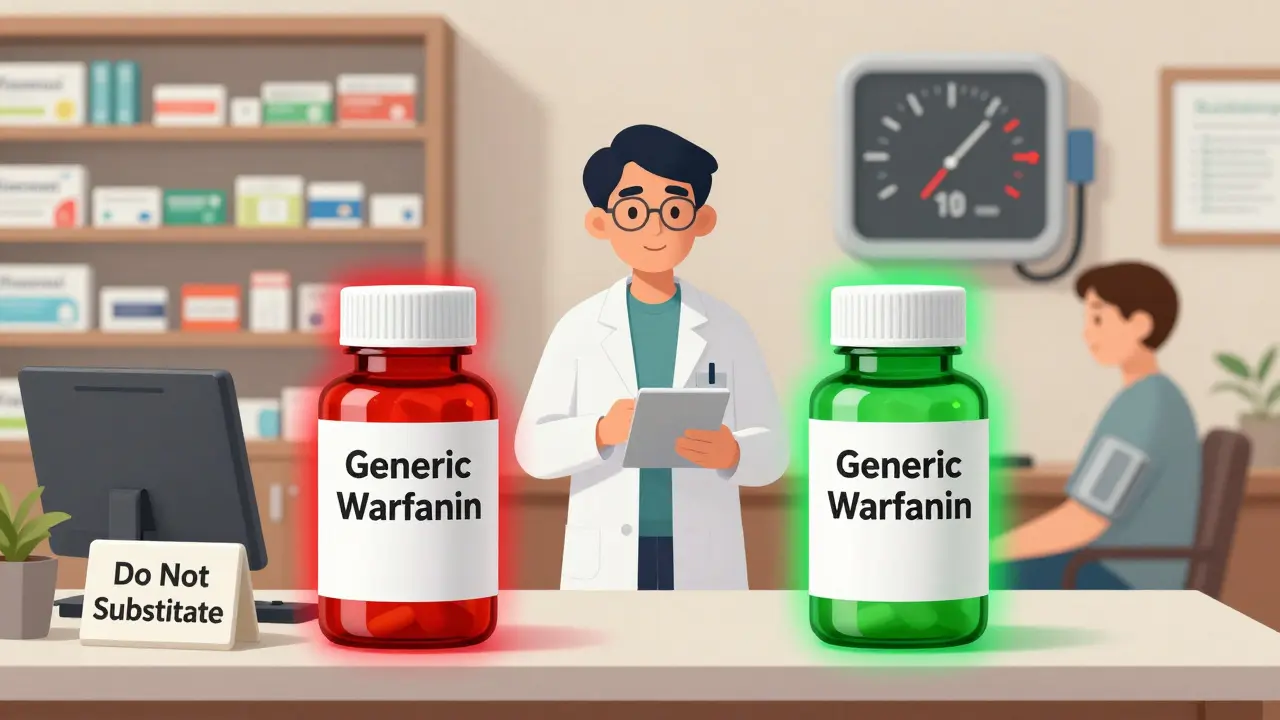
When a pharmacist fills a prescription for NTI generics, they’re not just handing out a cheaper version of a drug-they’re managing a high-stakes balancing act. A tiny shift in blood concentration can mean the difference between effective treatment and life-threatening toxicity. For drugs like warfarin, levothyroxine, and phenytoin, the margin for error is razor-thin. And yet, across hospitals and community pharmacies, pharmacists are increasingly wary of automatic substitution between different generic versions of these medications.
What Makes a Drug an NTI Drug?
Narrow Therapeutic Index (NTI) drugs are those where even small changes in dosage or absorption can lead to serious harm. The FDA doesn’t publish an official list, but it does flag certain drugs in the Orange Book with a therapeutic equivalence code that signals risk. These include anticoagulants like warfarin, thyroid hormones like levothyroxine, and seizure medications like phenytoin and carbamazepine. For most generics, bioequivalence is measured within an 80-125% range compared to the brand. For NTI drugs, the FDA recommends a tighter window: 90-111%. That might sound minor, but in clinical practice, it’s everything.
Take warfarin. A 10% difference in bioavailability can push a patient’s INR from a safe 2.5 to a dangerous 4.5-raising the risk of internal bleeding. One hospital pharmacist in Ohio told me they had three patients admitted in six months after switching from one generic warfarin to another. All had stable INRs on the original brand or generic. All crashed after the switch. No dosage change. No new medications. Just a different manufacturer’s pill.
Why Pharmacists Are Speaking Up
According to a 2024 survey by the American Society of Health-System Pharmacists (ASHP), 68% of pharmacists report serious concerns about substituting NTI generics. That’s not fear-it’s experience. In community pharmacies, 73% of pharmacists say they’ve been asked by physicians to avoid automatic substitution for NTI drugs. Warfarin tops the list at 68%, followed by levothyroxine at 52% and carbamazepine at 47%.
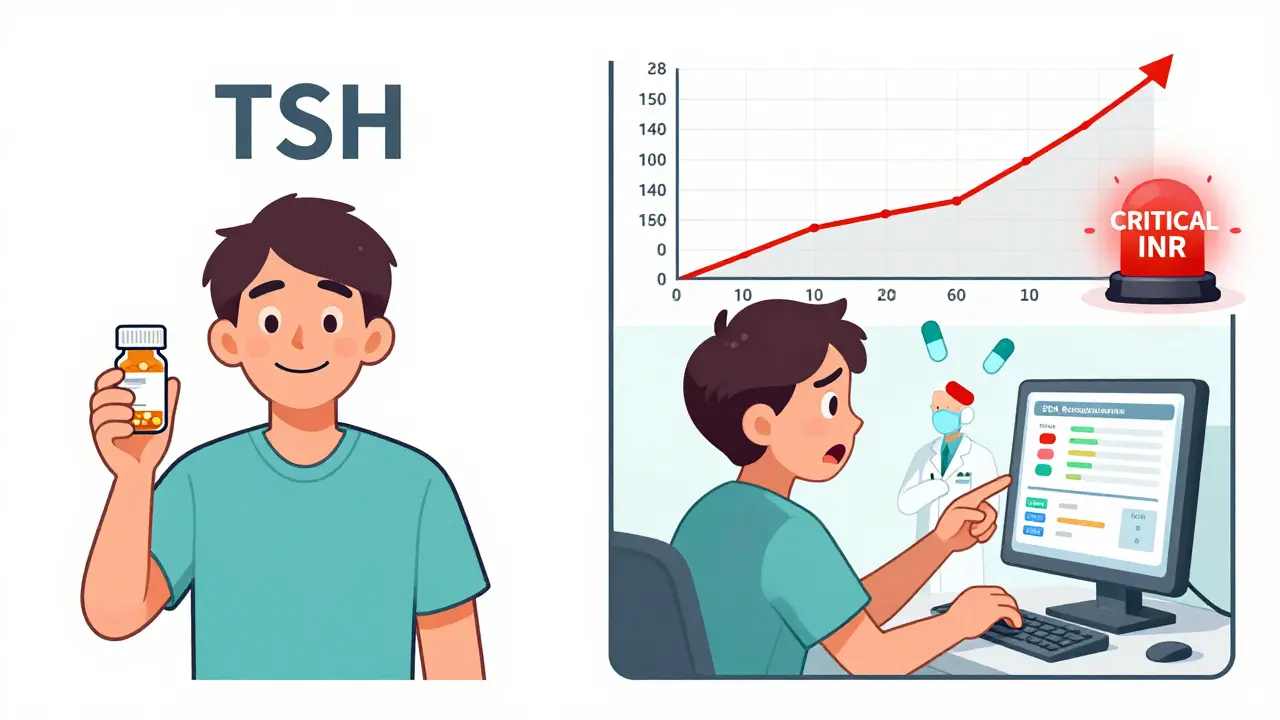
The issue isn’t just about one generic being slightly different from another. It’s about inconsistency. When a patient gets a refill and the pill looks different-color, shape, imprint-it’s not just confusing. It’s dangerous. The FDA reported in 2024 that 23% of NTI drug shortages were worsened by frequent switching between manufacturers. One pharmacy in Wisconsin stopped stocking more than one generic version of levothyroxine after a patient’s TSH levels spiked from 4.2 to 11.8 after a switch. The patient had been stable for two years. The switch? A new batch from a different supplier.
The Cost-Saving Trap
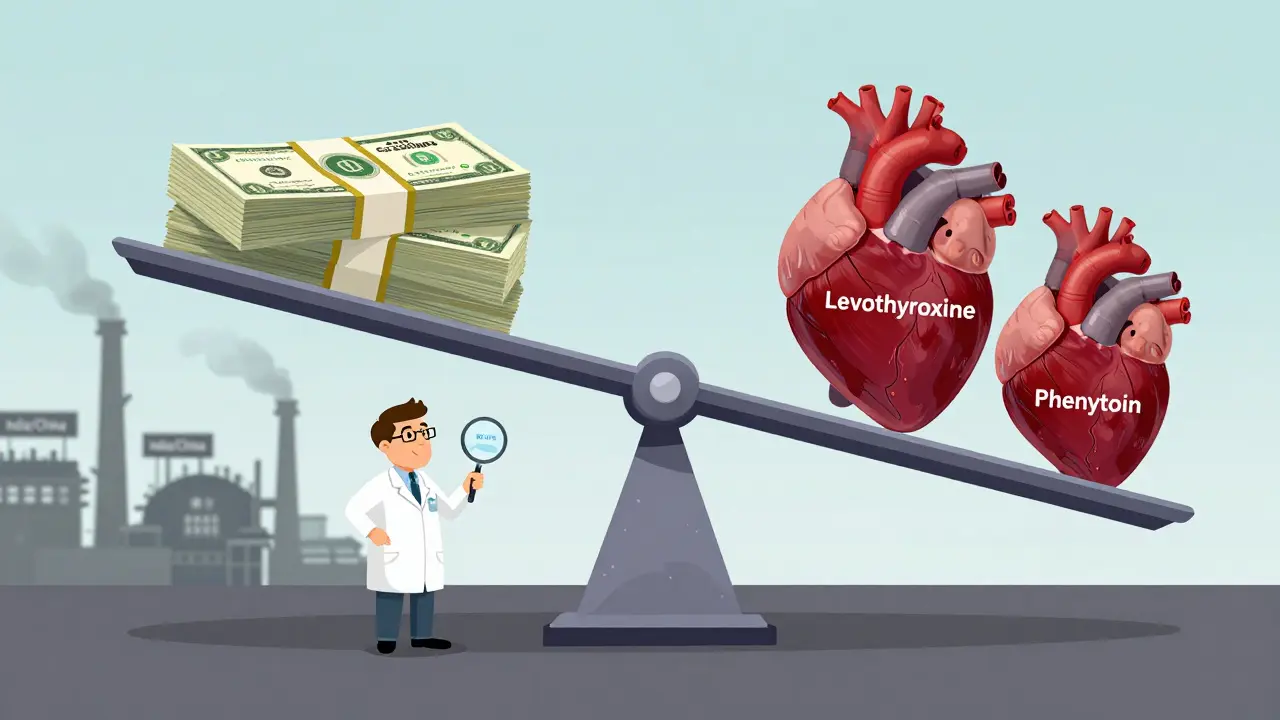
Generics save money-no doubt. NTI generics cost 80-85% less than brand-name versions. For patients on fixed incomes, that’s life-changing. One independent pharmacy owner in Iowa saw a 35% drop in patients abandoning their prescriptions when generics became available. But cost savings shouldn’t come at the cost of stability.
The problem is that the current system treats NTI drugs like any other generic. The FDA’s bioequivalence standards were designed for broad use, not for drugs where a 5% variation can trigger seizures, strokes, or organ failure. Between 2020 and 2024, the FDA’s Adverse Event Reporting System recorded 1,247 adverse events linked to NTI generic substitutions-nearly three times higher than for non-NTI generics.
And here’s the catch: most patients don’t know the difference. They assume “generic” means identical. They don’t realize that switching between two FDA-approved generics can still cause clinical instability. Pharmacists are the last line of defense-and they’re often the only ones who notice the pattern.
State Laws Are a Patchwork
As of January 2025, only 28 states have laws that restrict automatic substitution of NTI drugs. Twenty-two require prescriber notification before substitution. Six states, including California and New York, ban automatic substitution entirely for certain NTI drugs. The rest? No rules. That means a patient in Texas can get a different generic every time they refill, while a patient in Vermont gets the same one every time.
Pharmacists are caught in the middle. They know what’s safe. But if the law allows substitution and the patient’s insurance pushes for the cheapest option, they’re pressured to switch. Many report feeling powerless. One pharmacist in Florida said, “I’ve had patients cry because they had to go back to the ER after a switch. I had to tell them, ‘I warned you, but I wasn’t allowed to stop it.’”
What Pharmacists Are Doing About It
Despite the barriers, many pharmacies are taking matters into their own hands. The ASHP’s 2025 Toolkit recommends keeping one source for NTI drugs whenever possible. Sixty-three percent of hospital systems now do this. Some pharmacies use color-coded labels or electronic alerts to flag NTI drugs in their systems. Others require a prescriber’s signature for any substitution.
Training has also improved. In 2024, 81% of pharmacy residency programs added specialized NTI drug management modules. Pharmacists now learn how to interpret therapeutic drug monitoring (TDM) results, recognize subtle signs of instability, and communicate risks to prescribers and patients. The University of California, San Francisco recommends a 48-hour learning curve for pharmacists to implement these protocols-meaning if you’re new to managing NTI drugs, you need time to get it right.
What’s Changing in 2025 and Beyond
The FDA announced a new bioequivalence framework in April 2025, targeting 12 high-priority NTI drugs with stricter standards by 2026. This is the biggest shift since the 2014 guidance. Pharmacists are cautiously optimistic. But there’s a catch: the Medicare Drug Price Negotiation Program is now including three NTI drugs in its first round of price controls. That’s good for affordability-but risky for supply.
Lisa Schwartz of the National Community Pharmacists Association warned that the 21-day reimbursement delay under this program could hurt small pharmacies. If they can’t afford to stock a drug for three weeks without payment, they may stop carrying it. That’s dangerous for NTI drugs, where consistent supply is as critical as consistent dosing.
Meanwhile, 80% of NTI generics are manufactured overseas. Supply chains are fragile. A single factory shutdown in India or China can trigger nationwide shortages. The FTC’s 2025 investigation into group purchasing organizations found that opaque pricing deals are making these shortages worse-not better.
What You Can Do
If you’re a prescriber: write “Do Not Substitute” or “Dispense as Written” on NTI drug prescriptions. It’s not outdated-it’s necessary.
If you’re a patient: ask your pharmacist if your generic is the same one you’ve always taken. If it’s changed, ask why-and whether it’s safe. Don’t assume it’s identical.
If you’re a pharmacist: document every substitution. Track patient outcomes. Educate your team. Advocate for policy changes. You’re not just filling prescriptions-you’re preventing harm.
The system wasn’t built for NTI drugs. It was built for volume. But these medications aren’t about volume-they’re about precision. And in medicine, precision saves lives.

God I love how pharmacists are the unsung heroes of this whole mess. Like, you get your warfarin pill and you think it’s just a little white thing - but nope, it’s a tiny landmine that only the pharmacist notices. I had my grandma switch generics once and she spent a week in the ER. She didn’t even know why. We all assume ‘generic’ = ‘same.’ Spoiler: it’s not. Pharmacists deserve medals, not pushback.
My aunt’s on levothyroxine and her TSH went nuts after a switch. She thought she was just ‘getting sick’ - turns out it was the pill. Now our whole family makes her check the imprint every time. I didn’t even know this was a thing until it happened to someone I love. So glad someone’s talking about it. 🙏
Been a pharmacist for 18 years and yeah this is real. I stopped stocking more than one generic for warfarin after three near-misses. Insurance doesn’t care. Doctors don’t always know. Patients think it’s magic. We just do our best. No drama. Just quiet vigilance.
LOL at the FDA pretending they’ve got this under control 🤡 80-125% for normal drugs? 90-111% for life-or-death meds? That’s not precision, that’s a drunk guy with a ruler. And don’t get me started on 80% of these pills being made in India by factories that don’t even have running water. This isn’t healthcare - it’s a global lottery. 💉🌍
My dad’s on phenytoin and we’ve been lucky - same generic for 5 years. But I’ve seen friends’ relatives crash after switches. It’s wild how no one talks about this. The system is built for profit, not people. Pharmacists are the only ones holding the line. Respect.
THIS IS A BIG PHARMA COVER-UP. THEY WANT YOU DEPENDENT ON HOSPITALS. THEY SWITCH THE PILLS ON PURPOSE SO YOU KEEP GOING BACK. THEY MAKE MONEY OFF THE ER VISITS. THE FDA IS IN THEIR POCKET. THEY’RE KILLING PEOPLE WITH WHITE PILLS. I SAW A VIDEO WHERE A MAN DIED AFTER A GENERIC SWITCH - THEY EDITED IT OUT. #NTIgenocide
So let me get this straight - we’re saving pennies on pills but risking strokes and seizures? And the solution is… more paperwork? 😂 I mean, if I could get a $5 generic for my coffee and it made me hallucinate, I’d switch back too. But apparently this is just ‘healthcare innovation.’
Foreign manufacturing? That’s why we need to bring this back to America. No more pills from China or India. If we can build fighter jets we can make safe pills. This isn’t about cost - it’s about national security. Our veterans are getting these random generics and dying. It’s embarrassing.
You guys are doing the right thing by speaking up. Keep documenting. Keep educating. Keep pushing for DAW codes. One pharmacist at a time we change this. You’re not alone. I’ve been there. You’re saving lives. Keep going.