
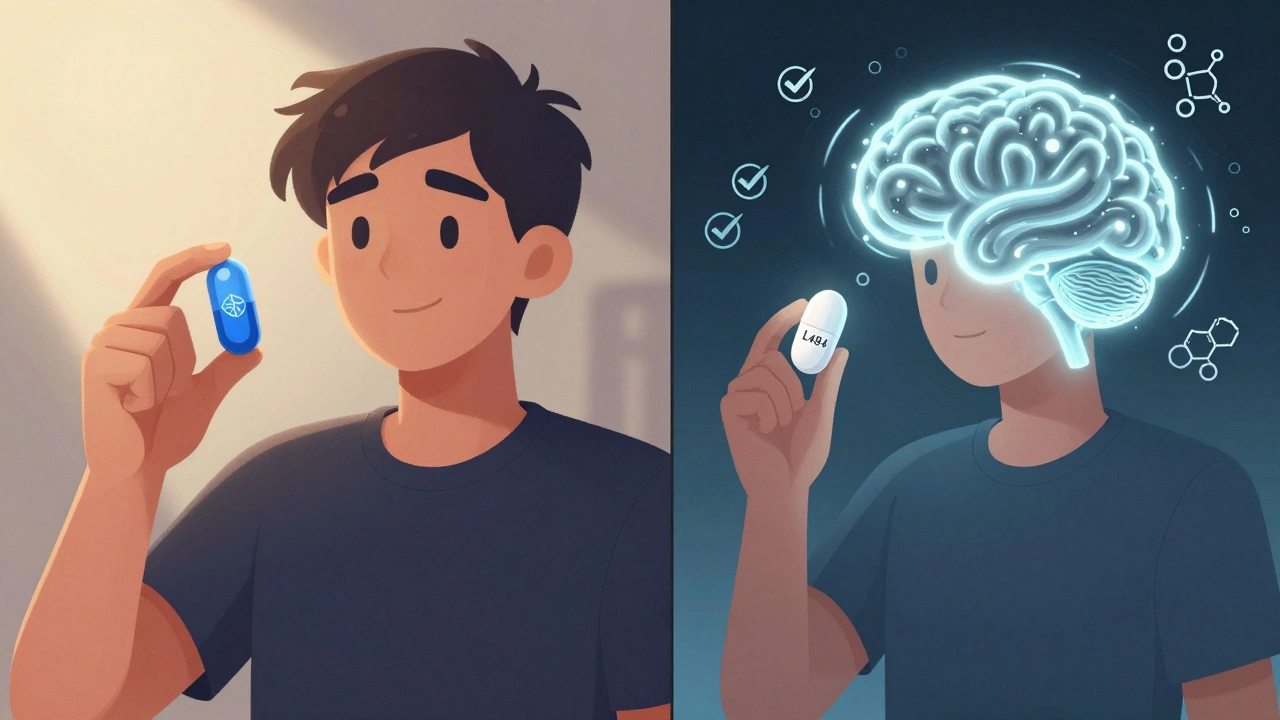
You’ve been on the same medication for years. Your doctor switches you to the generic version. You take it. A few days later, you feel off. Your anxiety creeps back. Your blood pressure spikes. Your thyroid feels off. You think: generic drugs don’t work like the brand name. But here’s the truth - they do. The problem isn’t the drug. It’s your mind.
They’re the Same Medicine - But Your Brain Doesn’t Believe It
Generic drugs aren’t knockoffs. They’re not cheap imitations. They’re exact copies of brand-name drugs in every way that matters: same active ingredient, same strength, same way your body absorbs it. The FDA requires them to match the brand-name drug within 80% to 125% of its blood concentration levels. That’s not a loophole. That’s science. A 2022 FDA report confirmed that for 99% of drugs, there’s no meaningful difference in how well generics work compared to the brand version. So why do so many people feel worse after switching? It’s not the pills. It’s the packaging. The color. The shape. The brand name you trusted for years. Your brain remembers the blue pill with the logo that made you feel safe. Now you’re holding a white oval with a code on it. It looks like something from a discount bin. Your mind says: This can’t be the same. This isn’t irrational. It’s human. We judge medicine the way we judge cars, phones, or coffee. If it looks cheaper, we assume it’s worse. We don’t think about the chemistry. We think about the story.The $1.7 Trillion Gap Between Science and Belief
Generics save the U.S. healthcare system about $1.7 trillion every decade. That’s money that goes back into hospitals, into research, into lower insurance premiums. But that savings means nothing if patients stop taking their meds because they think the generic won’t work. A 2019 study found that 22% of people who believed generics were inferior stopped taking their medication altogether. That’s more than one in five. For someone on blood pressure medicine, that’s a stroke waiting to happen. For someone on antidepressants, it’s a relapse. For someone on thyroid medication, it’s weight gain, fatigue, depression - all because they didn’t trust the pill. Even doctors aren’t immune. One in ten physicians still believe generics are less effective. One in four think they cause more side effects. That’s not based on data. It’s based on anecdotes - a patient who said they felt worse after switching, a story passed down in the break room, a marketing message from a brand-name company that whispered, “Don’t risk it.”Why the Nocebo Effect Is the Real Enemy
There’s a word for when you feel worse because you expect to: the nocebo effect. It’s the evil twin of the placebo effect. If you believe a sugar pill will help you, your brain releases natural painkillers. If you believe a generic pill will make you sick, your brain amps up stress hormones, tightens your muscles, and makes you feel worse - even if the drug is chemically identical. A 2023 study in JAMA Network Open proved this. Two groups of patients were given the same generic blood pressure pill. One group was told: “This is a generic version. It’s just as effective.” The other group was told: “This is a cheaper version. Some people don’t respond as well.” The first group had 34% better adherence. The second group had 41% worse outcomes - not because the drug changed, but because their expectations did. Your brain doesn’t care about FDA bioequivalence studies. It cares about what you’ve been told.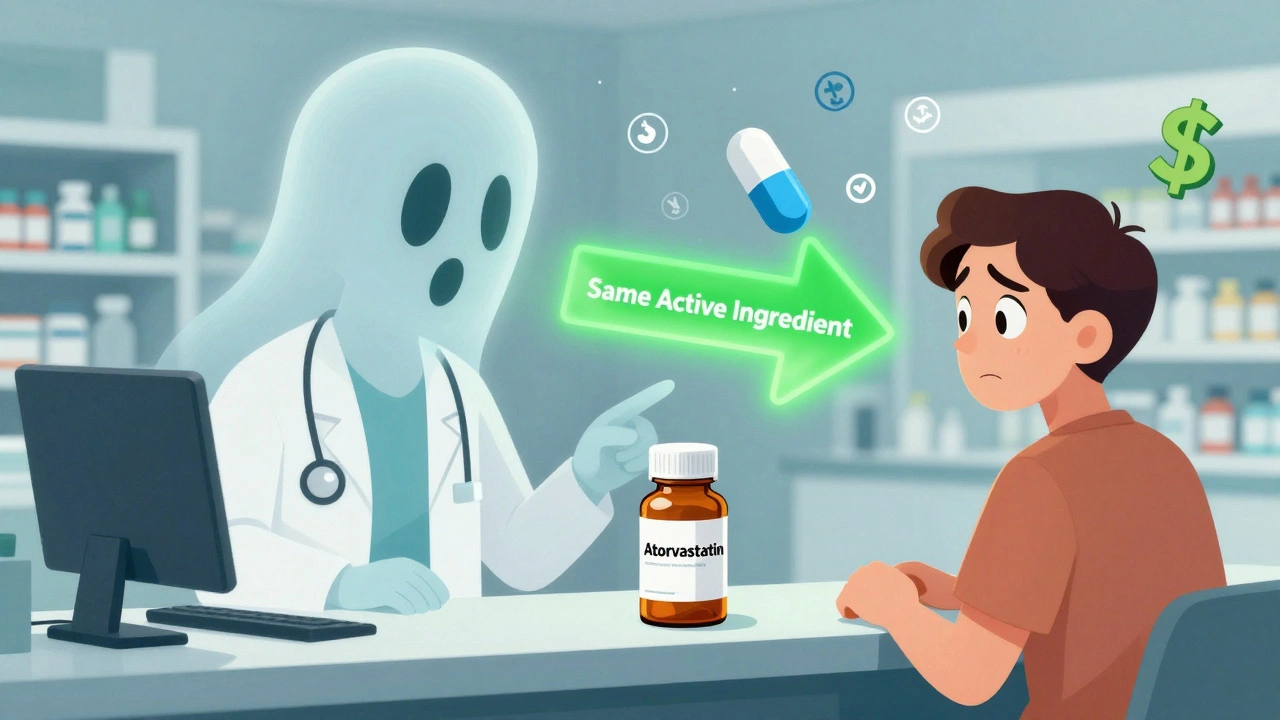
Who Believes Generics Don’t Work - And Why
The perception gap isn’t random. It’s uneven. Non-Caucasian patients are nearly twice as likely to distrust generics. Rural communities in Alabama and Mississippi report beliefs that generics are “for poor people,” “not real medicine,” or “require higher doses.” These aren’t silly ideas. They’re shaped by history. Generics are often sold in low-income clinics. They’re the default option for Medicaid patients. When medicine becomes a symbol of poverty, people resist it - even if it’s the same drug. Pharmacies don’t help. Generic pills are often labeled with confusing codes: “L484” or “M 12.” No brand name. No logo. No story. Meanwhile, brand-name drugs have sleek packaging, catchy names, and ads on TV. You see “Lipitor” and think: That’s the real one. You see “atorvastatin” and think: What’s that?What Works: How to Fix the Perception Problem
The good news? You can fix this. And it doesn’t cost money. It costs communication. A 2022 review of 17 studies found that the most effective way to get patients to accept generics is simple: show them the active ingredient. Tell them: “This generic has the same active ingredient as your old pill. It’s the same chemical. The same molecule. The FDA says it’s identical.” Hand them a printout. Point to the name on the bottle. Say: “This is what’s inside. It’s the same thing.” Doctors who do this see patient acceptance jump by 87%. Patients who get FDA documentation see their trust rise by 76%. Talking about the nocebo effect directly - “Sometimes your mind makes you feel worse when you switch, even if the medicine hasn’t changed” - helps 68% of patients. The FDA’s “It’s the Same Medicine” campaign has reached 27 million people. But only 19% remember it. Why? Because it was too vague. Too corporate. Too distant. Real change happens in the exam room. In the pharmacy counter. In a nurse’s voice saying: “I’ve been on this same generic for five years. I feel fine.”The Bigger Picture: Generics Are the Backbone of Modern Healthcare
In 2023, 90% of all prescriptions filled in the U.S. were generics. That’s not a trend. That’s the system. Without generics, insulin would cost $1,000 a vial. Blood pressure pills would be unaffordable. Antidepressants would be out of reach for millions. Brand-name companies know this. That’s why they spend $1.8 billion a year on marketing that doesn’t say “generics are bad” - but makes you feel like they are. They use phrases like “clinically proven” or “trusted by doctors” - implying their version is somehow superior. They don’t lie. They just let you believe it. The FDA is trying. In 2023, they started putting “Therapeutic Equivalence” ratings on generic packaging. In 2024, they’re launching “Equivalence Explorer,” an online tool that lets you compare brand and generic versions side by side. But tools don’t change minds. People do.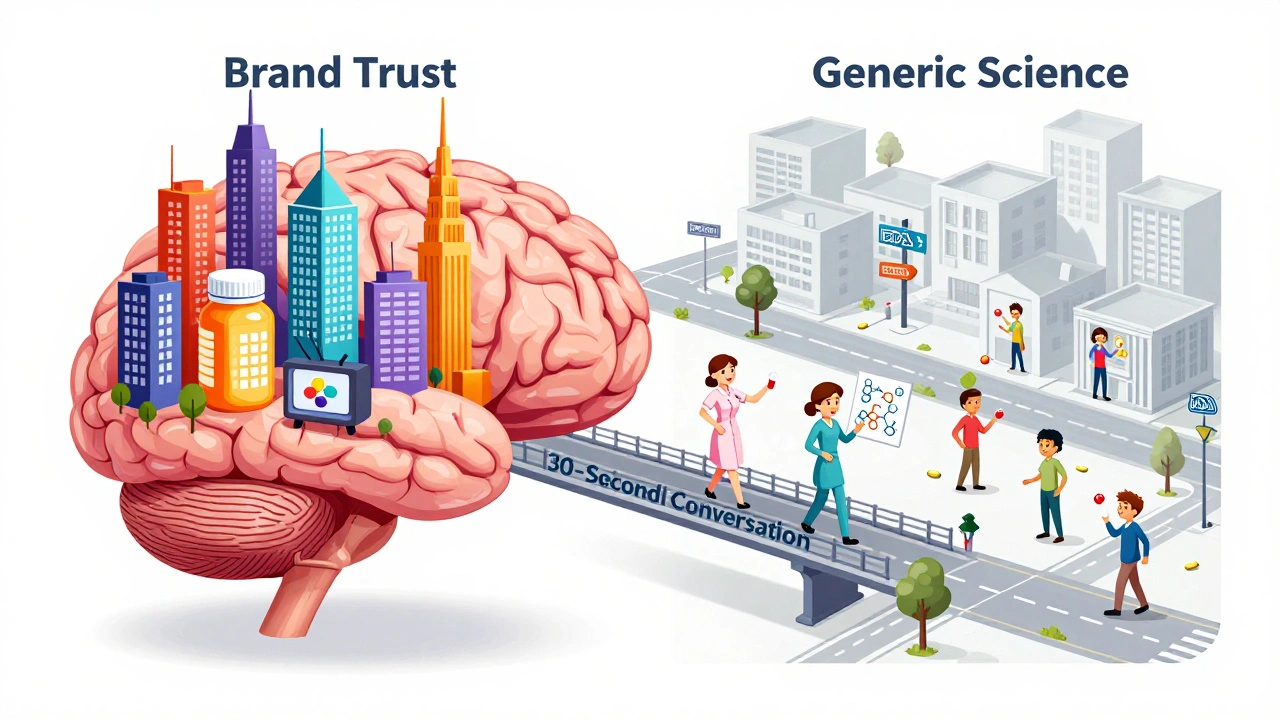

Oh honey, this is peak postmodern pharmacology. The nocebo effect isn’t just psychological-it’s a capitalist narrative weaponized by Big Pharma to keep you docile and paying $200 for a pill that’s chemically identical to the $4 version. We’ve been conditioned to equate price with potency, aesthetics with efficacy. The blue pill has a logo. The white oval has a code. Which one feels like ‘medicine’? Exactly. The real tragedy isn’t the drug-it’s the surrender of critical thinking to branding. And don’t get me started on how Medicaid became a synonym for ‘inferior care’ in the cultural lexicon. We’re not just prescribing pills-we’re prescribing class identity.
So essentially, we’re dealing with a semiotic crisis in therapeutics, no? The signifier (brand name, packaging, color) has been decoupled from the signified (bioequivalence), yet the psyche clings to the former like a security blanket. The FDA’s 80–125% bioequivalence window is a statistical mirage-human biology isn’t linear, and expectation is a potent modulator of pharmacokinetics. We’re not just treating disease; we’re treating belief systems. And yet, the medical establishment still treats patients like faulty machines. 🤷♂️
This is such an important breakdown. I’ve seen this firsthand in my work with chronic disease patients. The moment you show someone the active ingredient on the bottle and say, ‘This is the exact same molecule as your old pill,’ their anxiety drops 70%. It’s not magic-it’s transparency. The FDA’s ‘It’s the Same Medicine’ campaign failed because it was too abstract. Real change happens when a nurse says, ‘I’ve been on this for years, same dose, same results.’ Personal stories > public service announcements. We need more of that in clinics.
I CAN’T BELIEVE PEOPLE STILL FALL FOR THIS!! How DARE they tell you the pill is the same when it’s CLEARLY NOT?! My cousin switched to generic levothyroxine and gained 40 pounds, started crying in the shower, and couldn’t get out of bed for three weeks!! And now they’re saying it’s all in her head??!! The system is LYING to us!! The FDA is COMPROMISED!! I’ve seen the videos!!
Man, this hit me right in the feels. I used to swear the generic ibuprofen made me feel weird-until I read the label and realized it was literally just ibuprofen. Same molecule. Same stuff. I think we forget that our brains are the most powerful (and most unreliable) drug delivery system we’ve got. 🤯 Also, I switched my mom to generic blood pressure med last year. She cried because she thought it meant she was ‘poor now.’ We need to stop making medicine a status symbol. It’s medicine. Not a luxury brand.
Been on generic sertraline for 6 years. Same as the brand. Same side effects. Same good days. Same bad days. I don’t care what it looks like. I care that I’m not in the fetal position every morning. If your brain tells you it’s different, maybe it’s not the pill. Just saying.
Bro. I switched to generic and felt like death. Now I’m back on brand. Don’t tell me it’s ‘in my head.’ My body knows. 😔
I’ve been thinking about this a lot lately, especially after my dad had to switch from brand-name Lipitor to atorvastatin. He was terrified. Said it felt like he was ‘taking something fake.’ I sat down with him, printed out the FDA bioequivalence data, showed him the chemical structure side by side. He didn’t say much. But a week later, he said, ‘Huh. I guess I just needed to see it.’ That’s all it took. Not a lecture. Not a campaign. Just someone showing him the truth. Quietly. Without judgment. Maybe that’s the real fix.
It is imperative to acknowledge that the phenomenon described herein constitutes a profound epistemological failure within the American medical-industrial complex. The conflation of aesthetic presentation with therapeutic efficacy represents a systemic collapse of rational decision-making protocols. One must ask: if the molecular structure is identical, why does the patient perceive a divergence? The answer lies not in pharmacology, but in the sociopolitical architecture of pharmaceutical marketing. This is not a medical issue. It is a cultural pathology.
EVERYTHING IS A LIE. The FDA is owned by Pfizer. The ‘generic’ pill? It’s got a different filler. Something that messes with your gut microbiome. I’ve read the leaked documents. The ‘bioequivalence’ numbers? They’re rigged. They test on healthy college kids, not elderly diabetics. And the white pills? They’re made in China. Do you know what’s in those factories? Do you?? I’m not taking it. I’d rather pay $150 than let Big Pharma poison me slowly.
Look I don’t care what the science says. I took the generic and I felt awful. My head hurt. I was tired. So I went back to the brand. End of story. If you think I’m dumb for doing that, you’re the one who’s wrong. I’m not some lab rat. I’m a person. And my body tells me what’s real.
Generic works fine. No drama.
I want to gently say-this post matters. So deeply. I’ve worked with patients who’ve stopped taking their meds because they believed generics were ‘for poor people’ or ‘not real medicine.’ And I’ve seen the consequences: ER visits, hospitalizations, depression relapses. But I’ve also seen the opposite. When a pharmacist sits down, opens the bottle, and says, ‘Look-this is the same chemical your doctor prescribed. It’s just not wrapped in a fancy box’-something shifts. The fear doesn’t vanish overnight. But it softens. And that’s where healing begins. You don’t need a campaign. You need a human voice saying, ‘I see you. And I’m not judging you for feeling this way.’ That’s the real medicine.