
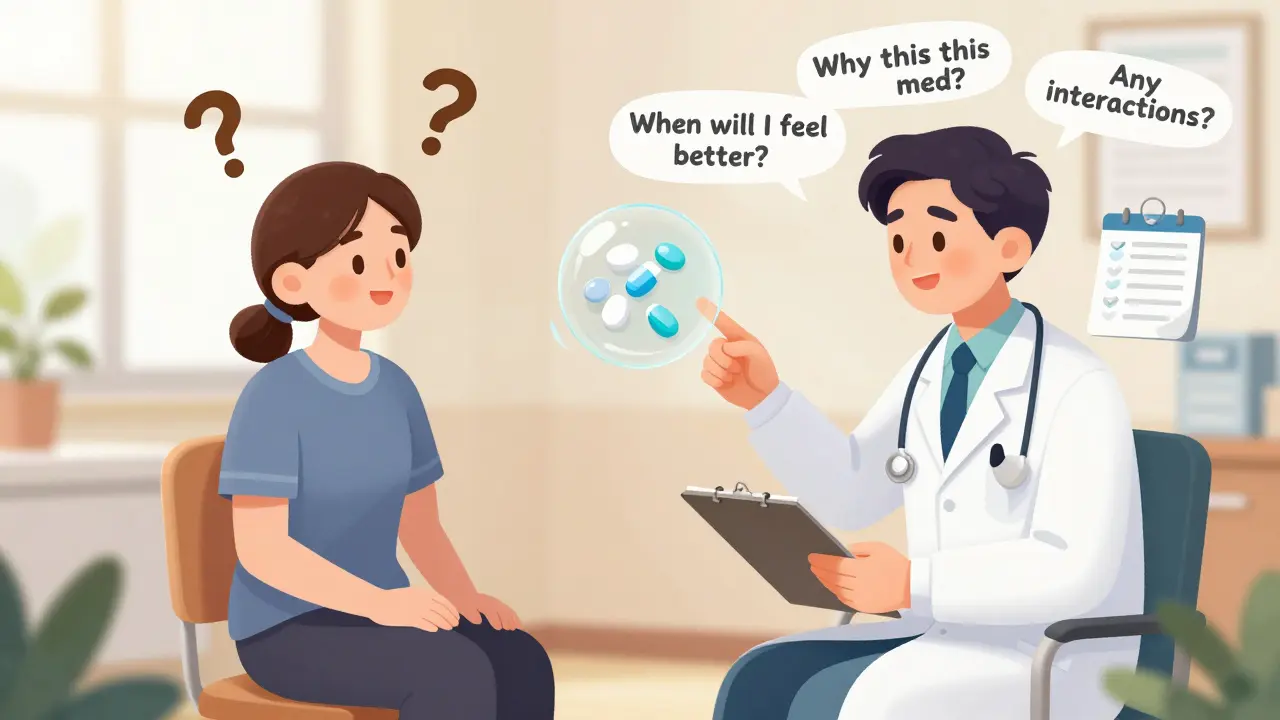
Starting a new medication can feel overwhelming. You might be told it’s necessary, but no one explains what it actually does, how to take it right, or what could go wrong. Too many people stop taking their meds because they don’t understand them-or worse, they get hurt because they didn’t ask the right questions. You don’t need to be a medical expert to protect yourself. Just knowing what to ask can cut your risk of side effects, hospital visits, and treatment failure.
What is this medication, and why am I taking it?
Start with the basics. Don’t just accept the name the doctor writes on the script. Ask for both the brand name and the generic name. Why? A 2020 report from the Institute for Safe Medication Practices found that nearly one in five medication errors comes from mixing up similar-sounding drug names. If your doctor says, “Take this for your blood pressure,” ask: “Is this lisinopril? Is that the same as Zestril?” Then ask: Which specific condition is this meant to treat? Some meds are used for more than one thing. A beta-blocker might be prescribed for high blood pressure, but also for anxiety or migraines. Knowing exactly why you’re taking it helps you notice if it’s working. If you’re taking it for migraines and your headaches don’t improve after six weeks, you need to know that’s not normal.How and when should I take it?
Dosage confusion is one of the biggest reasons people miss doses or take too much. Don’t assume “once daily” means morning. Some meds work best on an empty stomach. Others need food to be absorbed. Some must be taken at the same time every day-others don’t matter. Ask:- Should I take this with food, or on an empty stomach?
- What time of day is best?
- How many milligrams am I supposed to take each time?
- How long should I take it? Is this a short-term fix or something I’ll be on for months or years?
A 2021 study by the Agency for Healthcare Research and Quality found that 34% of patients misunderstand how to take their meds. That’s not because they’re careless-it’s because the instructions are vague. Write it down. Say it back to your doctor: “So I take one 10mg tablet at night, with dinner?” If they nod, you’re on the same page.
How will I know if it’s working?
This is the question most patients forget to ask-and it’s the one that saves the most people from quitting too soon. If you’re on an antidepressant, you might feel worse before you feel better. If you’re on a statin, you won’t “feel” lower cholesterol. But you need to know when to expect results.Ask: When should I start noticing a change? And what change should I look for? For blood pressure meds, it’s not about feeling better-it’s about numbers. Ask if you need to track your BP at home. For pain meds, ask: “Will the pain go away completely, or just get less intense?”
A 2022 study in the Journal of General Internal Medicine found that 68% of patients stop taking meds because they think they’re not working-when in reality, they just haven’t waited long enough. Knowing the timeline prevents unnecessary switches and dangerous self-adjustments.
What side effects should I expect?
Not all side effects are bad. Some are temporary. Others are warning signs. Don’t just say, “What are the side effects?” That’s too vague. Ask for a breakdown:- What side effects are common in the first few days or weeks?
- Which ones usually go away on their own?
- Which ones mean I should call you right away?
For example, nausea from an antibiotic often fades after a few days. But if you’re on a new heart medication and get sudden swelling in your legs or trouble breathing, that’s an emergency. A 2023 review in The BMJ found that nearly 1 in 4 hospital admissions for older adults are caused by bad drug reactions. Most of these could’ve been avoided if patients knew what to watch for.
Also ask: Will this affect my sleep, mood, or energy? Mental health meds, in particular, can cause drowsiness, anxiety, or emotional numbness early on. If you’re not told this, you might think you’re “failing” at treatment. A 2023 survey by the National Alliance on Mental Illness showed that 72% of patients who asked this question stayed on their meds longer because they knew the early discomfort wasn’t a sign it wasn’t working.
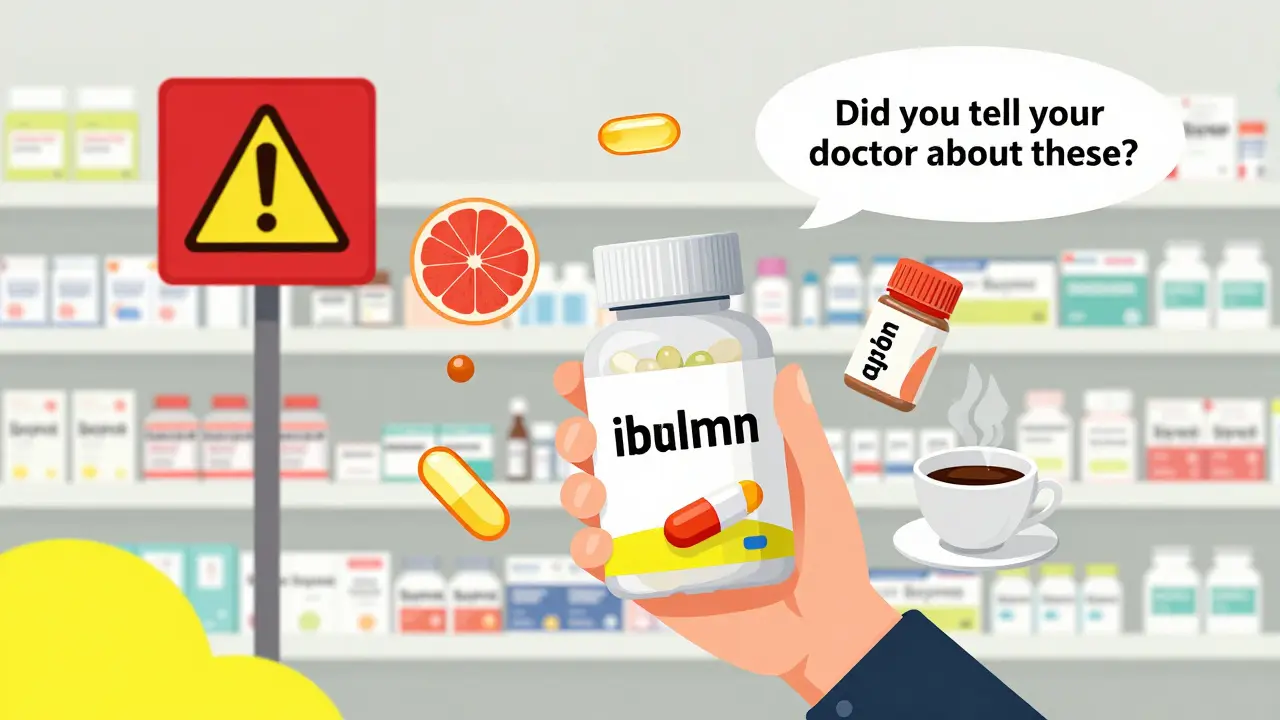
Will this interact with anything else I’m taking?
You’re not just taking one drug. You’re probably taking several. Prescription meds, over-the-counter painkillers, vitamins, herbal supplements-even grapefruit juice can mess with your pills.Bring a list. Not just what’s in your medicine cabinet. Include:
- All prescription drugs (even ones you’ve taken before)
- Every supplement (fish oil, magnesium, turmeric, melatonin)
- OTC meds (ibuprofen, antacids, cold pills)
- Any recreational substances (alcohol, marijuana, nicotine)
MedlinePlus says 40% of adults take five or more medications. That increases the risk of harmful interactions by 85%. A 2023 Reddit thread with 287 real-life stories showed that people who asked about interactions avoided serious problems-like one person who learned their blood pressure med would dangerously boost the effect of their antidepressant. That interaction could’ve sent them to the ER.
Are there alternatives?
Your doctor picked this drug for a reason. But why this one? Ask: Why this medication instead of another? Is it cheaper? Safer? More effective for your case?There’s often more than one option. For high cholesterol, statins are common-but there are also ezetimibe, PCSK9 inhibitors, or lifestyle changes. For depression, there are SSRIs, SNRIs, or therapy-first approaches. Some doctors assume you want the newest or most expensive option. But cost matters. A 2023 Kaiser Family Foundation survey found that 25% of patients skip doses because they can’t afford their meds. Ask: “Is there a generic version? Is there a lower-cost alternative?”
Also ask: Have you considered genetic testing? Pharmacogenetics looks at your genes to predict how you’ll respond to certain drugs. Genomind’s 2022 trial showed it can accurately predict 60-80% of variable responses. If you’ve had bad reactions to meds before, this could prevent future mistakes. It’s not for everyone-but it’s worth asking.
When should I follow up?
A prescription isn’t a one-time event. It’s a process. Ask: When should I come back to check how this is going? And what happens if it doesn’t work?American Medical Association data shows nearly half of patients never schedule a follow-up. That’s dangerous. If your blood sugar doesn’t drop after six weeks, you need to know what the next step is. Is it a higher dose? A different drug? A blood test?
Also ask: What signs should make me call you before my next appointment? That could be dizziness, rash, confusion, or unusual fatigue. Don’t wait until you’re in crisis. Have a clear plan.
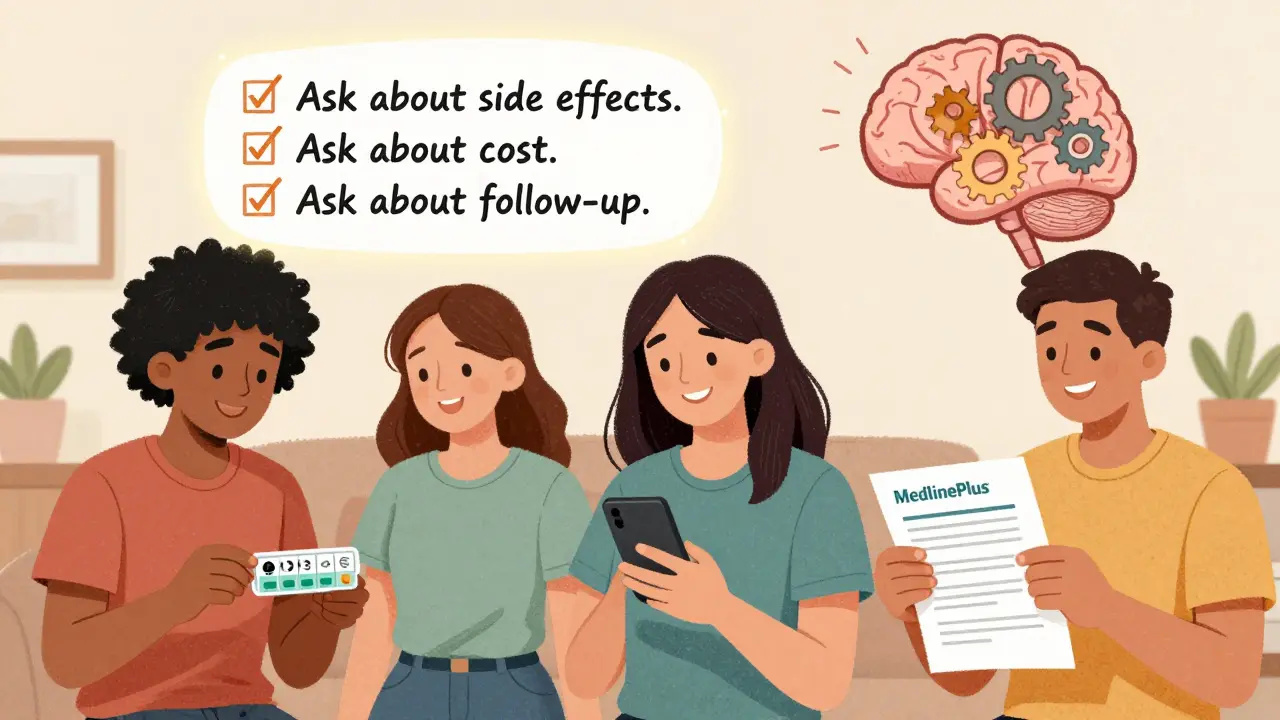
How can I make sure I remember all this?
You’re not going to remember everything. That’s normal. Here’s how to fix it:- Bring a written list of all your current meds to the appointment.
- Write down answers as your doctor speaks. Studies show this boosts memory by 70%.
- Ask if you can record the conversation (many doctors say yes).
- Ask for printed materials or a link to a trusted resource like MedlinePlus.
- Use a pill organizer with alarms-many apps like Hero Health offer free versions.
And if you feel rushed? Say it. “I want to make sure I understand this correctly. Can we take two more minutes?” Most doctors will slow down if you’re clear about your needs. A 2022 SurveyMonkey study found that patients who asked for more time were 3 times more likely to remember their instructions.
What’s changing in 2026?
Health systems are catching up. Electronic health records now include mandatory prompts for these questions. Epic and Cerner systems ask providers to confirm patients understand their meds before prescribing. The FDA now requires providers to discuss cost alternatives. And AI tools are being tested to customize questions based on your age, health history, and even your reading level.But the biggest change? You’re in charge. You don’t need to be perfect. You just need to ask. Even three good questions can cut your risk of harm. And if your doctor seems annoyed? That’s a red flag. Good care isn’t about speed-it’s about understanding.
What if I don’t understand what the doctor says?
It’s okay to say, “I’m not sure I understood.” Ask them to explain it again, slower. Request simpler terms: “Can you say that like I’m 12?” The Agency for Healthcare Research and Quality found that only 54% of doctors explain things at a 6th-grade reading level. If you’re still confused, ask for written materials or a follow-up call. You have the right to understand your care.
Can I stop taking the medication if I feel worse?
Never stop a prescription without talking to your doctor first. Some meds cause withdrawal symptoms or make your condition worse if stopped suddenly. If you feel worse, call your doctor. Ask: “Is this a side effect, or is the medication not working?” They may adjust the dose, switch drugs, or suggest a temporary fix. Stopping on your own is riskier than continuing under supervision.
Do I need to tell my pharmacist about new prescriptions?
Yes. Pharmacists are trained to catch drug interactions that doctors miss. Always give them your full list of meds-even if you think it’s obvious. Many pharmacies now offer free med reviews. Ask for one when you pick up a new prescription. A 2022 study by the American Pharmacists Association found that patients who got a pharmacist review reduced interaction risks by 63%.
What if the medication is too expensive?
Say so. Ask: “Is there a generic version?” or “Can I get a 90-day supply to save money?” Many drug companies offer patient assistance programs. Your pharmacist can help you apply. A 2023 KFF survey found that 72% of health plans now require doctors to discuss cost options before prescribing. You’re not being rude-you’re being smart.
Should I ask about natural alternatives?
Yes, but be specific. Don’t just say, “Can I take turmeric instead?” Ask: “I’ve heard about [herb/supplement]. Is it safe to use with this medication? Is there evidence it works as well?” Some supplements help, but many interfere with meds. A 2023 study showed that 40% of patients taking blood thinners also used herbal supplements-without telling their doctor. That’s dangerous. Your doctor needs to know everything.

I used to dread doctor visits until I started asking the questions in this post. Last month I asked my doc why I was on a statin-I thought it was for cholesterol, turns out it was for inflammation from my autoimmune thing. She hadn’t even told me that. Changed everything. Took me five minutes to ask. Saved me months of confusion.
Now I write down my questions before every appointment. Even if I forget half of them, the fact that I showed up prepared makes them slow down and actually listen.
Also-bring a list of everything. I once forgot I was taking melatonin. Turns out it messes with my blood pressure med. My pharmacist caught it. Doctors don’t always know what’s in your cabinet.
Let’s be real-most doctors are overworked and underpaid, but that doesn’t excuse them treating patients like dumb kids. I had a cardiologist prescribe me lisinopril and never mention the cough side effect. I stopped taking it because I sounded like a dying raccoon. Then I Googled it. Of course it was a known side effect. Why didn’t he warn me?
And don’t get me started on supplements. I take ashwagandha for stress. My doc acted like I was doing heroin. No one asks about your turmeric or magnesium or whatever herbal nonsense you’re swallowing. That’s negligence. You’re not just a number on a chart-you’re a person with habits.
And yes, I know some people think natural remedies are woo-woo. But if your doctor can’t explain why your specific combo is dangerous, they’re not doing their job. Half the time they’re just reading from a script they got in med school 20 years ago.
It is of paramount importance to recognize that the patient-physician dynamic, while ostensibly hierarchical, is in fact a collaborative enterprise predicated upon epistemic equity. The biomedical model, though efficacious in many contexts, often fails to account for the phenomenological experience of the patient as an embodied subject negotiating systemic complexity.
One must therefore interrogate the linguistic asymmetry inherent in clinical discourse. The majority of physicians, as the Agency for Healthcare Research and Quality cogently demonstrates, operate at a reading level exceeding the median adult literacy threshold. This epistemic exclusion is not incidental-it is structural.
Moreover, the commodification of pharmaceuticals within neoliberal healthcare paradigms necessitates a recalibration of agency. The patient’s right to understand-not merely to be informed, but to comprehend-is not a privilege, but a moral imperative. The invocation of pharmacogenetics, while technologically promising, must be contextualized within broader frameworks of distributive justice.
One might further posit that the very act of questioning constitutes a form of resistance against the medicalization of everyday life. To ask is to reclaim autonomy.
Good post. I’ve been on a few meds over the years and the ones that stuck were the ones where my doc actually paused and said, ‘Let me explain this again.’
One thing I learned: don’t be afraid to say ‘I’m not sure I got that.’ I used to nod along just to be polite. Now I say, ‘Can you say that like I’m a 12-year-old who just got a new prescription?’ They always laugh, then explain it better.
Also-pharmacists are your secret weapon. I got a med review last year and they caught that my OTC allergy pill was canceling out my blood pressure med. My doctor had no clue. Pharmacist knew instantly. Go talk to them. They’re not just the guy behind the counter.
Asking questions is basic. If you need a list, you shouldn’t be managing your own meds.
Also, pharmacogenetics is overhyped. Most people don’t need it.
Stop being so damn passive. You think your doctor cares if you live or die? They’re paid per visit. They don’t want to spend 20 minutes explaining a statin. They want you out so they can see the next one.
And don’t even get me started on supplements. People popping turmeric like candy while on blood thinners? That’s not ‘natural,’ that’s suicide with a yoga mat.
Stop being a victim. If you’re too lazy to read the damn leaflet, you deserve to get hospitalized. And yes-I said it. This isn’t a parenting class. You’re an adult. Learn how to read. Or stop complaining.
They’re lying about the 2026 EHR changes. Epic doesn’t care about patients. They’re selling data. The FDA doesn’t require cost discussions-they just say they do so you feel better about paying $800 for a pill.
AI tools? More like surveillance tools. They’re tracking your questions to sell you ads later. Your doctor’s tablet is watching you.
And don’t tell me about generics. The real drug companies own the generics now. Same factory. Same chemical. Same price hike.
You think you’re empowered? You’re a data point. Wake up.
Look, the entire pharmacovigilance infrastructure is a Rube Goldberg machine built on placebo-driven compliance and institutional inertia. We’re not talking about efficacy-we’re talking about adherence metrics and CMS reimbursement codes.
Pharmacogenomics is the only real frontier here, but it’s being weaponized by payers to stratify risk pools. If your SNP profile says you’re a ‘poor metabolizer’ of CYP2D6 substrates, you’re either flagged for higher monitoring costs or quietly deprescribed.
And don’t get me started on the ‘natural alternatives’ crowd. They’re not asking-they’re performing wellness theater. Turmeric doesn’t lower LDL. It’s a marketing slogan with a root.
Real solution? Standardized patient-facing AI triage bots trained on FDA labels and MedlinePlus. No more human error. No more ‘I thought it was once a day.’ Just push the button. The algorithm doesn’t lie.
This is so important. I work with older adults and I’ve seen so many stop meds because they didn’t know what to expect. One woman thought her antidepressant made her ‘emotionless’-she’d been crying every night because she thought she was broken. Turns out it was a side effect that fades after 3 weeks. She didn’t know that.
Also, I always tell people: if your doctor gets annoyed when you ask questions, find a new one. Good doctors don’t mind. They expect it. They want you to be involved.
And yes, write things down. Bring a friend. Record it. Whatever helps. You’re not being annoying-you’re being smart. And if you’re unsure about interactions, ask your pharmacist. They’re trained for this stuff. They’re not just filling prescriptions-they’re safety netters.
bro i just started a new med and i was scared to ask anything 😭
then i wrote down 3 questions on my phone and my doc was like ‘oh wow you actually did your homework’ 🤯
now i use a pill box with alarms and i text my pharmacist if i feel weird. they reply in 10 mins. 🙌
ps i take ashwagandha too and no one cares lmao
The fundamental challenge in contemporary clinical practice lies not in the absence of information, but in the disjunction between the technical precision of pharmaceutical science and the communicative inadequacy of its delivery systems. The patient, as an epistemic agent, is routinely positioned as a passive recipient rather than an active co-architect of therapeutic outcomes.
While the questions enumerated herein represent a necessary corrective, they remain insufficient without institutional recalibration. The time allocated per visit-the reimbursement structures that incentivize speed over depth-the lack of standardized patient education tools-all of these are systemic failures masked as individual negligence.
One might argue that the burden of comprehension should not fall solely upon the patient. The onus must be placed upon the provider to ensure understanding, not merely to impart information. The use of teach-back methods, visual aids, and multilingual resources is not an accommodation-it is a professional obligation.
Moreover, the integration of digital tools-such as AI-driven decision support and patient portals with embedded Q&A modules-must be mandatory, not optional. Technology, when ethically deployed, does not replace human interaction; it enhances its fidelity.
Empowerment is not a virtue to be cultivated by the patient alone. It is a right to be institutionalized by the system.
They say 2026 will have mandatory prompts... but who’s really controlling the software? I’ve seen the backend. The EHRs are built by contractors who’ve never met a patient. They don’t care if you understand-they care if the checkbox gets clicked.
And the AI tools? They’re trained on biased datasets. If you’re a woman over 60, the algorithm assumes you’re non-compliant. If you’re poor, it suggests cheaper drugs-even if they’re less effective.
They want you to ask questions? Fine. But don’t think the system is on your side. It’s designed to make you feel heard while quietly optimizing for profit.
Pharmacist reviews? Good. But they’re understaffed. You’ll wait 3 weeks. Meanwhile, your BP keeps climbing.
Ask. But don’t trust. Ever.