
Key Takeaways
- Obesity is a chronic disease driven by a breakdown in energy homeostasis, not just a lack of discipline.
- The brain's arcuate nucleus acts as a control center, balancing hunger-stimulating and satiety-inducing neurons.
- Leptin resistance is the primary driver of common obesity, meaning the brain stops "hearing" the signal to stop eating.
- Peripheral hormones like ghrelin and insulin work together with brain signaling to dictate when we feel hungry.
- Modern treatments are now targeting these specific biological pathways to help reset the body's weight set-point.
The Brain's Control Center for Hunger
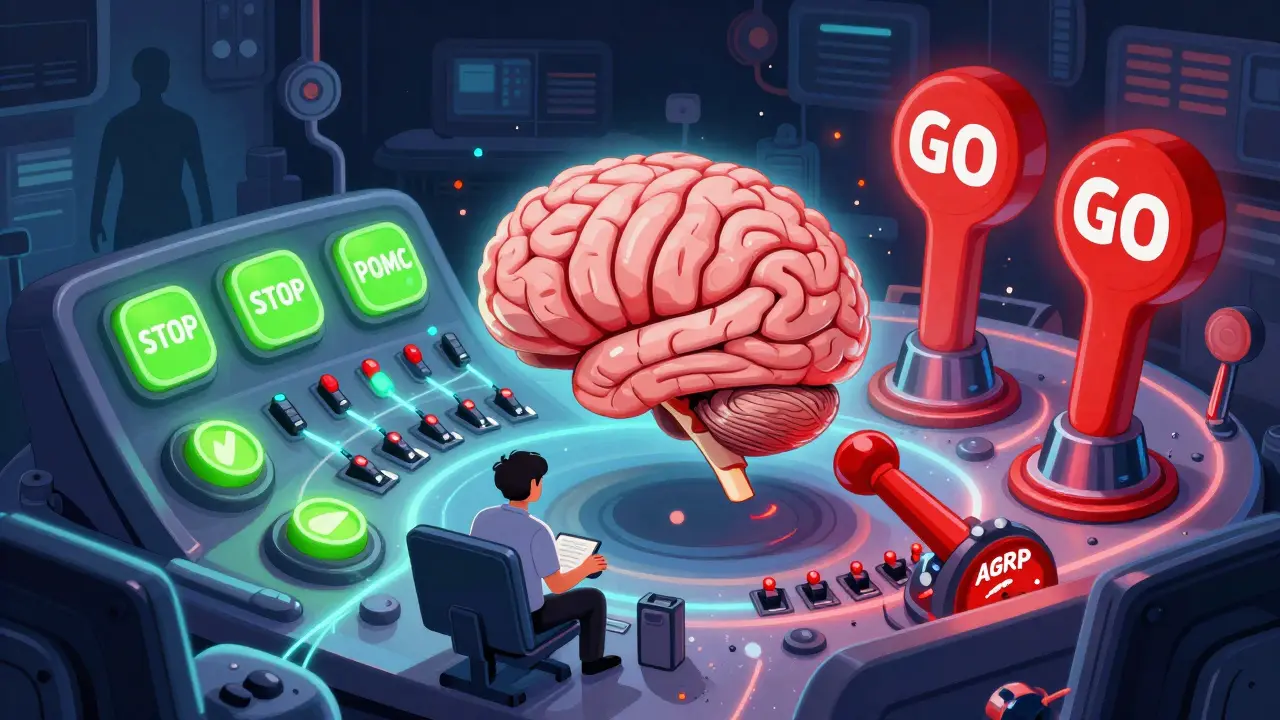
At the heart of your appetite is a tiny region of the brain called the Hypothalamic Arcuate Nucleus, a specialized hub that monitors your energy levels. Think of it as a switchboard with two main types of neurons that are constantly arguing over whether you should eat or stop. On one side, you have POMC neurons. These are the "stop" signals. When they fire, they release a peptide called alpha-MSH, which hits the Melanocortin-4 Receptor (MC4R). In experimental models, this signal can slash food intake by up to 40%. On the other side are the AgRP/NPY neurons. These are the "go" signals. They trigger an intense drive to find food. To give you an idea of their power, rodent studies show that activating these neurons can increase food consumption by 300-500% in just a few minutes. In a healthy body, these two groups stay in balance. In obesity, the scale tips heavily toward the AgRP side.The Hormonal Tug-of-War
Your brain doesn't make these decisions in a vacuum; it relies on a constant stream of data from your body via hormones. Leptin is the most famous of these. Produced by your fat cells, leptin's job is to tell your brain how much energy you have stored. In a lean person, leptin levels might be 5-15 ng/mL. In someone with obesity, these levels can jump to 30-60 ng/mL. You'd think more leptin would mean less hunger, but here is the catch: the brain becomes deaf to the signal. This is called leptin resistance. The brain "sees" the high leptin but doesn't believe it, leading it to think the body is starving even when fat stores are high. Then there is Ghrelin, often called the "hunger hormone." It's the only hormone that actually tells you to eat. During a fast, ghrelin levels might be around 100-200 pg/mL, but right before a meal, they can spike to 1,000 pg/mL. Ghrelin directly activates those AgRP neurons we mentioned, making a slice of pizza look irresistible even if you aren't physically starving. Insulin also plays a role. While we usually associate it with blood sugar, it also crosses into the brain to help suppress appetite. When insulin and leptin work together, they dampen the hunger signals and ramp up the satiety signals. When this system breaks down, the result is a persistent state of hunger.| Hormone | Primary Source | Effect on Appetite | Role in Obesity |
|---|---|---|---|
| Leptin | Adipocytes (Fat cells) | Decreases (Satiety) | Resistance occurs; brain ignores signal |
| Ghrelin | Stomach Lining | Increases (Hunger) | Triggers AgRP neurons to drive eating |
| Insulin | Pancreas | Decreases (Satiety) | Synergizes with leptin to stop feeding |
| Pancreatic Polypeptide | Pancreas (F cells) | Decreases (Satiety) | Often low in obesity, speeding gastric emptying |
The Cellular "Wiring" and Signal Failures
If hormones are the messages, signaling pathways are the wires that carry those messages to the brain's nucleus. If the wires are frayed, the message never gets through. One of the most critical wires is the PI3K/AKT pathway. This is where leptin and insulin signals converge. When this pathway is active, it helps the brain suppress food intake by 30-50%. However, in obesity, a protein called JNK gets activated, which essentially "cuts the wire" and induces central leptin resistance. Another player is mTOR. This system modulates energy balance based on nutrient availability. When mTOR is stimulated in the hypothalamus, food intake typically drops. In many cases of age-related obesity, this system slows down, making it harder for the body to naturally regulate weight as we get older.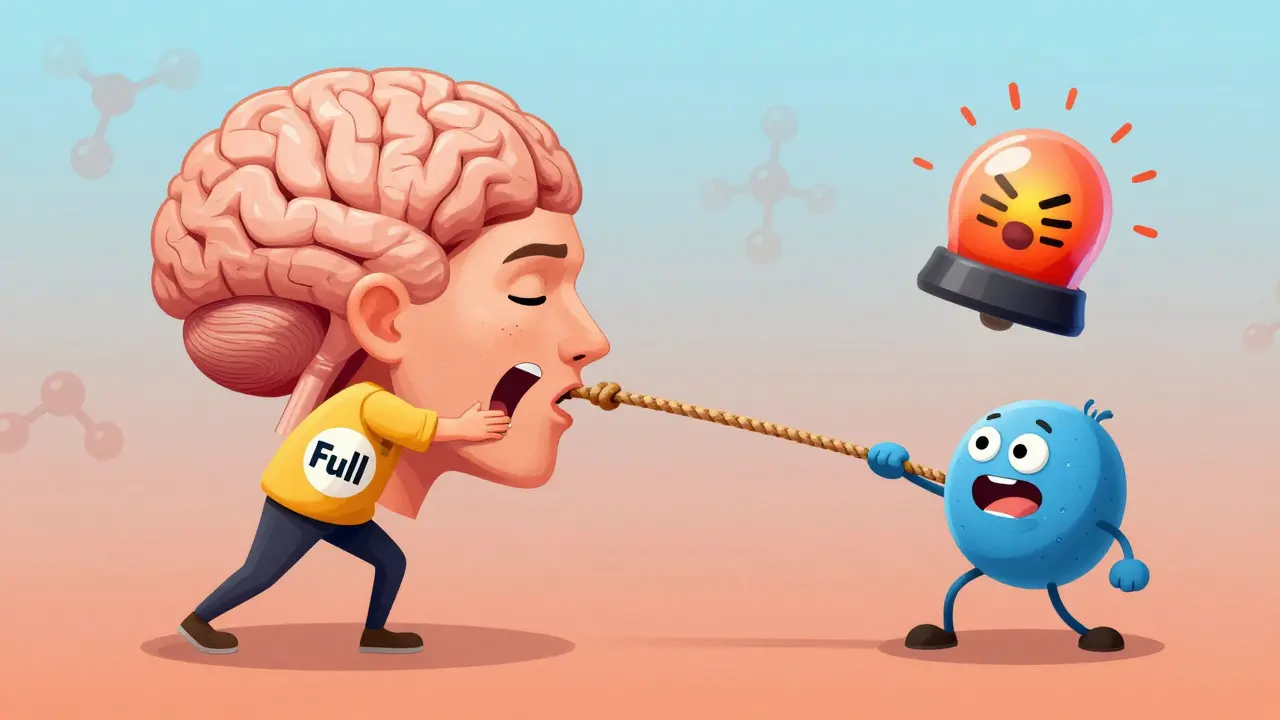
Why Some Groups Struggle More
Pathophysiology isn't the same for everyone. There are biological shifts that make weight management significantly harder for certain people. For instance, post-menopausal women often see a 12-15% increase in central adiposity (belly fat) within just five years. This isn't just about a slower metabolism; it's about Hypoestrogenemia (low estrogen). Without enough estrogen, the brain's energy expenditure drops, and food intake naturally increases. Then there are rare genetic conditions. While most obesity is "common" and related to environment and resistance, some people have a total lack of leptin or a broken MC4R receptor. For these individuals, the "stop" signal doesn't exist, leading to severe, early-onset obesity that cannot be treated with diet and exercise alone.Modern Medical Interventions
Because we now know that obesity is a failure of these biological pathways, we've moved away from the "eat less, move more" mantra and toward targeted therapies. Drugs like Semaglutide (a GLP-1 receptor agonist) essentially mimic hormones that tell the brain the stomach is full. By activating multiple appetite pathways, these medications can help patients lose an average of 15% of their body weight by effectively "fixing" the satiety signal. For those with specific genetic defects, medications like Setmelanotide act directly on the MC4R receptor, bypassing the broken parts of the signaling chain to reduce weight by 15-25% in eligible patients.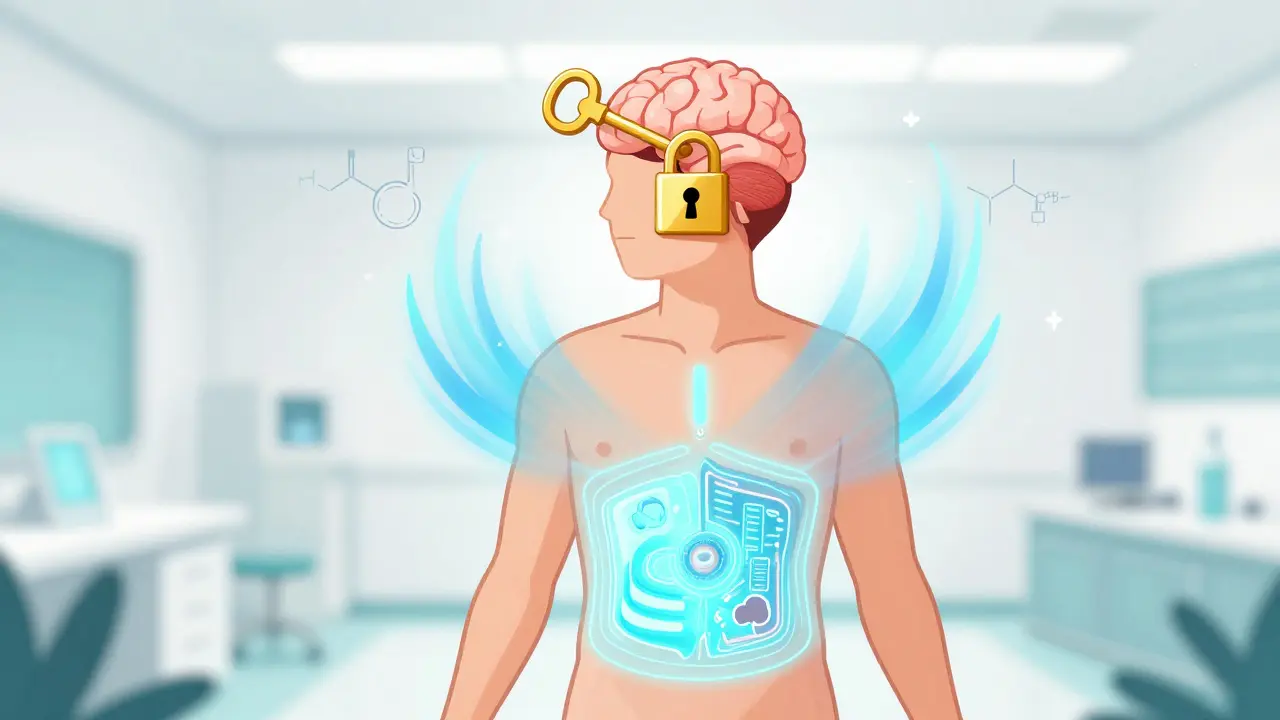
The Future of Weight Management
We are entering an era of precision medicine for obesity. Researchers recently discovered a new group of excitatory neurons in the arcuate nucleus that can shut down feeding in as little as two minutes. This discovery suggests that future treatments won't just be about suppressing hunger, but about rapidly triggering a "full" feeling. Combining these central brain treatments with peripheral metabolic boosters is the next frontier. We are moving toward a model where we treat the brain's perceived starvation and the body's metabolic dysfunction as two sides of the same coin.What exactly is leptin resistance?
Leptin resistance happens when the brain stops responding to leptin, a hormone produced by fat cells. In a healthy system, high leptin levels tell the brain to stop eating. In obesity, the brain ignores this signal, leading the person to feel hungry even though they have ample energy stored in fat cells.
Why is ghrelin called the hunger hormone?
Ghrelin is produced in the stomach and levels spike when the stomach is empty. It travels to the brain and activates the AgRP/NPY neurons in the arcuate nucleus, which creates a powerful physiological drive to eat.
Can genes really cause obesity?
Yes, although monogenic obesity is rare. Mutations in the leptin gene or the MC4R receptor can make it biologically impossible for a person to feel full, leading to severe obesity from a very young age. However, most people have a genetic predisposition that makes them more susceptible to environmental triggers.
How do GLP-1 medications like Semaglutide work?
These medications mimic the GLP-1 hormone, which slows down gastric emptying (keeping food in the stomach longer) and signals the brain's satiety centers to reduce the desire to eat, effectively overriding some of the dysfunction in the appetite regulation system.
Does menopause actually cause weight gain?
The drop in estrogen during menopause affects the brain's regulation of energy. It often leads to an increase in central adiposity because the body's baseline energy expenditure decreases while the biological drive to eat often increases.
Next Steps and Troubleshooting
If you're struggling with weight despite a strict diet, consider the following paths based on your situation:- For those with sudden, uncontrollable hunger: Discuss your hormonal profile with an endocrinologist. Checking for insulin resistance or hormonal imbalances can reveal if your "set-point" has shifted.
- For post-menopausal women: Focus on strength training to combat the decrease in basal metabolic rate caused by hypoestrogenemia.
- For those failing traditional diets: Look into GLP-1 receptor agonists or other metabolic interventions. If the issue is biological resistance, willpower alone is rarely the solution.

Oh, wonderful. Another scientific excuse for why we can't stop eating donuts. Truly a triumph of the human spirit to find a way to blame a tiny nucleus in the brain for a lack of self-control. I'm sure the 'set-point' is the real villain here, not the three slices of cake I had for lunch.
THE ABSOLUTE AUDACITY of the medical community to wait until NOW to prioritize the MC4R receptor! I have been screaming into the void about the catastrophic failure of the 'calories in, calories out' dogma for years! It is an absolute travesty that so many people suffered while doctors played with their spreadsheets! The drama of the human metabolic struggle is practically Shakespearean in its tragedy!
Imagine thinking a basic summary of the PI3K/AKT pathway constitutes 'deep' insight. This is essentially Pediatrics 101 for anyone with a functioning cerebral cortex. It's almost cute how the internet treats basic pathophysiology as some kind of revelation. Utterly banal.
It is imperative that you all recognize that these biological failures are often the result of a spiritually bankrupt lifestyle. One must maintain a rigorous discipline of the soul to ensure the hormones remain in harmony. It is quite disappointing to see such a focus on chemical shortcuts like Semaglutide instead of pursuing a path of absolute moral and dietary purity.
I really feel for the people dealing with leptin resistance... it sounds so scary!!! The way the AgRP/NPY neurons just take over is wild... just wild!!! Hope these new GLP-1 meds help everyone feel better!!!
Science is fine, but the truth is that the best way to stay healthy is following the traditional ways of my ancestors in India. We didn't need these fancy brain drugs back then. Nature is the only real teacher for the body.
Interesting read!