
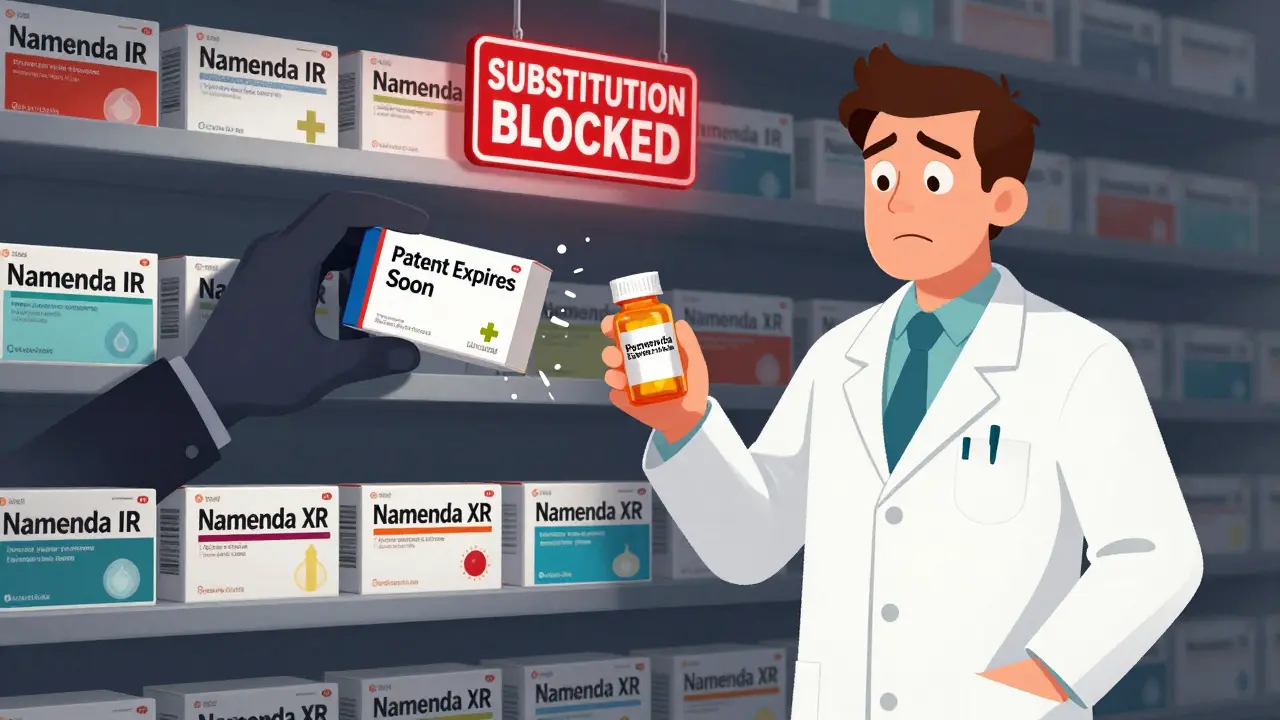
When you fill a prescription for a brand-name drug, you might expect your pharmacist to offer a cheaper generic version - and in most states, they’re legally allowed to. But what if the drug company made it impossible for that to happen? That’s not a glitch in the system. It’s a deliberate strategy - and it’s happening right now.
How Generic Substitution Is Supposed to Work
State laws in the U.S. let pharmacists substitute generic drugs for brand-name ones if they’re bioequivalent. That means the generic has the same active ingredient, dosage, and effect - but costs 80% less. This system was designed to save patients and taxpayers billions. When a patent expires, generics flood the market. In normal cases, within months, generics capture 80-90% of prescriptions. That’s how competition is supposed to work: lower prices, more access.
But some drug companies don’t want that. Instead of waiting for generics to compete fairly, they use legal loopholes and technical tricks to block substitution before it even starts. This isn’t about innovation. It’s about keeping prices high.
Product Hopping: The Main Trick
The most common tactic is called product hopping. Here’s how it works:
- A drug’s patent is about to expire.
- The company releases a slightly changed version - maybe a new pill shape, extended-release formula, or different coating.
- Then they stop selling the original version.
Why? Because state substitution laws only apply to the original drug. If the original is gone, pharmacists can’t swap in a generic - there’s nothing to substitute for.
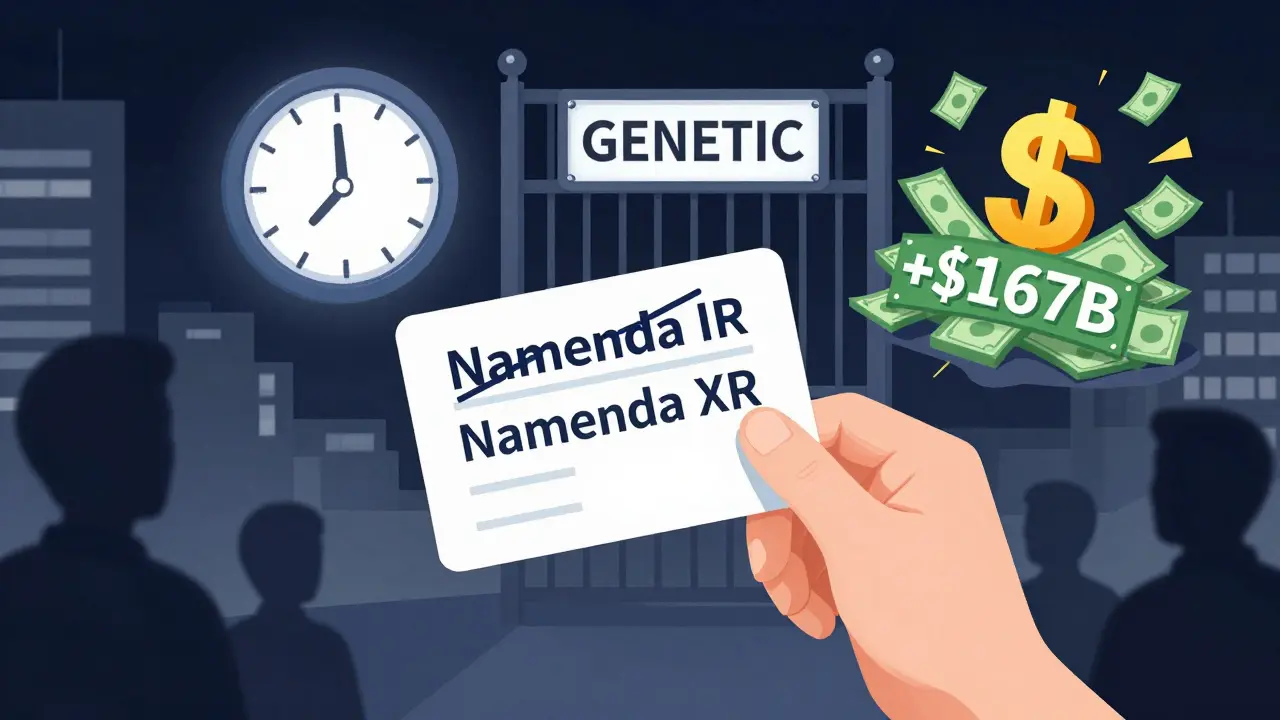
The classic example is Namenda a drug used for Alzheimer’s. The original, Namenda IR (immediate release), was set to lose patent protection. Instead of letting generics enter, the maker, Actavis, pulled it off the market just 30 days before generics could launch. They replaced it with Namenda XR, an extended-release version. Patients had to get a new prescription. Many doctors didn’t switch them. Many patients didn’t even know they could.
The Second Circuit Court of Appeals ruled in 2016 that this was illegal. Why? Because it wasn’t innovation - it was a trap. Generic manufacturers had no chance. The court called it a "coordinated effort to eliminate competition."
How It Hurts Patients and Payors
These tactics aren’t theoretical. They cost real money.
- Revlimid a cancer drug went from $6,000 a month to $24,000 over 20 years - all while patents were extended and new versions rolled out.
- One analysis found Humira an autoimmune drug, Keytruda a cancer immunotherapy, and Revlimid together cost U.S. payers $167 billion more than they would have in Europe, where generics entered faster.
- In the case of Copaxone a multiple sclerosis drug, Teva switched to a new formula and delayed generics for years. The cost to patients? $4.3 billion to $6.5 billion.
When product hopping works, generic market share drops from 80-90% to as low as 10-20%. That’s not competition. That’s control.
Another Trick: Blocking Generic Samples
Even if a generic company wants to enter the market, they need to test their drug against the brand-name version. That requires samples.
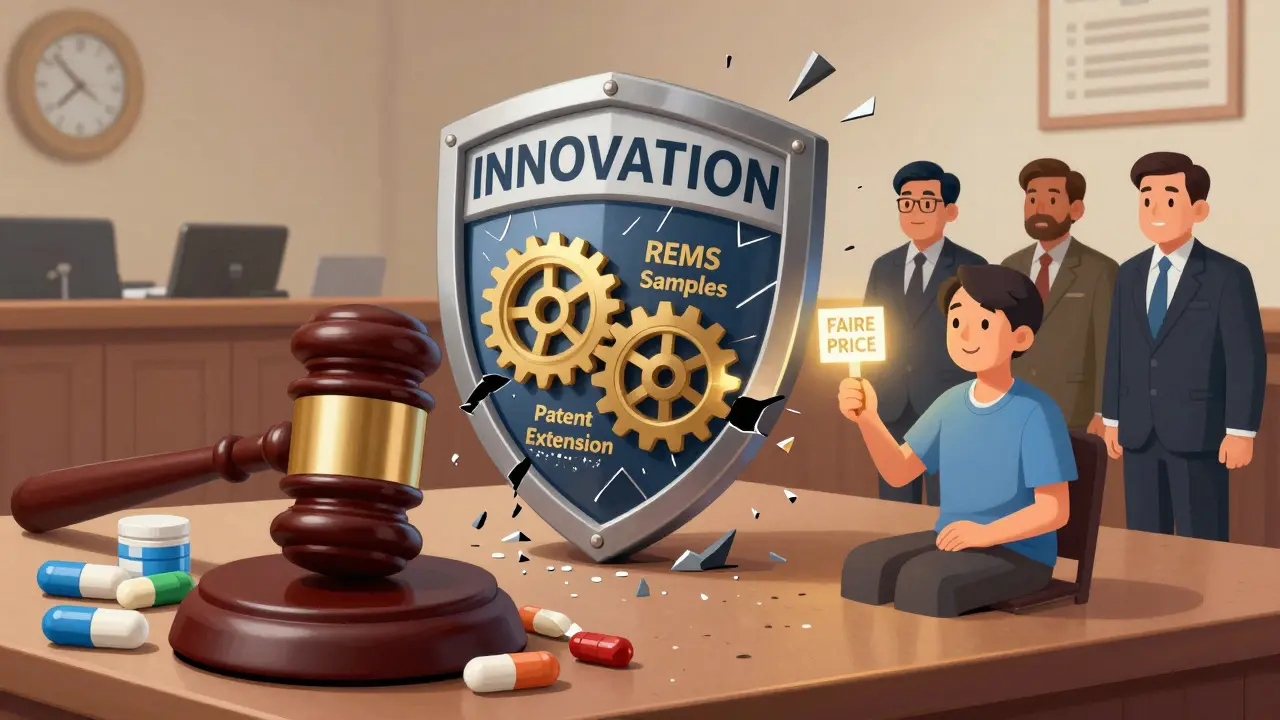
But some companies use FDA-mandated safety programs called REMS Risk Evaluation and Mitigation Strategies to block access. They claim safety reasons - but the real goal is to delay testing. A 2017 study found over 100 generic manufacturers couldn’t get samples. One analysis estimated this alone costs the system more than $5 billion a year.
It’s not just inconvenient. It’s a legal barrier built into the system. Courts have called this "textbook monopolization."
Why Some Courts Say "It’s Fine" - And Others Don’t
The legal fight is messy. Some courts see product hopping as innovation. Others see it as fraud.
In 2009, a court dismissed a case against AstraZeneca for switching from Prilosec to Nexium. Why? Because Prilosec was still on the market. Patients could still choose it. The court called the new drug a "legitimate product improvement."
But in the Namenda case, the court saw it differently. Namenda IR was removed. There was no choice. The original drug - the one generics could substitute for - was gone. That’s what made it illegal.
The difference? Availability. If the old version stays, courts often look the other way. If it’s pulled? That’s when regulators step in.
Enforcement: Who’s Fighting Back?
The FTC Federal Trade Commission has been pushing back hard. In 2022, they released a major report titled "Pharmaceutical Product Hopping," detailing how these tactics delay generic entry and inflate prices.
They’ve won key cases:
- In the Namenda case, the FTC got a court order forcing Actavis to keep selling the old version for 30 days after generic entry.
- In the Suboxone case, Reckitt Benckiser was forced to settle after it pushed patients away from tablets and toward films - while threatening to remove the tablets. The FTC called it "coercive."
The Department of Justice (DOJ) has also stepped in - but mostly against generic manufacturers. In 2023, Teva paid $225 million for price-fixing, and Glenmark paid $30 million. That’s a reminder: the system is broken on both sides.
What’s Next? Legislative Pressure and Public Awareness
State attorneys general are now filing their own lawsuits. New York’s AG led the charge on Namenda. Other states are following.
The FTC is also lobbying state legislatures to strengthen substitution laws. Some states are responding by banning "hard switching" - making it illegal to remove a drug from the market right before generics launch.
Experts agree: the current legal patchwork doesn’t work. Courts are split. Companies exploit the gaps. Patients pay.
There’s growing pressure for federal action. In 2023, Congress held hearings on barriers to generic competition. The message was clear: if you want lower drug prices, you have to stop these games.
What Patients Can Do
You can’t change the law. But you can ask questions.
- If your pharmacist says "this drug doesn’t have a generic," ask: "Was there an older version? Was it taken off the market?"
- If your doctor prescribes a new formulation, ask: "Is there a cheaper version I could have taken before?"
- Check drug price trackers. Sites like GoodRx show price spikes - often right after a product hop.
Awareness matters. When enough people demand transparency, companies think twice.
What is product hopping in the pharmaceutical industry?
Product hopping is when a drug company releases a slightly modified version of a drug - like a new dosage or delivery method - and then stops selling the original version right before its patent expires. This blocks pharmacists from substituting cheaper generics because there’s no original drug left to replace. Courts have ruled this illegal when the original drug is withdrawn to eliminate competition.
Why can’t pharmacists substitute generics if the brand drug changes?
State substitution laws only allow pharmacists to swap a generic for the exact brand-name drug listed on the prescription. If the original version is removed, the pharmacy has nothing to substitute it with - even if a generic exists for the old version. The new version is treated as a completely different drug, so substitution is blocked.
How do drug companies prevent generic manufacturers from testing their products?
Some companies use FDA-mandated Risk Evaluation and Mitigation Strategies (REMS) to restrict access to drug samples needed for bioequivalence testing. Without these samples, generic manufacturers can’t prove their drug works the same way - so they can’t get approval. Over 100 generic firms have reported being denied samples, delaying competition by years.
Has the government taken action against these practices?
Yes. The FTC has won multiple cases, including forcing Actavis to keep selling Namenda IR after generic entry and settling with Reckitt Benckiser over Suboxone. The DOJ has also fined generic manufacturers for price-fixing. State attorneys general are filing lawsuits, and Congress is holding hearings on the issue.
How much money do these tactics cost patients?
Estimates suggest delayed generic entry through product hopping and patent manipulation costs U.S. patients and payers over $167 billion in just three drugs - Humira, Keytruda, and Revlimid. In one case, a single drug’s price jumped 300% over 20 years because generics were blocked.
Final Thought: Competition Shouldn’t Be This Hard
Generic drugs exist to save lives and money. The system was built on trust - that when a patent expires, competition kicks in. But when companies manipulate the rules to delay that competition, it’s not just unethical. It’s illegal. And the people paying the price? It’s not shareholders. It’s you.

This is wild 😱 I had no idea drug companies were pulling this crap. My grandma’s meds went from $30 to $200 overnight. No one told us why.
So let me get this straight - we’re paying $24k/month for a drug that’s basically the same as a $5 generic? And the system lets them do this? 🤦♀️
You’re not alone. I’ve been fighting this for years. Pharmacists don’t always know the full story either. Ask questions. Push back. It matters.
In Japan, they don’t do this. Generics hit fast. Prices drop. People live longer. We’re not just broken - we’re choosing to be.
It’s not capitalism. It’s feudalism with a pharmacy counter. The king (pharma exec) owns the medicine. We’re just peasants with credit cards. 😔
I’ve worked in pharmacy for 18 years. I’ve seen patients cry because they couldn’t afford their meds. This isn’t policy. It’s cruelty dressed up as innovation.
This is all a CIA operation. The government owns the patents. They want you dependent. You think this is about money? It’s about control. Wake up.
The real issue? The FDA is a corporate puppet. REMS? A legal loophole? No - it’s a weapon. And the courts? They’re just the bailiffs for Big Pharma. $$$
These pharma bros are basically drug kingpins with MBAs and PR teams. They don’t invent cures - they invent excuses to keep you paying. Pathetic.
I get why courts are split. Sometimes the new version *is* better. But when they yank the old one? That’s not progress. That’s theft. And it’s working.
In the UK, generics kick in within weeks. We pay a fraction. We don’t have this mess. Why? Because we treat health as a right. Not a profit center.
Here’s the thing most people miss - the FDA doesn’t require brand companies to provide samples. That’s a regulatory gap. Someone could fix this tomorrow. But no one does. Why? Lobbying. Simple.
Stop acting like this is an accident. This is a business model. They calculated the cost of lawsuits vs. the profit from 5 more years of monopoly. They won. We lost.
I’m a pharmacist. I’ve seen patients skip doses because they can’t afford the new version. The old generic was fine. The new one? Just a rebrand. With a 300% markup. 😞
I’m so glad the FTC is stepping in. But we need state laws to ban hard switching. No more pulling drugs off shelves right before generics launch. It’s not just unethical - it’s criminal.