
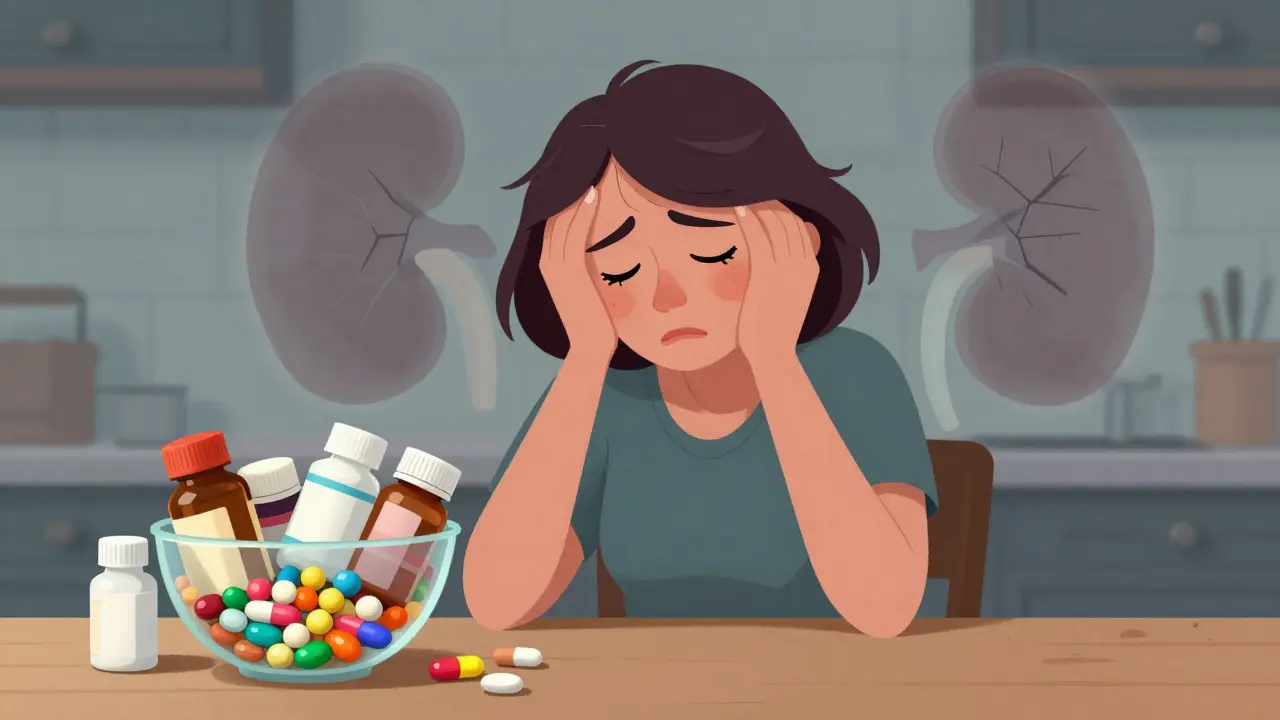
You pop a pill for your headache. Then another for your backache. It feels like the most normal thing in the world. But what if those everyday pills are quietly eating away at your kidneys? This isn't a scare tactic; it is a medical reality known as analgesic nephropathy, a form of chronic kidney disease caused by long-term overuse of pain medications. For decades, doctors have seen patients arrive with failing kidneys, only to discover the culprit was not diabetes or high blood pressure, but the very drugs they used to feel better.
We often assume that because a medication is available over the counter, it must be safe. That assumption is dangerous when it comes to nonsteroidal anti-inflammatory drugs (NSAIDs) and combination pain relievers. Understanding how these drugs affect your renal system is the first step toward protecting your health without sacrificing your quality of life. Let’s break down what is happening inside your body, who is at risk, and how you can manage pain safely in 2026.
How Painkillers Damage Your Kidneys
To understand the damage, you need to look at how your kidneys work. They filter waste from your blood using tiny structures called nephrons. Blood flow to these nephrons is critical. When you take an NSAID like ibuprofen or naproxen, the drug blocks enzymes called prostaglandins. Prostaglandins help keep the blood vessels in your kidneys wide open. Without them, those vessels constrict, reducing blood flow by 25% to 40% even at standard doses.
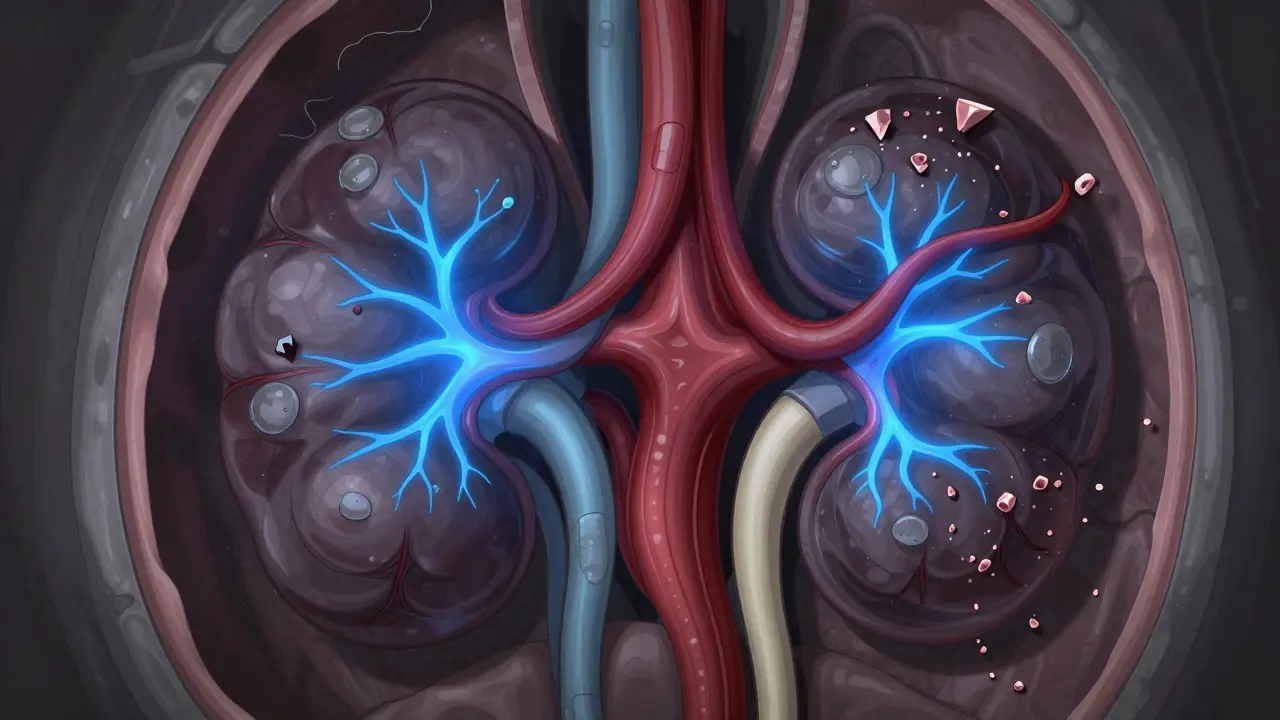
If this happens occasionally, your kidneys recover. But if you take these pills daily for years, the reduced blood flow causes chronic stress on the tissue. Over time, this leads to capillary sclerosis-a hardening of the small blood vessels in the renal pelvis and ureters. The tissue dies off, leading to renal papillary necrosis, where the tips of the kidney structures slough off. This process triggers chronic interstitial nephritis, which is essentially permanent scarring of the kidney tissue.
Historically, this condition was driven by phenacetin, a painkiller banned in the United States in 1983 after it was linked to up to 10% of end-stage kidney disease cases in Australia. Today, while phenacetin is gone, the risk remains high due to the widespread use of other analgesics. The mechanism is similar: oxidative damage and reduced blood flow starve the kidney cells of oxygen and nutrients, leading to irreversible injury.
Who Is Most at Risk?
Not everyone who takes a painkiller will develop kidney damage. However, certain groups face significantly higher risks. The data shows a clear pattern:
- Chronic Users: People taking six or more analgesic pills daily for three or more years are in the danger zone.
- Women Aged 35-55: Statistics indicate that women make up about 72% of analgesic nephropathy cases. This is often linked to the management of chronic headaches, migraines, and menstrual pain.
- Combination Product Users: Medications containing multiple active ingredients-such as acetaminophen, aspirin, caffeine, and codeine-are far more dangerous than single-ingredient pills. A 2018 meta-analysis found these combinations are 3.7 times more likely to cause nephropathy.
- Existing Health Conditions: If you already have hypertension, diabetes, or baseline chronic kidney disease (CKD), your kidneys are less resilient. Adding NSAIDs to this mix accelerates damage rapidly.
Dr. Emily Chen of Harvard Medical School has warned that the misconception that over-the-counter meds are inherently safe has created a "silent epidemic" among middle-aged women managing chronic pain. Many patients do not realize they are at risk until their kidney function has already declined significantly.
Recognizing the Symptoms Early
The tricky part about analgesic nephropathy is that it is often silent in its early stages. You might feel perfectly fine while your kidney function drops. This is why routine screening is vital, especially if you fall into the high-risk categories mentioned above.
When symptoms do appear, they are often vague. You might experience progressive fatigue, swelling in your legs or ankles, or unexplained weight gain due to fluid retention. As the condition advances, you may notice flank pain (pain in the side of your back below the ribs) or hematuria (blood in your urine). In severe cases, pieces of dead kidney tissue (renal papillae) can pass through the urinary tract, causing obstruction and intense pain.
Diagnostic criteria typically involve finding evidence of chronic kidney injury with non-nephrotic proteinuria (usually less than 3.5 grams per day) and a bland urinary sediment. Advanced imaging, particularly noncontrast CT scans, can reveal papillary calcifications with high sensitivity (87%) and specificity (97%). However, many cases are still caught simply through elevated creatinine levels during routine blood tests.
NSAIDs vs. Acetaminophen: Which Is Safer?
This is a common question, and the answer is nuanced. Traditionally, acetaminophen (Tylenol) has been considered safer for the kidneys than NSAIDs because it does not inhibit prostaglandins in the same way. However, "safer" does not mean "risk-free."
| Medication Type | Mechanism of Action | Kidney Risk Level | Key Concerns |
|---|---|---|---|
| NSAIDs (Ibuprofen, Naproxen) | Blocks prostaglandins, reducing blood flow | Moderate to High | Reduces renal blood flow by 25-40%; risk increases with duration |
| Acetaminophen | Central nervous system action | Low to Moderate | High doses (>4,000 mg/day) for 5+ years increase CKD risk by 68% |
| Combination Products | Multiple mechanisms | Very High | 3.7x higher risk than single ingredients; often contains hidden caffeine/codeine |
A 2020 study in Kidney International Reports highlighted that daily acetaminophen consumption exceeding 4,000 mg for five or more years increased the risk of chronic kidney disease by 68% compared to non-users. So, while acetaminophen is generally preferred for kidney patients, it must still be used within strict limits. Never exceed 3,000 mg of acetaminophen daily unless directed by a doctor.
Safer Pain Control Strategies
If you suffer from chronic pain, stopping all medication abruptly is not the answer. The goal is to find a balance that manages your pain without destroying your kidneys. Here is a stepwise approach recommended by the American College of Rheumatology and nephrology experts.
- Start with Non-Pharmacological Methods: Before reaching for a pill, try physical therapy, cognitive behavioral therapy, or heat therapy. Devices like ThermaCare HeatWraps have shown 40-60% pain reduction in osteoarthritis patients with zero renal risk.
- Use Topical NSAIDs: If you need an NSAID, consider topical gels or patches. A 2021 randomized trial showed that topical NSAIDs reduce systemic exposure by 90% compared to oral forms, providing equivalent pain relief without declining renal function.
- Limit Oral NSAID Duration: Do not use oral NSAIDs daily for more than 10 days without consulting a physician. If chronic use is necessary, stick to the lowest effective dose: no more than 1,200 mg of ibuprofen or 750 mg of naproxen per day.
- Monitor Regularly: If you are on chronic analgesic therapy, get your serum creatinine checked every six months. For high-risk patients, monthly monitoring during the first six months is mandated by guidelines.
- Explore Prescription Alternatives: For conditions like migraines, newer CGRP inhibitors offer effective relief without renal risk. While they are more expensive (around $650/month), they protect your long-term health.
Emerging treatments also show promise. AstraZeneca’s selepressin, a selective vasopressin receptor agonist, completed Phase II trials in 2022 showing it could reduce NSAID-induced renal blood flow reduction by 35% without compromising pain relief. Keep an eye on these developments as they become available.

The Economic and Personal Cost
Ignoring these risks has a steep price. Analgesic nephropathy contributes to approximately 15,000 to 20,000 new chronic kidney disease cases annually in the United States. The financial burden is heavy: early-stage management costs around $18,500 per patient annually, but once dialysis is required, that jumps to $90,000 per year.
Beyond the money, there is the personal toll. Patients who reach end-stage renal disease face dialysis or transplantation. Yet, the good news is that analgesic nephropathy is largely preventable. A 2022 study followed 142 patients who stopped their analgesics upon early diagnosis. Seventy-three percent of them stabilized their kidney function with no further decline over five years. Catching it early makes all the difference.
FAQ: Common Questions About Analgesic Nephropathy
Can I reverse kidney damage from NSAIDs?
Early-stage damage can sometimes be stabilized or partially reversed by stopping the offending medication immediately. However, advanced scarring (fibrosis) and renal papillary necrosis are irreversible. The key is early detection through regular blood tests. If you stop taking NSAIDs before significant scarring occurs, you can often prevent progression to end-stage renal disease.
Is Tylenol (acetaminophen) safe for my kidneys?
Acetaminophen is generally safer for kidneys than NSAIDs, but it is not risk-free. Long-term excessive use (over 4,000 mg daily for several years) has been linked to a 68% increased risk of chronic kidney disease. Stick to the recommended maximum of 3,000 mg per day for chronic use, and always check labels to avoid accidental overdosing from combination products.
What are the first signs of analgesic nephropathy?
In the early stages, there are often no symptoms. As the condition progresses, you may experience fatigue, swelling in the legs or ankles, high blood pressure, and anemia. Later signs include flank pain, blood in the urine, and passing small clots or tissue fragments. Because early symptoms are absent, regular blood tests for creatinine and GFR are essential for at-risk individuals.
How much ibuprofen is too much for kidney health?
For chronic pain management, experts recommend limiting ibuprofen to no more than 1,200 mg per day. Using it daily for more than 10 days without medical supervision increases risk significantly. If you have existing kidney issues, hypertension, or diabetes, you should avoid daily NSAID use altogether or consult a nephrologist for a personalized plan.
Are combination painkillers really that dangerous?
Yes. Combination products that contain two or more active ingredients, especially those with caffeine or codeine, are 3.7 times more likely to cause nephropathy than single-ingredient formulations. The cumulative effect of multiple drugs, along with the tendency to take more pills to achieve relief, accelerates kidney damage. Avoid these for chronic pain management whenever possible.