
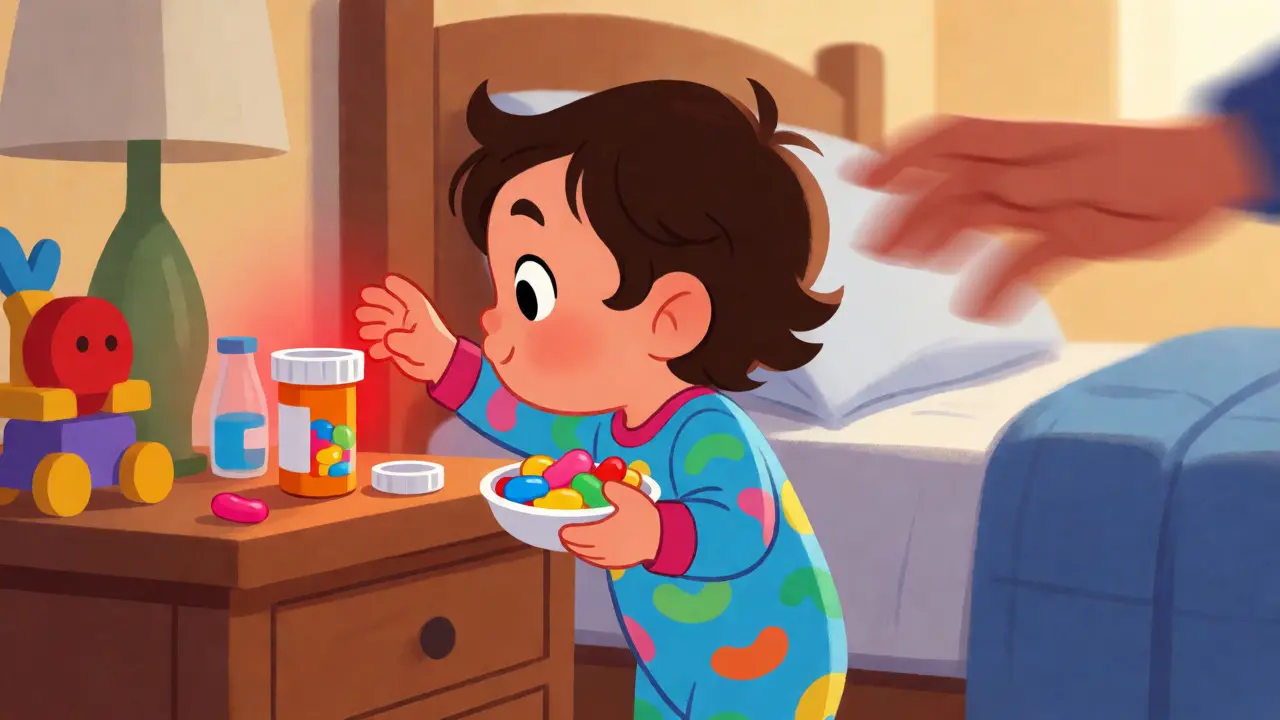
Imagine this: You turn your back for ten seconds to grab a towel, and your toddler is already popping pills from the nightstand like candy. It’s not just a scary thought-it’s a daily reality for thousands of parents. In fact, emergency departments see roughly 76,000 visits annually for unsupervised medication exposures in young children. That number isn’t just a statistic; it represents real kids, real panic, and real preventable mistakes. If you have little ones running around, knowing how to stop an accidental pediatric medication overdose before it happens-and what to do if it does-is one of the most critical skills you can learn.
Why Toddlers Are at Highest Risk
Kids under five are the primary victims of medication overdoses, and there’s a biological reason for that. They explore the world by touching and tasting everything. A bottle of gummy vitamins looks exactly like a jar of candy. A bright orange liquid medicine tastes sweet because manufacturers add flavoring to make it palatable. This combination of curiosity and appealing presentation creates a perfect storm for accidents. The Centers for Disease Control and Prevention (CDC) launched the PROTECT Initiative in 2008 specifically to tackle this crisis. Their data shows that while older kids might accidentally take a pill, toddlers are far more likely to ingest large quantities quickly because they don’t understand danger. Understanding this developmental stage helps you anticipate risks rather than just reacting to them.
The Three Pillars of Prevention
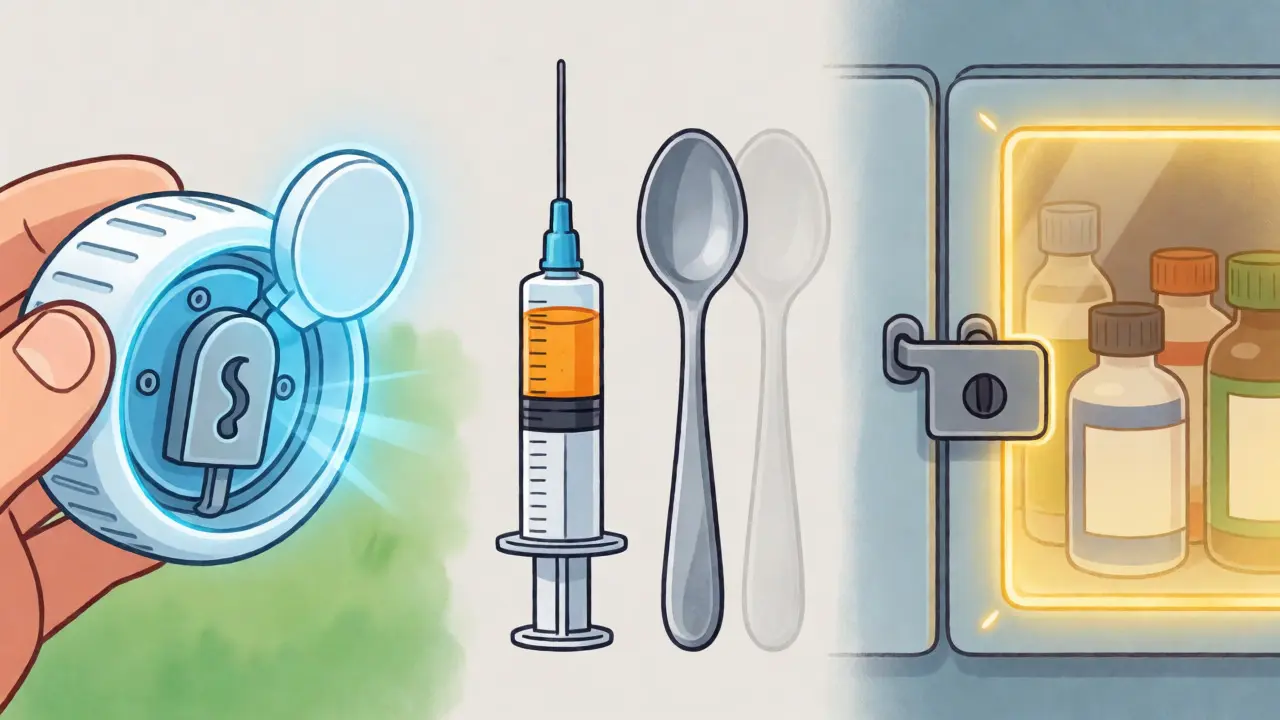
You can’t rely on luck alone. The PROTECT Initiative uses a three-pronged approach that works best when you apply all parts together. First, packaging matters. Child-resistant caps aren’t foolproof-about 10% of four-year-olds can open them-but they buy you precious time. Second, standardization saves lives. Using milliliters (mL) instead of teaspoons eliminates confusion between different spoon sizes. Third, education changes behavior. Knowing where to store meds is just as important as knowing how to give them.
Let’s break down the practical steps. Always use the dosing device that comes with the medicine. Never, ever use kitchen spoons. Research shows that 40% of parents make dosing errors, often because a "teaspoon" from your cutlery drawer varies wildly in volume compared to a medical teaspoon. Stick to the syringe or cup provided. If you lose it, ask your pharmacist for a replacement. They usually have them for free.
Storage Rules That Actually Work
Most people think putting medicine up high is enough. It’s not. Kids are climbers, and countertops are within reach. The golden rule is "Up and Away and Out of Sight." This means storing medications in locked cabinets, ideally at least four feet off the ground. But here’s the catch: many families keep their first-aid kit in the bathroom, which is also where kids brush their teeth and play with water. Consider moving adult medications-like blood pressure pills or painkillers-to a locked bedroom drawer. Keep only essential child-specific meds in a secured location accessible to caregivers.
Also, remember that "child-resistant" does not mean "child-proof." A Grandparents.com user shared a story about their granddaughter trying to twist open a cap. She couldn’t get it fully open, but she managed to chew through the plastic seal. That delay gave the grandparent time to intervene. Without that extra minute, the outcome could have been much worse. Always return medicines to storage immediately after use. Leaving a bottle on the counter while you pour a glass of water is a common mistake.
Common Dosing Mistakes to Avoid
Dosing errors account for nearly 80% of reported medication issues. The biggest culprit? Confusion between concentrations. Infant acetaminophen and children’s acetaminophen often have different strengths. If you switch brands or formulations without checking the label, you might double the dose. Another frequent error involves weight-based dosing. Children grow fast. A dose calculated six months ago might be too low now, leading a parent to guess and overshoot. Always re-check the weight-to-dose chart if your child has grown significantly since the last illness.
Here’s a quick checklist to keep you on track:
- Read the label every single time, even if you’ve given the same medicine before.
- Use mL units exclusively. Ignore "tsp" or "tbsp" instructions if possible.
- Write down the time and amount of each dose to avoid double-dosing.
- Check expiration dates. Expired meds may lose potency, leading to ineffective treatment, or degrade into harmful compounds.
What to Do If an Overdose Happens
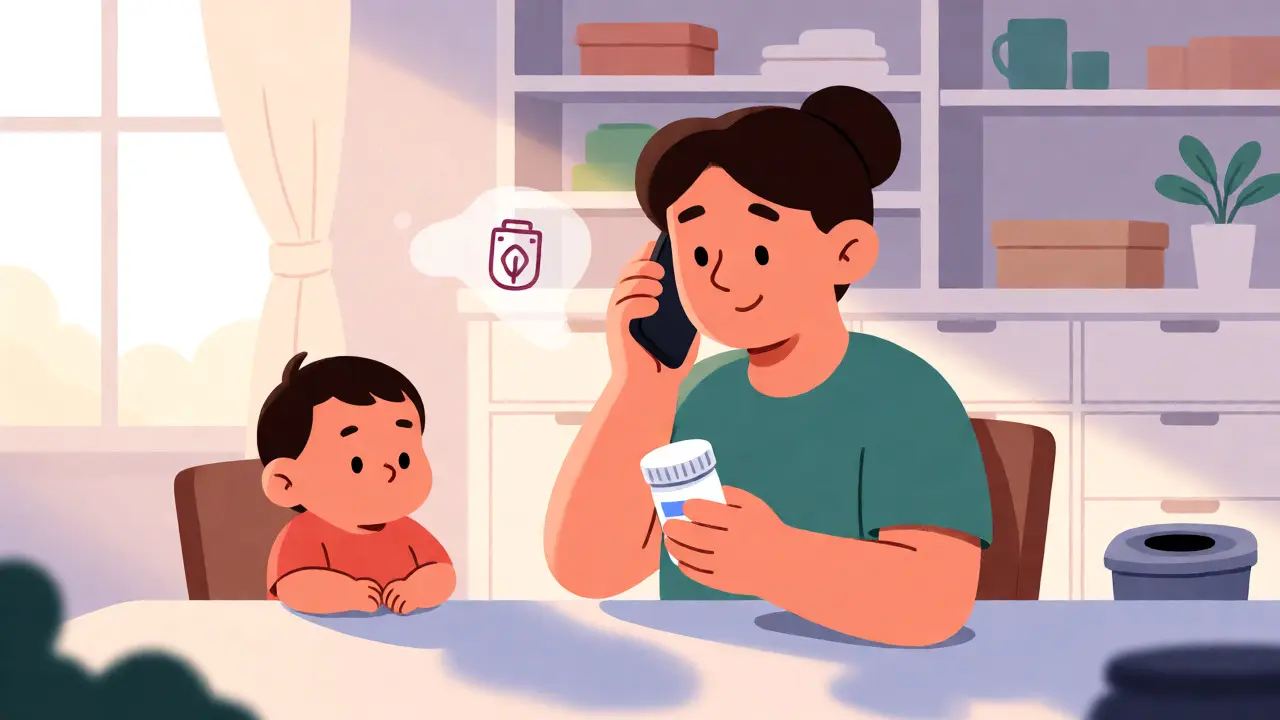
Panic is natural, but action is necessary. If you suspect an overdose, call Poison Control immediately. In the US, the number is 1-800-222-1222. Have the medication bottle ready so you can tell them the exact name, strength, and estimated amount ingested. Don’t wait for symptoms to appear. Some drugs, like acetaminophen, can cause liver damage hours after ingestion before any signs show up.
For opioid overdoses, speed is critical. Signs include slow breathing, blue lips, and unresponsiveness. Naloxone is the antidote, and recent guidelines recommend co-prescribing it with opioids for adolescents. While naloxone is approved for children, access varies. Keep it in your home if anyone in your household uses opioids. Remember, giving naloxone to someone who isn’t overdosing won’t hurt them, so if you’re unsure, administer it and call emergency services.
Disposal Matters Too
Leftover medication is a hazard. Flushing pills down the toilet contaminates water supplies, and throwing them in the trash exposes pets and curious kids. Use take-back programs at local pharmacies or police stations. If those aren’t available, mix unused solids with undesirable substances like coffee grounds or kitty litter in a sealed bag before tossing them. For liquids, absorb them with cat litter or sawdust. Proper disposal prevents future accidents and protects the environment.
| Strategy | Action Required | Effectiveness |
|---|---|---|
| Child-Resistant Packaging | Twist until click heard | Reduces access by ~50% |
| Standardized Dosing | Use mL-only devices | Cuts dosing errors by ~40% |
| Locked Storage | Out of sight, out of reach | Prevents majority of ingestions |
| Proper Disposal | Take-back programs | Removes long-term risk |
Frequently Asked Questions
Are gummy vitamins safe to leave on the counter?
No. Gummy vitamins look and taste like candy, making them highly attractive to toddlers. Even though they are less toxic than prescription meds, eating a whole bottle can cause gastrointestinal distress or toxicity depending on the vitamin content. Always store them in a locked cabinet.
Can I use a regular teaspoon to measure medicine?
It’s risky. Household teaspoons vary in size, ranging from 3 mL to 7 mL. A medical teaspoon is standardized at 5 mL. Using a kitchen spoon can lead to significant under- or over-dosing. Always use the dosing device provided with the medication.
What should I do if my child vomits after taking medicine?
Don’t automatically redose. Contact your doctor or pharmacist. Redosing can lead to an overdose if the medicine was partially absorbed. They will guide you based on how much time has passed and whether the vomiting was immediate.
Is it safe to crush pills for my child?
Not always. Extended-release or enteric-coated tablets can release their full dose at once if crushed, causing an overdose. Check with your pharmacist before crushing any medication. Liquid formulations are generally safer for young children.
How often should I check my medicine cabinet?
At least twice a year. Remove expired medications and ensure all caps are secure. This routine helps you spot potential hazards before an accident occurs and keeps your inventory organized.
Next Steps for Parents
Taking charge starts today. Walk through your home and identify every place where medication is stored. Install locks on lower cabinets if needed. Buy a dedicated medication box with a lock for your purse or diaper bag. Talk to your pediatrician about proper dosing for your child’s current weight. And save the Poison Control number in your phone right now. Small habits create big safety margins. Your vigilance is the best defense against accidental overdose.

Oh, look at you all patting yourselves on the back for reading an article about locking up pills. 🙄 Let's get real: if your kid is smart enough to open a child-resistant cap, they're probably smart enough to figure out where you hid the key. The statistic about 76,000 visits? That's just lazy parenting masked as bad luck. I've seen people leave NyQuil on the counter because "it was just for a second." A second is all it takes. You don't need a locked cabinet; you need basic common sense and maybe less reliance on government initiatives like PROTECT which clearly aren't working if we still have this many ER visits. If you can't keep your house tidy enough to store meds properly, maybe you shouldn't have toddlers running around unsupervised. It’s not rocket science, it’s just responsibility. And before anyone comments that their kid is "special," no, your kid isn't special, they're just curious and you were distracted. Fix your environment or fix your attention span. 😒
This article completely ignores the most obvious solution: American manufacturing standards are failing us. Child-resistant caps are a joke. They break after two uses, they’re impossible for grandparents with arthritis to open, and yet we blame parents for "accidental" overdoses when the packaging itself is defective. In other countries, packaging laws are stricter. Here, we prioritize convenience over safety. We need federal mandates, not "tips" from some blog. If a four-year-old can open it, it’s not child-resistant, it’s child-annoying. Stop blaming mothers and start blaming the pharmaceutical companies cutting corners on plastic quality.
I hear everyone’s frustration here. It’s tough balancing vigilance with daily life. Maybe instead of judgment, we could share what actually worked for us? My routine is simple: one locked box for everything. No exceptions. It feels restrictive but it brings peace of mind. We are all doing our best in different circumstances.
The philosophical underpinning of this issue is fascinating. We live in a world where objects are designed to be attractive to those who cannot comprehend their danger. Gummy vitamins are essentially Trojan horses-sweet, colorful, and deceptive. The tragedy isn't just the medical outcome, but the failure of societal design to protect the vulnerable. We must move beyond reactive measures (ER visits) to proactive ethical design. Every parent is a guardian, yes, but society must also be a guardian. Empathy requires us to understand that fatigue and distraction are human conditions, not moral failings. Let us coach each other toward better systems rather than condemning individual moments of lapse. 🌿
Literally shaking right now reading this. 💀 Like, why do manufacturers make medicine taste like fruit punch?? It’s maliciously confusing! 🍬🚫 Also, the part about kitchen spoons being useless? FACTS. My mom used to eyeball everything and honestly, she’s lucky we didn’t end up in the ICU multiple times. Using mLs only is such a non-negotiable rule IMO. If you’re still using tsp, you’re basically gambling with your kid’s liver. 🎲💊 It’s not elitist to care about precision, it’s just survival. Ugh, thinking about how many parents are out there guessing dosages makes me want to scream into a pillow. 😤✨
Ugh. Too much text. Just buy a lockbox. Done. Next.
Dear friends, I feel compelled to offer a gentle perspective amidst the fervor. It is truly heartwarming to see such engagement, though perhaps the tone has grown a bit... prickly? 🥺 I recall when my nephew swallowed a handful of iron supplements. The panic was palpable, a visceral wave of terror. But remember, we are all navigating the labyrinth of parenthood without a map. Let us extend grace. If you are struggling with the storage logistics, please know you are not alone. We must collaborate, not criticize. Perhaps sharing specific product recommendations for locks would be more constructive than debating the efficacy of national initiatives? Let us build bridges, not walls. 🤝
Wait, did anyone else catch the part about crushing extended-release pills? That blew my mind. 🤯 I always thought crushing them made it easier for kids to swallow, but apparently, it dumps the whole dose at once? That’s terrifying! Like, imagine giving a slow-release med and accidentally turning it into an instant overdose just because you wanted to hide the taste in applesauce. 🍎 Does anyone know if liquid versions are actually safer long-term, or do they degrade faster? I’m trying to be super careful with my niece’s meds, so any tips on finding reliable liquid formulations would be awesome! ✨
Agreed on the disposal point. Flushing is ecologically disastrous. We need better municipal take-back infrastructure. Until then, kitty litter method is the standard operating procedure. Simple efficient safe.
While the sentiment is noble, the execution lacks nuance. One must consider the socioeconomic disparities inherent in these "simple solutions." Not every household possesses the spatial luxury of a locked bedroom drawer, nor the financial bandwidth for dedicated medication safes. To suggest that proper storage is merely a matter of willpower ignores the structural constraints faced by urban families in substandard housing. Furthermore, the reliance on Poison Control assumes immediate access and literacy levels that are not universally present. True prevention requires systemic intervention, not just individual behavioral modification. It is rather reductive to frame a complex public health crisis as a series of parental oversights.