
Every year, thousands of people are harmed-not because of their illness, but because a pill they took was confused with another. This isn’t rare. It’s common. And it’s happening mostly with generic drugs.
You might think generics are just cheaper versions of brand-name pills. But what you don’t see are the tiny differences in spelling, the similar shapes, the nearly identical packaging. That’s where the danger hides. Look-alike, sound-alike (LASA) drugs are one of the leading causes of preventable medication errors. And generic medications? They’re at the heart of the problem.
What Are Look-Alike, Sound-Alike Drugs?
Look-alike, sound-alike (LASA) drugs are medications that look or sound so similar that they can be easily mixed up. This isn’t just about spelling. It’s about how they appear on a shelf, how they sound when a nurse reads them aloud, or how they pop up on a computer screen during prescribing.
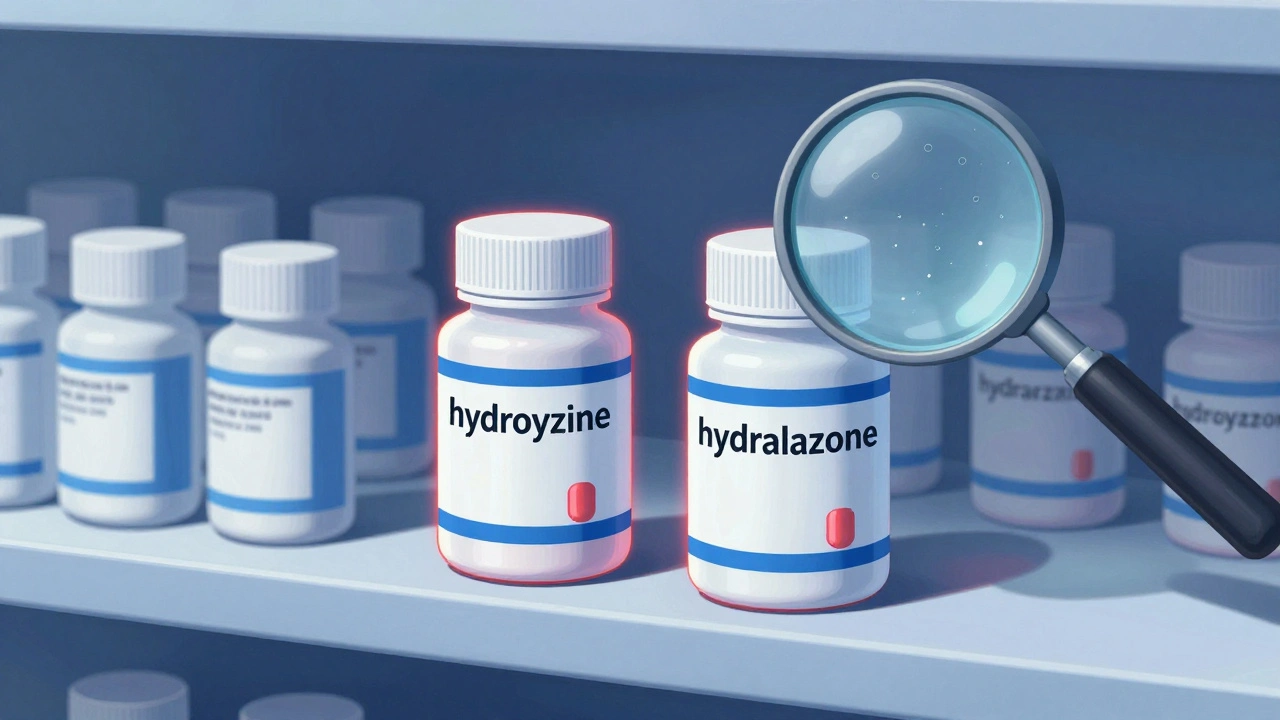
Look-alike means visual confusion. Think of hydroxyzine and hydralazine. Both start with “hyd,” both come in small white capsules, both are labeled with similar font sizes. One treats anxiety. The other lowers blood pressure. Give the wrong one to a patient with heart failure? Bad outcome. Fast.
Sound-alike means auditory confusion. Say albuterol and atenolol out loud. They’re almost identical. One opens airways for asthma. The other slows your heart for high blood pressure. If a doctor says “albuterol” over a noisy floor, and the pharmacist hears “atenolol,” someone could end up with a dangerously slow heart rate.
These aren’t hypotheticals. The Institute for Safe Medication Practices tracks nearly 1,000 such pairs. And according to the World Health Organization, about 25% of all medication errors are tied to LASA confusion. That’s one in four. And generics make it worse.
Why Generics Are the Main Culprit
Brand-name drugs usually have unique packaging, distinct colors, and clear branding. Generics? They’re made by dozens of companies. Each one chooses its own pill shape, color, and label design. No standard. No rules.
Take valacyclovir (Valtrex) and valganciclovir (Valcyte). Both start with “val.” Both are used for viral infections in transplant or HIV patients. One treats herpes. The other fights CMV, a deadly virus in immunocompromised people. The brand names are different enough. But when generic versions are made by different manufacturers, they often end up looking nearly identical on pharmacy shelves.
Pharmacists in New Zealand, the U.S., and the UK report seeing these mix-ups regularly. In one case, a patient was given hydralazine instead of hydroxyzine because the bottles looked the same. The patient had severe dizziness and a dangerous drop in blood pressure. It was caught in time-but not always.
It’s not just the names. It’s the system. When a pharmacy runs low on one generic, they switch to another brand. No warning. No label change. Just a different bottle on the shelf. That’s how errors creep in.
Where Do These Errors Happen?
It’s not just pharmacists making mistakes. LASA errors happen at every step:
- Prescribing: A doctor types “prednisone” but the system auto-fills “prednisolone.” Both are steroids. But dosing and duration differ.
- Dispensing: A pharmacist reaches for the wrong bottle because two generics look the same.
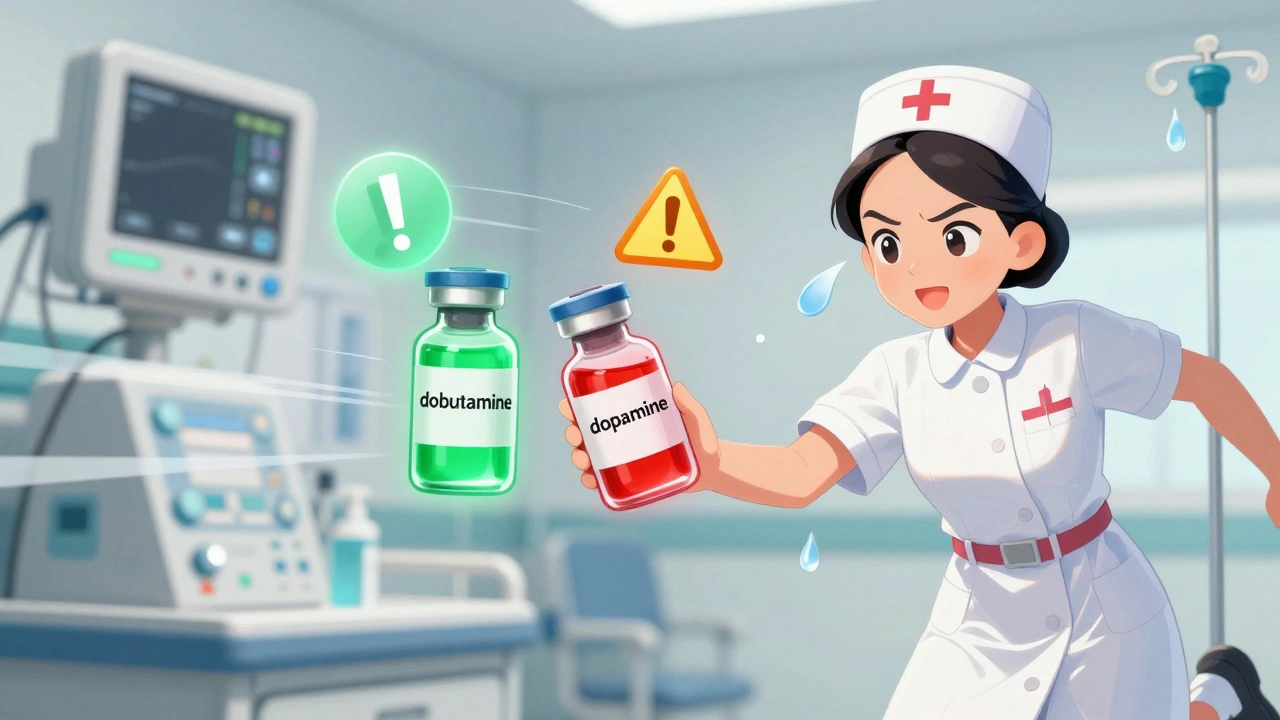
- Administration: A nurse grabs “dobutamine” instead of “dopamine” from a bedside drawer. Both are IV drugs used in ICUs. One boosts heart output. The other raises blood pressure. Mix them up? Cardiac arrest.
According to Merative’s 2023 analysis, 68% of medication errors happen during administration. That’s when the drug is actually given to the patient. And in high-stress environments like ERs or ICUs, mistakes happen fast. There’s no time to double-check every name.
The UK’s National Reporting and Learning System recorded over 206,000 medication incidents in one year. Of those, 66 were fatal. Many involved LASA drugs. And that’s just what got reported.
What’s Being Done? (And Why It’s Not Enough)
There are solutions. But they’re not universal.
Tall man lettering is one of the most effective tools. That’s when key letters are capitalized to highlight differences: predniSONE vs. predniSOLONE. A 2020 study showed this cut LASA errors by 67% in a 12-hospital system. But not all pharmacies use it. Some still print labels in all lowercase.
Barcoding and electronic alerts help too. When a nurse scans a drug, the system can flag if it’s a high-risk LASA pair. One hospital reduced errors by 45% using this method. But it requires investment. Not every clinic has it.
Artificial intelligence is stepping in. A 2023 study found AI-powered systems in electronic health records reduced LASA errors by 82%. These tools cross-check names in real time, flagging matches before the drug is even dispensed. But again-only in big hospitals. Rural clinics? Not so much.
The FDA and EMA now reject drug names that are too similar. In 2021, the FDA turned down 34 drug name applications because of LASA risk. That’s progress. But it doesn’t fix the thousands of generics already on shelves.
What You Can Do
You’re not powerless. Whether you’re a patient, caregiver, or healthcare worker, here’s what works:
- Always ask: “What is this for?” If you’re given a new generic, know why you’re taking it. If it’s supposed to lower blood pressure but you have asthma, that’s a red flag.
- Check the label: Compare the name on the bottle to your prescription. Look for tall man letters. If you see “hydroxyzine” but the pill looks like the last one you took for allergies, ask.
- Use one pharmacy: If you use multiple pharmacies, your records aren’t connected. One might not know you’re on a high-risk drug.
- Speak up: If a nurse or pharmacist says a drug name that sounds familiar, say, “Wait-was that dobutamine or dopamine?” Don’t assume they know.
Patients who ask questions reduce their risk by up to 30%, according to a 2022 study in the American Journal of Nursing. It’s not about being difficult. It’s about being safe.

The Bigger Picture
Medication errors cost the global health system $42 billion a year. LASA errors make up a big chunk. And they’re not just about money. They’re about lives.
For years, these errors were blamed on “human error.” But experts like Dr. David Bates from Harvard say it’s not about tired nurses or distracted pharmacists. It’s about bad systems. If two drugs look the same, the system failed. If the computer doesn’t warn you, the system failed. If the label doesn’t make the difference clear, the system failed.
The WHO’s Medication Without Harm campaign aims to cut severe medication errors by 50% by 2025. That’s possible-but only if we fix the root causes. Not just the symptoms.
That means:
- Standardizing generic packaging
- Making tall man lettering mandatory
- Building AI alerts into every EHR, not just big hospitals
- Training every pharmacist, nurse, and doctor to spot LASA risks
It’s not just about avoiding a mix-up. It’s about building a system where mistakes can’t happen-not because people are perfect, but because the system won’t let them.
What’s Next?
Change is coming. Slowly. The FDA’s Safe Use Initiative has made LASA error reduction a top priority through 2025. New Zealand’s Medsafe is starting to require clearer labeling for generics. The European Medicines Agency now checks every new drug name for similarity before approval.
But the biggest change needs to come from you. If you’re on a generic drug, don’t assume it’s safe just because it’s cheap. Ask questions. Check labels. Know your meds. Because in the world of look-alike, sound-alike drugs, the only thing standing between you and a dangerous mistake might be your own voice.
Are generic drugs less safe than brand-name drugs?
No, generics are not less safe. They contain the same active ingredient, at the same strength, and work the same way. The risk comes from how they’re labeled, packaged, and stored. Look-alike, sound-alike confusion happens because multiple generic makers use different designs, not because the drug itself is flawed.
How can I tell if my medication is a generic?
Look at the label. Generic drugs will list the active ingredient (like “amlodipine”) instead of a brand name (like “Norvasc”). The manufacturer’s name will be different from the brand. The pill shape or color may also be different from what you’re used to. If it looks unfamiliar, ask your pharmacist.
Why don’t all pharmacies use tall man lettering?
It’s not required everywhere. Some pharmacies use older printing systems that don’t support capitalization in labels. Others don’t have the budget to update software or train staff. Even though studies show it cuts errors by two-thirds, adoption is uneven-especially in smaller clinics and rural areas.
Can AI really prevent these errors?
Yes-when it’s properly built and integrated. One study found AI flagged 98.7% of potential LASA errors with only a 1.3% false alert rate. But it only works if the system is connected to your electronic health record and updated with the latest drug name lists. Not every hospital or pharmacy has this yet.
What should I do if I think I got the wrong generic?
Stop taking it. Call your pharmacist or doctor immediately. Compare the pill to your prescription and the previous bottle. Take a photo if you can. Don’t wait to see if you feel sick. Even a small mix-up can cause serious harm-especially with drugs that affect your heart, blood pressure, or nervous system.
If you’re managing multiple medications, keep a written list with the purpose of each one. Bring it to every appointment. It’s the simplest, most powerful tool you have.

Been a pharmacist for 12 years. Saw a guy get hydralazine instead of hydroxyzine once. He thought he was getting his anxiety med, ended up in the ER with BP so low he passed out. Not his fault. Not the nurse’s fault. Just bad system design. We need standardized generics. No more guessing games with pills.
oh wow so generics are literally just a russian roulette with extra steps? 🤡
I think the real issue is how fragmented the generic market is. Brand names have consistency. Generics? You get 15 different versions of the same drug, all looking like siblings from different parents. It’s not that they’re unsafe-it’s that the system doesn’t care enough to make them distinguishable.
From a clinical safety standpoint, this is a classic systems failure. LASA errors are preventable through layered controls: tall man lettering, barcode verification, AI-driven CPOE alerts, and pharmacist-led reconciliation. The fact that we’re still relying on human vigilance in high-stress environments is indefensible. We need institutional mandates-not just recommendations.
It’s hilarious that people blame generics. The active ingredient is identical. The problem isn’t the drug-it’s the lazy, underfunded, poorly regulated pharmaceutical logistics chain. If you can’t distinguish between ‘prednisone’ and ‘prednisolone’ on a label, maybe you shouldn’t be handling medication. This isn’t rocket science.
People think safety is about rules. But real safety is about making it impossible to mess up. If two pills look the same, the system is broken. Not the person. Not the nurse. The system.
Oh great, another ‘awareness’ post. Let me guess-next you’ll tell us to ‘speak up’ like that magically fixes a $42 billion industry that doesn’t give a damn. The FDA rejects 34 names a year? Cool. What about the 50,000 already on shelves? You’re just comforting yourself while people die. #NotMyProblem
Man, I just got my generic blood pressure med and it looked totally different from last time. I thought I was getting scammed… then I remembered this exact article. Took a pic, called my pharmacist. Turned out it was a different maker. She thanked me for asking. Said 80% of patients just take it and hope. We gotta stop being passive. 🤝💊
My grandma’s on 7 meds. She asks every single time, ‘What’s this for?’ And she writes it down. She’s 82. She’s safer than half the nurses I know. 😊
Actually in India we have a different problem-too many generics from unregulated factories, not just packaging. I’ve seen pills with no batch number, no expiration, no manufacturer name. Sometimes they’re even mislabeled as different drugs entirely. Tall man lettering? We don’t even have barcode scanners in rural clinics. This is a global problem, not just a US one. And no, AI won’t help if the pharmacy is a shack with a laptop from 2010.
My cousin is a nurse in a small town. She told me they switch generics daily because insurance changes what they cover. No warning. No label update. She once almost gave a patient the wrong drug because the bottle looked identical to the last one. She said she cries sometimes. We need better systems-not more blame.
Why are we even talking about this? It’s simple. Stop making generics look alike. End of story. The FDA should shut down any manufacturer who makes similar-looking pills. No excuses. No delays. Just fix it. People are dying because someone’s too cheap to print a label right. 🇺🇸
As a clinical informaticist, I can confirm: AI-driven LASA flagging in EHRs reduces errors by up to 80% when integrated with pharmacy workflows. The barrier isn’t tech-it’s procurement. Small clinics can’t afford Epic or Cerner upgrades. We need federal subsidies to bring these tools to every community pharmacy. Safety shouldn’t be a luxury.
It’s not about the drugs. It’s about how we treat people as afterthoughts in a machine designed for profit, not care.
USA is the only country that lets this happen. In Canada, Europe, Australia-generics are standardized. Packaging is regulated. Labels are clear. We’re the ones letting corporations cut corners while people die. Shame on us.