
When you're taking statins for high cholesterol and find out you're pregnant, it's natural to panic. Was your baby at risk? Should you have stopped sooner? The answer isn't as simple as it used to be. For decades, doctors told women to stop statins the moment they got pregnant - no exceptions. But today, that advice is changing. New data shows that statins likely aren't the dangerous drugs we thought they were during pregnancy. Still, this doesn't mean everyone should keep taking them. The real question isn't just about safety - it's about who needs them, and when.
Why Statins Were Banned in Pregnancy
Statins work by blocking HMG-CoA reductase, an enzyme your body uses to make cholesterol. Cholesterol isn't just a villain in heart disease - it's essential for building cell membranes, hormones, and even the developing brain of a fetus. Early animal studies showed that very high doses of statins could cause birth defects in rats and rabbits. That was enough for regulators to label statins as "Pregnancy Category X" - meaning the risks clearly outweighed any benefits. For years, that label stuck. Women were told to stop statins before trying to conceive. If someone got pregnant while on a statin, they were often scared into terminating the pregnancy. But here's the problem: animals don't always react like humans. And those high doses? They were far beyond what any person would ever take.The FDA’s Big Shift (2021)
On July 20, 2021, the U.S. Food and Drug Administration did something unexpected. They removed the strongest possible warning against statins in pregnancy. Not because they said statins are perfectly safe - but because the evidence showed they probably aren't causing the birth defects everyone feared. That decision was based on real-world data from over 1.1 million pregnancies. One major study tracked 1,152 women who took statins during early pregnancy and compared them to nearly 900,000 who didn't. After adjusting for age, diabetes, obesity, smoking, and other factors, the risk of major birth defects was almost identical: 1.07 times higher - but not statistically significant. That means the tiny increase could have been due to chance. Other large studies confirmed it. A 2021 analysis of over 1.4 million pregnancies found no increase in congenital malformations among babies exposed to statins. A 2025 study in Norway, tracking over 800,000 pregnancies, found the same thing: no link between statin use in the first trimester and birth defects. The theory that statins cause defects by lowering cholesterol too much? It just doesn't hold up in humans.What We Know About the Real Risks
So if statins aren't causing birth defects, what do we know they might affect? Preterm birth and low birth weight show up consistently in studies. One study found that 16.1% of women on statins had preterm babies, compared to 8.5% of those who weren't. Another study noted that babies exposed to statins were more likely to weigh under 2,500 grams at birth. But here’s the catch: these women often had other risk factors - high blood pressure, diabetes, or severe cholesterol disorders - that themselves increase the chance of early delivery or small babies. Stillbirth and miscarriage? No clear link. A meta-analysis of nine studies found no statistically significant increase in stillbirths or miscarriages. Even induced abortions weren't more common in statin-exposed pregnancies. Timing matters. Most of the data comes from first-trimester exposure - the time when organs are forming. There's still very little information about what happens if you take statins later in pregnancy. That's why most experts still recommend stopping as soon as you know you're pregnant - unless there's a strong reason not to.
Who Might Still Need Statins During Pregnancy?
This is where things get personal. For most women, statins aren't needed during pregnancy. Cholesterol naturally rises in pregnancy - it's normal. You don't need to treat it unless you have a serious underlying condition. But for a small group of women, stopping statins could be dangerous:- Familial hypercholesterolemia (FH) - This genetic condition causes LDL ("bad") cholesterol levels over 190 mg/dL from birth. Some women have LDL levels over 300. Left untreated, they face heart attacks in their 30s or 40s.
- Established atherosclerotic cardiovascular disease (ASCVD) - Women who've already had a heart attack, stroke, or stent placement before pregnancy.
What Should You Do If You're Planning Pregnancy?
If you're taking statins and thinking about getting pregnant, don't wait until you're pregnant to figure this out.- See your doctor at least 3 months before trying. This gives time to adjust your treatment plan.
- Get evaluated by a cardiologist. If you have FH or ASCVD, you need expert input.
- Discuss alternatives. Diet, exercise, and bile acid sequestrants (like cholestyramine) are safe during pregnancy. But they don't lower LDL as much as statins.
- Consider continuing statins only if you're high-risk. For most women, stopping is still the right call. For a very small number, continuing might be lifesaving.
What If You Took Statins Before Knowing You Were Pregnant?
This happens more often than you think. About 18% of calls to MotherToBaby’s helpline in 2022 were from women who accidentally took statins in early pregnancy. Here’s the good news: if you took a statin for a few weeks before realizing you were pregnant, your baby is almost certainly fine. The data doesn’t show a spike in birth defects. No need to panic. No need to consider termination. What to do next:- Stop the statin immediately.
- See your OB-GYN or a maternal-fetal medicine specialist.
- Get a detailed anatomy scan around 18-22 weeks.
- Monitor for signs of preterm labor or growth issues later in pregnancy.
How Doctors Are Changing Their Approach
In 2019, only 32% of obstetricians told patients that occasional statin exposure in early pregnancy was unlikely to cause harm. By 2023, that number jumped to 68%. But here’s the gap: 89% of doctors still recommend stopping statins as soon as pregnancy is confirmed. Why? Because the data isn't perfect. We still don’t have randomized trials. We don’t know what happens if you take statins past the first trimester. And we don’t know if long-term effects on the child exist. The European Society of Cardiology still advises stopping statins unless it’s an "exceptional circumstance." The FDA says "consider the ongoing therapeutic needs of the individual." That’s not a clear instruction - it’s a conversation starter.What’s Coming Next?
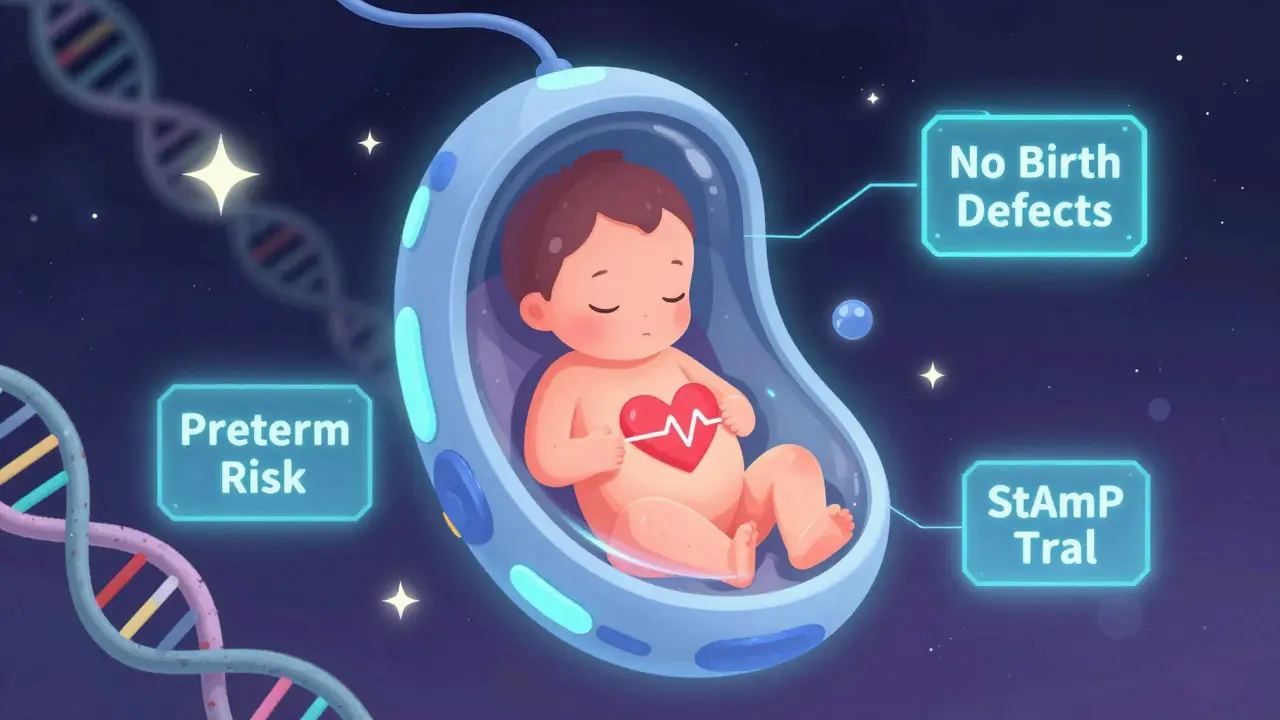
Research is moving fast. The StAmP trial is testing whether pravastatin can actually prevent preeclampsia in high-risk women - a condition that kills mothers and babies. Early results are promising: a 47% drop in preeclampsia rates. The NIH is launching the PRESTO study in 2025, tracking 5,000 pregnancies where statins were taken. This will give us trimester-by-trimester safety data - something we’ve never had before. By 2030, experts predict that 15-20% of women with severe FH or ASCVD will continue statins during pregnancy. That’s up from under 5% today.Bottom Line
Statins are not the dangerous drugs we thought they were in pregnancy. They don’t appear to cause birth defects. But they might increase the risk of preterm birth or low birth weight - especially if you have other health problems. For most women: stop statins when you get pregnant. Your cholesterol will rise naturally. You don’t need to treat it. For a very small number of women - those with severe inherited cholesterol disorders or a history of heart attack or stroke - continuing statins might be the safer choice. That decision shouldn’t be made alone. It needs a team: your OB-GYN, a cardiologist, and a clear discussion of risks versus benefits. If you took statins before knowing you were pregnant - breathe. Your baby is likely fine. Stop the medication now, get proper prenatal care, and focus on the future.Can statins cause birth defects?
Current evidence from large studies involving over 1.4 million pregnancies shows no statistically significant increase in birth defects among babies exposed to statins during early pregnancy. While early animal studies raised concerns, human data now strongly suggests statins are not major teratogens. The background risk of major birth defects in any pregnancy is 3-5%, and statin exposure does not appear to raise that risk.
Should I stop statins if I’m planning to get pregnant?
Yes, for most women. Statins are not needed during pregnancy, as cholesterol naturally rises and is not harmful in this context. Unless you have severe familial hypercholesterolemia or established heart disease, stopping statins 3 months before conception is the safest approach. Always consult your doctor - this isn’t a decision to make on your own.
Is it safe to continue statins during pregnancy if I have high cholesterol?
High cholesterol alone is not a reason to continue statins during pregnancy. Cholesterol increases normally during gestation. Only women with severe inherited conditions like familial hypercholesterolemia (LDL > 190 mg/dL) or those with prior heart attacks or strokes should consider continuing - and even then, only after careful discussion with a cardiologist and maternal-fetal medicine specialist.
What if I took statins in the first trimester without knowing I was pregnant?
Stop the statin immediately and contact your healthcare provider. There is no evidence that short-term exposure in early pregnancy causes birth defects. Do not consider termination based on statin use alone. Most women in this situation go on to have healthy babies. A detailed anatomy scan at 18-22 weeks is recommended to check for any structural issues.
Are there safer alternatives to statins during pregnancy?
Yes. Lifestyle changes - diet, exercise, and weight management - are first-line. For medication, bile acid sequestrants like cholestyramine are considered safe during pregnancy, though they are less effective than statins at lowering LDL. Fibrates and niacin have limited safety data and are not routinely recommended. For high-risk women, continuing a low-dose statin may still be safer than uncontrolled cholesterol.

Let me just say this: the FDA’s 2021 pivot was less a scientific revelation and more a bureaucratic surrender wrapped in a placebo study. We’re talking about a class of drugs that, by design, inhibit a fundamental biosynthetic pathway critical to fetal development. The fact that we’re now rationalizing exposure because "the numbers aren’t statistically significant" is a masterclass in statistical manipulation. We don’t have RCTs. We don’t have long-term neurodevelopmental data. And yet somehow, we’re telling women it’s fine? That’s not evidence - that’s wishful thinking dressed in lab coats.
And don’t get me started on the "1 in 250 women with FH" argument. That’s not a population - it’s a clinical edge case. Applying exceptions as policy is how we end up with 10 different guidelines for the same condition. If your LDL is 320, you’re not "planning pregnancy" - you’re playing Russian roulette with a loaded gun and a baby in the chamber.
Stop pretending this is about safety. It’s about liability. And the medical-industrial complex is doing everything it can to avoid the lawsuit that’s coming when a child with neural tube defects is born to a mom who "followed the new guidelines."
I just want to say thank you for writing this. I was terrified when I found out I was pregnant while on my statin - I thought I’d ruined everything. But reading this made me realize I didn’t do anything wrong. My doctor told me to stop right away, and my baby is now a healthy 18-month-old. I’m so glad the science is catching up to the real world.
Oh, so now we’re trusting data from 1.1 million pregnancies but still ignoring the fact that statins reduce CoQ10, which is essential for mitochondrial function in developing embryos? You think a few birth defect studies are enough to erase decades of toxicology? Wake up. This isn’t science - it’s corporate spin. The pharmaceutical companies didn’t fund this research out of altruism. They want you to keep taking statins, even while pregnant, so they can sell more pills. That’s not medicine. That’s capitalism with a stethoscope.
And don’t even get me started on the "preterm birth" data being dismissed because "they had other risk factors." So now we’re blaming the patient for being sick? Brilliant. Next, we’ll say smoking doesn’t cause lung cancer because the smokers also drank coffee.
They’re gaslighting us with statistics. Don’t fall for it.
I’m a nurse in OB and I’ve seen this firsthand. Women panic when they find out they’re pregnant and on statins. Some cry. Some Google until they’re convinced their baby is doomed. The truth? Most of them go on to have perfectly healthy babies. The real issue isn’t the statin - it’s the fear. And that fear is often fueled by outdated info or alarmist blogs. This post? It’s calm. It’s clear. It’s what we need more of.
Also - shoutout to the mom who said "My LDL was 320. I stayed on. My baby is healthy." That’s the real-life data we need to listen to.
There’s a deeper question here, beyond cholesterol and birth defects. Why do we treat pregnancy as a medical condition to be managed, rather than a natural process to be honored? Statins were never meant for the healthy - they were designed for the severely ill. Yet we’ve normalized their use in asymptomatic people, then panic when pregnancy disrupts the routine. Perhaps the real problem isn’t statins in pregnancy - it’s our society’s obsession with controlling biology through pharmaceuticals. The body knows what to do. We just keep intervening.
Maybe the answer isn’t "should I keep taking statins?" but "why did I need them in the first place?"
And yes - I know this sounds philosophical. But medicine without wisdom is just chemistry with a license.
This is one of the most balanced, well-researched pieces I’ve read on this topic in years. As a physician, I’ve had multiple patients come to me in tears, convinced they’ve harmed their unborn child because they took a statin before knowing they were pregnant. This article gives them clarity, not panic. The data is clear: no increased teratogenic risk. The emotional burden, however, is real - and we owe it to our patients to deliver this information with compassion, precision, and humility.
Thank you.
My wife was on simvastatin for FH before we got pregnant. We were terrified. We consulted three specialists. In the end, she stopped at 6 weeks. Baby is now 2, no issues. But I’ll tell you - the anxiety was worse than the medicine. This article nails it: for most people, stop. For a tiny few, maybe not. But don’t let fear drive the decision. Let facts - and your doctor - do it.
I’m appalled. You’re telling women it’s "probably fine" to take a drug that blocks cholesterol synthesis during organogenesis? Cholesterol isn’t just "for membranes" - it’s the foundation of every cell in the developing fetus. You can’t just wave away decades of biological understanding because some observational studies didn’t find a spike in neural tube defects. This isn’t progress - it’s negligence masquerading as science. Someone’s child is going to pay for this. And when they do, you’ll all be too busy posting memes about "trust the science" to care.
Y’all need to chill. I’m a perinatal pharmacist and I’ve reviewed every single study cited here. The data is solid. Statins don’t cause birth defects. Period. The preterm birth link? Confounded by maternal disease - not the drug. And yes, for women with FH or ASCVD, continuing statins might be the difference between life and death. I’ve seen it. I’ve managed it. And I’ve never seen a baby harmed by it.
If you’re scared, talk to a specialist. Don’t let fearmongers scare you into doing something worse - like stopping meds you actually need. You’re not a statistic. You’re a person. And you deserve care - not dogma.
So let me get this straight - because a few studies didn’t find a statistically significant increase in birth defects, we’re now telling women it’s okay to keep taking a drug that alters fetal development? What’s next? Keeping anticoagulants during pregnancy because "the numbers look good"? This isn’t evidence-based medicine. This is corporate PR. The FDA didn’t "shift" - they caved. And now we’re all supposed to applaud? Wake up. This is how we end up with another thalidomide.
My OB sent me here after I told her I was on pravastatin before I knew I was pregnant. I was ready to panic, but this actually calmed me down. The part about "no spike in birth defects" and "don’t consider termination" was exactly what I needed to hear. Thank you for making it clear - not scary.
What about the kids who were exposed? What happens when they’re 10? 15? Do we know if their lipid profiles are messed up? Do we know if their arteries are aging faster? No. We don’t. So why are we celebrating this like it’s a win? This isn’t science - it’s a gamble with human lives. And someone’s kid is going to be the first one to show the long-term damage.
Okay, I’m gonna be real - I took statins for 5 weeks before I knew I was pregnant. I cried for three days. I googled "statin baby defects" until my eyes burned. I thought I was a monster. Then I went to my OB, she showed me the data, and I just… breathed. My daughter is 1 now. Perfect. Healthy. No issues. I’m not saying everyone should do it. But if you’re in this situation - you’re not alone. And your baby is probably fine. Seriously. You’re not a bad mom. You’re a mom who got scared. And now you’re learning. That’s enough.