
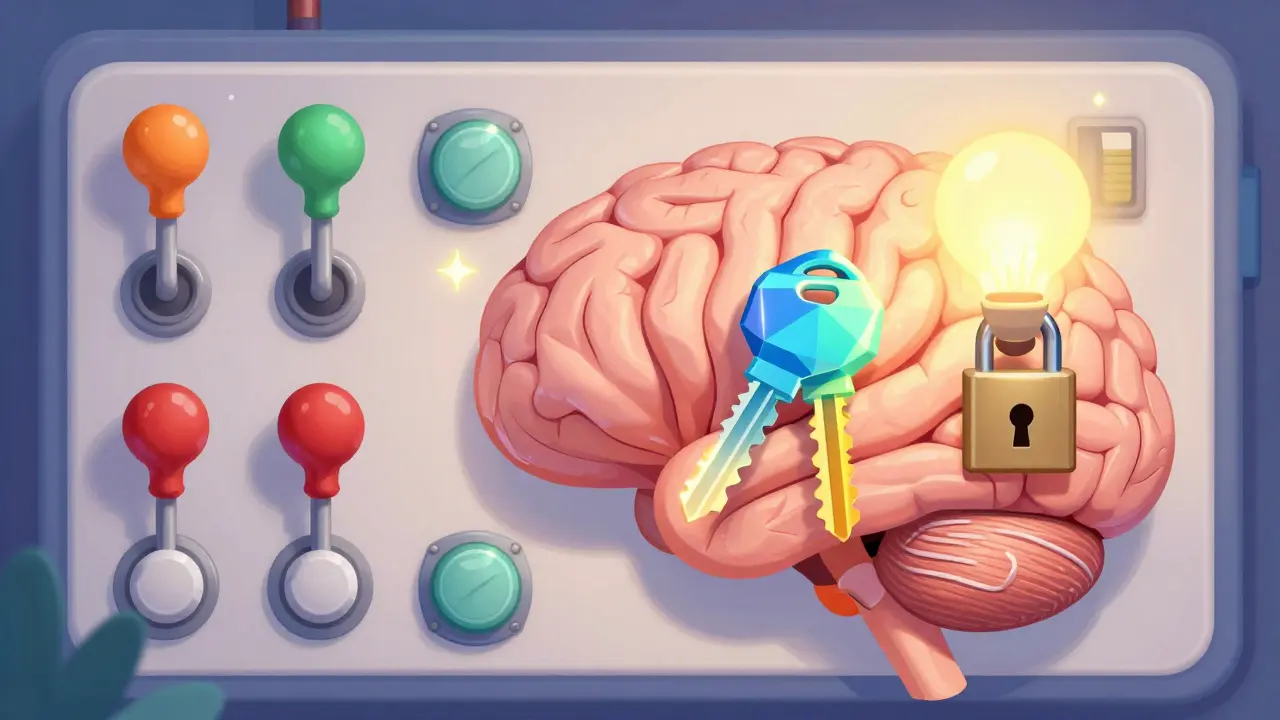
When a single medication doesn't do the trick for complex mental health issues, doctors often turn to psychiatric medication combinations is a strategic pharmacological approach where two or more drugs are paired to enhance efficacy in treating conditions like treatment-resistant depression or bipolar disorder. While this can significantly boost remission rates-sometimes by 15-20%-it also introduces a tricky variable: the switch from brand-name drugs to generics. For many, this isn't just about saving money; it's about whether the "cocktail" that finally stabilized their mood continues to work or suddenly fails.
Why Combine Psychiatric Medications?
Most people start with monotherapy, but about 30-40% of patients with major depressive disorder don't respond adequately to their first antidepressant. This data, highlighted in the STAR*D trial, pushed the clinical community toward augmentation. The goal is to target different neurotransmitters or receptors simultaneously to break through a therapeutic plateau.
Common, evidence-based pairings include:
- Antidepressants + Atypical Antipsychotics: Pairing an SSRI like escitalopram (Lexapro) with a low dose of aripiprazole (Abilify) is a frequent choice for severe depression.
- Fixed-Dose Combinations: Symbyax combines olanzapine and fluoxetine into one pill, reducing the "pill burden" for the patient.
- SSRI + Buspirone: Using sertraline (Zoloft) with buspirone helps target residual anxiety without the addiction risks associated with benzodiazepines.
- Bupropion + SSRI: Adding bupropion (Wellbutrin) to an SSRI is often used specifically to combat the sexual dysfunction that many antidepressants cause.
The Generic Substitution Gamble
On paper, a generic drug is the same as the brand name. The FDA requires generics to be bioequivalent, meaning they fall within an 80-125% range of the original drug's absorption. In many medical fields, this variance is negligible. In psychiatry, however, it can be the difference between stability and a crisis.
A 2019 study in the Journal of Clinical Psychiatry found that patients switched from brand-name to generic SSRIs had a 22.3% higher treatment failure rate. This is especially dangerous for medications with a "narrow therapeutic index," where the gap between a helpful dose and a toxic dose is tiny. Lithium carbonate is the prime example; if blood levels drop even slightly due to a generic manufacturer's variation, a patient could slip back into mania within days.
| Medication Type | Specific Example | Primary Risk After Switch | Clinical Impact |
|---|---|---|---|
| Mood Stabilizers | Lithium | Bioavailability variance | Recurrence of mania |
| Extended Release | Bupropion XL | Inconsistent release profiles | Breakthrough anxiety/depression |
| SNRIs | Venlafaxine ER | Different bead technologies | Destabilized serotonin/norepinephrine ratio |
The Cascade Effect in Polypharmacy
When you are taking a single drug, a slight change in absorption might not be noticeable. But in a combination, drugs often interact through the CYP450 enzyme system in the liver. If a generic version of one drug is absorbed slightly differently, it can change how the other drug in the combination is metabolized.
For instance, if fluvoxamine (Luvox) is used in a combination, it inhibits the CYP1A2 enzyme. If the other drug in the mix is switched to a generic with a slightly different potency, the blood levels of that drug could spike or crash, leading to toxicity or a total loss of symptom control. This "cascade effect" is why experts like Dr. Charles Popkin argue that the standard FDA bioequivalence window is too wide for complex psychiatric cocktails.
Real-World Fallout and Patient Experiences
The clinical data is backed by a wave of patient reports. On platforms like Reddit and PatientsLikeMe, users frequently describe "medication cocktails" that worked perfectly until a pharmacy switch. A common thread is the frustration of being stabilized for years, only to experience a return of obsessive thoughts or severe mood swings after a switch to a generic manufacturer like Apotex or Mylan.
One alarming trend involves the use of generic mood stabilizers combined with antipsychotics. Reports indicate that a significant percentage of these patients experience "emotional destabilization" shortly after a generic switch, sometimes requiring emergency care. This suggests that for some people, the specific inactive ingredients (excipients) or the exact release mechanism of a generic version can trigger a relapse.

How to Safely Navigate Substitutions
If you or a loved one are on a combination of psychiatric meds and need to switch to a generic for cost reasons, don't do it blindly. There are protocols to minimize the risk.
First, establish a baseline. Use a standardized scale, like the MADRS, to document exactly how you feel before the switch. Second, timing is everything. Never switch manufacturers during an acute episode or a crisis; wait until you are in a period of relative stability.
Third, keep a detailed log. Don't just write down the drug name-record the specific manufacturer and lot number. If you suddenly feel worse, your doctor can check if the issue is tied to a specific company's formulation. Finally, schedule a follow-up appointment within 7 to 10 days of the switch to catch subtle changes before they become full-blown relapses.
The Future of Personalized Generic Selection
We are moving toward a more precise way of handling these issues. The VA has already started mandating that patients on narrow-therapeutic-index drugs stay with the same manufacturer for at least a year, which has already led to a nearly 19% drop in psychiatric hospitalizations.
Looking ahead, pharmacogenetic testing may soon allow doctors to predict which generic formulations will work best for a specific person's genetic makeup. Instead of a "one-size-fits-all" approach, we might see a future where your DNA determines which manufacturer's version of a drug is safest for your specific brain chemistry.
Are all generic psychiatric medications unsafe?
No. For the vast majority of people, generics work exactly like brand-name drugs. The risks are primarily concentrated in patients using complex combinations (polypharmacy) or those taking drugs with a narrow therapeutic index, such as lithium.
What is a "narrow therapeutic index" drug?
This refers to medications where there is a very small difference between the dose that treats the condition and the dose that becomes toxic. Because the window of safety is so small, even a tiny variation in how a generic is absorbed can cause a problem.
Why does the manufacturer of the generic matter?
Different companies use different fillers, binders, and release technologies (like different types of beads in an extended-release capsule). These variations can change how quickly the drug enters your bloodstream, which can destabilize a carefully balanced medication combination.
Can I request a specific generic manufacturer?
Yes. You can ask your doctor to specify "Dispense as Written" (DAW) or request a specific manufacturer on the prescription. However, some insurance companies may require a medical justification to cover a specific brand or manufacturer.
How do I know if my generic switch caused my symptoms?
If you notice a return of symptoms or new side effects within 7 to 14 days of a pharmacy changing your medication brand, it is a strong signal that the substitution may be the cause. Document the change and contact your provider immediately.

It is so important to feel heard when you're dealing with these medication switches. I've seen so many people struggle with the anxiety of not knowing if their pharmacy changed the manufacturer, and it really can throw off your whole stability. Just remember that you aren't alone in this struggle, and keeping a log is a great way to take your power back.
The fundamental tragedy here is the societal insistence on the illusion of bioequivalence. We pretend that a chemical compound exists in a vacuum, ignoring the teleological reality that the delivery mechanism is as vital as the agent itself. One must realize that the FDA's window is not a clinical standard, but a bureaucratic convenience designed to facilitate corporate profit under the guise of accessibility. Truly, the pursuit of pharmaceutical efficiency is often the enemy of individual stability.
Bioequivalence is a myth.
Oh sure, because we all trust the FDA to have our backs when it comes to the 80-125% variance. Absolute genius. I love how we just gamble with brain chemistry and then act surprised when people have a meltdown because their pills came from a different factory in a different country. Truly a masterpiece of medical regulation.
Please. You all are acting like this is just a "variance" issue. Wake up. The pharmaceutical giants purposely alternate these formulations to keep us in a cycle of instability so we have to keep coming back for more "adjustments." It's a curated chaos. They don't want you stable on a cheap generic; they want you desperate enough to pay for the brand-name luxury version once the generic ruins your life. It's all a game of control and profit, and most doctors are just reading the script they were given in med school by the same companies making the pills.
Actually... the data on the CYP450 system is just the tip of the iceberg!!! Many of these manufacturers use fillers that are completely undocumented... and they just hope the patient doesn't notice the switch!!! It's absolutely negligent... and honestly... kind of disgusting how the industry operates!!!
I just feel like most people dont even try to heal thier spirits with hollistic methods first... why rely on a cocktel of chemicals when you could just align your energy... the lafure of the medical system is just so sad to see...
I really appreciate how this post highlights the practical side of things, and for anyone who is feeling overwhelmed by the idea of tracking their medications or dealing with insurance, just know that it's a journey and you can take it one step at a time. It might seem like a lot of work to record lot numbers and manufacturer names, but when you think about the peace of mind it brings to know exactly what is entering your body, it's a small price to pay for long-term wellness and mental clarity, and I'm here to cheer you on as you advocate for your own health with your doctor!