
Imagine a patient walking into your clinic, staring at a prescription for a brand-name drug and then seeing a generic alternative that costs 90% less. Their first question is almost always: "Is the cheap one actually as good?" If you hesitate for even a second, you've just reinforced a misconception that can lead to thousands of dollars in wasted healthcare spending and, more critically, lower patient adherence. When cost is the barrier, roughly 20% to 30% of new prescriptions go unfilled. That is a massive gap in care that can be closed with the right evidence-based communication.
Getting comfortable with prescriber education resources isn't just about reading a brochure; it's about mastering the regulatory science and communication tools needed to move patients toward cost-effective, safe alternatives. While 90% of prescriptions in the U.S. are now generics, a significant number of providers still feel uneasy about the "sameness" of complex generics or the specifics of bioequivalence. This guide breaks down the best available tools to bridge that knowledge gap.
The Core Toolkit: What Every Doctor Should Use
The FDA is the primary regulatory body in the United States responsible for ensuring the safety and efficacy of generic drugs through the Abbreviated New Drug Application (ANDA) process . They provide a suite of resources designed to fit into a busy clinical workflow without requiring hours of study.
- The Generic Drugs Stakeholder Toolkit: This is the "gold standard" for providers. It includes customizable info cards and infographics that visually explain how a generic drug is validated. One of the most useful pieces is the "What Makes a Generic the Same as a Brand-Name Drug?" infographic, which simplifies the complex science of pharmaceutical manufacturing.
- Prescriber Flyers: These are single-page references designed for office literature racks. Version 2 (released in 2022) is particularly valuable because it includes QR codes linking to Spanish-language materials, helping you reach Hispanic patients who, according to 2021 data, often express higher concerns about generic quality.
- Generic Drugs and Health Equity Handout: This resource puts the cost issue into perspective. For patients earning under $25,000 annually, the likelihood of stopping essential medication due to cost is nearly four times higher than for wealthier patients.
| Organization | Core Focus | Key Tool/Output | Primary Metric emphasized |
|---|---|---|---|
| FDA | Regulatory Science & Safety | Stakeholder Toolkit | Bioequivalence (80-125%) |
| ACP | Clinical Adherence | Position Statements | Patient Adherence Rates |
| CDC | Public Health Frameworks | Prescribing Guidelines | Therapeutic Substitution % |
| EMA | European Standards | Comparative Dissolution | Dissolution Profiles |
Understanding Bioequivalence: The "80-125%" Rule
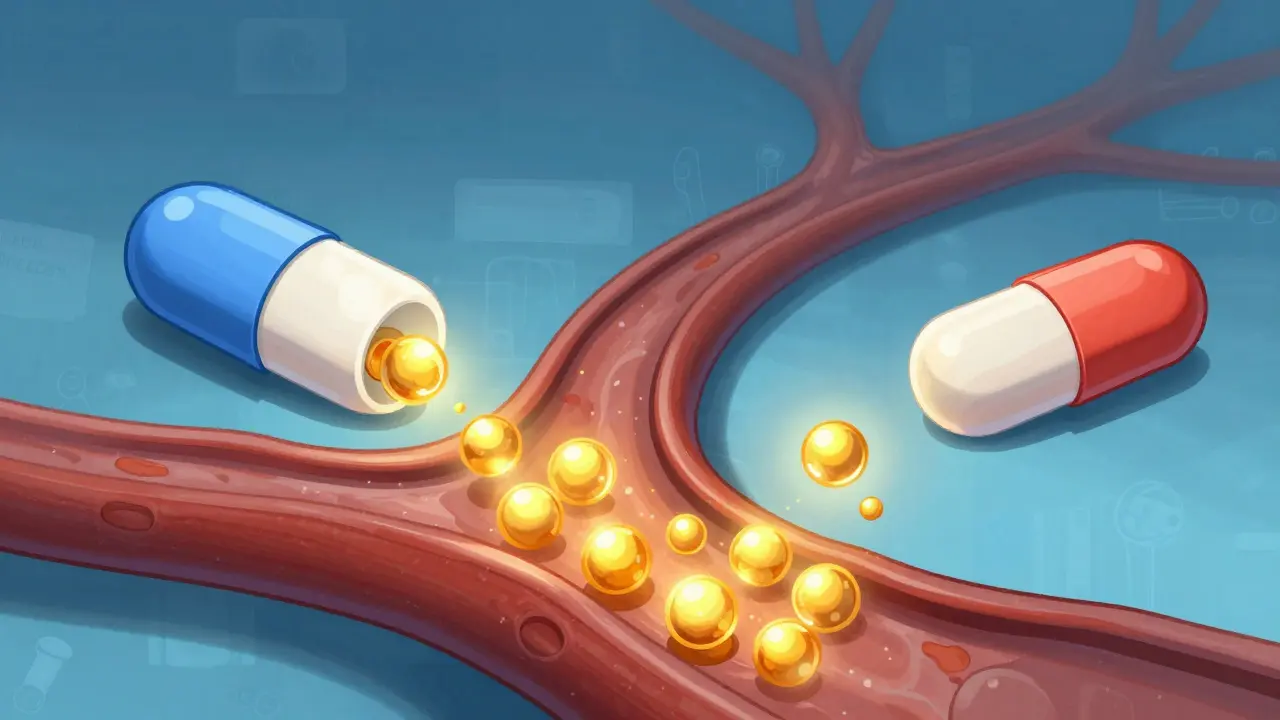
The biggest hurdle in prescribing generics is explaining Bioequivalence is the property whereby a generic drug delivers the same amount of active ingredient into a patient's bloodstream at the same rate as the brand-name drug . To a patient, "similar" sounds like "not the same." You need to be specific.
FDA standards require that the 90% confidence interval for the ratio of the generic to the brand-name drug's absorption fall between 80% and 125%. In practical terms, for the vast majority of drugs, the therapeutic effect is 99.7% identical. When you explain that the active ingredient is chemically the same and the delivery rate is within a tight, regulated window, you move the conversation from "trust me" to "here is the data." For example, switching a patient from a $300/month brand-name medication to a generic can save them over $260 monthly without compromising the clinical outcome.
Handling Complex Generics and Biosimilars
Not all generics are created equal. While a generic tablet is straightforward, Complex Generics are medications where the drug's delivery system, such as inhalers or topical creams, is as critical as the active ingredient itself . This is where many doctors feel the most hesitation.
Therapeutic substitution rates for complex medications are lower (around 78%) compared to simple oral generics. This is because the device-the inhaler's spray pattern or the cream's absorption rate-can vary. When using education resources for these, look for specific comparative dissolution profiles rather than just general bioequivalence. Current trends are moving toward Biosimilars, which are the generic equivalents of biologic drugs. These are not "identical" but "highly similar," requiring a different set of educational talking points focused on clinical equivalence rather than chemical identity.
Integrating Education into Your Daily Workflow
The biggest complaint from physicians is that they don't have time to hunt for PDFs during a 15-minute appointment. To make these resources work, you have to embed them into your process.
- EHR Integration: If your practice uses Epic or Cerner, check if your administrator can enable generic drug education pop-ups. Systems that integrate FDA facts directly into the decision support tool have seen brand-name prescribing drop by nearly 19% within six months.
- The Three-Step Approach: Follow the CDC implementation toolkit: Spend 15 minutes reviewing regulatory standards, add conversation prompts to your patient intake forms (e.g., "Are you concerned about the cost of your medications?"), and review your prescribing rates monthly against peer benchmarks.
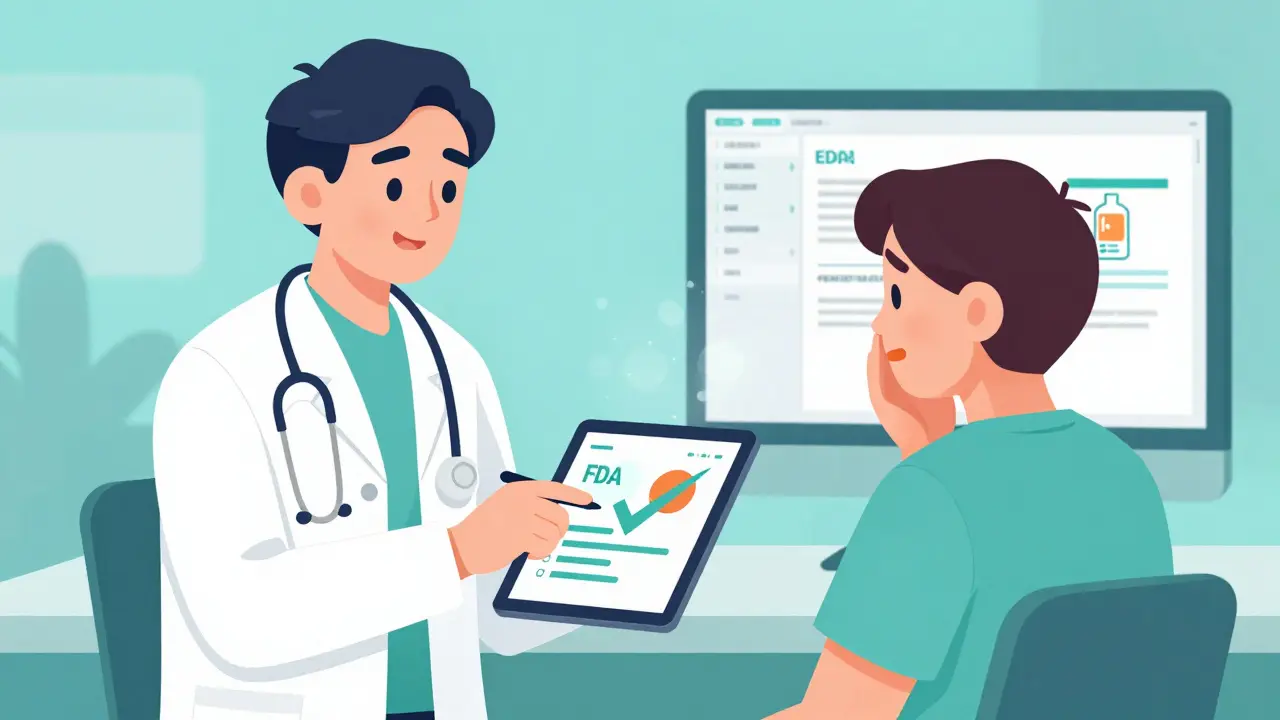
- Visual Aids: Don't just tell; show. Keep a few FDA infographics on your desk or tablet. Showing a patient the 5-step approval process for a generic drug is often more convincing than a verbal explanation.
Overcoming Patient Skepticism with Scripts
Patients often bring in anecdotes: "My neighbor said the generic didn't work for them." Using structured scripts from the FDA resources can help you pivot the conversation back to evidence.
Scenario: "My insurance wants me to switch, but I'm afraid the brand works better."
Response: "It's common to feel that way, but the FDA requires generic drugs to have the same active ingredient and the same effect on the body as the brand name. In fact, the safety monitoring for generics is just as rigorous-in 2022, the FDA analyzed over 12,000 adverse event reports for generics to ensure they remained safe and effective. The main difference is the price, which helps ensure you can stay on your medication consistently."
What is the difference between a generic and an authorized generic?
An authorized generic is the brand-name drug itself, but sold without the brand-name label and often at a lower price. It is manufactured by the original brand company but marketed as a generic. This often confuses prescribers, as it is chemically identical to the brand because it IS the brand, just rebranded for the generic market.
How can I tell if a generic is truly bioequivalent?
You can refer to the FDA's Orange Book, which lists approved drug products with therapeutic equivalence evaluations. If a drug is rated as "AB," it means it is therapeutically equivalent to the brand-name drug and can be expected to have the same clinical effect and safety profile.
Are generics as safe as brand-name drugs?
Yes. The FDA monitors both equally through postmarketing surveillance. Data shows that the number of adverse event reports for generics is generally equivalent to those for brand-name drugs, proving that the safety monitoring systems are just as stringent for both.
Why do some patients feel generics don't work as well?
This is often due to the placebo effect or the "nocebo" effect, where the belief that a cheaper drug is inferior leads to perceived reduced efficacy. Using visual aids and explaining the 80-125% bioequivalence range can help patients overcome this psychological barrier.
What resources are best for patients with low health literacy?
The FDA's Prescriber Flyers and infographics are specifically calibrated to a 6th-8th grade reading level, following Health Literacy Universal Precautions. These are the most effective tools for patients who struggle with complex medical jargon.
Next Steps for Your Practice
If you are just starting to integrate these resources, don't try to overhaul your entire prescribing habit overnight. Start by picking one high-cost medication class-like statins or antihypertensives-and commit to using the FDA's generic drug facts during every patient conversation for that class. Once you see the increase in patient adherence and the reduction in "cost-related non-compliance," you can expand the approach to more complex medications. If you're in a larger group, suggest a pharmacology grand round to align your colleagues on the latest bioequivalence data.

This is an absolute game-changer for clinical practice! The sheer tragedy of patients skipping life-saving meds just because of a price tag is enough to make any provider scream in frustration. Using the FDA toolkit to smash these myths is the only way forward! 🚀
Sure, the 80-125% range looks great on a slide, but anyone actually in the trenches knows some patients react totally differently to different generic manufacturers. It's not all just 'placebo' or 'nocebo' stuff like the post says.
We need to stop relying on these international standards and focus on bringing every single cent of pharmaceutical manufacturing back to American soil where we can actually see the factories and know for a fact that the quality is top-tier without needing some government PDF to tell us it is okay because the current system is just too fragmented and lets too many foreign players in the mix who don't care about the American patient!
Um, hello? Did we just ignore the part about biosimilars? 🙄 They are NOT the same as generics and trying to use the same talking points is a recipe for disaster! Like, the complexity here is through the roof and the post barely scratches the surface! 😱
Oh great, another government-approved toolkit to make us feel better about the 'efficiency' of the healthcare system. I'm sure the QR codes will work perfectly in a clinic with zero cell service. Just wonderful.
The Orange Book is just a list of things the FDA wants you to believe. They're all in the pockets of Big Pharma anyway. The 'bioequivalence' is a joke to keep people taking pills that don't work while the companies rake in billions.
It is interesting to consider how much of the patient's trust resides in the price tag rather than the science. We are dealing with a psychological barrier as much as a medical one here.
regulatory science is just a fancy term for bureaucracy. a 20 percent drop in brand name prescribing is just a shift in profit margins not health
The suggestion to use a 'three-step approach' is quaintly simplistic. In a high-volume practice, the cognitive load of managing these conversations is significantly underestimated by the author. One simply cannot 'embed' a PDF into a fifteen-minute window without sacrificing the actual diagnostic quality of the visit.
I really appreciate the mention of the Spanish-language materials. Bridging the gap for our Hispanic communities is so vital for health equity. It's these small, inclusive steps that actually make a difference in long-term patient outcomes.
I'm curious if anyone has tried integrating the FDA pop-ups into Epic specifically? I've heard it helps, but I want to know if it actually disrupts the flow or if it's seamless. I'm all for the cost savings, but the UX has to be right for it to work in a real clinic.
I totally agree that cost is a huge barrier for so many people. It's heart-wrenching to see a patient leave without their meds.
The intersection of pharmaceutical economics and patient psychology presents a profound ethical dilemma. We must contemplate whether the standardization of care through generics inadvertently diminishes the perceived value of the healing process in the eyes of the patient.
This approach seems very promising. It is encouraging to see such structured resources available to improve the confidence of practitioners globally. I believe this will lead to a more sustainable healthcare model where accessibility is prioritized alongside efficacy. The focus on bioequivalence provides a solid foundation for patient education. By utilizing the FDA's visual aids, we can transform a stressful conversation about money into a productive discussion about science. It is also vital to recognize the role of the pharmacist in this chain. When doctors and pharmacists are aligned, the patient feels more secure. This synergy is exactly what the healthcare system needs to evolve. The data on health equity is particularly moving and underscores the necessity of these interventions. Moving forward, perhaps we can develop similar toolkits for other medication classes. I am optimistic that this will reduce the 20-30% gap in unfilled prescriptions. Every patient deserves access to their medication regardless of their income level. The emphasis on a gradual integration into the workflow is a practical touch. I look forward to seeing how this impacts clinical adherence rates over the next few years. This is a step toward a more equitable future for all patients.
Oh my god, the thought of a patient thinking their medicine is inferior just because it's cheaper is absolutely devastating! We have to fight this misconception with everything we have!