

Imagine spending years managing your diabetes without a hitch, only to wake up one day with a red, itchy lump at your injection site that won't go away. Or worse, feeling your throat tighten just minutes after a dose. It's terrifying and confusing, especially when the very medicine keeping you alive is the thing causing the chaos. While most people use insulin without any issues, a small group of us experience insulin allergies-immune reactions that can range from a minor nuisance to a life-threatening emergency.
The good news is that you don't have to just "deal with it" or, heaven forbid, stop your medication. Modern medicine has a way to figure out exactly what's triggering your body and how to stop it. Whether it's a reaction to the insulin itself or a hidden preservative, there are clear paths to getting your treatment back on track.
Quick Takeaways for Fast Relief
- Local reactions: Redness, itching, and lumps at the site. Usually not an emergency, but needs a doctor's look.
- Systemic reactions: Hives, swelling of the face, or trouble breathing. This is a medical emergency.
- The Trigger: It might not be the insulin; additives like metacresol or zinc can be the real culprits.
- The Fix: Switching insulin brands or starting immunotherapy often solves the problem.
- Warning: Never stop taking insulin without a doctor's plan, as this can lead to diabetic ketoacidosis (DKA).
Is It an Allergy or Just a Side Effect?
It's easy to mix up a true allergy with a common side effect. If you're shaking, sweating, or feeling anxious after a dose, you're likely dealing with hypoglycemia (low blood sugar), not an allergy. A real allergic reaction is an immune response.
In most cases, Insulin Allergy is an adverse immune-mediated reaction where the body identifies insulin or its components as harmful invaders. This usually happens in one of three ways:
- Local Reactions: These are the most common, affecting about 97% of people with insulin allergies. You'll see swelling, redness, and itching right where you injected. Sometimes, tender lumps (subcutaneous nodules) form between 30 minutes and 6 hours later.
- Systemic Reactions: These are rare but scary. They happen almost immediately and involve the whole body-think hives, a full-body rash, or a drop in blood pressure.
- Delayed Hypersensitivity: This is the weird one. You could use the same insulin for ten years and suddenly develop joint and muscle pain (arthralgia) or bruising that takes weeks to fade.
The Hidden Culprits: Insulin vs. Excipients
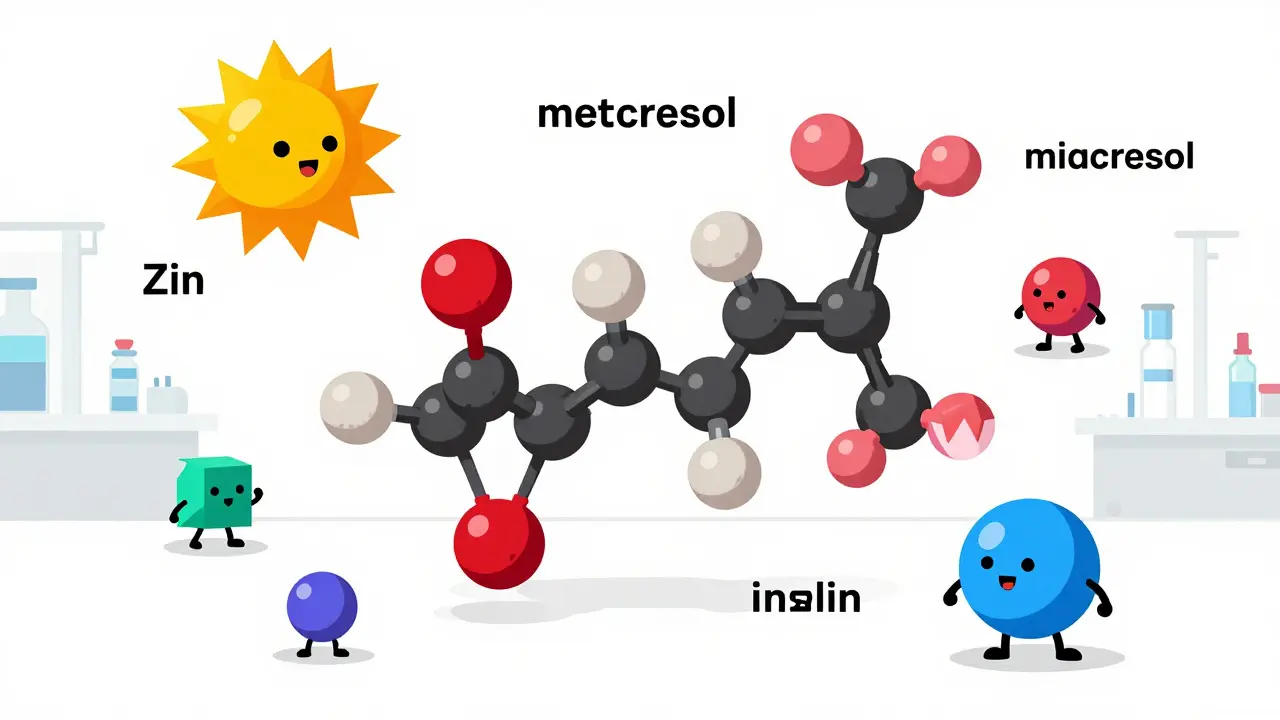
Here is a secret many people don't know: you might not actually be allergic to the insulin molecule. Insulin isn't just a single ingredient; it's a cocktail. To keep the medicine stable and sterile, manufacturers add Excipients, which are inactive substances like metacresol (a preservative) and zinc.
Some people find that their body is perfectly happy with the insulin but hates the preservative. For example, certain brands like Humalog have higher concentrations of metacresol, which can trigger reactions in sensitive people. This is why switching brands often works-you aren't necessarily changing the "type" of insulin, but the "recipe" of the liquid it's floating in.
| Feature | Local Reaction | Systemic Reaction |
|---|---|---|
| Common Symptoms | Redness, itching, lumps at site | Hives, facial swelling, dyspnea |
| Timing | 30 mins to 6 hours post-dose | Immediate / Rapid onset |
| Frequency | Very common (approx 97% of cases) | Very rare (less than 0.1% of users) |
| Urgency | Schedule a clinic visit | Call emergency services (999/911) |
| Primary Cause | T-cell or IgE mediated | IgE-mediated (Type 1) |
How Doctors Diagnose the Reaction
You can't diagnose an insulin allergy just by looking at a red bump. You need a team-up between your Diabetologist and an Allergologist. The specialist will usually start with a skin prick test or an intradermal test. This involves placing a tiny amount of the suspected insulin or preservative on your skin to see if it wheals (bumps up).
They may also run blood tests to look for specific IgE Antibodies, which are the proteins your immune system produces when it thinks something is a threat. If the tests are positive, you have a confirmed immune-mediated allergy rather than just a skin irritation from the needle.
Management Strategies: From Creams to Cures
Depending on how severe your reaction is, the treatment plan varies. If you're dealing with those annoying delayed lumps and bruises, a doctor might suggest using Calcineurin Inhibitors like tacrolimus. These are creams applied right after the injection and again a few hours later to "quiet down" the immune response in the skin.
For more persistent issues, here are the primary clinical paths:
- Switching Insulins: This is the first line of defense. Switching to a different analog or a different brand works for about 70% of people.
- Antihistamines and Steroids: These are used to dampen the immediate itching and swelling.
- Specific Immunotherapy: This is essentially "training" your body to tolerate the insulin. A specialist gives you gradually increasing doses of the insulin to desensitize your immune system. Research shows this can completely resolve symptoms in over 60% of patients.
- Alternative Medications: For some people with Type 2 diabetes, if insulin simply isn't working, doctors may pivot back to oral antidiabetics.

When to Panic (and When to Just Call the Doctor)
Knowing the difference between "this is annoying" and "this is a crisis" is life-saving. You need to call emergency services immediately if you experience Anaphylaxis, which is a severe, whole-body allergic reaction.
Red flags that require an immediate 999 or 911 call:
- Your tongue, lips, or throat start swelling up.
- You feel a sudden tightness in your chest or have trouble catching your breath.
- Your skin turns a strange color (pale or bluish) while you feel faint.
- You feel a rapid drop in blood pressure or feel like you're going to pass out.
If you just have a red spot and some itching, you're not in immediate danger, but don't ignore it. Start a log. Write down the exact time you injected, which brand of insulin you used, and exactly when the reaction started. This data is gold for your allergist.
Can I just stop taking insulin if I'm allergic?
Absolutely not. If you have Type 1 diabetes, stopping insulin can lead to diabetic ketoacidosis (DKA), which is a life-threatening medical emergency. Always contact your diabetes team first to arrange a safe transition to a different insulin or a desensitization plan.
Why did I suddenly become allergic after years of using the same insulin?
It's actually quite common. Delayed hypersensitivity can develop even after a decade of successful use. This is often a T-cell mediated response where the immune system slowly "learns" to react to the protein or the preservatives over time.
Does changing my injection site help?
While rotating sites is important to prevent lipohypertrophy (fatty lumps), it won't cure a true allergy. If you are allergic to the insulin or its excipients, the reaction will likely follow the medicine wherever you inject it.
Are some insulins "safer" than others?
Modern human insulins and analogs are much safer than the animal-sourced insulins used in the 1920s. However, because different brands use different preservatives (like metacresol), one brand may be "safer" for you specifically than another.
How long does immunotherapy take to work?
It varies by person, but it involves a gradual process of increasing doses. Many patients see significant improvement within a few months, and some achieve complete resolution of symptoms, allowing them to use their required insulin without any skin reactions.
Next Steps for Relief
If you suspect you're having a reaction, your first move is to call your diabetes clinic. Don't try to diagnose yourself by switching brands randomly, as this can make it harder for a doctor to pinpoint the exact trigger.
For those already in the middle of a diagnostic process, keep a detailed "reaction diary." Note the brand, the lot number of the insulin vial, and the exact time of the reaction. If you've been prescribed a topical steroid or calcineurin inhibitor, be strict about the timing-applying it immediately after the injection is the key to suppressing that delayed immune response.