
NMS Risk & Severity Estimator
Input patient data to estimate the likelihood and severity of Neuroleptic Malignant Syndrome (NMS). This tool helps identify potential emergencies requiring immediate medical attention.
Interpretation
Click calculate to see results.
Symptom Breakdown
Recommended Actions
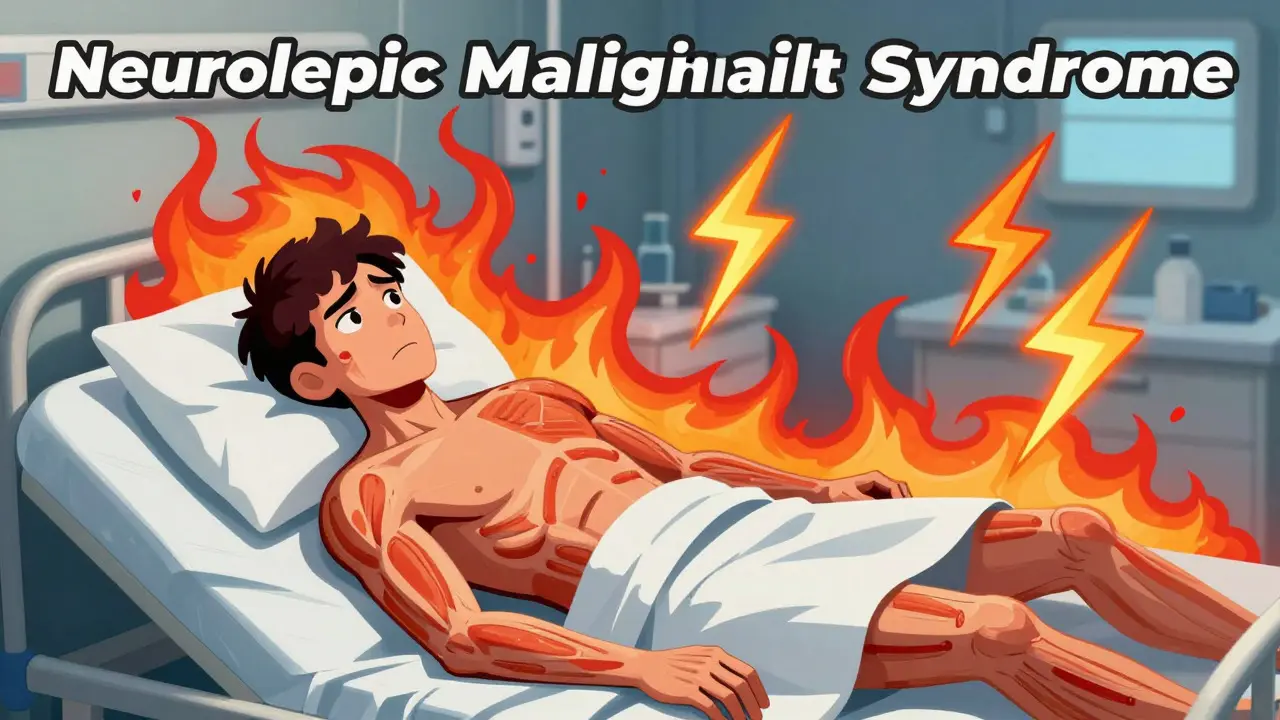
Imagine your muscles turning to concrete while your body temperature spikes above 105°F. That is the terrifying reality of Neuroleptic Malignant Syndrome, a rare but life-threatening reaction to certain psychiatric medications. While most people tolerate antipsychotics well, this condition strikes without warning in a small percentage of patients, often within the first two weeks of starting treatment or increasing the dose. It is a medical emergency that requires immediate hospitalization, yet it is frequently misdiagnosed as a worsening of mental illness or a simple infection.
Understanding this reaction is critical for anyone taking medication that blocks dopamine receptors. Whether you are a patient, a caregiver, or a healthcare provider, recognizing the early signs can mean the difference between a full recovery and severe complications like kidney failure. This guide breaks down what happens inside the body during an NMS episode, how doctors diagnose it, and the specific treatments that save lives.
What Is Neuroleptic Malignant Syndrome?
Neuroleptic Malignant Syndrome (NMS) is a severe adverse drug reaction characterized by muscle rigidity, high fever, altered mental status, and autonomic instability. It was first formally described in 1960 by French psychiatrist Jean Delay, though cases were noted shortly after chlorpromazine hit the market in the mid-1950s. The core mechanism involves the blockade of dopamine D2 receptors in the brain. When these receptors are blocked, particularly in the hypothalamus and nigrostriatal pathways, the body’s thermostat and muscle control systems go haywire.
This condition is not just a "bad side effect." It is a systemic crisis. The estimated incidence ranges from 0.01% to 3.2% among individuals taking antipsychotics, depending on the generation of the drug. First-generation antipsychotics carry a higher risk, with rates around 0.5-2.0%, whereas second-generation agents have lowered this risk significantly to roughly 0.01-0.02%. Despite its rarity, the mortality rate remains significant at 10-20% if untreated, dropping to about 5% with prompt recognition and intensive care.
The Four Cardinal Symptoms You Must Know
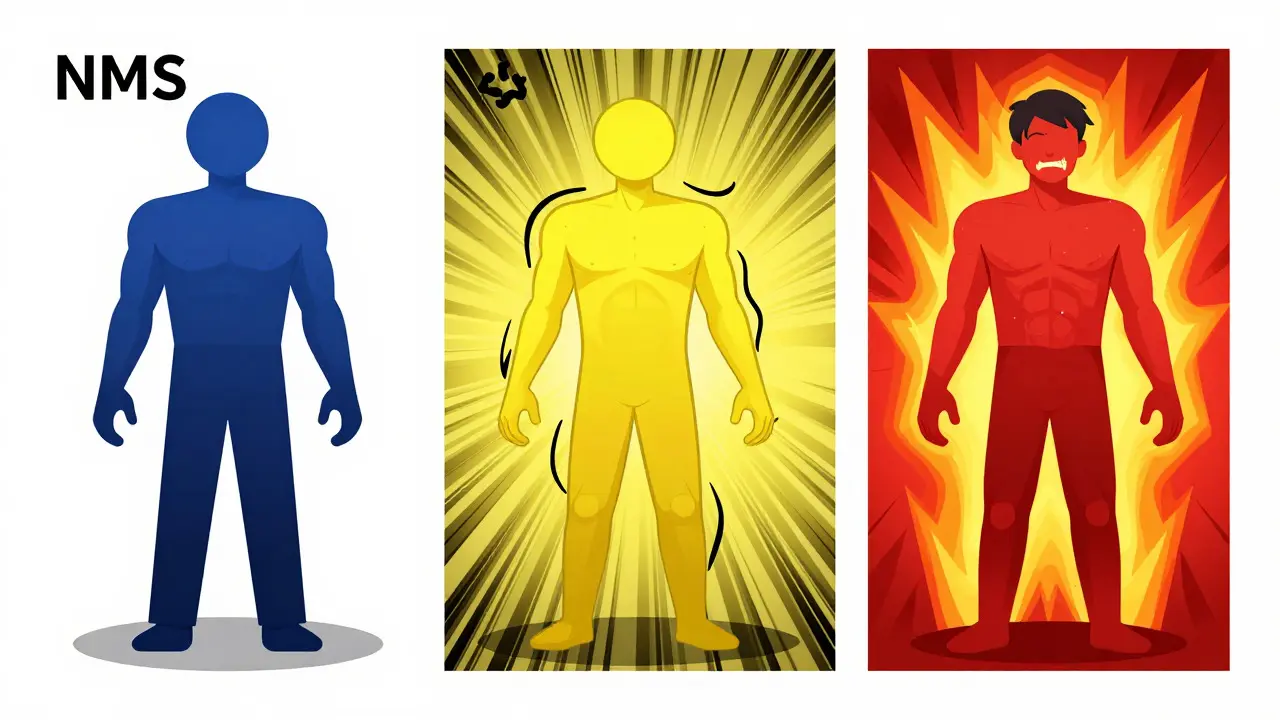
Doctors look for a specific tetrad of symptoms to confirm an NMS diagnosis. If you or someone you know experiences these together, it is time to seek emergency care immediately.
- Muscle Rigidity: Often described as "lead pipe" rigidity, where muscles resist passive movement uniformly. Patients may feel their limbs are locked in place.
- Hyperthermia: A fever exceeding 100.4°F (38.0°C), often spiking above 104°F (40°C). This is usually one of the later signs to appear.
- Altered Mental Status: Ranging from agitation and delirium to mutism and coma. This often mimics a psychiatric exacerbation, which leads to diagnostic delays.
- Autonomic Instability: Fluctuating blood pressure, rapid heart rate (tachycardia over 90 bpm), heavy sweating, and irregular breathing.
The sequence of these symptoms matters. Typically, mental status changes appear first, followed by motor abnormalities, then hyperthermia, and finally autonomic dysfunction. Recognizing this pattern helps distinguish NMS from other conditions.
Causes and Risk Factors
NMS is primarily triggered by dopamine receptor-blocking agents. While classic antipsychotics like haloperidol and chlorpromazine are the most common culprits, non-antipsychotic drugs can also cause it. Antiemetics such as metoclopramide and promethazine account for approximately 15% of cases. Additionally, rapid withdrawal of dopaminergic medications used for Parkinson's disease can trigger similar symptoms in about 5% of those cases.
Certain factors increase the likelihood of developing NMS:
- Rapid Dose Escalation: Increasing the dose of an antipsychotic too quickly, especially with high-potency agents like haloperidol.
- Parenteral Administration: Receiving injections rather than oral medication.
- Concurrent Medications: Using lithium alongside antipsychotics increases risk.
- Dehydration and Exertion: Physical stress or lack of fluids can precipitate the reaction.
- Young Male Gender: There is a slightly higher incidence in young males, with a male-to-female ratio of 2:1.
Interestingly, about 60% of cases occur during initial exposure to the medication, 30% during dose escalation, and only 10% during long-term stable treatment. This means the danger is highest when starting or adjusting therapy.
Diagnosis: Distinguishing NMS from Similar Conditions
One of the biggest challenges with NMS is that it looks like other serious conditions. Up to 12% of cases are initially misdiagnosed, often as severe psychiatric worsening or infection. This delay can be dangerous because treatment for the wrong condition does nothing to stop the progression of NMS.
| Feature | Neuroleptic Malignant Syndrome | Serotonin Syndrome | Malignant Hyperthermia |
|---|---|---|---|
| Onset Time | Days to 2 weeks | Hours | Minutes (post-anesthesia) |
| Muscle Tone | Lead pipe rigidity | Clonus, myoclonus | Masseter spasm |
| Reflexes | Hyporeflexia or normal | Hyperreflexia | Normal until late stage |
| Trigger | Dopamine antagonists | Serotonergic agents | Volatile anesthetics/succinylcholine |
| Specific Antidote | Dantrolene/Bromocriptine | Cyproheptadine | Dantrolene |
Laboratory tests play a crucial role in confirming the diagnosis. Doctors will check for elevated creatine kinase (CK) levels, which can exceed 1,000 IU/L and sometimes reach 100,000 IU/L due to muscle breakdown (rhabdomyolysis). Other markers include leukocytosis (high white blood cell count), metabolic acidosis, and low serum iron. Monitoring these values helps track the severity of the muscle damage and kidney stress.
Treatment Protocols and Recovery
Treating NMS is a race against time. The goal is to reverse the dopamine blockade, cool the body, and protect the organs from secondary damage. Here is the standard clinical approach:
- Stop the Offending Agent: Immediately discontinue all neuroleptics and dopamine antagonists. This is the single most important step.
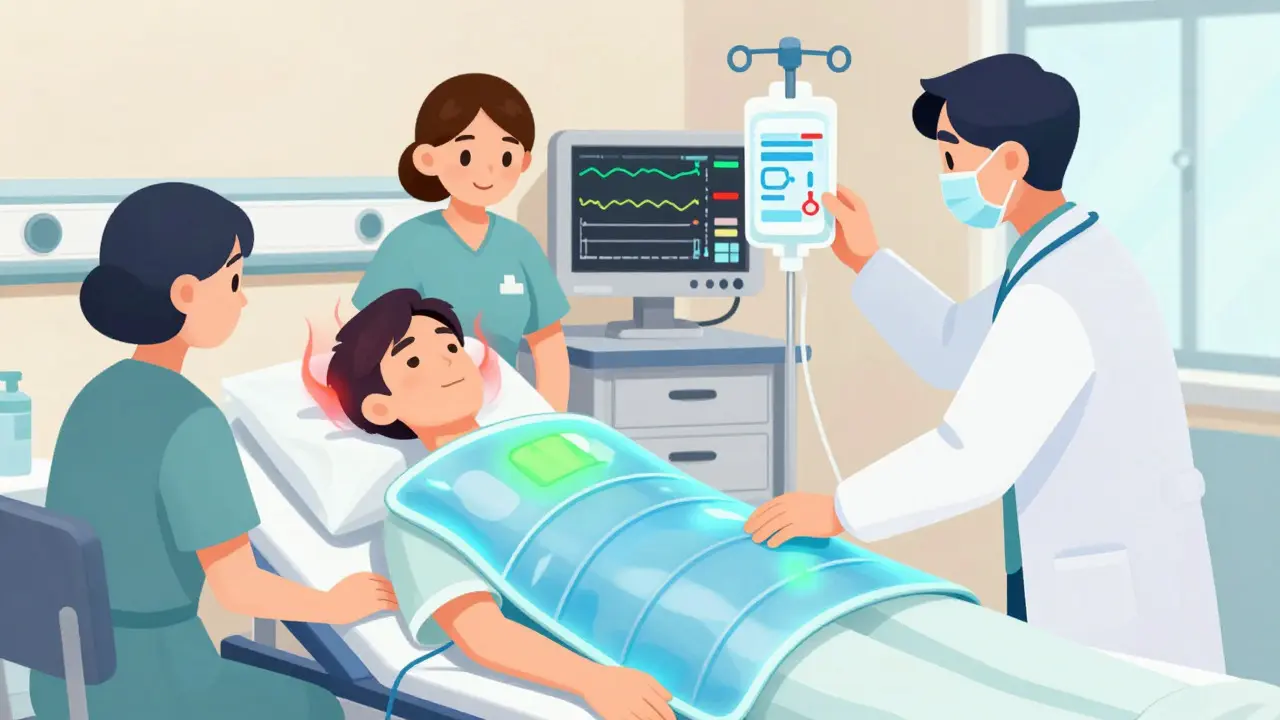
- Aggressive Cooling: For temperatures above 102°F (38.9°C), use external cooling blankets and intravenous fluids to lower body heat rapidly.
- Hemodynamic Support: Maintain blood pressure and hydration. Fluid management typically involves a 1-2L bolus followed by 100-150 mL/hour maintenance to prevent kidney failure from myoglobinuria.
- Pharmacological Intervention:
- Dantrolene: A direct-acting muscle relaxant given IV (1-2.5 mg/kg start, titrated up to 10 mg/kg) to relieve rigidity and reduce heat production.
- Bromocriptine: A dopamine agonist (2.5-10 mg orally every 8 hours) to counteract the dopamine blockade.
- Renal Protection: Monitor urine output closely (aiming for >30 mL/hour) and CK levels every 6-12 hours until they peak and then daily until normal.
Recovery typically takes 7-10 days with proper management. However, residual muscle weakness can persist in about 15% of survivors at 30-day follow-up. Some patients report prolonged recovery periods, with some unable to walk unassisted for several weeks due to the extent of muscle damage.
Patient Experiences and Long-Term Impact
Surviving NMS is physically and emotionally taxing. Patient reports highlight the trauma of ICU stays, where they may be sedated, intubated, and unable to communicate for days. One patient described feeling like their "muscles turned to concrete" and losing the ability to speak for three days. Another noted that it took 48 hours for doctors to realize their schizophrenia wasn't worsening, but that they were suffering from a drug reaction.
A significant challenge for survivors is the fear of restarting psychiatric medication. A survey by Mental Health America found that 65% of NMS survivors reported reluctance to resume antipsychotic treatment despite ongoing symptoms. This creates a difficult therapeutic dilemma: the need for psychiatric stability versus the fear of a repeat reaction. Close monitoring and careful re-introduction of lower-risk medications are essential for long-term management.
Frequently Asked Questions
Can you get Neuroleptic Malignant Syndrome from antidepressants?
It is rare but possible. Most cases involve antipsychotics, but any medication that blocks dopamine receptors can trigger NMS. This includes some antiemetics like metoclopramide. Antidepressants that affect serotonin are more likely to cause serotonin syndrome, which is different but has overlapping symptoms.
How long does it take to recover from NMS?
With prompt treatment, most patients recover in 7 to 10 days. However, muscle weakness can last longer, and some patients experience fatigue or mobility issues for several weeks. Full neurological function usually returns, but physical rehabilitation may be needed.
Is NMS fatal?
Yes, if left untreated, the mortality rate is 10-20%. With modern intensive care and early recognition, the mortality rate drops to approximately 5%. Complications like kidney failure or pulmonary embolism are the primary causes of death.
Can I take antipsychotics again after having NMS?
Many patients can safely restart antipsychotic medication under close supervision. Doctors usually choose a different agent with a lower risk profile and introduce it slowly. However, about 65% of survivors initially hesitate due to fear, so open communication with your psychiatrist is key.
What are the earliest signs of NMS?
The earliest signs are often subtle changes in mental status, such as confusion, agitation, or unusual sleepiness, combined with increased muscle stiffness. Fever and autonomic instability (sweating, fast heart rate) typically follow. If you notice new stiffness and confusion after starting or changing a psychiatric med, see a doctor immediately.

They say it's a rare side effect but I know better, the pharmaceutical giants are just trying to silence the truth about how dopamine is actually controlled by external forces. It's not just a reaction, it's a symptom of a deeper systemic failure that only those with the right 'access' can see. Most people are too busy trusting their doctors to notice that the medication itself is part of the experiment. The real danger isn't the fever, it's the loss of autonomy that comes with accepting the label. You have to look at the patterns, not just the symptoms they list in these sanitized guides.
Great read! 🧠💪
But honestly this feels like a lot of pressure for patients who are already struggling. The fear of restarting meds is so real and we need to talk more about the psychological toll after surviving something this scary. It’s not just about the body recovering, its about the mind trusting the process again. We need better support systems for survivors, not just medical protocols. Keep pushing for awareness! 🔥
The table comparing NMS and Serotonin Syndrome is where the real insight lies, or does it?
It’s funny how we try to categorize human suffering into neat little boxes when the reality is so much messier. The 'lead pipe' rigidity is a perfect metaphor for the modern patient experience, stuck in place while the system spins around them. But let’s be honest, the diagnosis delay is less about medical incompetence and more about a fundamental misunderstanding of what mental health even means in the first place. If you can’t explain why you’re confused without blaming the drug, maybe the model is broken. Just food for thought, eh?
This is such an important topic! It’s scary to think about how quickly things can go wrong. I really hope everyone shares this with their families so they know the signs early on. Early detection really does save lives!
I agree completely... the timeline of symptoms is... very specific... and often overlooked... by general practitioners... who might just assume it's... a bad night... or a viral infection... which is... dangerous... because time... is literally... running out... in these cases... so... please... pay attention... to the stiffness... and the confusion... especially... if you just started... a new med...
In many cultures, physical symptoms are dismissed as spiritual issues. This guide bridges that gap beautifully. Clear facts help families advocate for their loved ones regardless of background. Knowledge is power here.
stop being so dramatic about it. if you take your meds properly this wont happen. its all in your head anyway. typical western overreaction to basic biology. just toughen up and deal with it like adults do everywhere else. no excuses needed.
An excellent comprehensive overview of a critical medical emergency. The clarity provided regarding the differential diagnosis between NMS and Serotonin Syndrome is particularly valuable for clinicians and informed caregivers alike. Furthermore, the emphasis on the psychological impact on survivors highlights the necessity for holistic post-acute care strategies. Understanding the pharmacological mechanisms involved allows for better anticipation of risk factors, thereby enabling proactive monitoring in vulnerable populations. This resource serves as a vital educational tool for bridging the gap between complex pathophysiology and practical clinical application. Continued dissemination of such detailed information is essential for reducing mortality rates associated with this condition. Let us continue to champion evidence-based practices in psychiatric pharmacology management.