
Starting a new medication for depression or anxiety can feel like stepping into the unknown. You’ve heard the stories-some say it changed their life, others say it left them feeling numb or sick. The truth is, antidepressants are prescription medications designed to treat depression, anxiety, and other mental health conditions by altering brain chemistry. They are not magic pills, but they are powerful tools that work for many people when used correctly.
The challenge isn’t just finding a pill that works; it’s finding one that works *for you* without causing unacceptable side effects. With dozens of options across different classes, the trial-and-error process can be exhausting. This guide breaks down the main types of antidepressants, what to expect from each, and how to navigate the safety profiles so you can make informed decisions with your doctor.
How Antidepressants Actually Work
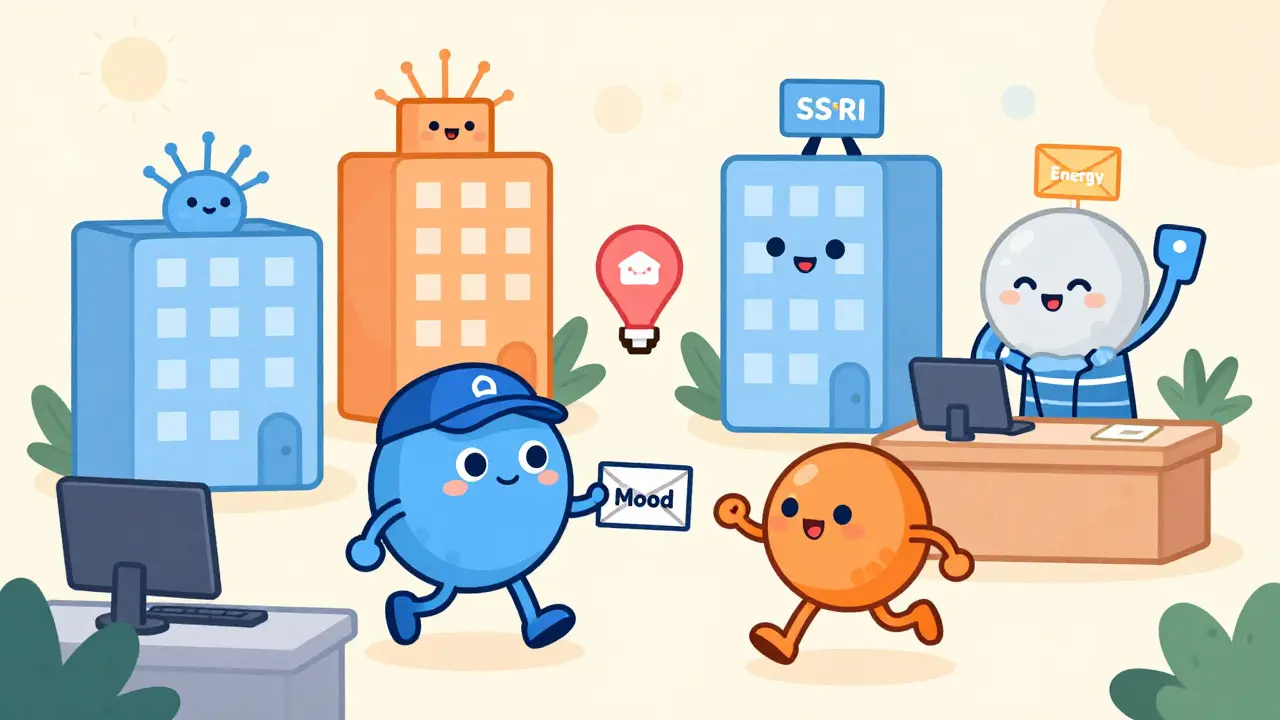
To understand why these medications help, we have to look at neurotransmitters-chemical messengers in your brain like serotonin, norepinephrine, and dopamine. Think of them as the email servers of your nervous system. When you’re depressed, it’s often because these emails aren’t getting delivered properly. Serotonin regulates mood, sleep, and appetite. Norepinephrine affects energy and attention. Dopamine drives pleasure and motivation.
Selective serotonin reuptake inhibitors (SSRIs) are a class of antidepressants that increase serotonin levels by blocking its reabsorption into neurons. Instead of letting the brain recycle serotonin too quickly, SSRIs keep more of it available in the space between nerve cells. This doesn’t fix everything overnight, but over time, it helps restore balance. It’s important to note that this process takes weeks. Most patients don’t feel better until 4 to 6 weeks after starting treatment, with full benefits sometimes taking up to 12 weeks.
According to a landmark 2018 study published in The Lancet, antidepressants produce a significant reduction in symptoms for about 50-60% of patients, compared to 30-40% who respond to placebo. That gap matters. For severe depression, combining medication with therapy is often the most effective approach, as neither alone may be enough to break the cycle of negative thoughts and low energy.
The Main Classes of Antidepressants
Not all antidepressants are created equal. They fall into several categories based on how they interact with brain chemicals. Knowing which class your prescription belongs to helps you anticipate side effects and understand why your doctor chose it.
| Class | Common Examples | Primary Mechanism | Best For | Key Side Effects |
|---|---|---|---|---|
| SSRIs | Fluoxetine (Prozac), Sertraline (Zoloft), Escitalopram (Lexapro) | Blocks serotonin reuptake | First-line treatment for depression and anxiety | Nausea, sexual dysfunction, weight gain |
| SNRIs | Venlafaxine (Effexor), Duloxetine (Cymbalta) | Blocks serotonin and norepinephrine reuptake | Depression with chronic pain or fatigue | Sweating, high blood pressure, dry mouth |
| Atypical Antidepressants | Bupropion (Wellbutrin), Mirtazapine (Remeron) | Affects dopamine/norepinephrine or unique receptors | Patientssensitive to sexual side effects or needing weight gain | Insomnia (Bupropion), drowsiness/appetite increase (Mirtazapine) |
| Tricyclic Antidepressants (TCAs) | Amitriptyline, Nortriptyline | Blocks multiple neurotransmitter reuptakes | Treatment-resistant depression or nerve pain | Dry mouth, constipation, heart rhythm issues |
| MAOIs | Phenelzine, Tranylcypromine | Inhibits enzyme breakdown of neurotransmitters | Complex or atypical depression cases | Dietary restrictions (tyramine), severe interactions |
SSRIs: The Gold Standard
SSRIs dominate the market for good reason. They are generally safer than older drugs and easier to tolerate. Sertraline (Zoloft) is the most prescribed antidepressant in the U.S., with over 38 million prescriptions in 2022. Other popular options include fluoxetine (Prozac) and escitalopram (Lexapro). Because they primarily target serotonin, they are effective for both depression and anxiety disorders. However, sexual side effects are common, affecting up to 56% of users. If this becomes a dealbreaker, doctors might switch you to an atypical antidepressant like bupropion.
SNRIs: Adding Energy to the Mix
If you struggle with fatigue or physical pain alongside depression, SNRIs might be a better fit. By also boosting norepinephrine, they provide a slight energizing effect. Venlafaxine and duloxetine are frequently prescribed for this dual benefit. Be aware that SNRIs can raise blood pressure slightly, so regular monitoring is wise if you have hypertension.
Atypical Options: Breaking the Mold
Bupropion (Wellbutrin) stands out because it doesn’t affect serotonin much at all. Instead, it targets dopamine and norepinephrine. This makes it less likely to cause sexual dysfunction or weight gain, making it a favorite for patients who prioritize those concerns. However, it can increase anxiety or cause insomnia in some people. Mirtazapine, another atypical option, is often used when poor sleep and loss of appetite are major issues, as it tends to cause drowsiness and increased hunger.
Older Generations: TCAs and MAOIs
You won’t hear about tricyclic antidepressants (TCAs) or monoamine oxidase inhibitors (MAOIs) as often anymore, and there’s a reason. While effective, they come with heavier side effect burdens. TCAs can cause dry mouth, blurred vision, and heart rhythm problems. MAOIs require strict dietary restrictions-you must avoid aged cheeses, cured meats, and certain wines to prevent dangerous spikes in blood pressure. These are usually reserved for cases where newer medications have failed.
Safety Profiles and Common Side Effects
No medication is free of side effects, and antidepressants are no exception. The key is knowing what’s normal, what’s manageable, and what requires immediate attention.
The First Few Weeks
When you start an SSRI or SNRI, your body needs time to adjust. Nausea is very common, affecting 15-20% of patients initially. Taking the pill with food can help. Headaches, jitteriness, and vivid dreams are also frequent early complaints. Most of these fade within a week or two. If they don’t, talk to your doctor. Don’t just push through severe discomfort.
Long-Term Considerations
Weight gain is a major concern for many. Studies suggest around 50% of users experience some weight change. This varies by drug-mirtazapine is more likely to cause gain, while bupropion might help you lose weight. Sexual dysfunction is another long-term issue. It can manifest as decreased libido, difficulty achieving orgasm, or erectile dysfunction. About 71.8% of long-term users report some form of sexual problem. If this happens, ask your doctor about adding bupropion or switching to a different class.
Emotional Blunting
Some patients report feeling “numb” or emotionally flat. While the sadness lifts, so does the joy. This phenomenon, known as emotional blunting, affects roughly 64.5% of long-term users according to some studies. If you feel like you’re watching your life from behind glass, discuss dosage adjustments or alternative treatments with your provider.
Withdrawal and Discontinuation Syndrome
Stopping antidepressants abruptly is a bad idea. Your brain has adapted to the presence of the drug, and sudden removal causes a shock. This is called discontinuation syndrome. Symptoms include dizziness, “brain zaps” (electric shock sensations), nausea, anxiety, and flu-like feelings.
About 50-70% of patients experience these symptoms if they stop cold turkey. Paroxetine (Paxil) has a short half-life, meaning it leaves your system quickly, leading to higher withdrawal rates (up to 75%). Fluoxetine (Prozac) stays in the body longer, so withdrawal is less severe (15-25%). Always taper off under medical supervision. A slow reduction over several weeks or months minimizes these effects significantly.
Special Populations: Pregnancy and Age
Antidepressant use during pregnancy is complex. Untreated depression poses risks to both mother and baby, but some medications cross the placenta. In the third trimester, SSRIs have been linked to neonatal adaptation syndrome, causing temporary restlessness, low blood sugar, or breathing issues in newborns. However, recent guidelines from the American College of Obstetricians and Gynecologists emphasize that for many women, the benefits of treating depression outweigh these risks. Newer options like zuranolone (Zurzuvae) offer targeted treatments for postpartum depression with different safety profiles.
For older adults, antidepressants are increasingly common, with usage rising to 19% among those over 60. However, elderly patients are more susceptible to hyponatremia (low sodium levels) and falls due to dizziness. Start with lower doses and monitor closely.

Finding the Right Fit: A Practical Strategy
There is no genetic test yet that guarantees which antidepressant will work for you. It remains a process of careful trial and error. Here’s how to navigate it:
- Start Low, Go Slow: Doctors often begin with a low dose to minimize initial side effects, gradually increasing as tolerated.
- Track Your Symptoms: Keep a simple journal. Note your mood, sleep quality, energy levels, and any side effects daily. This data is invaluable for your next appointment.
- Be Patient: Give the medication at least 4-6 weeks before judging its effectiveness. Early side effects often mask later benefits.
- Combine with Therapy: Medication manages the chemical imbalance; therapy (like CBT) addresses the thought patterns. Together, they reduce relapse rates from 50-60% to 20-30%.
- Communicate Openly: If a drug isn’t working or side effects are unbearable, tell your doctor. Switching is common. It took one patient four different medications over 18 months to find the right match. That’s not failure; that’s persistence.
Future Directions in Treatment
The field is evolving. Esketamine (Spravato), approved in 2019, offers rapid relief for treatment-resistant depression, working within hours rather than weeks. Research into genetic markers aims to predict response rates, potentially raising success from 40-60% to 70-80% in the coming decade. Until then, personalized care means working closely with your healthcare team to tailor the approach to your unique biology and lifestyle.
How long does it take for antidepressants to start working?
Most patients begin to notice improvements in mood and energy within 4 to 6 weeks. However, full therapeutic benefits can take up to 12 weeks. Initial side effects like nausea or jitteriness may appear within days but typically subside as your body adjusts.
Can I stop taking antidepressants suddenly?
No, you should never stop abruptly. Doing so can trigger discontinuation syndrome, characterized by dizziness, brain zaps, nausea, and anxiety. Always taper off gradually under the guidance of your healthcare provider to minimize these risks.
Which antidepressant is best for anxiety?
SSRIs like sertraline (Zoloft) and escitalopram (Lexapro) are often first-line treatments for anxiety disorders due to their efficacy and tolerability. SNRIs like venlafaxine are also effective. The best choice depends on your specific symptoms and medical history.
Do antidepressants cause weight gain?
Yes, weight changes are a common side effect, affecting about 50% of users. Mirtazapine and paroxetine are more likely to cause weight gain, while bupropion may lead to weight loss. Monitoring your diet and exercise routine can help manage this.
Are antidepressants safe during pregnancy?
Safety depends on individual circumstances. While some risks exist, such as neonatal adaptation syndrome, untreated depression also poses significant dangers. Guidelines suggest that for many women, the benefits of treatment outweigh the risks. Consult your OB-GYN and psychiatrist for a personalized plan.