
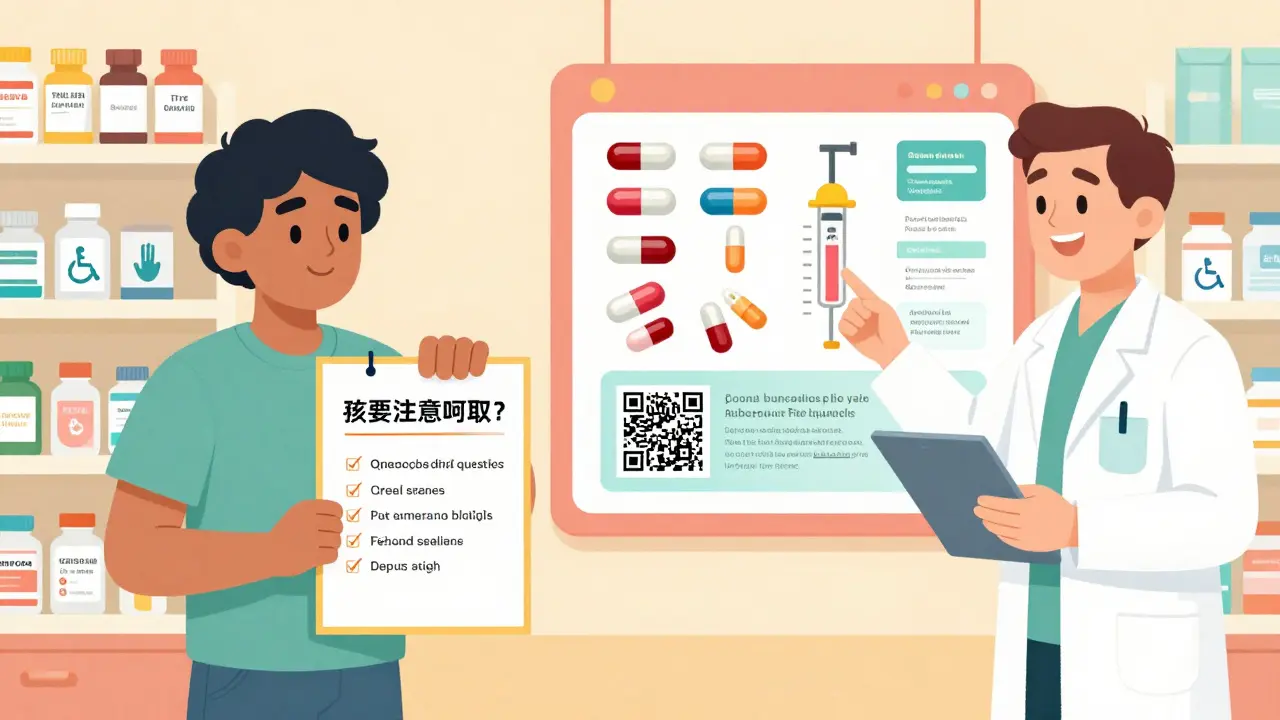
Most people pick up their prescriptions without asking a single question. But what if you could walk away with clear, personalized instructions that actually help you take your medicine right? Pharmacists are trained medication experts - not just pill dispensers. They have the knowledge to explain exactly how your drugs work, what to watch out for, and how to fit them into your daily life. Yet too often, patients leave without getting the full picture. You don’t need to wait for them to offer help. You can - and should - ask for specific patient education materials.
What You’re Entitled to Ask For
Pharmacists are legally required to provide basic counseling in 47 U.S. states, and federal rules under OBRA '90 mandate it for Medicaid patients. But the law sets a minimum. You deserve more. The Pharmacists' Patient Care Process (PPCP), updated in May 2025 by the Joint Commission of Pharmacy Practitioners, says pharmacists must partner with you - not just hand you a leaflet. That means asking for materials that match your needs, not just their checklist.
Start by requesting these nine core elements, backed by the American Society of Health-System Pharmacists (ASHP):
- The exact name of each medication and why you’re taking it
- How much to take, how often, and for how long
- How to take it - with food? On an empty stomach? At bedtime?
- What to do if you miss a dose
- Expected benefits and how long it takes to work
- Common side effects and how to manage them
- How to monitor your progress - like checking blood pressure or tracking symptoms
- How to store the medication safely
- Potential interactions with other drugs, foods, or health conditions
Don’t settle for vague answers. Say: “Can you give me a printed summary of this?” or “Can you show me how to use this inhaler?”
Ask for Visuals, Not Just Text
Reading a handout about insulin injections isn’t the same as watching someone do it - and then doing it yourself. Studies show patients who receive visual demonstrations, like seeing actual pill sizes or watching a video of an inhaler technique, are 87% more likely to use their medication correctly. Chain pharmacies often rush, but independent pharmacies and clinic-based pharmacists are more likely to have time for this.
Ask for:
- Actual pill images - “Can you show me what my pills look like?”
- Step-by-step diagrams for devices like nebulizers, auto-injectors, or insulin pens
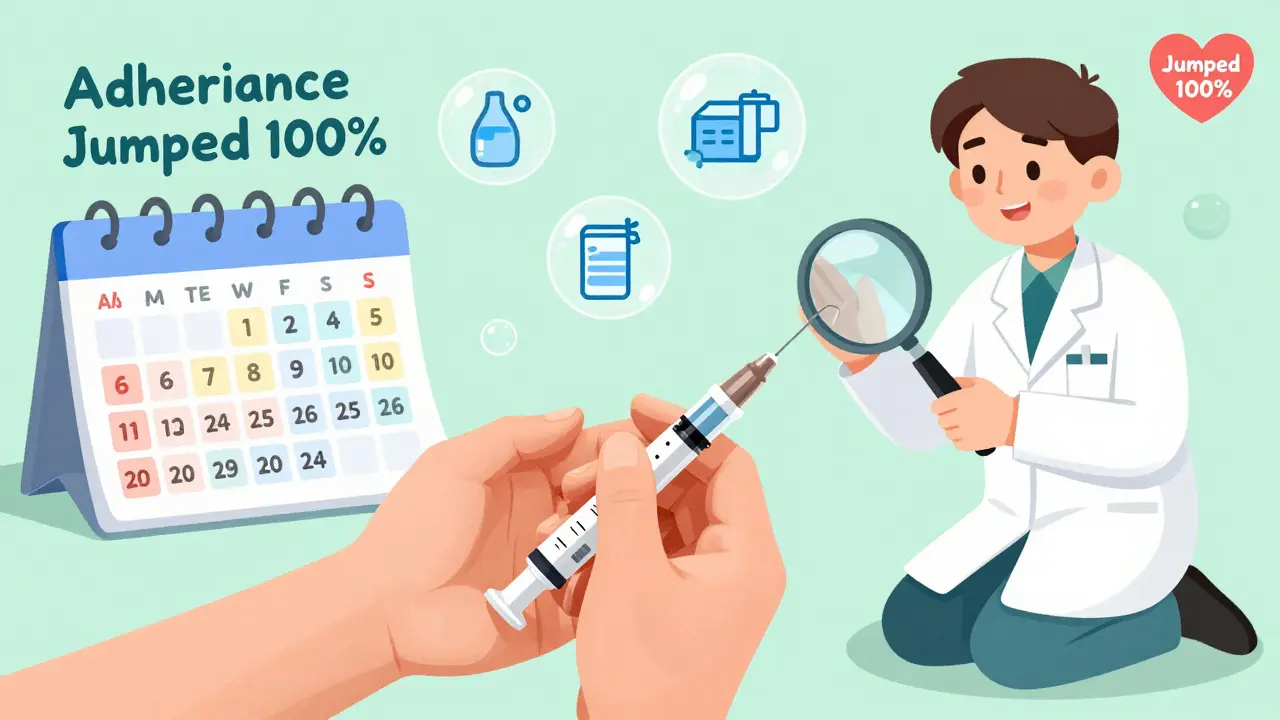
- Color-coded calendars showing when to take each pill
- QR codes that link to short video tutorials (many pharmacies now use UpToDate or PERC resources with these)
One patient in Michigan said her pharmacist printed a chart showing exactly where to rotate her Lantus injection sites - something her doctor never explained. Her adherence jumped overnight.
Language, Literacy, and Accessibility Matter
Eighty million U.S. adults struggle with health literacy. That means even simple instructions can be confusing. Most pharmacy handouts are written at a 10th-grade level - but you need them at a 6th-grade level or lower to truly understand.
Ask:
- “Can you give me this in simpler language?”
- “Do you have this in Spanish, Tagalog, or another language?”
- “Can you read this aloud to me and then let me explain it back?”
The Patient Education Reference Center (PERC) offers over 15,000 handouts in English and Spanish, and many can be customized with your name, dosage, and doctor’s instructions. If your pharmacist says they don’t have it, ask where they get their materials - most use PERC, UpToDate, or Epocrates. You can even request a version with larger font or high-contrast colors if you have vision issues.
Request Documentation - and Keep a Copy
Pharmacists are supposed to document counseling in your record. In 32 states, it’s required by law. But if it’s not written down, it’s not official. Ask: “Will this be added to my pharmacy record?”
Then ask for a copy. Not just a receipt. A written summary of what was discussed. This helps when:
- You see a new doctor and need to show what you’re taking
- You forget details after a few days
- You need to prove you were properly counseled for insurance or legal reasons
Some pharmacies now send these via email or secure patient portals. If not, ask for a printed copy before you leave.
Ask About Cost and Alternatives
Sixty-two percent of patients need cheaper options, but only 18% of pharmacists bring it up. That’s a gap you can close.
Ask: “Is there a generic version?” “Can I get this for less with a 90-day supply?” “Are there patient assistance programs?”
Pharmacists have direct access to drug pricing databases and can often find savings you didn’t know existed. One woman in Florida saved $1,200 a year by switching from a brand-name statin to a generic - and her pharmacist printed a comparison sheet showing the difference.
Use the 7 Essential Questions
It’s hard to remember everything. Use this simple list as your script:
- What is this medication for?
- How and when should I take it?
- What should I do if I miss a dose?
- What side effects should I watch for?
- How will I know if it’s working?
- How should I store it?
- Is there anything else I need to know?
Print this list. Bring it with you. Read it out loud. Pharmacists appreciate patients who come prepared - it makes the conversation more efficient and effective.
What to Do If They Say No
Some pharmacists are overworked. Chain pharmacies average just 1.8 minutes of counseling per patient. If you feel rushed or get a brush-off:
- Ask to speak with the pharmacist in charge - they often have more time
- Request a follow-up appointment - many pharmacies offer free 10-minute med reviews
- Visit an independent pharmacy - they typically spend 5-10 minutes per patient
- Call your local health department - they often have free medication counseling programs
Remember: You have a right to understand your meds. If a pharmacist refuses to provide materials or answer your questions, file a complaint with your state board of pharmacy. It’s not just polite - it’s your health.
What’s Changing in 2025-2026
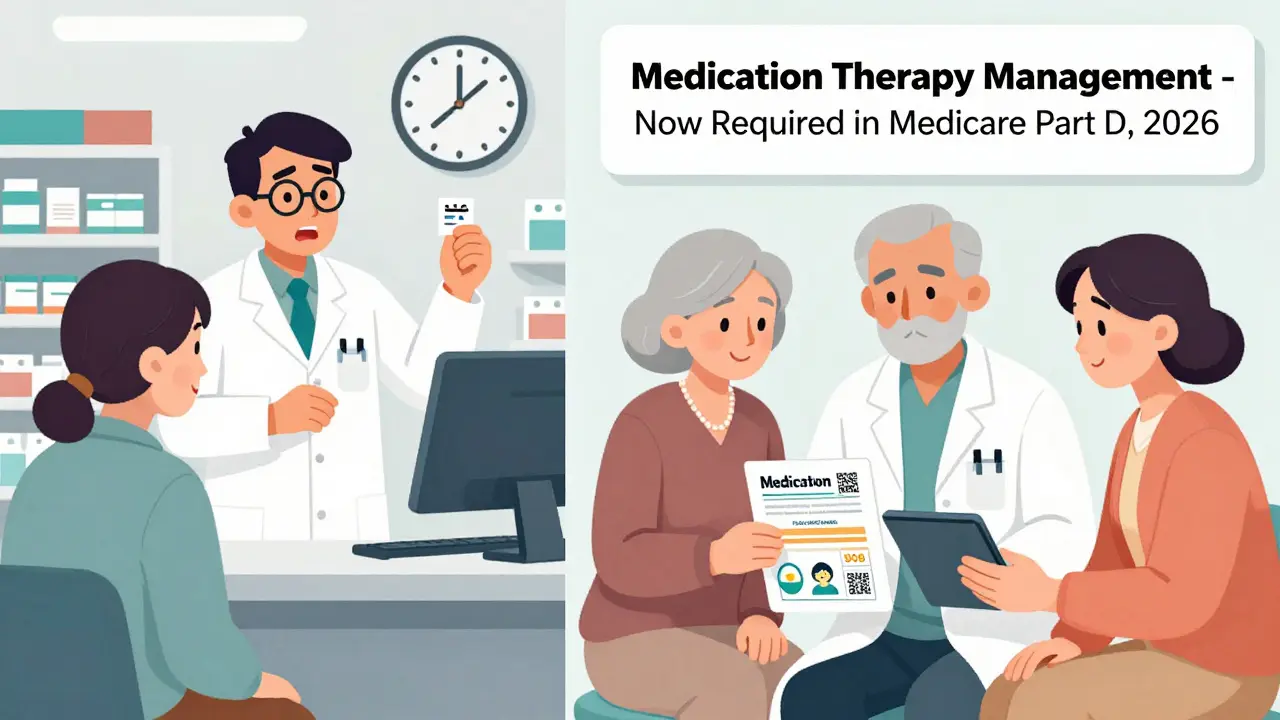
Big changes are coming. Starting January 2026, Medicare Part D plans must include pharmacist-led medication therapy management as a required benefit. That means over 52 million seniors will get access to structured education - not just a quick chat.
The FDA is pushing for Medication Guides to be rewritten at an 8th-grade level and include QR codes linking to video demos. Pharmacies are also rolling out digital tools that let you download personalized instructions to your phone.
But none of this matters if you don’t ask. The system is improving - but you still have to drive your own care.
Final Tip: Make It a Habit
Every time you pick up a new prescription - or refill a chronic one - ask for the same things. Over time, your pharmacist will know your needs. You’ll get better materials. You’ll feel more in control. And you’ll avoid the costly, dangerous mistakes that come from misunderstanding your meds.
Medication errors cause 7,000 deaths a year in the U.S. Most of them are preventable. You don’t need to be a medical expert. You just need to ask the right questions - and insist on clear answers.
Can I ask my pharmacist for written instructions even if I didn’t ask at first?
Yes. You can request written materials at any time - even days after picking up your prescription. Most pharmacies keep digital copies of counseling records and can print or email you the handouts. Call or visit the pharmacy and say, “I’d like a printed copy of the instructions you gave me about my new medication.” They’re required to provide it if it was part of your counseling.
Do pharmacists have to give me these materials for free?
Yes. Under federal and state laws, counseling and basic written materials are part of the service you pay for when you fill your prescription. You should not be charged extra for handouts, diagrams, or verbal explanations. Some pharmacies may charge for premium printed booklets or branded materials, but core educational resources must be provided at no cost.
What if my pharmacist gives me different info than my doctor?
This happens more often than you think. Doctors focus on diagnosis and overall treatment; pharmacists focus on how the medicine works, interacts, and fits into your daily life. If there’s a conflict - like different dosing instructions - ask the pharmacist to clarify with your doctor. Most pharmacies have direct communication channels with prescribers. Never guess. Always get it confirmed.
Can I get materials for my elderly parent or caregiver?
Absolutely. Pharmacists can provide materials to caregivers, family members, or guardians - even if the patient isn’t present. Just bring the patient’s prescription and let the pharmacist know you’re helping manage their meds. They can print copies for multiple people and even set up reminders or synchronization programs to help with weekly pill organization.
Why don’t pharmacists always offer this information on their own?
Time and workload. In chain pharmacies, pharmacists often handle 150-200 prescriptions a day. Counseling is legally required, but with staffing shortages and pressure to move quickly, many only give the bare minimum. That’s why you need to ask. The system isn’t broken - it’s overwhelmed. Your request helps them prioritize what matters most: your safety.

bro i just asked my pharmacist for a diagram of my inhaler and she pulled up this insane color-coded chart with like 5 different angles. i thought she was gonna hand me a tiny pamphlet. turns out she’s got a whole digital library. now i’m hooked. if you’re on like 5 meds, just ask for the ‘PPCP summary’ - it’s a game changer. also, QR codes for videos? yes. my grandma uses them now.
AMERICA IS THE ONLY COUNTRY WHERE PHARMACISTS ACTUALLY GIVE A SH*T ABOUT YOU 🇺🇸💪😭
Oh wow, so we’re supposed to treat pharmacists like personal health coaches now? Next they’ll be asking us to bring cookies to the counter. I’m sure the 1.8-minute counseling window was designed by someone who’s never had to count 150 scripts before lunch.
You’re not entitled to anything. You’re lucky they don’t charge you extra for breathing while they hand you the bottle. The system isn’t broken - you’re just lazy. If you can’t read a 6th-grade handout, maybe don’t take meds.
Did you know the FDA is pushing QR codes because they’re secretly tracking who takes what? And the ‘Patient Education Reference Center’? That’s just a front for Big Pharma’s AI mind-control program. They want you to think you’re in control - but every ‘color-coded calendar’ is a trap. I’ve been using my pills since 2019 and I still don’t trust the bottle. I microwave them first. Just saying.
There’s a deeper truth here: the act of asking is the first step toward reclaiming agency over your body. We’ve been conditioned to see medicine as a transaction - pill for payment - when it should be a dialogue. Pharmacists hold the keys to understanding, but the door only opens when you knock. And knocking isn’t demanding - it’s dignified. It says, ‘I am not a patient. I am a person.’ And that changes everything. No handout can replace that.
OMG I just told my pharmacist I wanted pics of my pills and she looked at me like I asked for a unicorn. But then she laughed and pulled out this laminated card with actual photos of my meds - like, real size. I took a pic and sent it to my mom. She cried. We’re all just trying to not die, y’know? Also, if you’re not asking for a 90-day generic, you’re leaving $$$ on the table. I saved $800 last year. Don’t be a sucker.
just tried this today. asked for the list of 7 questions. pharmacist smiled and said ‘finally someone who gets it.’ gave me a printed sheet with my name on it. felt like a VIP. also got a QR code for a video on how to use my nasal spray without shooting it into my brain. i’m not joking. it worked. you guys should do this. it’s easy. and your future self will thank you.
While I appreciate the sentiment, the underlying assumption here is that pharmacists are obligated to provide personalized care. This is a structural failure of the healthcare system, not a failure of patient initiative. The burden of education should not rest on the individual. If we are to prevent 7,000 deaths annually, we need policy reform - not better scripts. Asking nicely doesn’t fix underfunding.
Let’s be brutally honest: 90% of patients are too dumb to follow basic instructions. They mix up their pills. They take them with grapefruit. They forget they’re on blood thinners. This whole ‘ask for materials’ thing is just a band-aid on a hemorrhage. The real problem? We’ve turned medicine into a consumer product. You don’t ask for a manual when you buy a toaster - you just plug it in. But pills? Oh no, now we need color-coded calendars and QR codes because the population has devolved into a bunch of confused toddlers with prescriptions. This isn’t empowerment. It’s damage control.