
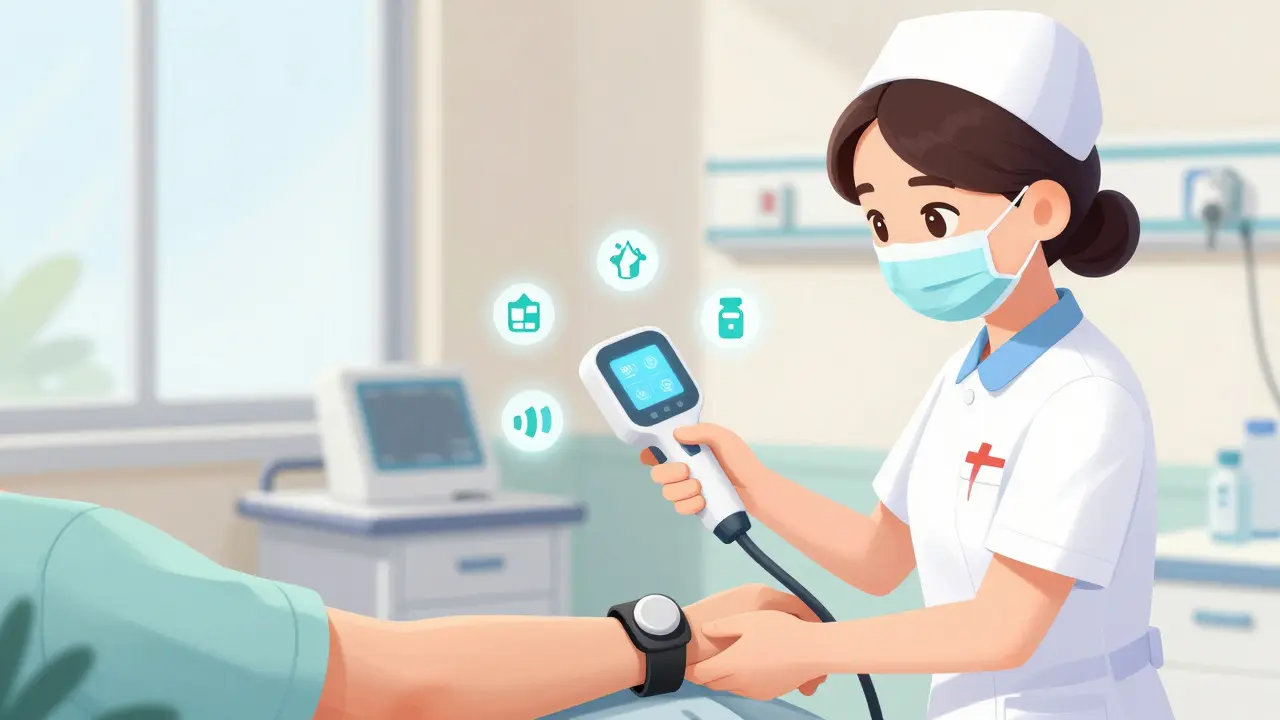
Every year, over 1.3 million people in the U.S. get hurt from medication errors. That's more than car accidents or diabetes complications. For healthcare providers, this isn't just a statistic-it's a daily reality. One wrong dose can change a patient's life forever. But the good news? Most of these errors are preventable with the right practices and training.
Why Medication Safety Matters
The World Health Organization defines medication safety as ensuring patients receive optimal therapeutic benefits while minimizing risks. The WHO's 'Medication Without Harm' initiative launched in 2017 aims to reduce severe, avoidable harm by 50% within five years. The Agency for Healthcare Research and Quality (AHRQ) reports medication errors cause over 7,000 deaths annually in the U.S. alone. These numbers aren't just numbers-they represent real people, real families, and real consequences for healthcare teams.
Core Best Practices for Medication Safety
Effective medication error prevention starts with clear communication and standardized processes. Let's break down the key practices that make a difference.
- Barcode-assisted medication administration (BCMA) is a system that requires scanning at the point of care to verify the five rights (right patient, drug, dose, route, time). It reduces administration errors by 41.1% according to the Institute for Healthcare Improvement (2022). But remember: nurses sometimes skip scans during emergencies. Training should include simulated scenarios to build compliance.
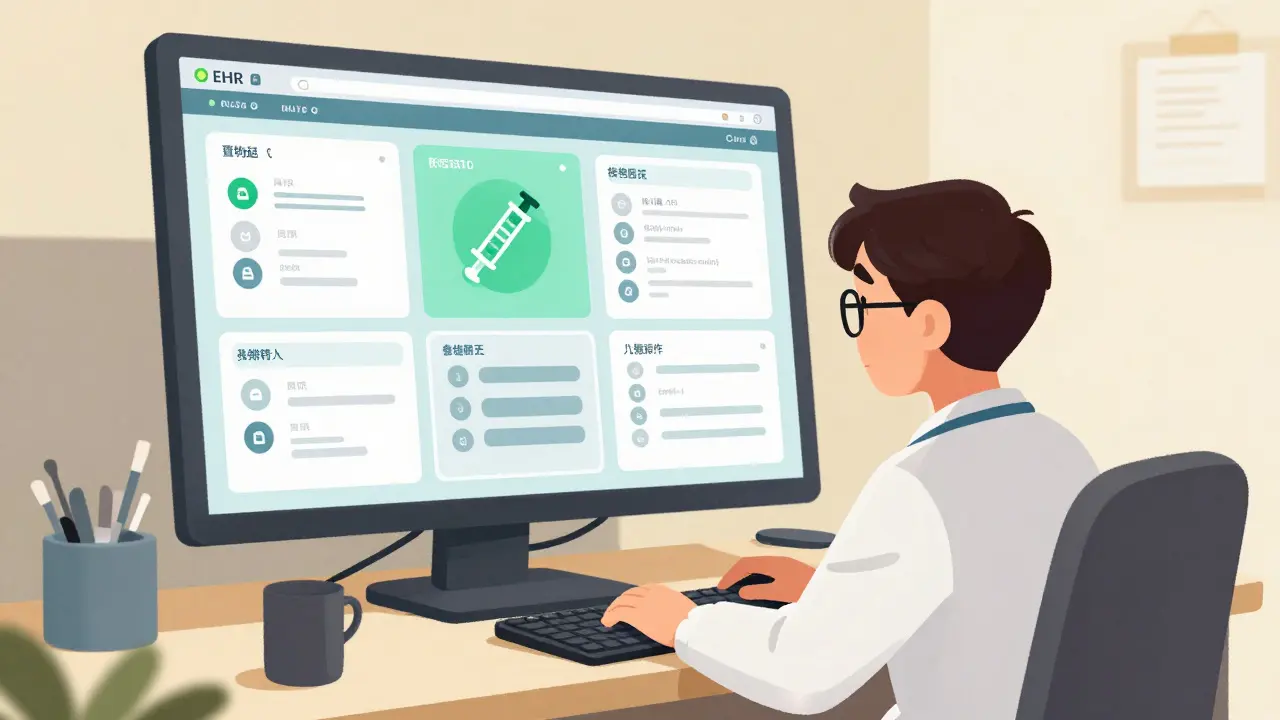
- Electronic Health Record (EHR) systems with clinical decision support trigger alerts for drug interactions. However, alert fatigue is a challenge-clinicians override 49-96% of alerts. Customizing alerts based on patient data can reduce irrelevant warnings.
- Medication reconciliation is the process of comparing a patient's current medications with new prescriptions. AHRQ found only 32% of primary care practices have formal reconciliation processes, compared to 89% in hospitals. This gap creates risks during transitions of care.
- High-alert medications like intravenous oxytocin or insulin require special protocols. ISMP's Targeted Medication Safety Best Practices specify exact system requirements, such as a hard stop for daily methotrexate orders to prevent fatal dosing errors.
Training Strategies That Work
Training isn't just a one-time event-it's an ongoing process. The AHRQ's Patient Safety Network recommends 16-24 hours of initial training for new clinicians, followed by 8 hours of annual refresher training with simulation components. For example, Johns Hopkins Hospital embedded pharmacists in intensive care units and reduced medication errors by 81% through real-time order verification. Here's what effective training looks like:
- Simulation-based training for high-risk scenarios, like emergency medication administration.
- Regular team huddles to discuss near-misses and share lessons learned.
- Clear protocols for high-alert medications, with visual cues like color-coded labels.
- Annual competency checks for medication administration procedures.
Resistance to change is common-42% of nursing staff initially resist BCMA implementation due to perceived workflow disruptions. But with proper support, compliance typically reaches 95% within six months (American Journal of Health-System Pharmacy, 2022).

Common Challenges and How to Overcome Them
Even with best practices in place, challenges arise. Alert fatigue is a major issue-clinicians override 49-96% of drug interaction alerts because many are irrelevant. A nurse on Reddit (user 'NurseJen87') shared: 'I override 80% of drug interaction alerts because 95% are irrelevant to my patient's actual condition.' Solutions include:
- Customizing alert thresholds based on patient-specific data
- Reducing unnecessary alerts through clinical decision support tuning
- Creating 'safe harbor' protocols for emergencies where BCMA scanning is temporarily bypassed, with post-event review
Outdated policies are another problem. A 2021 survey found 31% of hospital medication safety policies hadn't been updated in three or more years. Regular policy reviews-every 12-18 months-keep practices current with ISMP's Targeted Medication Safety Best Practices updates.
Future Trends in Medication Safety
The field is evolving fast. WHO extended their 'Medication Without Harm' initiative through 2027, focusing on high-risk situations, polypharmacy in older adults, and medication safety in digital health. The ISMP announced new priorities for 2024-2025 around telehealth medication management and AI-assisted prescribing. Early studies show AI algorithms can identify 89% of potential prescribing errors before they reach patients-compared to 67% with standard clinical decision support. However, the FDA reported 214 adverse events related to EHR usability issues in 2022, a 37% increase from 2021. This highlights the need for balanced technology adoption.
What is the most common medication error among healthcare providers?
The most common medication errors involve wrong dosage, incorrect drug selection, and administration mistakes. For example, the Institute for Safe Medication Practices (ISMP) reports that 40% of errors occur during the prescribing phase, often due to unclear handwriting or lack of standardization. In hospitals, wrong dose accounts for 28% of errors, while wrong drug accounts for 22%. Proper training and EHR systems with decision support can significantly reduce these issues.
How can BCMA systems reduce medication errors?
BCMA systems require scanning at the point of care to verify the five rights (right patient, drug, dose, route, time). Studies show this technology reduces administration errors by 41.1% (Institute for Healthcare Improvement, 2022). By ensuring the right drug reaches the right patient in the right dose, BCMA eliminates common manual errors. However, consistent use is critical-some nurses bypass scanning during emergencies, which undermines the system's effectiveness.
What causes alert fatigue in EHR systems?
Alert fatigue happens when clinicians are overwhelmed by too many warnings. Studies show clinicians override 49-96% of medication alerts, particularly when systems generate more than 20 alerts per patient encounter (BMJ Quality & Safety, 2020). Many alerts are irrelevant to the patient's specific situation. Solutions include customizing alert thresholds, reducing unnecessary warnings, and using AI to prioritize critical alerts based on patient data.
How often should medication safety policies be updated?
Policies should be reviewed every 12-18 months to stay current with best practices. A 2021 survey found 31% of hospital medication safety policies hadn't been updated in three or more years. The Institute for Safe Medication Practices updates its Targeted Medication Safety Best Practices every two years, so regular policy reviews ensure alignment with the latest guidelines. This helps prevent outdated procedures that could lead to errors.
What role does AI play in medication safety?
AI is transforming medication safety by identifying potential errors before they occur. Early studies show AI algorithms can detect 89% of potential prescribing errors before they reach patients-compared to 67% with standard clinical decision support (Nature Medicine, 2023). However, over-reliance on technology carries risks. The FDA reported 214 adverse events related to EHR usability issues in 2022, a 37% increase from 2021. The key is using AI as a tool to support clinicians, not replace human judgment.

The WHO's 'Medication Without Harm' initiative is merely a facade for pharmaceutical corporations to increase their market share. The data presented here is selectively curated to promote their agenda. I've seen firsthand how these 'best practices' are designed to keep healthcare providers subservient to profit-driven systems. It's not about safety-it's about control.
I've worked in hospitals where BCMA was implemented, and the key was training staff properly. Initially, there was resistance, but once they saw how it reduced errors, everyone came around. It's all about making the system work for the staff, not against them. Regular huddles and simulation exercises really help teams stay sharp. Also, addressing alert fatigue by customizing alerts can make a huge difference.
BCMA is great but sometimes the scannrs don't work right. I once saw a nurse have to redo a scan 3 times becuz the barcode was smudged. Maybe we need better tech or more training on how to handle those issues. Also, medication reconciliation is crucial during patient transfers. A lot of errors happen when info gets lost between departments.
USA has the best healthcare system. Period. 😤
US healthcare is the best stop overcomplicating things
The government is using medication safety as an excuse to control doctors. They want to force us into using systems that track everything. It's a surveillance tool disguised as safety. Trust me, this is part of a larger plan to take over healthcare.
During my time in the ICU, I've witnessed numerous near-misses due to communication breakdowns during shift handovers. Proper protocols like SBAR (Situation, Background, Assessment, Recommendation) can prevent these errors. Always double-check medications before administration-this simple step saves lives. EHR systems often fail to integrate data across departments, leading to critical information gaps. For example, when a patient moves from surgery to ICU, their medication history isn't always updated in time. Training should include realistic simulations of high-stress scenarios to build muscle memory for safety protocols. Alert fatigue is a real issue; clinicians override 90% of drug interaction alerts because they're irrelevant. Customizing alerts based on patient-specific factors like allergies or comorbidities can reduce noise. Regular team huddles where staff share near-miss experiences create a learning culture. Visual cues like color-coded labels for high-risk drugs prevent mix-ups. Standardizing processes across the organization ensures consistency. Policy updates every 12-18 months keep practices current with the latest evidence. Investing in continuous education for all staff is non-negotiable for patient safety. It's not just about technology-it's about people working together. Every healthcare provider has a role in preventing errors, and that starts with accountability and teamwork.
The real issue is the EHR systems. They're designed to fail. All the alerts are a distraction. The FDA knows this but does nothing. It's all part of the plan. The government is using this to control healthcare providers. They want us to rely on tech instead of critical thinking. It's a trap.
This is all corporate propaganda
Medication safety requires collaboration. BCMA helps but we need to address alert fatigue by customizing alerts. It's not about one solution but combining approaches. Training and policy updates are essential for reducing errors.
I agree that training is important. Regular huddles and simulation exercises really help teams stay sharp. But we also need to make sure policies are updated regularly to keep up with new tech. And addressing alert fatigue is key-too many irrelevant warnings make clinicians ignore critical ones.
High-alert medications require stringent protocols. The use of color-coded labels and double-checks has been proven effective. However, policy updates must align with ISMP's latest guidelines to ensure consistency across institutions. Jargon-heavy but accurate.