
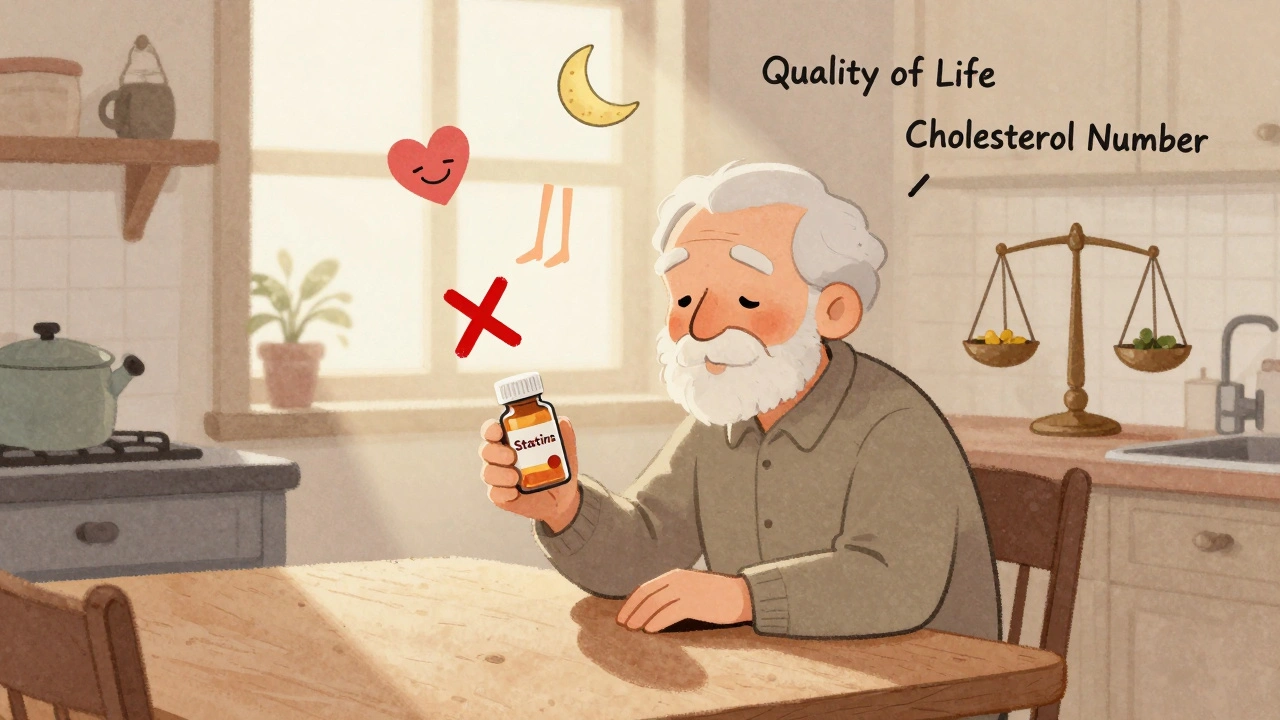
Stopping statins isn’t as simple as just skipping a pill. For millions of people, these drugs have been a routine part of daily life - often prescribed for years, sometimes decades. But what happens when the reasons for taking them change? When you’re older, sicker, or just tired of side effects? The truth is, statin discontinuation is more common than most doctors admit - and it’s not always dangerous. In fact, for some, it’s the safest choice.
Why Do People Stop Statins?
Nearly one in five people who take statins stop them for at least a year. That’s not just a few outliers. It’s a pattern. And the biggest reason? Side effects. Muscle pain, weakness, or fatigue are the top complaints. Many people don’t even know if the pain is from the statin or just aging. But when it’s bad enough, they quit. Others stop because they’re scared. They read online that statins cause diabetes, liver damage, or memory loss. Some of these fears are real, but often exaggerated. Still, the anxiety sticks. And when a patient walks into a doctor’s office and says, “I can’t take this anymore,” the conversation rarely goes deep enough. Hospital stays, nursing home transfers, or a new cancer diagnosis also trigger statin discontinuation - not always because the patient asked, but because the system defaults to stopping “non-essential” meds. The problem? Many of these decisions aren’t intentional. They’re accidental. And that’s dangerous.Who Should Consider Stopping Statins?
Not everyone should stop. But some people absolutely should. If you’re over 75, have multiple chronic illnesses, and aren’t living with heart disease, stopping statins may be a smart move. A 2023 review from MyPCnow found that for patients with a life expectancy under two years - say, from advanced cancer, dementia, or severe heart failure - continuing statins offers no meaningful benefit. The risk of side effects outweighs the tiny chance of preventing a heart attack that’s unlikely to happen anyway. For people with established heart disease - someone who’s had a heart attack, stent, or bypass - stopping statins is riskier. A 2021 JAMA study showed that for every 77 people who stopped statins after a heart event, one had another major problem like a second heart attack or stroke within a year. That’s not a small number. It’s a real danger. But here’s the twist: for people without heart disease - those taking statins just to lower cholesterol - the risk of stopping is lower. The same study found one extra major event for every 112 people who quit. That’s still a risk, but it’s smaller. And for older adults with frailty, falls, or muscle loss, the benefit of statins becomes harder to justify.What Happens When You Stop?
Your cholesterol will rise again. That’s guaranteed. Statins work by blocking a liver enzyme. Once you stop, the enzyme wakes up, and LDL cholesterol climbs back to where it was before you started. But here’s what most people don’t realize: rising cholesterol doesn’t always mean rising risk. If your body is failing in other ways - kidneys, liver, immune system - the impact of LDL matters less. Your body isn’t repairing itself anymore. A high cholesterol number is just a number. It doesn’t tell you if you’ll live another year, five, or ten. Some people feel better after stopping. Muscle pain fades. Sleep improves. Energy returns. That’s real. And it’s not just placebo. A 2024 review in the Journal of the American Geriatrics Society looked at hospice patients and found no increase in death rates after statins were stopped. For those in their final months, the comfort of fewer pills often matters more than a few extra days of life.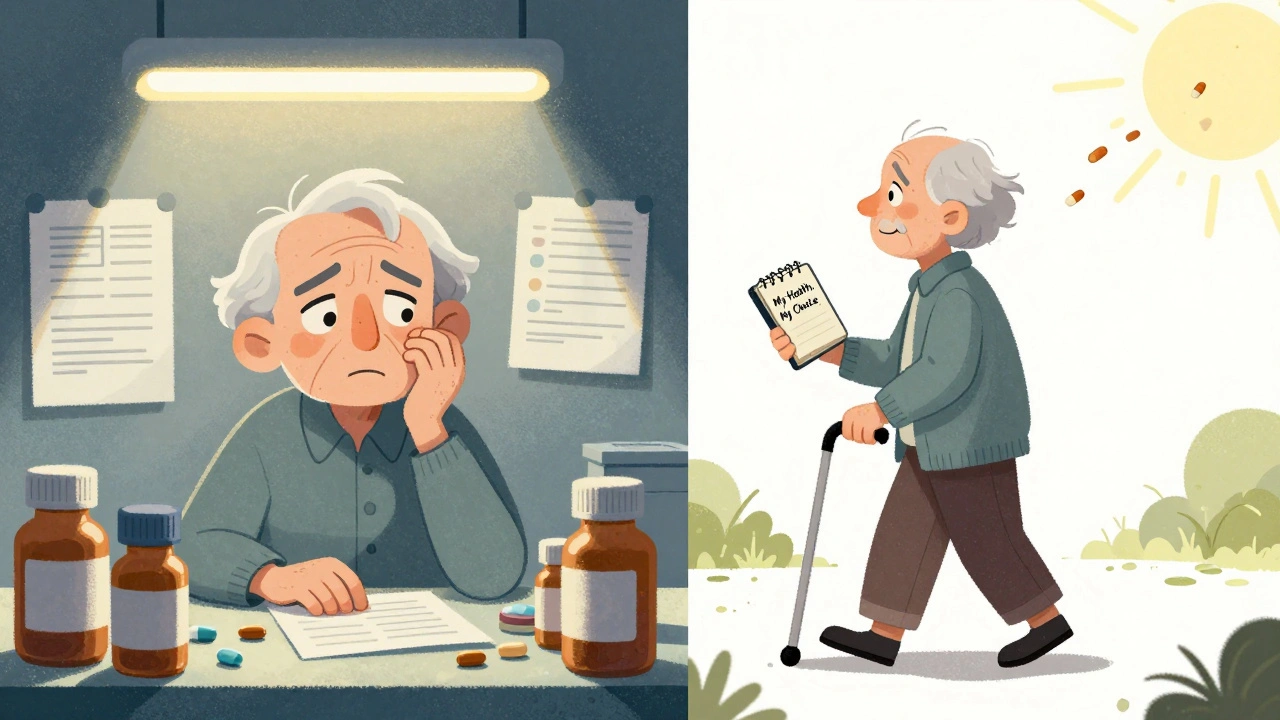
How to Stop Safely
Don’t just quit cold turkey. Even though statins don’t cause withdrawal, stopping abruptly can leave you vulnerable. Here’s how to do it right. Step 1: Talk to your doctor - not just your pharmacist. This isn’t a pharmacy refill question. It’s a life decision. Ask: “Based on my health right now, do I still need this?” Bring a list of all your meds. Point out any side effects. Say if you’re tired of taking pills. Step 2: Know your risk level. Are you in primary prevention (no heart disease) or secondary prevention (you’ve had a heart event)? That changes everything. If you’ve had a stent, stopping is risky. If you’re 82 with arthritis, COPD, and no history of heart problems? The risk of continuing may be higher than stopping. Step 3: Consider alternatives - but don’t rush. Some people try lower doses, different statins, or even intermittent dosing (like taking it every other day). Others switch to non-statin options like ezetimibe or PCSK9 inhibitors. But these aren’t magic fixes. Ezetimibe lowers LDL a bit, but doesn’t cut heart attacks like statins do. PCSK9 drugs are expensive and need injections. Fibrates and fish oil? They help triglycerides, not LDL. Don’t trade one pill for another unless it’s truly better for you. Step 4: Monitor your body. After stopping, pay attention. Do your muscles feel stronger? Are you sleeping better? Do you feel more like yourself? That’s good. But if you start having chest pain, shortness of breath, or unusual fatigue, call your doctor. Don’t assume it’s just aging. Step 5: Document why you stopped. Too often, medical records just say “no longer necessary.” That hides the real reason - muscle pain, fear, or quality of life. Write it down. Tell your doctor. Make sure it’s in your chart. This helps future providers understand your history.What About Long-Term Use?
Many people assume statins are for life. That’s what they’re told. But life changes. Your health changes. Your goals change. A 2020 review in the Journal of the American Geriatrics Society found that three major guidelines now suggest reconsidering statins in older adults with poor health. That’s a big shift. It means doctors are finally starting to ask: “Is this helping, or just adding to the pile?” The same is true for people with dementia, advanced kidney disease, or terminal cancer. Keeping statins going isn’t heroic. It’s often just inertia. And that’s not care - it’s habit.What’s New in 2025?
A major trial called “Discontinuing Statins in Multimorbid Older Adults” is wrapping up in early 2025. It’s tracking 1,800 people over 70 with multiple chronic conditions who stopped or kept statins. They’re measuring not just heart attacks, but quality of life, muscle strength, falls, and even loneliness. Early results suggest stopping statins doesn’t hurt survival - and might even help people feel better. That’s huge. It means the old rule - “statins forever” - is crumbling. We’re moving toward personalized decisions, not blanket prescriptions.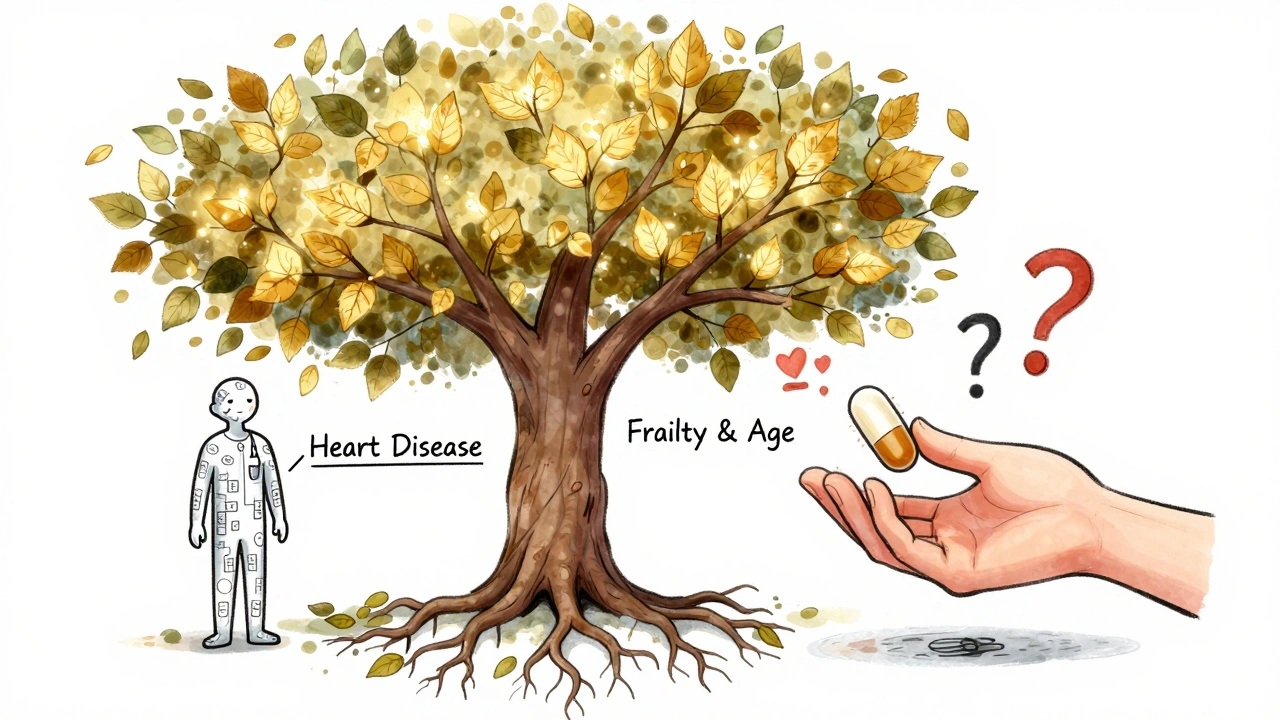
Common Myths About Stopping Statins
- Myth: Stopping statins causes immediate heart attack. Truth: Risk increases over months and years, not days. You won’t drop dead the next morning.
- Myth: You’ll die sooner if you stop. Truth: For people with limited life expectancy, stopping doesn’t shorten life - it may improve it.
- Myth: Only young, healthy people should stay on statins. Truth: Even healthy older adults may benefit - but only if they’re likely to live long enough to see the benefit.
- Myth: There’s no alternative to statins. Truth: Lifestyle changes, diet, and other meds can help. But they’re not always enough. The key is matching the tool to the person.
When to Reconsider Statins Later
Stopping doesn’t mean forever. If your health improves - say, you recover from an illness, lose weight, or start exercising - you can restart statins. Some people do. Others don’t. It’s your choice. But if you stop and then have a heart attack? That’s a wake-up call. Talk to your doctor. Reassess. Maybe you need a different approach - lower dose, different drug, or lifestyle changes. But don’t assume you’re doomed. You’re not.Final Thought: It’s Your Health, Not Your Prescription
Statins saved lives. They’re one of the most studied drugs ever. But they’re not a one-size-fits-all fix. The goal isn’t to take fewer pills - it’s to take the right ones for your life right now. If you’re tired, achy, overwhelmed by meds, or just feel like you’re living for your prescription list - it’s okay to ask: “Do I still need this?” There’s no shame in stopping. There’s only shame in never asking.Can I stop statins cold turkey?
Yes, you can stop statins abruptly without withdrawal symptoms. But that doesn’t mean you should. Stopping suddenly doesn’t cause immediate harm, but it also doesn’t give you time to monitor how your body responds. A planned conversation with your doctor helps you understand the risks and track changes in your health after stopping.
Will my cholesterol go back to dangerous levels if I stop?
Yes, your LDL cholesterol will rise again - usually within a few weeks. But high cholesterol isn’t the only thing that matters. If you’re older, frail, or have a short life expectancy, the danger of high LDL is much lower than the risk of side effects from the drug. Your overall health matters more than a number on a lab report.
Are there safer alternatives to statins?
Yes, but they’re not always better. Ezetimibe lowers LDL slightly and has fewer side effects. PCSK9 inhibitors are powerful but require injections and cost thousands per year. Fibrates and omega-3s help triglycerides, not LDL. Lifestyle changes - diet, exercise, weight loss - are the safest long-term option. But they work slowly and require consistency. Talk to your doctor about what fits your life.
Is it safe to stop statins if I’m over 75?
For older adults without heart disease, stopping statins is often safe - and sometimes better. A 2024 review found no increase in death rates after stopping in hospice or frail older adults. The American Geriatrics Society now recommends reconsidering statins in people with poor health or limited life expectancy. The goal isn’t to live longer with pills - it’s to live better without them.
What if I stop and then have a heart attack?
That’s a serious concern - and one reason to discuss stopping with your doctor first. If you stop statins and later have a heart event, it doesn’t mean you made the wrong choice. It means your risk was higher than you realized. Talk to your doctor about restarting a lower dose, switching to another medication, or focusing on lifestyle changes. Your health plan can change - and it should.
How do I know if my muscle pain is from statins?
Muscle pain from statins usually affects both sides of the body - thighs, shoulders, or calves - and gets worse with activity. It often starts within weeks of starting or increasing the dose. If the pain goes away after stopping and returns when you restart, it’s likely related. Blood tests for CK (creatine kinase) can help, but they’re not always reliable. Your symptoms matter more than the numbers.
Does stopping statins increase my risk of stroke?
For people with known heart disease, stopping statins does increase stroke risk slightly - but not as much as heart attack risk. In primary prevention (no prior heart issues), the stroke risk increase is small and often not significant. The bigger concern is whether the benefits of statins still outweigh the side effects in your current health state.
Can I restart statins later if I change my mind?
Yes, you can restart statins at any time. Many people do - especially if their health improves or they develop new heart risks. Start with a lower dose and monitor closely. Your doctor may suggest a different statin or an alternative if you had side effects before. The door isn’t closed - it’s just open for a new conversation.
Is deprescribing statins common among doctors?
Not yet - but it’s growing. Most doctors are trained to prescribe, not stop. But guidelines from the American Geriatrics Society and new research are changing that. Pharmacists, geriatricians, and palliative care teams are leading the way in deprescribing. If your doctor doesn’t bring it up, ask. You’re not being difficult - you’re being proactive.
What should I do if my doctor won’t let me stop statins?
Get a second opinion. Ask for a referral to a geriatrician, pharmacist specializing in deprescribing, or a cardiologist who understands shared decision-making. Bring research - like the 2021 JAMA study or the 2024 geriatrics review. You have the right to be part of your care plan. If your doctor dismisses your concerns, it’s time to find someone who listens.

bro i stopped my statin last year after my legs felt like concrete and now i can actually walk to the fridge without crying 😭 no more muscle pain, no more weird brain fog, just me and my snacks. doctors act like you’re a robot that needs constant firmware updates.
Really glad to see this conversation happening. So many older adults are stuck on meds they don’t need because no one ever asks, ‘Is this still helping you?’ It’s not about taking fewer pills-it’s about living better with the ones you do take. If you feel better off statins and your doc listens, that’s win-win. 💪
Let’s be real: 87% of statin discontinuations are just people being lazy and ignoring science. LDL isn’t a number-it’s a countdown to death. You think your ‘muscle pain’ is from the statin? Nah, it’s from eating pizza every night and sitting on the couch watching Netflix. 🧠📉
i stopped mine after 12 years and honestly? my sleep got better, my knees stopped aching, and i didn’t feel like i was dragging around a sack of bricks. i didn’t tell my dr at first-was scared they’d judge me. but when i finally did, they said ‘i wish more patients asked this.’ you’re not weak for wanting to feel like yourself again.
This is a well-researched and necessary discussion. Statins are overprescribed in primary prevention, especially in older adults. The data shows diminishing returns with age and comorbidities. The real issue isn’t the drug-it’s the medical culture that equates prescribing with caring. Time to shift to patient-centered goals.
Okay so i’ve been thinking about this for like a week now and i just wanna say that the whole statin debate is kind of a microcosm of modern medicine’s obsession with numbers over lived experience. Like yeah your LDL is 140 but if you’re 80 and can’t climb stairs without wheezing and your grandkid says you smell like a pharmacy, maybe the real problem isn’t your cholesterol-it’s that we’ve turned health into a spreadsheet. Also i tried ezetimibe and it made me burp for 3 days so i went back to nothing and now i nap in the sun. 🌞
Anyone who stops statins is a walking time bomb. You think you’re saving yourself from side effects? You’re just gambling with your life. Statins prevent heart attacks. Period. End of story. People who quit are just scared of responsibility.
you people are so irresponsible. statins are life saving. if you stop them you’re basically signing your own death warrant. i work in a hospital and i’ve seen people die because they listened to reddit instead of their doctors. shame on you. 🙄
Just wanted to say thank you for this post. I’ve been afraid to bring up stopping statins with my doctor because I thought they’d think I was being difficult. But after reading this, I scheduled an appointment and we talked about my muscle pain and fatigue. We agreed to taper off slowly. I feel heard for the first time in years. ❤️
Canada and India are letting their people die because they don’t understand how dangerous this is. In America, we know statins save lives. If you’re stopping because you’re tired of taking pills, you’re not sick-you’re selfish. This isn’t a lifestyle choice. It’s medical.
I’ve been on statins for 15 years and I’m 79. I have arthritis, COPD, and I can’t remember my grandkids’ birthdays half the time. My doctor said I should stop. I did. My energy came back. My knees don’t scream when I stand up. I don’t care if my LDL is 160. I’m alive and I’m happy. That’s what matters.
OMG I’m so glad someone finally said this. I stopped statins after my mom died and I realized I didn’t want to spend my last years feeling like a zombie on a pill schedule. I eat better now, walk every day, and I haven’t had a headache since. Also my cat loves me more. 🐱
Wait so you’re telling me I can just stop taking my statin and not die? That’s insane. I’ve been on this since I was 50. My doctor said it’s for life. I’m gonna go ask him again tomorrow. But like… what if I’m wrong? What if I wake up dead?
Think about it, my friends: the statin is not just a drug-it is a symbol of our collective surrender to the pharmaceutical-industrial complex. We have outsourced our health to a pill, forgetting that life is not a lab test, but a dance with impermanence. When you stop the statin, you don’t just stop a molecule-you reclaim your sovereignty. You become a free human again. The cholesterol? It’s just a ghost. The real number is your joy. 🌌
lol @pooja_surnar you work in a hospital? then why are you still on reddit instead of saving lives? my cousin took statins for 10 years and died of a heart attack anyway. guess what? he was also on 14 other meds. maybe the problem isn’t the person stopping… maybe it’s the system.