

Adrenal Recovery & ACTH Test Calculator
Recovery Timeline Estimator
Based on the rule of thumb: ~1 month recovery per month of suppression.
ACTH Test Result Checker
Interpret your peak cortisol level (at 30 or 60 mins post-injection).
Stopping long-term steroid use isn't like quitting a daily vitamin. It’s more like stepping off a moving train while trying to keep your balance. If you’ve been taking glucocorticoids (like prednisone or hydrocortisone) for months or years, your body has likely stopped making its own cortisol. This condition, known as hypothalamic-pituitary-adrenal (HPA) axis suppression, means your adrenal glands are essentially on strike. Restarting them requires a precise, slow process called a taper, monitored by specific medical tests.
The stakes are high. Without a structured plan, the risk of an adrenal crisis-a life-threatening drop in blood pressure and electrolytes-jumps significantly. Recent data from longitudinal studies at Mayo Clinic shows that proper protocols reduce this risk from 8.5% to just 1.2%. The key to this safety net is the ACTH stimulation test, which acts as the definitive checkpoint for whether your adrenal glands have recovered enough to handle life without external steroids.
Why Your Body Needs a Slow Exit
When you take synthetic steroids for more than three to four weeks, your brain stops sending signals to your adrenal glands because it thinks there’s plenty of cortisol circulating. Over time, those glands shrink and become dormant. This is secondary adrenal insufficiency.
If you stop cold turkey, your body faces a sudden vacuum. You might feel fine for a day, then crash with severe fatigue, nausea, dizziness, and potentially shock. The goal of a taper is to mimic the natural rhythm of cortisol production while giving your adrenal glands time to wake up. According to the joint clinical guidelines published in June 2024 by the European Society of Endocrinology and the Endocrine Society, the speed of this taper depends entirely on how long you were on therapy and why.
- Short-term use (less than 3-4 weeks): Usually no taper is needed unless doses were extremely high.
- Medium-term (3-12 months): Requires a gradual reduction, often decreasing by 2.5-5 mg of prednisone every 1-2 weeks until reaching a low maintenance dose.
- Long-term (over 12 months): Recovery can take nine to twelve months. The rule of thumb here is that recovery takes roughly one month for every month of suppression.
The Gold Standard: ACTH Stimulation Testing
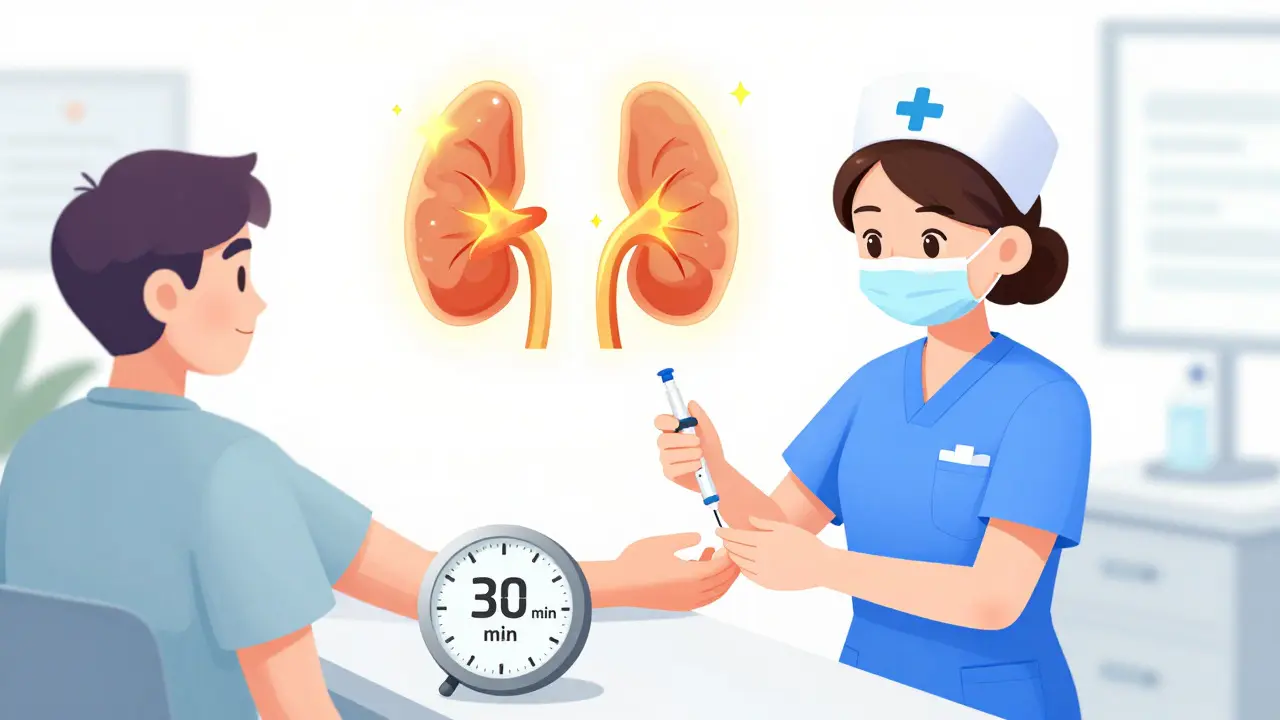
You cannot guess if your adrenal glands are ready. You need data. The ACTH stimulation test (also called the cosyntropin test) is the standard tool for this job. Here is exactly how it works:
- Baseline Draw: A nurse draws blood to measure your current cortisol level (time zero).
- Injection: You receive an injection of 250 mcg of synthetic ACTH (cosyntropin), either into a vein or muscle.
- Wait and Measure: Blood is drawn again at 30 minutes and 60 minutes after the injection.
The results tell a clear story. A peak cortisol level of 18-20 mcg/dL (or higher) indicates that your adrenal glands are responsive and sufficient. Levels below 14 mcg/dL confirm adrenal insufficiency, meaning you still need replacement therapy. This test is typically performed when you reach a "physiologic replacement dose"-about 4-6 mg of prednisone equivalent per day-and before you attempt to stop completely.
Comparing Major Tapering Protocols
Different medical groups have developed slightly different approaches. Understanding these differences helps you ask better questions during your appointments. The following table compares the two most prominent frameworks used in 2024 and 2025.
| Feature | Endocrine Society / ESE (2024) | PJ Nicholoff Protocol (Updated 2018) |
|---|---|---|
| Primary Focus | General population, broad endocrine conditions | Duchenne Muscular Dystrophy & neuromuscular diseases |
| Testing Approach | Selective: Test only if symptoms appear or high risk | Routine: Structured testing at specific intervals |
| Taper Speed | Variable based on disease response; slower near physiological doses | Fixed steps: 20-25% weekly reductions after reaching maintenance |
| Stress Dosing | General advice to increase dose during illness/surgery | Specific tables for exact dosing during injury, surgery, or fever |
| Adoption Rate | 78% of US endocrinology practices (as of late 2024) | 95% adherence among neurologists treating DMD |
The PJ Nicholoff Protocol, maintained by Parent Project Muscular Dystrophy, is particularly rigorous. It provides a 14-step approach that leaves little room for error, which is critical for patients where muscle function could rebound negatively if steroids are dropped too fast. In contrast, the Endocrine Society guidelines emphasize clinical judgment, allowing doctors to adjust speeds based on whether the underlying disease (like arthritis or asthma) is flaring up.
Navigating Withdrawal vs. True Insufficiency
This is where things get tricky. About 35-45% of people going through a taper experience glucocorticoid withdrawal syndrome. Symptoms include joint pain, fatigue, and mood changes. These are uncomfortable but not dangerous. They are distinct from true adrenal insufficiency, which involves low blood pressure and electrolyte imbalances.
How do you tell the difference? Often, it’s hard. The 2024 guidelines suggest that if symptoms are mild, you might pause the taper or return to the last tolerated dose rather than jumping back up to high levels. However, if you have vomiting, severe dizziness, or confusion, treat it as a potential crisis. Always carry a steroid alert card. Studies show that while 92% of academic centers ensure patients have these cards, only 47% of community practices do. This card tells emergency responders that you need immediate steroid coverage, which can save your life.
Practical Steps for Patients
If you are starting a taper today, here is what you should expect and demand from your care team:
- Regular Monitoring: Expect check-ins every 2-4 weeks during active tapering. Don’t go it alone.
- Clear Stress Plans: Ask for written instructions on how to double or triple your dose if you get a fever, have surgery, or suffer an injury. The PJ Nicholoff protocol offers excellent templates for this.
- Test Timing: Ensure your doctor schedules the ACTH test when you hit the 4-6 mg prednisone equivalent mark. Do not wait until you are off steroids completely.
- Mental Health Support: Anxiety during tapering is real. With 78% of surveyed patients reporting significant anxiety, consider counseling or support groups like Adrenal Insufficiency United.
The Future of Adrenal Recovery
Technology is catching up to these complex needs. By late 2024 and into 2025, we are seeing the integration of tapering protocols directly into electronic health records like Epic Systems, which helps track HPA axis recovery automatically. Additionally, the NIH has funded research into point-of-care ACTH tests, aiming to remove the barrier of long wait times for lab work. Currently, 61% of patients face over four weeks of waiting for testing, which creates dangerous gaps in care. Newer methods, such as salivary cortisol monitoring, are also being investigated as less invasive alternatives to blood draws.
Until those tools become widespread, the combination of a slow, personalized taper and the standard ACTH stimulation test remains the safest path forward. It is a marathon, not a sprint, but with the right data and medical support, full recovery of your adrenal function is achievable.
How long does it take to recover adrenal function after stopping steroids?
Recovery time varies significantly based on duration of use. For therapy under 3-4 weeks, recovery is usually rapid. For treatment lasting 3-12 months, it may take several months. If you have been on steroids for more than a year, recovery can take 9 to 12 months. The general rule is one month of recovery for every month of suppression.
What are the symptoms of an adrenal crisis?
Symptoms include severe weakness, fatigue, nausea, vomiting, abdominal pain, low blood pressure, dizziness, and loss of consciousness. It is a medical emergency requiring immediate injection of hydrocortisone and hospital care.
Is the ACTH stimulation test painful?
The test involves an injection and two additional blood draws. Most patients report minimal discomfort, similar to routine blood work. The main challenge is often the scheduling and waiting period between draws.
Can I drive myself home after the ACTH test?
Usually, yes, unless you feel dizzy or lightheaded during the procedure. However, it is advisable to have someone accompany you in case you feel unwell immediately after the final blood draw.
What should I do if I miss a dose during my taper?
Take the missed dose as soon as you remember, unless it is close to the time of your next scheduled dose. Do not double up on doses. If you miss multiple doses, contact your endocrinologist immediately for guidance on restarting the taper safely.
Do I need to change my diet during steroid tapering?
While no specific "steroid diet" exists, maintaining stable blood sugar and adequate salt intake is important. Cortisol affects metabolism, so balanced meals with protein and complex carbohydrates can help manage energy levels and weight fluctuations common during tapering.

look at this mess. doctors still treating adrenal recovery like its a suggestion not a mandate. i spent 6 months on pred for my autoimmune flare and the guy just told me to cut it in half every week. no tests. nothing. felt like crap for months. this article is basically saying what we already know but nobody listens. the acth test is the only thing that matters here. if you dont get tested you are flying blind. simple as that.
so let me get this straight. you take pills for a year then spend another year slowly stopping them while getting poked with needles to prove your body remembers how to work? sounds like a great way to lose weight and sanity. thanks for the info though guess i'll keep taking mine until i drop dead
hey gary u right about the blind flying part. i had the same issue with my rheum doc. he was super chill about it but i ended up going to an endo who actually ordered the cosyntropin test. huge difference. makes me so mad that community practices only have those alert cards half the time. feels like russian roulette honestly. glad someone is writing this stuff down properly
YES! Finally some clarity on this nightmare! I’ve been reading everything I can find since starting my taper three weeks ago, and seeing the specific numbers really helps calm my nerves. It’s so easy to feel like you’re failing when you have withdrawal symptoms, but knowing that joint pain and fatigue are actually signs of the process working (or at least common) is a huge relief. We’ve got this! Slow and steady wins the race, folks. Don’t let the anxiety win. You are stronger than you think!
i went thru this last yr. took forever. doctor kept pushing too fast. ended up in er once with low bp. scary stuff. now im off completely but still check in w endo sometimes. good luck everyone out there trying to quit. it sucks but worth it in end
The distinction between glucocorticoid withdrawal syndrome and true adrenal insufficiency is paramount, yet frequently overlooked by practitioners who lack specialized endocrine training. The article correctly identifies that while withdrawal symptoms such as arthralgia and lethargy are distressing, they do not constitute a medical emergency in the same vein as hypotensive shock. However, the reliance on patient self-reporting for these nuanced differences remains a significant vulnerability in current care models. The integration of electronic health record protocols mentioned in the final section offers a promising avenue for standardization. Until such systems are universally adopted, patients must remain vigilant advocates for their own physiological stability.
Absolutely brilliant summary! :) The comparison table between the Endocrine Society guidelines and the PJ Nicholoff Protocol is incredibly useful. As someone dealing with chronic inflammation, understanding the 'why' behind the slow taper helps mentally prepare for the journey. It reminds us that our bodies are wise healers if given the time. Namaste to all recovering warriors! 🙏✨
This is a very comprehensive overview. I appreciate the inclusion of the specific cortisol thresholds for the ACTH stimulation test. Many patients are unaware that a level below 14 mcg/dL confirms insufficiency. It is crucial to understand that the test should be performed at the physiologic replacement dose, not after complete cessation. Could you elaborate slightly on the salivary cortisol monitoring mentioned in the future section? Is it currently available for private use or strictly research-based? Thank you for sharing this valuable information.
Just wanted to say the bit about carrying the steroid alert card is spot on. Had mine scanned at an airport once and security freaked out thinking it was a weapon. Funny story but also proves it works. People need to know.