
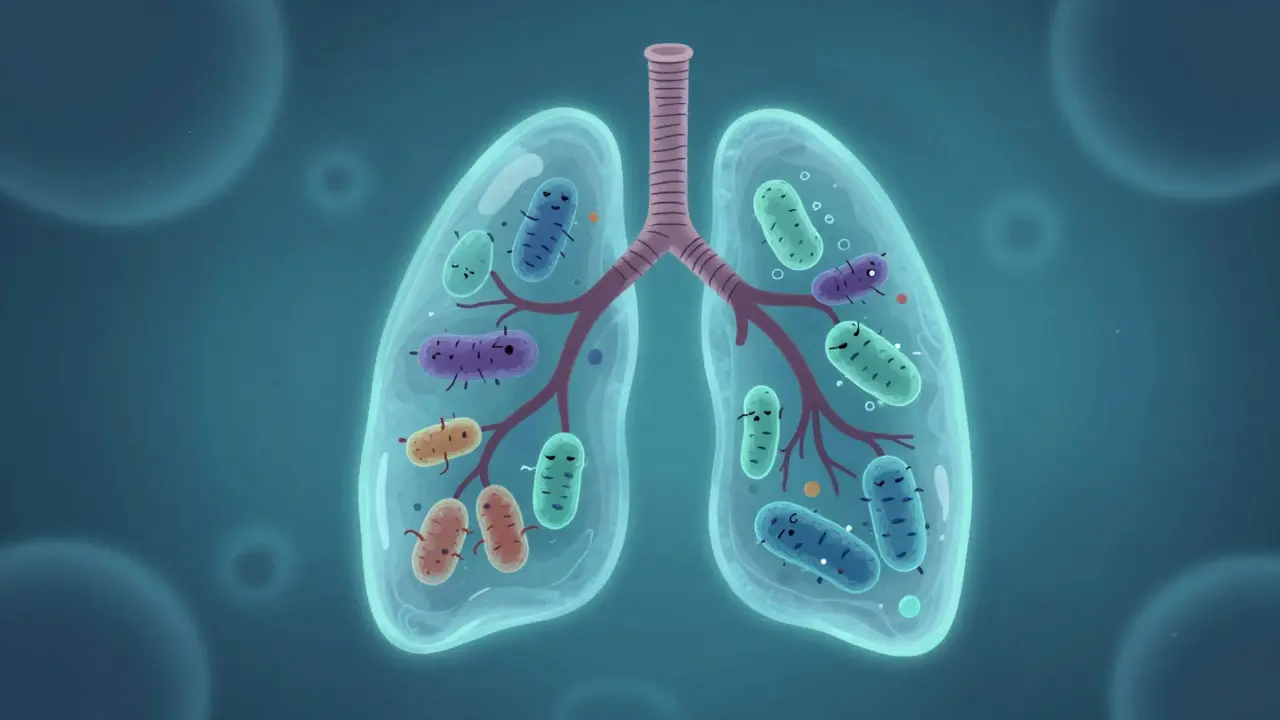
Imagine carrying a passenger in your body for twenty years without ever knowing they were there. No cough, no fever, no fatigue-just a silent presence. This is the reality for millions of people living with latent tuberculosis. But there is a tipping point where that silent passenger wakes up, begins to multiply, and transforms into a life-threatening illness. Understanding the shift from a dormant state to a full-blown disease is the key to stopping Tuberculosis in its tracks.
The Silent Phase: What is Latent TB Infection?
When Mycobacterium tuberculosis is a hardy bacterium that causes tuberculosis by attacking the lungs and other organs, it doesn't always cause immediate chaos. In many people, the immune system manages to wall off the bacteria, creating a biological stalemate. This is known as Latent TB Infection (LTBI).
In this state, the bacteria are alive but inactive. Because they are trapped in small clusters called granulomas, they can't spread throughout the body. If you have latent TB, you won't feel sick, and your chest X-ray will look completely normal. Most importantly, you cannot spread the bacteria to your family, friends, or coworkers. You aren't "contagious," but you are carrying a biological seed that could bloom into a disease if your immune system weakens.
Statistically, about 30% of people exposed to the bacteria will test positive for an infection. However, only a small fraction-roughly 10%-will ever develop the active form of the disease. For most, the infection remains a lifelong secret unless a specific medical test reveals it.
When the Bacteria Wake Up: Active TB Disease
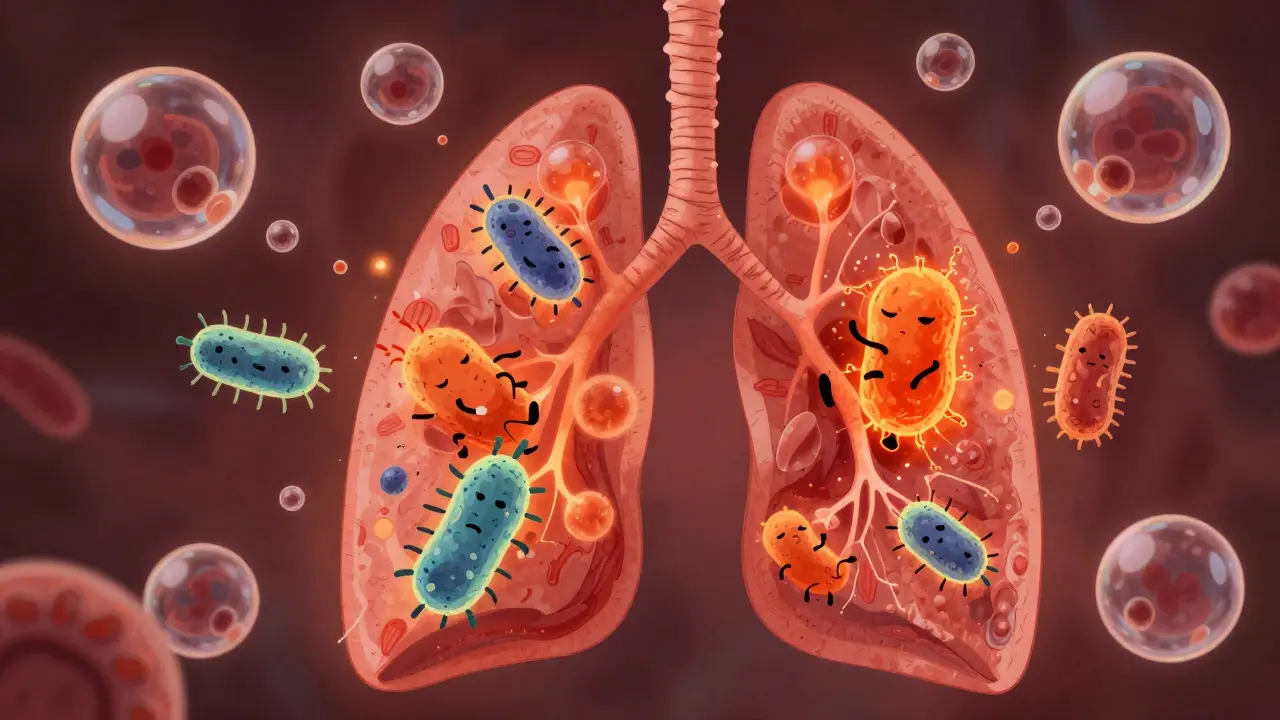
Active TB occurs when the immune system can no longer contain the bacteria. This is not a sudden switch but often a gradual decline. The bacteria begin to multiply rapidly, destroying lung tissue and releasing droplets into the air whenever the person coughs or speaks. This is the stage where the disease becomes a public health threat.
The symptoms of Active TB Disease are distinct and often debilitating. It usually starts with a persistent cough that lasts more than three weeks. As the infection progresses, you might experience:
- Unexplained weight loss (often dramatic enough that clothes no longer fit)
- Drenching night sweats that require changing pajamas or sheets
- A lingering low-grade fever and persistent chills
- Hemoptysis, which is the medical term for coughing up blood
- Extreme fatigue that doesn't improve with rest
While the lungs are the primary target (pulmonary TB), the bacteria can travel through the bloodstream to the spine, kidneys, or brain. This is why active TB is so dangerous; if left untreated, it causes permanent organ damage or death.
Spotting the Difference: Diagnosis and Testing
Since latent TB has no symptoms, you can't "feel" your way to a diagnosis. Doctors rely on immunologic tests to see if your body has recognized the bacteria. The two most common methods are the Tuberculin Skin Test (TST) and the Interferon-Gamma Release Assay (IGRA). A positive result on either of these suggests you have the bacteria in your system.
To figure out if the infection is latent or active, doctors use a process of elimination. If your skin or blood test is positive, but your chest X-ray is clear and you have no symptoms, you are classified as having latent TB. If the X-ray shows cavities in the lungs or infiltrates, and you are coughing up bacteria, it is active disease.
For active TB, the gold standard is microbiological confirmation. This involves a sputum culture, where a lab grows the bacteria from your phlegm, or a Nucleic Acid Amplification Test (NAAT), which detects the genetic material of the bacteria quickly.
| Feature | Latent TB Infection | Active TB Disease |
|---|---|---|
| Symptoms | None | Cough, fever, weight loss, night sweats |
| Contagiousness | Not contagious | Highly contagious (airborne) |
| Chest X-Ray | Normal | Usually abnormal (cavities/shadows) |
| Immune Test (TST/IGRA) | Positive | Positive |
| Sputum Culture | Negative | Positive |
The Battle Plan: Drug Therapy for TB
Treating TB isn't as simple as taking a pill for a week. Because the bacteria have a thick, waxy cell wall, they are incredibly resistant to many antibiotics. Treatment requires a marathon, not a sprint. The goal is not just to make the patient feel better, but to kill every single dormant bacterium to prevent a relapse.
Treating Latent TB
The goal here is preventative. By treating latent TB, we stop the 10% risk of it becoming active. The most common approach is Isoniazid monotherapy for 9 months. However, newer, shorter regimens are becoming popular to help patients stick to the plan, such as a 3-month combination of Isoniazid and Rifapentine.
Treating Active TB
Active disease requires an aggressive, multi-drug attack. Using only one drug would allow the bacteria to develop resistance, leading to Multidrug-Resistant TB (MDR-TB). The standard "first-line" cocktail includes four primary medications:
- Isoniazid: Kills actively dividing bacteria.
- Rifampin: Powerful sterilizing agent that kills dormant bacteria.
- Pyrazinamide: Effective in the acidic environment of the granuloma.
- Ethambutol: Prevents the bacteria from developing resistance to the other drugs.
Patients typically take all four drugs for the first two months (the intensive phase) and then transition to just Isoniazid and Rifampin for another 4 to 7 months (the continuation phase). Because these drugs can be hard on the liver, doctors perform regular liver function tests to ensure the therapy isn't causing hepatotoxicity.
Overcoming the Hurdles: Adherence and DOT
The biggest challenge in TB therapy isn't the medicine itself-it's the clock. When patients start feeling better after a few weeks, they often think they are cured and stop taking their pills. This is a dangerous mistake. Stopping early allows the strongest bacteria to survive and mutate, creating strains that are nearly impossible to treat.
To fight this, public health systems use Directly Observed Therapy (DOT). In a DOT program, a healthcare worker or trained community member meets the patient daily or weekly to watch them swallow their medication. It sounds extreme, but it is the most effective way to ensure treatment completion and protect the community from drug-resistant outbreaks.

Who is Most at Risk?
Tuberculosis is an opportunistic predator. It thrives when the immune system is compromised. The most significant risk factor is an untreated HIV infection, as the loss of CD4 T cells removes the body's ability to maintain the granulomas that keep TB latent. This is why people living with HIV are screened aggressively for TB.
Other high-risk groups include people with diabetes, those undergoing chemotherapy, and individuals living in crowded environments with poor ventilation, such as shelters or correctional facilities. Geographic factors also play a role; people born in regions with high TB prevalence are often screened upon migrating to countries where the disease is less common.
Can I have TB if my chest X-ray is normal?
Yes. This is typical for Latent TB Infection. In the latent stage, the bacteria are present but inactive and trapped, so they don't cause the tissue damage or cavities that would show up on an X-ray. Only the active stage typically shows abnormalities on imaging.
If I have latent TB, do I really need to take medicine?
While you aren't sick now, there is roughly a 10% lifetime risk that the infection will become active. Treatment is highly recommended for high-risk individuals (like those with HIV) or those who want to eliminate the risk of ever becoming contagious and ill in the future.
How do I know if my TB is drug-resistant?
Drug resistance is determined through drug susceptibility testing (DST) performed on your sputum culture. The lab tests the bacteria against standard drugs like Isoniazid and Rifampin. If the bacteria continue to grow despite the drugs, you may have MDR-TB, which requires a different, often longer, set of medications.
Is TB only a problem for the lungs?
No. While pulmonary TB is most common, the bacteria can spread via the blood to other organs. This is called extrapulmonary TB. It can affect the lymph nodes, kidneys, and most notably the spine (Pott's disease) or the meninges of the brain.
How long does it take to stop being contagious?
Most patients with active pulmonary TB stop being contagious after a few weeks of consistent, effective antibiotic treatment. However, you must continue the full course of medication for several months to ensure the bacteria are completely eradicated.
Next Steps and Guidance
If you've been exposed to someone with active TB, don't panic, but do get tested. A simple blood or skin test can tell you if you've been infected. If you are currently on TB medication and experience yellowing of the eyes (jaundice), dark urine, or severe nausea, contact your doctor immediately, as these can be signs of liver stress.
For those managing a diagnosis, focus on nutrition and respiratory health. Avoiding smoking and maintaining a balanced diet helps the lungs heal faster. If you are struggling with the long medication schedule, ask your provider about shorter regimens or DOT support to keep you on track.

Sure, let's just trust the "government doctors" to tell us which bacteria are "dormant" and which ones aren't. It's way too convenient that they want you on these pills for nine months. They're just keeping you hooked on their chemicals to see how your body reacts over a long period of time. Absolute joke.
Glad to see more info on this. It's reassuring to know that latent TB isn't contagious. Definitely helps lower the anxiety for people who've had a positive skin test but feel perfectly healthy.
The pharmaceutical companies love this. Nine months of meds for a "maybe." Pure greed.
I've seen so many people in my community struggle with the DOT programs. While it's tough to have someone watch you take your meds, it really is the best way to prevent MDR-TB. We've got to support each other and make sure no one drops off the treatment plan because the stakes are just too high for the whole community!
It is important to highlight that the IGRAs are generally more specific than the TST. The skin test can sometimes give a false positive if a person has had the BCG vaccine, which is common in many parts of the world. Switching to blood tests has really helped in refining the diagnosis process for many patients.
Basically, the skin test just shows if you've been exposed. It doesn't mean you're sick. Everyone knows that.
The irony of human existence is that we spend our lives fighting invisible enemies that we barely understand. This whole "battle plan" approach is just a superficial attempt to control nature. We treat the symptom, but we never address the systemic decay of the environment that allows these bacteria to thrive in the first place. It's all quite predictable really.
It's so wild how the body can just hold onto something for years without us knowing... truly amazing how complex we are!!! 🌿✨ Hope everyone stays healthy and takes care of their mental space too!!!! 🌈
Stay strong everyone!!!! Just follow the doctor's orders and you'll be fine!!!! Believe in the process!!!!
I think it's really valuable that we talk about the social side of this, especially regarding the people living in shelters or correctional facilities where the air isn't great. It's not just about the medicine, it's about the living conditions and how we treat the most vulnerable among us, because if they don't have a safe place to recover, the medicine only does so much of the heavy lifting in the long run. We should all try to be a bit more understanding of the struggle and offer a helping hand to those who feel overwhelmed by the long treatment timelines, as it can be quite a mental burden to carry for nearly a year.