

Esketamine Treatment Simulator
Pre-Treatment Assessment
Vital signs checked. BP must be below 160/100 mmHg.
First Dose Administered
Patient self-administers first spray under supervision.
Second Dose Administered
Second spray given 15 minutes after first. Effects begin building.
Peak Effects Reached
Maximum dissociation and blood pressure elevation occur around this mark.
Monitoring Continues
Staff check vitals every 5-10 minutes. Dissociation begins to subside.
Recovery Phase
BP returns toward baseline. Most dissociative effects resolve.
Discharge Evaluation
Final checks. Patient cleared if stable and accompanied by responsible adult.
Imagine sitting in a quiet clinic room. You just administered a dose of Esketamine nasal spray, also known by the brand name Spravato, for treatment-resistant depression. Within minutes, the walls seem to breathe. Time slows down. You feel detached from your body, as if you are watching yourself from a distance. This is not a panic attack; it is dissociation, a well-documented effect of this medication. At the same time, your blood pressure is rising, peaking around the 40-minute mark. These intense physiological and psychological changes are why esketamine cannot be taken at home like most antidepressants. It requires strict supervision, specific timing, and careful monitoring to ensure safety.
If you or a loved one is considering this treatment, understanding what happens during those critical two hours is essential. The drug works differently than traditional antidepressants, targeting glutamate receptors rather than serotonin or dopamine. This unique mechanism drives both its rapid antidepressant effects and its acute side effects. Knowing exactly how dissociation manifests, how blood pressure shifts, and what the monitoring protocol entails can reduce anxiety and help you navigate the process with confidence.
How Esketamine Works and Why It Causes Side Effects
To understand the side effects, we first need to look at the biology. Traditional antidepressants often take weeks to work because they slowly adjust neurotransmitter levels. Esketamine is different. It is an NMDA receptor antagonist. Specifically, it blocks the N-methyl-D-aspartate (NMDA) receptors in the brain.
Here is the simple breakdown: When esketamine binds to these receptors, it temporarily inhibits GABAergic interneurons. Think of GABA as the brain's "brake" system. By blocking the brakes on these specific neurons, esketamine allows excitatory neurons to fire more freely. This surge in activity is believed to promote synaptic plasticity-the brain's ability to form new connections-which may reverse the neural damage caused by chronic depression.
However, this same surge causes the acute side effects. The disinhibition of neuronal firing leads to altered perception, resulting in dissociation. Simultaneously, the drug affects the autonomic nervous system, causing transient increases in blood pressure and sedation. Because peak plasma concentration occurs between 20 and 40 minutes after administration, these effects are not immediate but build up quickly, requiring constant observation during that window.
Understanding Dissociation: What It Feels Like
Dissociation is the most prominent subjective side effect of esketamine therapy. In clinical trials, over 56% of patients experienced some level of dissociation, compared to about 14% in the placebo group. But what does it actually feel like?
Patient reports describe it as a dream-like state. Common sensations include:
- Depersonalization: Feeling detached from your own body or thoughts.
- Derealization: Feeling that the environment around you is unreal or distorted.
- Time distortion: Minutes feeling like hours, or vice versa.
- Visual alterations: Mild hallucinations or changes in color perception.
The intensity varies by dose. Higher doses (84 mg) tend to cause more pronounced dissociation than lower doses (56 mg). Crucially, this effect is temporary. Most patients report that the peak intensity lasts for about 40 minutes and then gradually fades. By the end of the mandatory two-hour monitoring period, most people feel back to baseline, though some residual dizziness or mild detachment may linger for a short time.
Healthcare providers use standardized tools like the Clinician-Administered Dissociative States Scale (CADSS) to measure this. If dissociation becomes severe or distressing, staff are trained to provide reassurance and, in rare cases, administer rescue medications like benzodiazepines. However, severe reactions requiring intervention are uncommon, occurring in less than 2% of treatments.
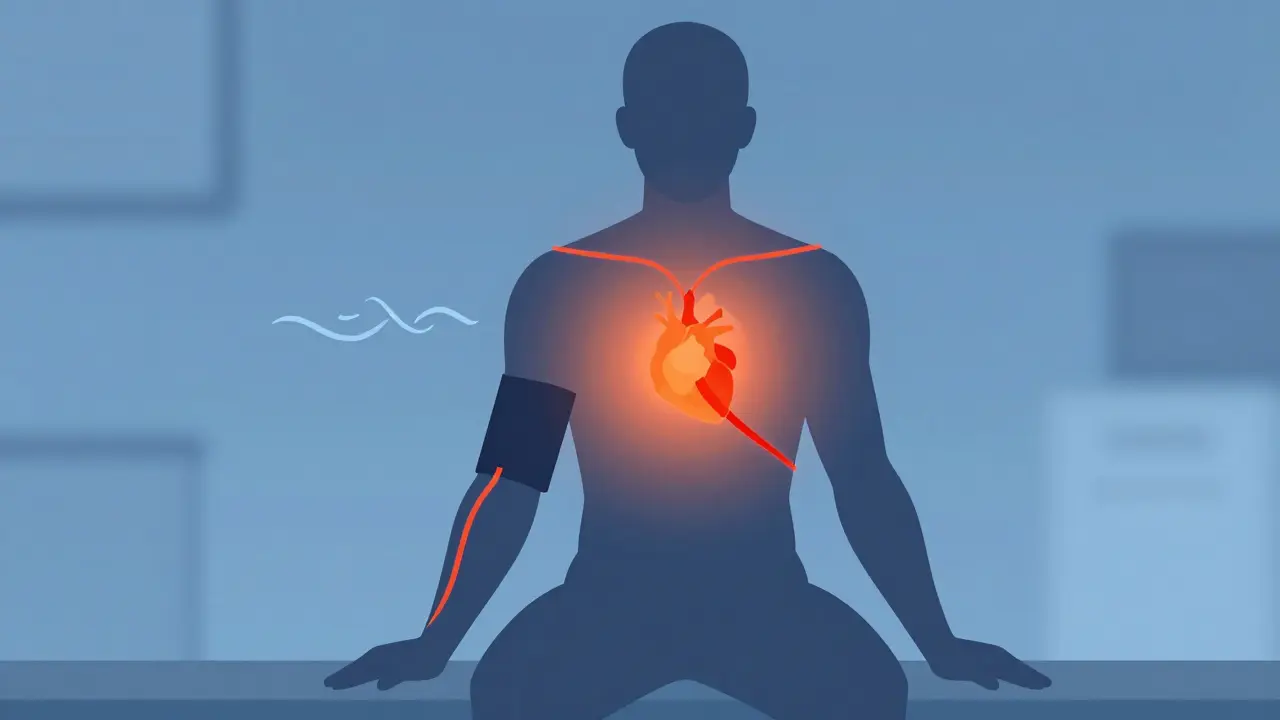
Blood Pressure Changes: The Physiological Response
While dissociation affects your mind, blood pressure elevation affects your body. Transient hypertension is a known effect of esketamine. Studies show that systolic blood pressure typically rises by 14 to 23 mmHg, and diastolic pressure by 7 to 16 mmHg, peaking around the same 40-minute mark as dissociation.
For most healthy individuals, this spike is asymptomatic-you won't feel it happening. However, for patients with pre-existing cardiovascular conditions, uncontrolled hypertension, or a history of aneurysms, this poses a real risk. This is why screening is so rigorous. Patients with a systolic blood pressure above 160 mmHg or diastolic above 100 mmHg at screening are generally excluded from treatment until their blood pressure is controlled.
The good news is that these elevations are transient. They do not last all day. Within 90 minutes to two hours after administration, blood pressure typically returns to baseline levels. This predictable pattern allows clinicians to manage the risk effectively through structured monitoring.
| Side Effect | Esketamine Group (%) | Placebo Group (%) | Peak Onset | Resolution Time |
|---|---|---|---|---|
| Dissociation | 56.2% | 13.9% | ~40 minutes | 1.5 - 2 hours |
| Hypertension (SBP ≥140) | 32.7% | 14.2% | ~40 minutes | 1.5 - 2 hours |
| Sedation | Common | Rare | Immediate | Variable |
| Nausea | Moderate | Low | Variable | Short-term |
The REMS Program: Why Monitoring Is Mandatory
You cannot buy esketamine at a pharmacy and take it home. It is distributed under a Risk Evaluation and Mitigation Strategy (REMS) program mandated by the FDA. This ensures that every dose is administered in a certified healthcare setting.
The protocol is strict for good reason. Here is what a typical session looks like:
- Pre-Administration Check: Your blood pressure, heart rate, and oxygen saturation are measured. If your BP is too high, the dose is delayed or cancelled.
- Administration: You self-administer the spray under direct observation. Two sprays are usually given, 15 minutes apart.
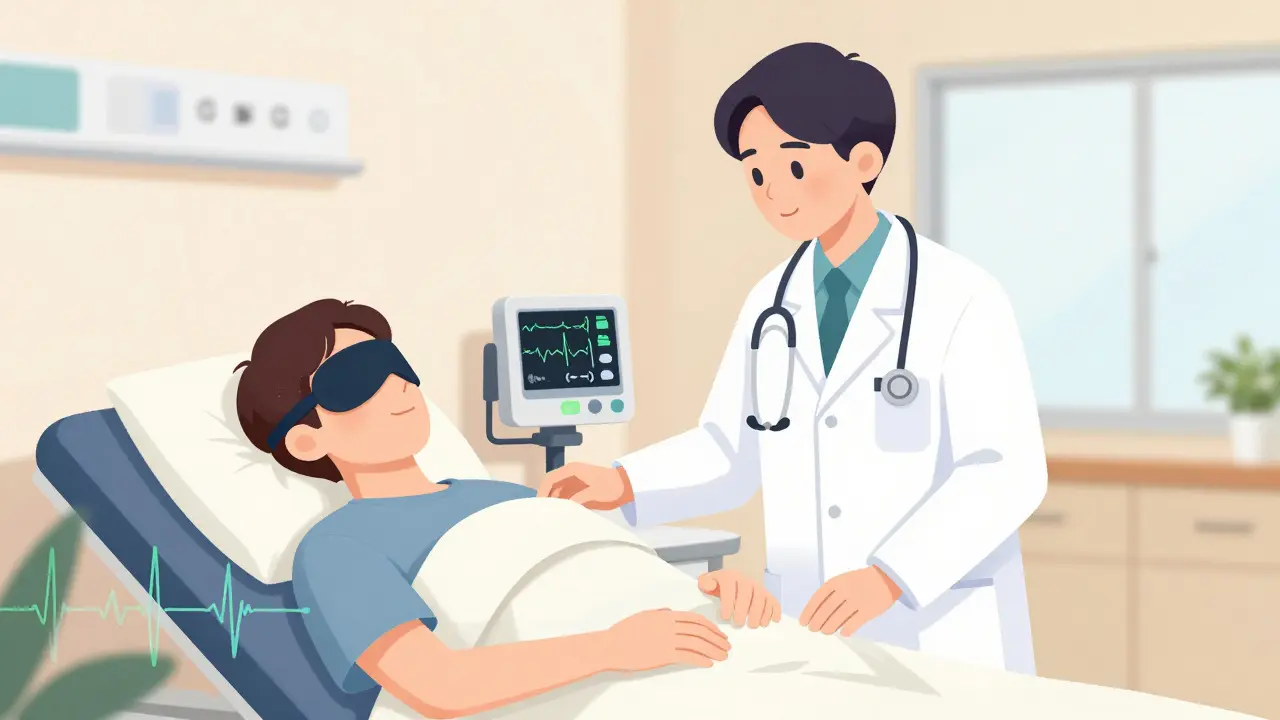
- Monitoring Period (Minimum 2 Hours): You must remain in the clinic. Staff check your vital signs every 5-10 minutes for the first 30-40 minutes, then less frequently. They also assess your mental status for dissociation.
- Discharge Criteria: You can only leave when your vital signs are stable, dissociation has resolved to a safe level, and you are accompanied by a responsible adult who will drive you home (you cannot drive yourself).
This structure minimizes risks. For example, if your blood pressure spikes dangerously, staff can intervene immediately. If dissociation becomes overwhelming, they can provide a calm environment or medical support. The REMS program also requires clinics to have emergency equipment, including oxygen and resuscitation devices, on hand.
Practical Tips for Patients
Knowing what to expect helps reduce anxiety. Here are practical steps to make your experience smoother:
- Plan Your Schedule: Treat the appointment as a half-day commitment. Factor in travel time, the 2-hour wait, and recovery time afterward. Avoid scheduling important meetings or driving tasks for the rest of the day.
- Bring Comfort Items: Some patients find eye masks, noise-canceling headphones, or soft blankets helpful during the dissociative phase. Ask your clinic if these are allowed.
- Communicate Openly: Tell your provider if you feel anxious before the dose. Pre-treatment education significantly lowers anxiety scores. If you feel distressed during dissociation, speak up. The staff are trained to guide you through it.
- Manage Blood Pressure: If you have hypertension, ensure it is well-controlled with medication before starting esketamine. Bring your usual antihypertensive meds if instructed by your doctor.
- Arrange Transportation: You legally and medically cannot drive after treatment. Have a friend or family member ready to pick you up.
Long-Term Outlook and Future Directions
While the acute monitoring requirements are intensive, many patients find the trade-off worth it for the relief from treatment-resistant depression. Long-term studies suggest that dissociation and blood pressure effects do not worsen with repeated use. In fact, some patients report that dissociation becomes milder over time as their bodies adjust.
Research is ongoing to optimize these protocols. Recent data suggests that for select patients with stable vitals and minimal dissociation, the monitoring period might eventually be shortened to one hour. Additionally, digital health tools are being developed to monitor vital signs remotely, which could improve access for patients in rural areas where certified clinics are scarce.
Despite these advancements, the core safety principles remain. Esketamine is a powerful tool that demands respect and careful handling. By adhering to monitoring guidelines, patients and providers can harness its benefits while minimizing risks.
How long does dissociation last after taking esketamine?
Dissociation typically peaks within 40 minutes of administration and begins to resolve shortly after. For most patients, the effects subside significantly within 1.5 to 2 hours, which is why the mandatory monitoring period is set at two hours. Residual feelings of detachment or dizziness may linger briefly after discharge but usually fade completely within a few hours.
Can I take esketamine if I have high blood pressure?
It depends on the severity. Esketamine is contraindicated for patients with uncontrolled hypertension (systolic >160 mmHg or diastolic >100 mmHg). If you have mild to moderate hypertension that is well-managed with medication, you may still be eligible. Your doctor will evaluate your cardiovascular history and current blood pressure readings to determine if the risks are acceptable.
Why can't I take esketamine at home?
Esketamine carries risks of acute dissociation, sedation, and blood pressure spikes that require immediate medical attention if they become severe. The REMS program mandates administration in certified healthcare settings to ensure continuous monitoring of vital signs and mental status for at least two hours post-dose. This protects patients from accidents (like falling due to dizziness) and manages potential cardiovascular events.
Is the dissociation dangerous?
In itself, dissociation is not physically dangerous, but it can be psychologically distressing. It impairs judgment and coordination, which is why you cannot drive or operate machinery. In rare cases, severe dissociation can lead to agitation or confusion, requiring medical intervention. However, with proper monitoring and a calm environment, most patients tolerate the experience safely.
Does the blood pressure spike last all day?
No, the blood pressure elevation is transient. It typically peaks around 40 minutes after the dose and returns to baseline levels within 1.5 to 2 hours. There is no evidence of cumulative long-term blood pressure damage from repeated treatments, provided that acute spikes are monitored and managed appropriately during each session.