Why You Should Not Wait for Epilepsy Surgery
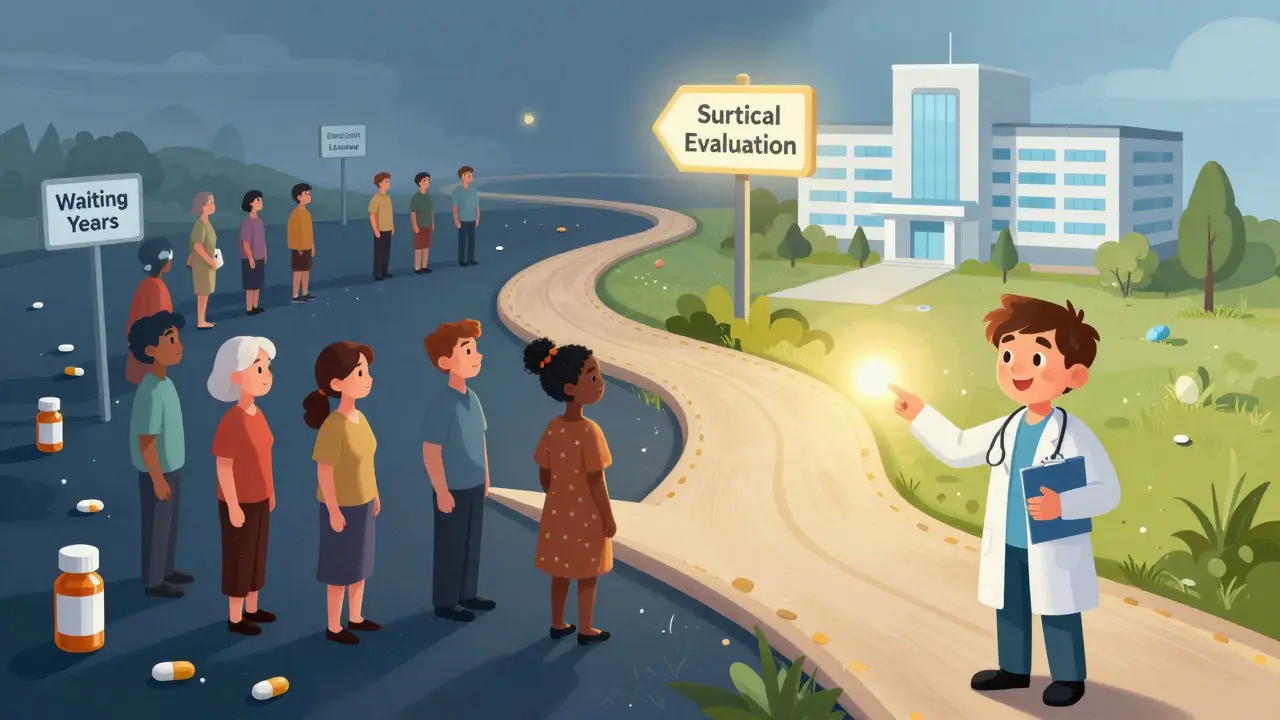
If you or a loved one has tried two different antiseizure medications (ASMs) without stopping the seizures, you are likely dealing with drug-resistant epilepsy. This is not just a frustrating phase; it is a specific medical definition established by the International League Against Epilepsy (ILAE). The hard truth is that if two drugs haven't worked, a third one is unlikely to succeed. Yet, most people wait years-sometimes decades-before considering surgery. This delay costs patients their quality of life, their independence, and in some cases, their safety.
Surgery is not a last resort anymore. It is a primary treatment option for focal epilepsy. When performed correctly at a specialized center, it offers the only realistic chance for complete seizure freedom for many patients. But how do you know if you qualify? What are the real risks? And what kind of results can you actually expect? Let’s break down the facts so you can make an informed decision without the fear of the unknown.
Key Takeaways
- Candidacy: If two appropriate medications fail to control seizures, you meet the criteria for drug-resistant epilepsy and should be referred for evaluation immediately.
- Success Rates: For temporal lobe epilepsy, 60-80% of patients achieve total seizure freedom after surgery.
- Risks: Serious permanent complications are rare (1-2%), but transient issues like memory changes occur in 5-10% of cases.
- Timing: Early referral leads to better cognitive outcomes and higher chances of success compared to waiting years.
- Process: Evaluation takes 2-6 weeks at a Level 4 epilepsy center involving video-EEG, MRI, and neuropsychological testing.
Who Is a Candidate for Epilepsy Surgery?
The biggest barrier to surgery isn't the operation itself-it's getting the referral. Many neurologists still operate under the old mindset of "try every pill first." However, current guidelines from the ILAE Surgical Therapies Commission (2022) are clear: refer patients as soon as drug resistance is confirmed. You don't need to wait two years. You don't need to try five drugs. Two failed trials are enough.
To be a candidate, three things must align:
- Disabling Seizures: Your seizures must impact your daily life. This usually means having at least one disabling seizure per month, severe side effects from medication, or an inability to work or drive.
- Focal Onset: The seizures must start in a specific, identifiable area of the brain (focal epilepsy). Generalized epilepsies, where seizures start everywhere at once, are generally not suitable for resective surgery.
- Consistent Data: Your imaging (MRI) and electrical recordings (EEG) must point to the same spot in the brain as the source of the seizures.
For children, the rules are slightly stricter but equally urgent. Conditions like tuberous sclerosis complex or infantile spasms (West syndrome) are known to be highly resistant to medication. In these cases, waiting for more drugs to fail can cause irreversible developmental damage. Immediate evaluation is often recommended.
The Evaluation Process: What to Expect
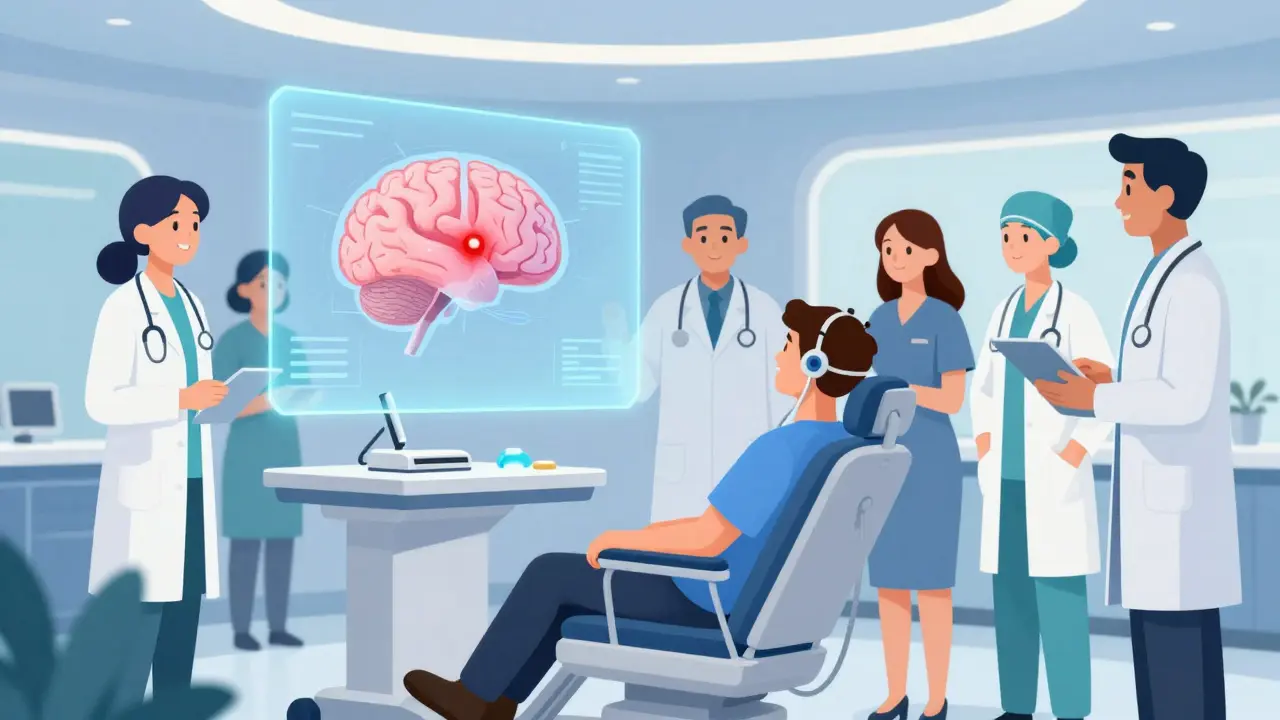
You won't go straight into surgery. First, you undergo a comprehensive presurgical evaluation. This happens at a Level 4 epilepsy center, which is the highest designation for such facilities. These centers have multidisciplinary teams including epileptologists, neurosurgeons, and neuropsychologists.
The process typically lasts 2 to 6 weeks and includes:
- Video-EEG Monitoring: You stay in the hospital for 5-7 days while doctors record your brain activity and capture your typical seizures on camera. This helps pinpoint exactly when and where seizures start.
- High-Resolution MRI: A 3T MRI with thin slices looks for structural abnormalities like hippocampal sclerosis or tumors.
- Neuropsychological Testing: Tests assess your memory, language, and cognitive function to predict how surgery might affect these areas.
- Advanced Imaging: Sometimes FDG-PET scans or intracranial EEG (electrodes placed inside the skull) are needed if the initial data is unclear.
This step is crucial because removing the wrong part of the brain can cause new problems. The goal is to remove only the tissue causing seizures while sparing everything else.
Types of Epilepsy Surgeries
Not all surgeries involve cutting out a large piece of the brain. The type of procedure depends on where the seizures originate and what functions that area controls.
| Surgery Type | Description | Best For | Seizure Freedom Rate |
|---|---|---|---|
| Temporal Lobectomy | Removal of part of the temporal lobe, often including the hippocampus. | Mesial temporal lobe epilepsy with hippocampal sclerosis. | 65-80% |
| Laser Interstitial Thermal Therapy (LITT) | Minimally invasive laser heating to destroy seizure focus through a small hole in the skull. | Hippocampal sclerosis, hypothalamic hamartomas. | ~55% at 1 year |
| Corpus Callosotomy | Cutting the bundle of nerves connecting the brain halves to stop seizures from spreading. | Generalized drop attacks (atonic seizures). | Reduces frequency/severity, rarely curative. |
| Responsive Neurostimulation (RNS) | Implanted device detects abnormal activity and sends pulses to stop seizures. | Multiple foci or eloquent cortex areas that cannot be removed. | Significant reduction over time. |
Temporal lobectomy remains the gold standard for mesial temporal lobe epilepsy, offering the highest rates of cure. However, newer techniques like LITT are gaining popularity due to shorter recovery times and lower complication rates, though long-term seizure freedom may be slightly lower than open surgery.
Risks and Complications: The Real Numbers
Fear of brain surgery is understandable. About 50% of patients who get a referral decline the evaluation because they worry about damaging their brain. But let’s look at the actual data from the Multicenter Study of Epilepsy Surgery.
The risk of a permanent, major neurological deficit (like paralysis or severe aphasia) is low, around 1-2%. More common are transient issues that resolve over months. For example, visual field cuts (loss of peripheral vision on one side) occur in up to 10% of temporal lobectomies but are often manageable. Memory changes are a concern, particularly if the dominant hemisphere (usually the left) is operated on. However, for many patients, the relief from constant seizures improves overall cognitive function because the brain is no longer in a state of chronic electrical storm.
It is also important to weigh the risks of *not* having surgery. People with uncontrolled epilepsy face a significantly higher risk of injury, accidents, and SUDEP (Sudden Unexpected Death in Epilepsy), which affects approximately 1 in 1,000 people with epilepsy annually. Surgery drastically reduces this risk.

Expected Outcomes and Quality of Life
What does success look like? For the lucky majority with well-defined focal epilepsy, success means zero seizures. Studies show that 60-80% of patients with temporal lobe epilepsy become seizure-free within two years of surgery. Even if seizures aren't completely gone, a significant reduction in frequency and severity allows many patients to reduce or stop their medications, regain their driver's license, and return to work.
A 2021 study found that 79% of postoperative patients reported being able to drive for the first time in decades. That is a massive boost to independence. Economically, successful surgery pays for itself within three years through reduced healthcare costs and increased productivity. The societal benefit is estimated at $1.2 million per successfully treated patient over ten years.
However, surgery is not magic. If the seizure focus cannot be precisely localized, or if it involves critical brain areas responsible for speech or movement, the outcome may be less favorable. About 15-20% of evaluated patients are deemed unsuitable for resective surgery after the full workup. In these cases, palliative options like RNS or vagus nerve stimulation may still offer help.
Overcoming Barriers to Access
Despite the proven benefits, fewer than 1% of Americans with drug-resistant epilepsy are referred to epilepsy centers annually. Why? Misconceptions. Many doctors still view surgery as a dangerous last resort rather than a viable first-line treatment for resistant cases. Insurance hurdles are also real; prior authorization can take nearly a month, and initial denials are common (though appeals are successful 78% of the time).
If you suspect you have drug-resistant epilepsy, take charge. Keep a detailed seizure diary. Document your medication trials. Ask your neurologist directly: "Am I a candidate for surgical evaluation?" If they hesitate, seek a second opinion at a dedicated epilepsy center. Organizations like the Epilepsy Foundation and the Epilepsy Surgery Alliance offer patient navigators to help guide you through the system.
How do I know if my epilepsy is drug-resistant?
According to the International League Against Epilepsy, you have drug-resistant epilepsy if you have failed adequate trials of two tolerated, appropriately chosen antiseizure medications. These medications must have been taken at the correct dose for a sufficient duration. If you still have disabling seizures, you meet the criteria.
Is epilepsy surgery painful?
The surgery itself is performed under general anesthesia, so you feel no pain during the procedure. Post-operative pain is managed with medication and typically subsides within a few days to a week. Minimally invasive options like LITT result in significantly less post-surgical discomfort and faster recovery.
Will surgery cure my epilepsy?
Surgery offers the best chance for a cure in focal epilepsy. For temporal lobe epilepsy, 60-80% of patients achieve complete seizure freedom. However, outcomes vary based on the location of the seizure focus and the underlying cause. Some patients experience a significant reduction in seizures even if they are not completely cured.
How long does the evaluation process take?
A comprehensive presurgical evaluation at a Level 4 epilepsy center typically takes 2 to 6 weeks. This includes inpatient video-EEG monitoring (5-7 days), advanced imaging, and neuropsychological testing. Complex cases requiring intracranial electrodes may take longer.
What are the risks of memory loss after surgery?
Memory changes are a potential risk, particularly if the surgery involves the temporal lobe, which plays a key role in memory formation. The risk is higher if the dominant hemisphere (usually the left) is operated on. Pre-surgical neuropsychological testing helps predict individual risk. Most patients adapt well, and the improvement in quality of life often outweighs minor memory deficits.
Can children undergo epilepsy surgery?
Yes, children can and often should undergo epilepsy surgery, especially for catastrophic epilepsies like infantile spasms or conditions like tuberous sclerosis. Early intervention can prevent developmental delays and improve long-term cognitive outcomes. Pediatric epilepsy centers specialize in these evaluations.