
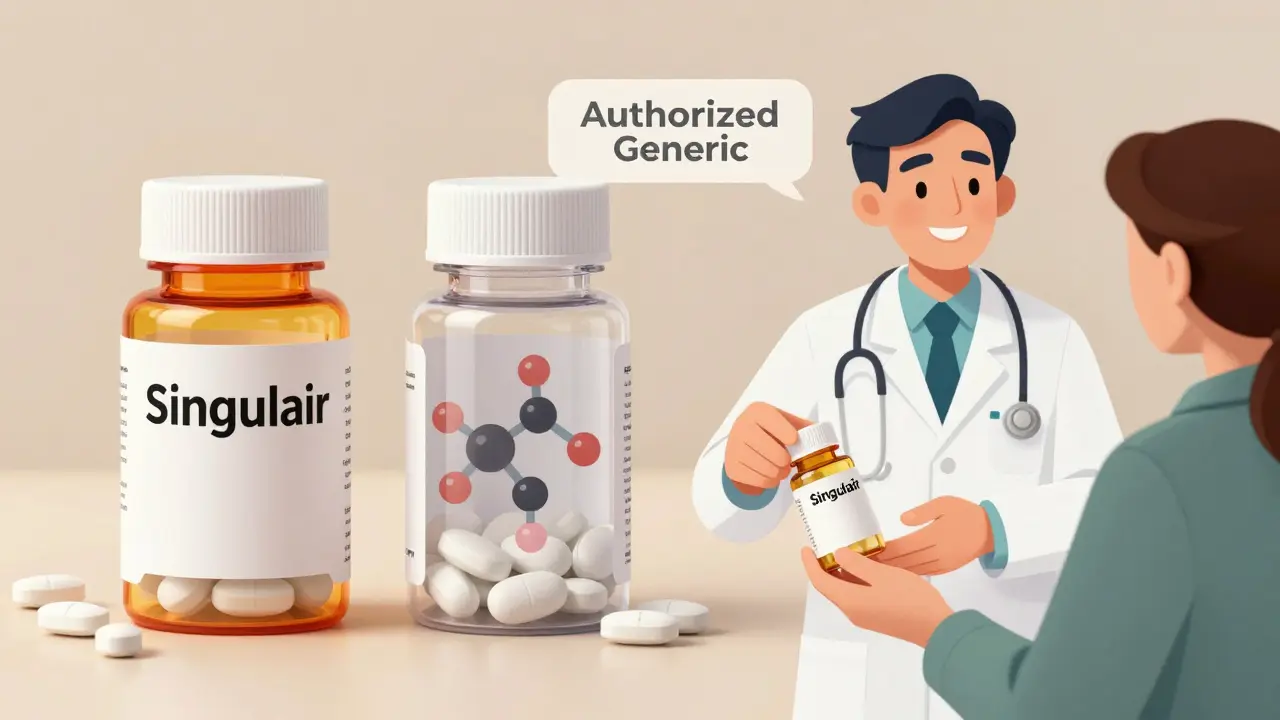
When you pick up a prescription, you might see a different name on the pill bottle than what your doctor wrote. That’s because your pharmacy filled it with a generic version. But not all generics are the same. There are two main types: authorized generics and traditional generics. They look similar, cost less than brand-name drugs, and are both approved by the FDA - but the differences between them matter more than most people realize.
What Is an Authorized Generic?
An authorized generic is essentially the brand-name drug with the brand name removed from the label. It’s made by the same company that produces the original brand, using the exact same ingredients, same manufacturing process, and same quality controls. The only difference? The packaging and labeling don’t say the brand name.
For example, if you take Singulair (montelukast), the brand-name asthma and allergy medication, an authorized generic of Singulair is made by Merck - the same company that makes the brand version. It has the same active ingredient, the same inactive ingredients (like fillers and dyes), and even the same shape and color of the pill. The only thing missing is the "Singulair" logo.
This is possible because authorized generics are produced under the original brand’s New Drug Application (NDA). That means they don’t go through the full FDA approval process that traditional generics do. Instead, the brand manufacturer simply notifies the FDA they’re launching an authorized version. The FDA doesn’t need to retest it - because it’s already been approved as the brand drug.
What Is a Traditional Generic?
A traditional generic, also called a typical generic, is made by a different company - not the original brand manufacturer. It must contain the same active ingredient, strength, dosage form, and route of administration as the brand-name drug. But here’s the catch: the inactive ingredients can be different.
Think of it like baking cookies. The brand-name cookie uses a specific flour, butter, and vanilla extract. A traditional generic might use a different brand of flour or a slightly different type of sugar. The taste and effect are supposed to be the same, but small changes in how the drug breaks down in your body can sometimes matter - especially for drugs with a narrow therapeutic index.
Traditional generics must prove they’re bioequivalent to the brand. That means they deliver the same amount of medicine into your bloodstream at the same speed. This is tested in clinical studies and approved through an Abbreviated New Drug Application (ANDA). The ANDA process is cheaper and faster than developing a new drug, but it still requires evidence that the generic performs the same way in the body.
Key Difference #1: Ingredients Are Identical - Or Not
This is the biggest practical difference.
Authorized generics have the same active AND inactive ingredients as the brand. If you’ve ever had a reaction to a brand-name drug because of a dye or filler, you’ll have the same reaction to its authorized generic. No surprises.
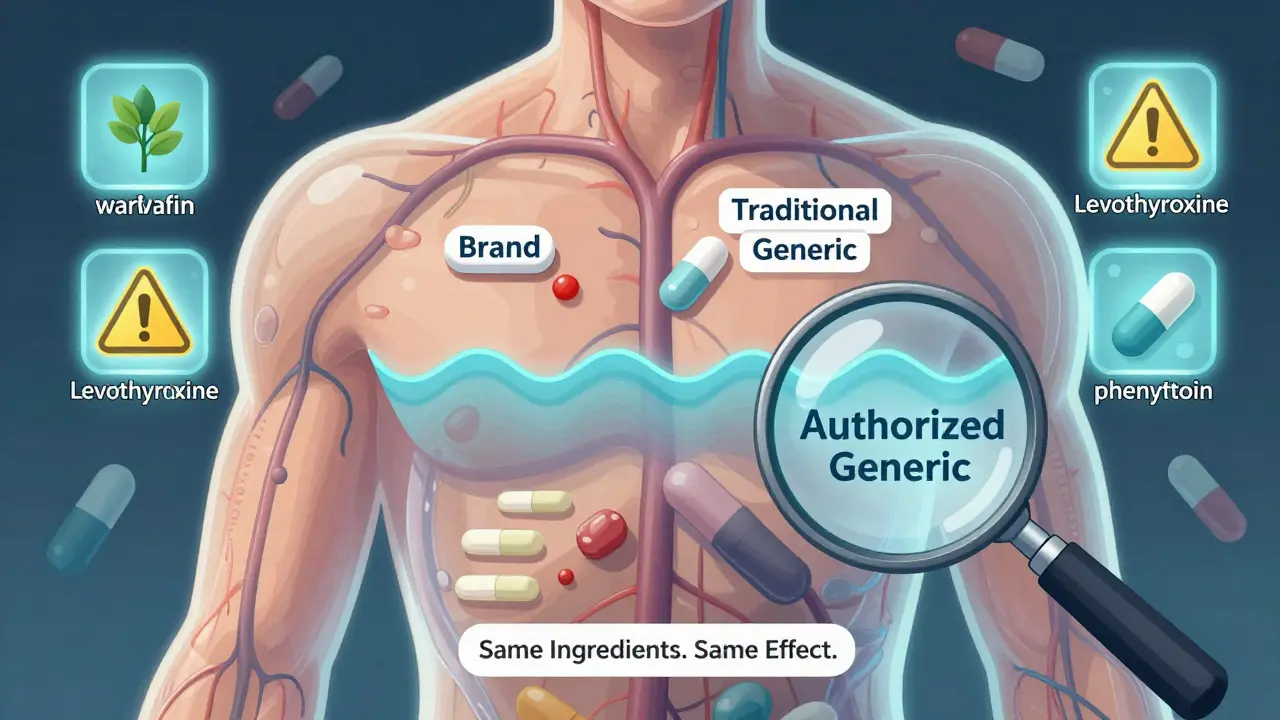
Traditional generics can have different inactive ingredients. For most people, this doesn’t matter. But for patients with allergies, sensitivities, or those taking drugs where tiny changes affect absorption - like warfarin, levothyroxine, or epilepsy medications - even small differences can cause problems.
One study in Health Affairs found that patients switching from brand to traditional generic for asthma inhalers sometimes reported reduced effectiveness. The change wasn’t in the active drug - it was in the propellant or stabilizer. Authorized generics avoid this issue entirely because they’re chemically identical.
Key Difference #2: Who Makes Them?
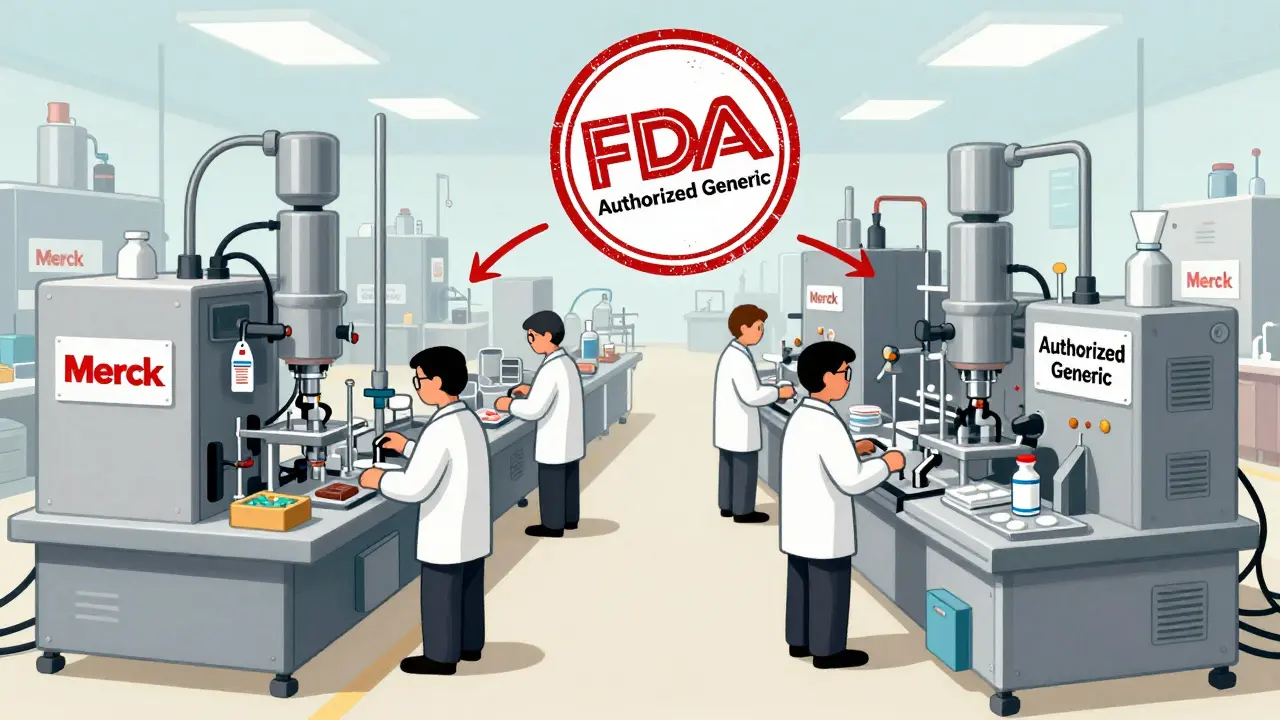
Authorized generics are made by the original brand manufacturer - or a licensed partner under their supervision. They’re not a third-party company trying to copy the drug. They’re the same factory, same equipment, same quality team.
Traditional generics are made by companies that specialize in generic drugs. These companies often produce hundreds of different generic products. They don’t have the same ties to the brand, and their manufacturing standards, while FDA-approved, may differ.
That’s why some pharmacies and doctors prefer authorized generics for critical medications. If you’re on a drug where consistency matters - like thyroid medicine or blood thinners - knowing it’s the exact same formula as the brand gives peace of mind.
Key Difference #3: Regulatory Pathway
Traditional generics must go through the ANDA process. That means submitting data, running bioequivalence studies, and waiting for FDA approval. This can take months or even years.
Authorized generics skip all of that. They’re already approved under the brand’s NDA. The manufacturer just needs to tell the FDA they’re launching it. This means authorized generics can hit the market faster - sometimes even before the first traditional generic is approved.
Some brand manufacturers use this to their advantage. They launch an authorized generic right after the patent expires - or even before - to undercut the price of traditional generics. This strategy helps them keep market share, but it also gives patients a cheaper option that’s identical to the brand.
Key Difference #4: Where You’ll Find Them
Authorized generics aren’t listed in the FDA’s Orange Book - the official directory of approved generic drugs. That makes them harder for pharmacists to identify. If a patient asks, "Is this the same as my brand?" the pharmacist can’t check the Orange Book to confirm.
Traditional generics are clearly listed in the Orange Book. Pharmacists can easily verify their therapeutic equivalence.
This lack of visibility creates confusion. Many patients think all generics are the same. They don’t realize their "generic" might be an authorized one - or that switching from one generic to another could mean changing inactive ingredients.
Some pharmacies now label authorized generics clearly on the bottle. But not all do. If you’re unsure, ask your pharmacist: "Is this an authorized generic?"
Key Difference #5: Price and Insurance
Both types cost less than the brand. But authorized generics often cost even less than traditional generics - because they’re made by the brand company, and there’s no middleman.
Insurance plans usually favor generics over brand-name drugs. But some plans treat authorized generics the same as the brand - meaning you might pay a higher copay. Others put them in the lowest tier, like traditional generics.
One 2023 analysis found that authorized generics were priced 20-40% lower than the brand, while traditional generics were priced 60-80% lower. But because authorized generics are identical to the brand, some patients and doctors prefer them even if the price difference is smaller.
When Does It Matter?
For most medications - like antibiotics, blood pressure pills, or antidepressants - the difference between authorized and traditional generics doesn’t matter. The body absorbs them the same way. Switching between them is safe.
But for drugs with a narrow therapeutic index - where the difference between an effective dose and a toxic one is very small - the choice matters more.
Examples include:
- Warfarin (blood thinner)
- Levothyroxine (thyroid hormone)
- Phenytoin (seizure control)
- Cyclosporine (organ transplant)
- Propranolol (heart condition)
In these cases, many doctors recommend staying on the same version - whether it’s brand, authorized generic, or traditional generic. Switching between types can lead to changes in blood levels, which might cause side effects or reduced effectiveness.
What Should You Do?
Here’s how to make smart choices:
- Ask your pharmacist if your generic is authorized or traditional. They can check the label or contact the manufacturer.
- Check the pill. Authorized generics often look identical to the brand. Traditional generics may look different - different color, shape, or marking.
- Don’t assume all generics are the same. If you notice a change in how you feel after switching generics, talk to your doctor.
- Use "DAW" or "do not substitute" on your prescription if you want to stick with one version. This tells the pharmacy not to switch you without your doctor’s approval.
- Know your medication. If you’re on a drug with a narrow therapeutic index, ask if an authorized generic is available - and whether it’s right for you.
Authorized generics aren’t a marketing trick. They’re a real option that gives patients the same drug as the brand - at a lower price. Traditional generics are still safe and effective for most people. But knowing the difference helps you make informed choices - especially when your health depends on consistency.
Are authorized generics safer than traditional generics?
Authorized generics are not inherently "safer," but they are more consistent. Since they contain the exact same ingredients as the brand-name drug - including inactive ones - they eliminate the risk of unexpected reactions caused by formulation changes. For patients sensitive to dyes, fillers, or other additives, this matters. For most people, both types are equally safe. The FDA considers both therapeutically equivalent. The difference is in predictability, not safety.
Can I switch between an authorized generic and a traditional generic?
For most medications, yes. But for drugs with a narrow therapeutic index - like warfarin, levothyroxine, or seizure meds - switching between types can affect how your body absorbs the drug. Even small changes in inactive ingredients can alter absorption rates. If you’re on one of these drugs, it’s best to stick with one version unless your doctor advises otherwise. Always talk to your pharmacist or doctor before switching.
Why aren’t authorized generics listed in the FDA’s Orange Book?
The Orange Book only lists drugs approved through the ANDA process - which is how traditional generics are approved. Authorized generics aren’t approved separately because they’re made under the brand’s original NDA. The FDA doesn’t require them to be listed, which makes it harder for pharmacists to identify them. The FDA does maintain a separate, less-publicized list of authorized generics, but it’s not as widely used or updated as the Orange Book.
Do authorized generics cost more than traditional generics?
Usually not. Authorized generics often cost less than traditional generics because they’re made by the brand company and don’t require the expensive ANDA approval process. However, insurance plans sometimes treat them differently. Some put them in a higher copay tier because they’re "closer" to the brand. Always check your plan’s formulary. If you’re paying more for an authorized generic than a traditional one, ask your pharmacist if a different version is available.
Can a brand manufacturer launch an authorized generic before the patent expires?
Yes. This is one of the unique features of authorized generics. Unlike traditional generics, which must wait for patent expiration or legal challenges to enter the market, authorized generics can be launched at any time - even before the brand patent expires. Brand manufacturers use this to compete with future generic competitors by offering a lower-priced version of their own drug. It’s a strategy to keep market share, but it also gives patients access to cheaper versions earlier.

Had no idea authorized generics existed. Just assumed all generics were the same. Learned something today. My pharmacist never mentioned this when I switched from my brand-name asthma med.
As a pharmacist, I see this all the time. Patients get upset when their pill changes color or shape, but they don’t realize it’s often just the inactive ingredients. Authorized generics? They’re the gold standard for consistency. I always flag them when available for thyroid or anticoagulant patients.
I’ve been on levothyroxine for 12 years. Switched from brand to generic once - felt like a zombie for two weeks. Back to brand, then tried the authorized generic - same as the original. No more brain fog. If you’re on a narrow-therapeutic-index drug, don’t gamble. Ask for the authorized version. It’s not about being fancy, it’s about stability.
My endocrinologist didn’t bring it up either. Pharmacists know, but they’re not always proactive. You have to ask. Don’t wait until you feel off.
Also, if your pill looks different, that’s a clue. Authorized generics look identical to the brand. Traditional ones? Sometimes they look like they were designed by a toddler.
India’s generic industry is amazing, but this is one area where US pharma actually does right by patients. Authorized generics are underrated.
PS: Always check the lot number. If it matches your brand’s old lot, you’ve got an authorized one. My pharmacy prints it on the label now. Small thing, huge difference.
Ugh, I hate how pharmacies just swap things without telling you. I had a panic attack last year because my generic blood pressure med felt ‘off’ - turns out they switched from an authorized to a traditional one. My doctor didn’t even know. I had to call the manufacturer to prove it. Why is this not mandatory info on the bottle?!
Why are we even talking about this? In India, generics are the only option - and they save lives. Stop overcomplicating. If you’re not dying from a pill change, stop being so picky. We don’t have the luxury of choosing between ‘authorized’ and ‘traditional.’ We just take what works.
Also, why do Americans act like their drugs are sacred? Your brand-name Singulair costs $300. Mine? 15 rupees. I’d take a rock with the same active ingredient if it worked.
Biggest win for patients? Authorized generics are often cheaper than traditional ones because the brand company doesn’t need to pay for ANDA paperwork. That’s a win-win - same drug, lower price, no risk. Why isn’t this the default? Pharma’s weird incentive structures are wild.
I’ve been on warfarin for 8 years. I stick with the same version - no switching. My INR stays stable. My doctor says it’s not ‘necessary’ but I’ve seen people crash after switching generics. Don’t mess with blood thinners.
Also, shoutout to pharmacists who actually know this stuff. They’re rare. Ask for the manufacturer name. If it’s Merck, Pfizer, or Novartis - you’re probably getting an authorized one.
And yes, if your pill looks different, that’s a red flag. I keep a photo of my pill on my phone. I compare. It’s weird, but it saved me once.
Okay, let’s be real - this whole ‘authorized generic’ thing is just a corporate loophole. The brand company makes a generic version to keep market share, then pretends they’re being altruistic. They’re not saving you money - they’re keeping you locked in. Meanwhile, the real generic manufacturers get crushed by this move. It’s not about patient care - it’s about monopoly maintenance.
The FDA’s Orange Book is a joke. Why isn’t this info standardized? Why can’t we just have a single database with all versions - brand, authorized, traditional - clearly labeled? Because Big Pharma doesn’t want you to know the difference. They want you confused, buying what’s cheapest without realizing you might be getting a different formulation.
And don’t get me started on insurance. They treat authorized generics as ‘brand’ for copay purposes? That’s pure greed. If it’s chemically identical, it should be in the lowest tier. But they don’t care. They want you paying more so they can squeeze more out of manufacturers.
Meanwhile, people with thyroid issues are suffering because pharmacists don’t know how to identify authorized generics. The system is broken. It’s not about education - it’s about profit. And we’re all just pawns.
Someone should sue the FDA. Or at least start a petition. This needs to change. Not because it’s dangerous - but because it’s dishonest.
And why does no one talk about how this affects international patients? If you’re in a developing country, you’re stuck with whatever’s cheapest - no ‘authorized’ option. So the US gets its ‘premium’ generics while the rest of the world gets the leftovers. Classy.
OMG I JUST REALIZED MY PILL LOOKS DIFFERENT NOW 😭 I THOUGHT I WAS GOING CRAZY BUT NOW I KNOW IT’S BECAUSE THEY SWITCHED TO A TRADITIONAL GENERIC AND I’M ON LEVOTHYROXINE I’M SO SCARED I’M GONNA DIE
MY DOCTOR NEVER TOLD ME THIS WOULD HAPPEN I’M SURE THIS IS A CONSPIRACY BY PHARMA TO KILL US
AND WHY ISN’T THE FEDERAL GOVERNMENT DOING ANYTHING??
Ugh, I can’t believe you’re even discussing this. Authorized generics? Please. I only take the brand because I have a *soul* and I refuse to settle for ‘equivalent.’ My body is a temple. I don’t want some factory in China or India touching my medication. The brand has a legacy. A story. A heritage. You can’t replicate that with a generic - no matter how ‘identical’ they say it is.
Also, my esthetician told me generics cause skin rashes. Not scientifically proven, but I’ve seen it. My cousin’s friend had a reaction. So I stick with the brand. And I pay the extra $200/month. Because I’m worth it.
Let’s deconstruct this. The entire premise is a fallacy. ‘Authorized generics’ aren’t a distinct category - they’re just brand-name drugs sold under a different label. The FDA’s regulatory distinction is meaningless. Bioequivalence studies for traditional generics are often underpowered, poorly conducted, and funded by the manufacturers themselves. The ‘identical’ claim for authorized generics is a marketing tactic, not a scientific fact.
Also, the assumption that inactive ingredients are harmless? Dangerous. Many of them - like dyes, preservatives, or binders - are known allergens or endocrine disruptors. The FDA doesn’t require disclosure of all excipients. So even if the active ingredient is the same, you’re still being exposed to unknown variables.
And let’s not pretend this is about patient safety. This is about corporate strategy. The brand manufacturer launches an authorized generic to preempt competition. It’s anti-consumer. It’s monopolistic. It’s designed to keep prices artificially high by eliminating the low-cost generic market.
Meanwhile, patients with narrow therapeutic index drugs are being manipulated into believing they need ‘premium’ versions. But if you look at the data - the difference in clinical outcomes is statistically insignificant in 97% of cases. The fear is manufactured. The narrative is controlled. The system is rigged.
Stop treating patients like children. Empower them with data. Not marketing.
Thank you for writing this. I’ve been on cyclosporine since my transplant and I switched from brand to traditional generic once - my levels spiked. I had to go back to brand. Then my pharmacist offered me the authorized generic - same pill, half the price. I’ve been on it for two years. No issues.
It’s not about being picky. It’s about consistency. And if your pharmacy won’t tell you what kind you’re getting, ask again. And again. Until they give you an answer.
Also - if you’re on one of those high-risk meds, keep the original pill bottle. Compare the shape, color, imprint. If it changes, don’t take it without asking.
So let me get this straight - Americans are freaking out because their generic pill looks different… but in India, we’re happy to take the same pill in a plastic bag with a handwritten label. Who’s really the one being irrational here?
Here’s what no one is saying - the real problem isn’t authorized vs traditional generics. It’s that the FDA doesn’t require manufacturers to disclose which version they’re selling. That’s the core issue. If every pill bottle had a QR code that linked to a public database showing the exact manufacturer, excipients, and approval path - we wouldn’t have this confusion.
But they don’t. Why? Because it would expose how fragmented and inconsistent the supply chain is. It would reveal that 40% of traditional generics are made in the same factories as the brand, just under a different name. It would show that ‘authorized’ doesn’t mean ‘better’ - it just means ‘same factory, different label.’
The entire system is designed to confuse patients. And it works. People think they’re saving money by taking ‘generic’ - but they’re often getting a version with different fillers, different dissolution rates, and zero transparency.
And don’t even get me started on how insurance companies incentivize switching. They don’t care if you have a reaction. They care if you pay less. Your health is a line item.
We need mandatory labeling. We need public databases. We need patient rights. Not more blog posts about ‘differences.’
I’ve been reading about this and I’m convinced the government is hiding something. Authorized generics? That’s just a front. They’re using it to track us. The pill imprint? It’s a microchip. The FDA is working with Big Pharma to implant surveillance tech in every pill. They’re monitoring our blood levels, our habits, our emotions. That’s why they don’t want you to know the difference - because they’re already watching.
My neighbor’s cat got sick after eating a generic. Coincidence? I think not.