
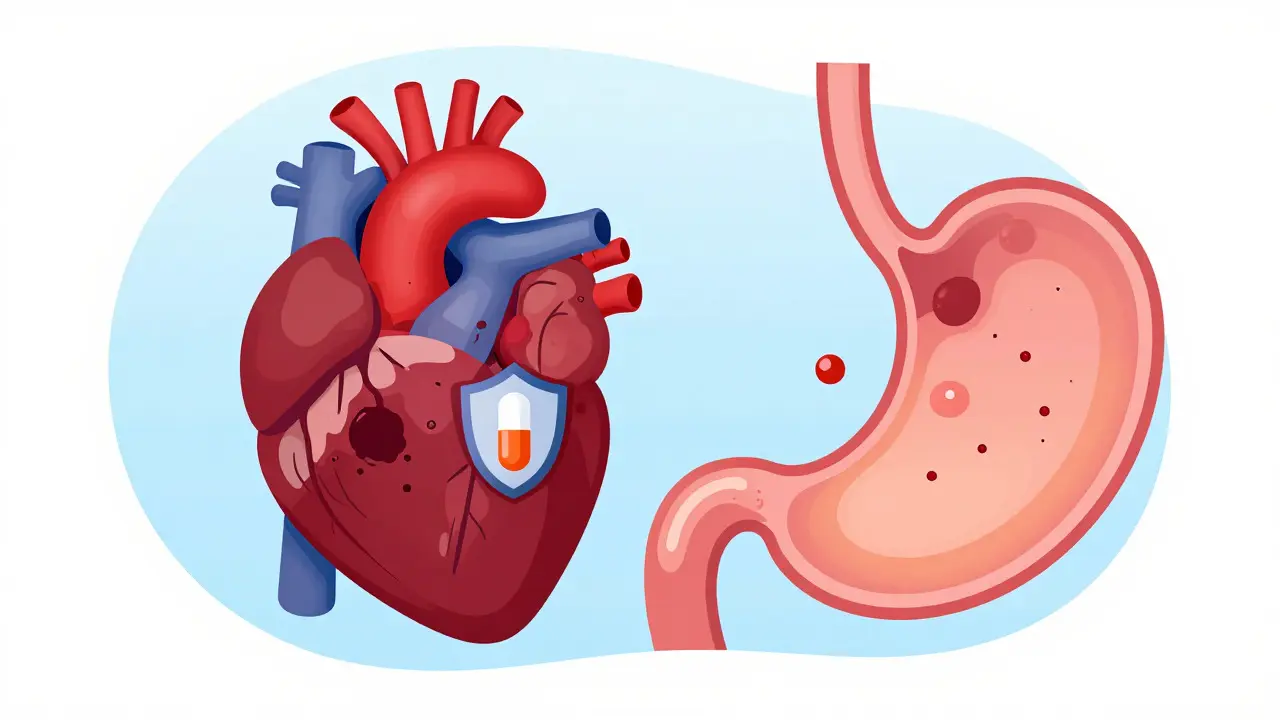
Take a look at your medicine cabinet. If you or a loved one has had a heart attack, stroke, or stent placement, chances are there is a small white pill sitting in that bottle. These are antiplatelet medications, drugs designed to keep blood from clotting too easily. They save lives by preventing deadly cardiovascular events. But they come with a trade-off: they make bleeding more likely. The most common and dangerous side effect? Gastrointestinal (GI) bleeding.
You might wonder why doctors prescribe these if the stomach lining can get damaged. It’s because the risk of another heart attack usually outweighs the risk of a bleed-but only if you manage both sides of the equation. This guide breaks down how these drugs work, who is at highest risk for stomach issues, and exactly what you can do to protect your gut while keeping your heart safe.
How Antiplatelet Drugs Work and Why They Hurt Your Stomach
To understand the risk, you need to know what the drug is actually doing. Aspirin is the oldest player here. It works by permanently blocking an enzyme called cyclooxygenase-1 in your platelets. Since platelets don’t have nuclei, they can’t fix this blockage. So, for their entire lifespan of about 7 to 10 days, those platelets are disabled. This prevents them from clumping together to form clots.
The other major group is called P2Y12 inhibitors. This includes clopidogrel (brand name Plavix), prasugrel, and ticagrelor. Instead of blocking enzymes, these drugs block specific receptors on the platelet surface where adenosine diphosphate (ADP) binds. When ADP binds, it tells platelets to activate. By blocking this signal, the drug keeps platelets calm.
So, why does this lead to stomach bleeding? Your stomach lining is constantly exposed to acid and digestive enzymes. Normally, tiny micro-hemorrhages happen in the gastric mucosa, but healthy platelets seal them up instantly. When you take antiplatelet meds, that sealing mechanism is impaired. Small cuts stay open longer. Over time, this can progress to ulcers or significant bleeding. A study published in JAMA Network Open in 2023 found that about 1% of patients experience overt GI bleeding within the first 30 days of therapy after a procedure like a stent placement. That number sounds low, but when you consider millions of people take these drugs daily, it adds up to thousands of hospitalizations every year.
Comparing the Risks: Aspirin vs. P2Y12 Inhibitors
Not all antiplatelet drugs carry the same level of GI risk. Many patients assume aspirin is the worst offender because it’s been around longest, but the data tells a nuanced story.
| Medication Class | Specific Drug | Relative GI Injury Risk | Key Mechanism of Harm |
|---|---|---|---|
| Cyclooxygenase Inhibitor | Aspirin | Moderate | Systemic inhibition of thromboxane A2; enteric coating reduces local damage but not systemic risk |
| P2Y12 Inhibitor | Clopidogrel | High (HR 1.8 vs Aspirin) | Impairs ulcer healing by suppressing platelet-derived growth factor release |
| P2Y12 Inhibitor | Ticagrelor | Very High (+30% vs Clopidogrel) | More potent antiplatelet effect; reversible binding leads to higher overall bleeding incidence |
Clopidogrel is particularly interesting. While it doesn’t directly irritate the stomach lining like non-enteric-coated aspirin might, it actively slows down the healing process. Platelets release growth factors that help repair tissue. By inhibiting platelets, clopidogrel inadvertently removes these healing aids. Research shows that patients on clopidogrel have a hazard ratio of 1.8 for developing high-risk GI phenotypes compared to those on aspirin alone. Ticagrelor, which is newer and more potent, pushes the risk even higher, increasing bleeding complications by roughly 30% compared to clopidogrel in large trials like PLATO. However, this comes with a benefit: ticagrelor reduces stent thrombosis by 50% compared to clopidogrel. It’s a classic medical trade-off: better heart protection versus higher bleeding risk.
Identifying Your Personal Risk Factors
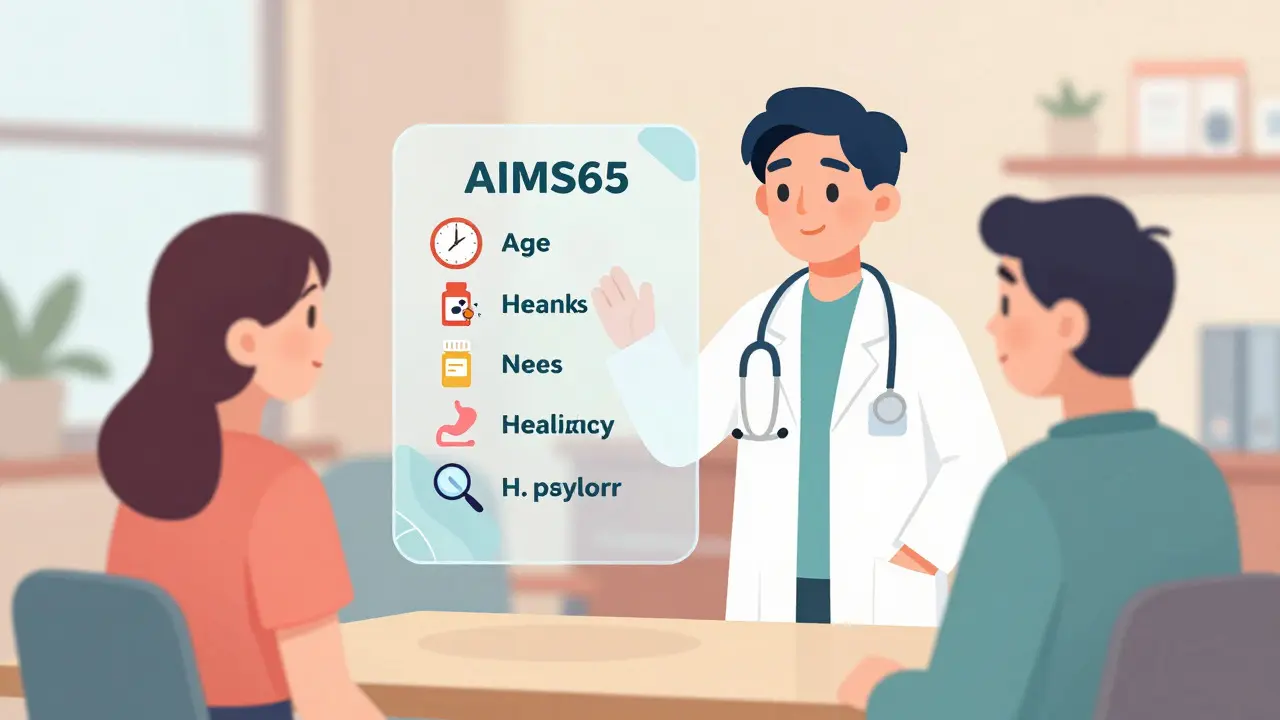
Not everyone who takes these pills will bleed. Risk is highly individual. Doctors use specific scoring systems to gauge how vulnerable you are. One common tool is the AIMS65 score, which looks at five factors: Albumin levels below 3.0 g/dL, INR above 1.5, altered mental status, systolic blood pressure of 90 mmHg or lower, and age 65 or older. A score of 2 or higher suggests a higher mortality risk if bleeding occurs, prompting more aggressive monitoring.
Beyond acute scores, chronic risk factors matter just as much. You are at higher risk for GI bleeding if you:
- Are over 65 years old.
- Have a history of peptic ulcers or GI bleeding.
- Take other blood thinners (like warfarin) or NSAIDs (like ibuprofen or naproxen).
- Are on "dual antiplatelet therapy" (DAPT), meaning you take both aspirin and a P2Y12 inhibitor. DAPT increases bleeding risk by 30-50% compared to taking just one drug.
- Have a confirmed infection with Helicobacter pylori (H. pylori).
If you check off two or three of these boxes, your doctor should be discussing GI protection strategies with you proactively, not waiting for you to vomit blood.
Strategies for Gastrointestinal Protection
So, how do we keep the heart protected without wrecking the stomach? The gold standard is adding a Proton Pump Inhibitor (PPI). PPIs like omeprazole, esomeprazole, or pantoprazole reduce stomach acid production, giving the mucosal lining a chance to heal and stay intact.
A 2019 survey of gastroenterologists found that 89% routinely prescribe PPIs for patients on antiplatelet therapy who have a prior ulcer history. Even among those without ulcers, 62% prescribe PPIs if multiple risk factors are present. For patients already on clopidogrel, case series show that adding esomeprazole 40mg daily can achieve 92% ulcer healing rates at 8 weeks.
But wait-doesn’t the FDA warn about interactions between PPIs and clopidogrel? Yes, and it’s a source of confusion. Clopidogrel is a prodrug; it needs to be activated by liver enzymes (specifically CYP2C19) to work. Some PPIs inhibit this enzyme. Theoretically, this could reduce clopidogrel’s effectiveness. However, clinical relevance remains debated. The FDA acknowledged in 2010 that the interaction's impact on real-world outcomes was uncertain. Current guidelines suggest that if you must take both, choosing a PPI with less CYP2C19 inhibition (like pantoprazole) or separating the dosing times may mitigate the risk, though evidence is mixed. Most experts agree that the benefit of preventing a severe GI bleed often outweighs the theoretical reduction in antiplatelet efficacy, especially in high-risk patients.
What to Do If Bleeding Occurs
Let’s say the worst happens. You notice black, tarry stools (melena) or coffee-ground vomit. What now? The biggest mistake patients make is stopping their antiplatelet medication immediately. Counterintuitively, stopping aspirin during a GI bleed episode does not improve bleeding outcomes and may increase mortality by 25%, according to a landmark RCT in The Lancet. This is because the primary goal is still preventing a fatal heart event.
Here is the general protocol recommended by the American College of Gastroenterology (ACG) and Canadian Association of Gastroenterology in their 2023 guidelines:
- Do not stop aspirin unless directed by a specialist. Continue it for secondary cardiovascular protection.
- Hold P2Y12 inhibitors temporarily. If you are on clopidogrel, prasugrel, or ticagrelor, doctors typically hold the dose for 5-7 days during active bleeding to allow hemostasis.
- Start high-dose PPI therapy. Often IV initially (e.g., esomeprazole 40mg twice daily), then transition to oral.
- Restart antiplatelet therapy quickly. Once bleeding is controlled (usually within 24-72 hours depending on stability), restart the P2Y12 inhibitor as soon as clinically possible.
- Avoid platelet transfusions. Unless there is life-threatening hemorrhage, platelet transfusions are generally discouraged. Studies show they may actually increase mortality in patients on antiplatelet agents by overwhelming the system with new, uninhibited platelets that trigger further clotting instability.
This approach balances the immediate threat of bleeding with the long-term threat of cardiovascular collapse.
Emerging Trends and Future Directions
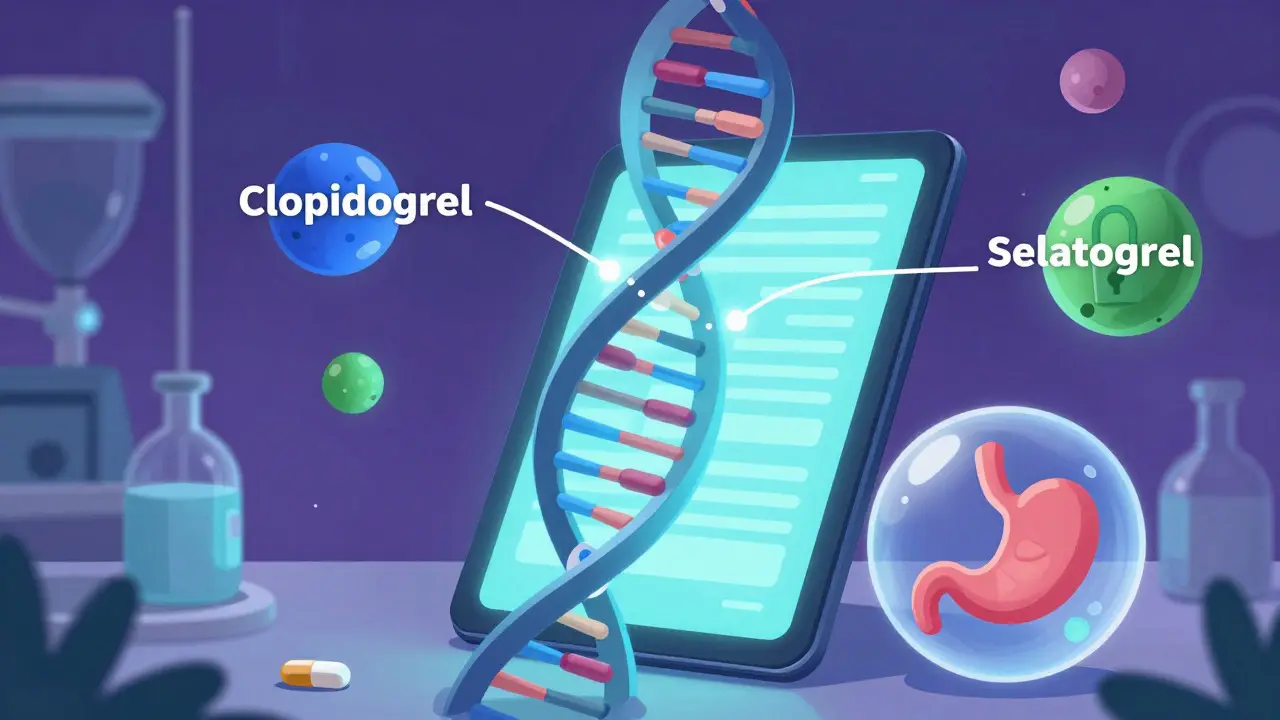
Medicine is moving toward personalization. One area gaining traction is pharmacogenomics. About 15-20% of people are "poor metabolizers" of clopidogrel due to genetic variations in the CYP2C19 gene. For these individuals, clopidogrel doesn’t work well, leading to higher stent thrombosis risk, yet they still face the GI side effects. Genotyping can identify these patients early, allowing doctors to switch them to alternative agents like ticagrelor or prasugrel, which don’t rely on CYP2C19 activation. This could spare poor metabolizers from ineffective therapy and potentially lower GI risks associated with trying to compensate for non-response.
Newer drugs are also in development. Selatogrel, currently in Phase III trials, targets a different receptor (PAR-1) and shows 35% lower GI injury in preclinical models compared to ticagrelor. If approved, it could offer a safer profile for patients with compromised gastric health. Additionally, researchers are looking at biomarkers like serum pepsinogen and gastrin-17 to predict who is at highest risk for GI injury before symptoms start. As Dr. Lauren B. Gerson of Stanford University noted, we are moving toward routine use of these biomarkers to target protective strategies precisely where they are needed.
For now, the best defense is awareness. Know your risk factors, talk to your doctor about PPI co-prescription if you’re high-risk, and never stop your heart meds without professional guidance. The balance between protecting your heart and your stomach is delicate, but with the right strategy, you can navigate it safely.
Should I stop taking aspirin if I have a stomach ulcer?
Generally, no. If you are taking aspirin for secondary prevention (after a heart attack or stroke), stopping it increases your risk of dying from a cardiovascular event. Instead, treat the ulcer with a proton pump inhibitor (PPI) and continue the aspirin under medical supervision.
Is enteric-coated aspirin safer for the stomach than regular aspirin?
Enteric-coated aspirin bypasses the stomach and dissolves in the intestine, reducing direct local irritation. However, it still has systemic antiplatelet effects that impair clotting throughout the body, including in the stomach lining. It is slightly safer locally but does not eliminate the overall bleeding risk.
Can I take ibuprofen with my antiplatelet medication?
It is generally best to avoid NSAIDs like ibuprofen and naproxen if you are on antiplatelet therapy. NSAIDs independently increase GI bleeding risk and can interfere with aspirin’s antiplatelet effect. Acetaminophen (paracetamol) is usually the preferred pain reliever for patients on these medications.
How long do I need to take a PPI for GI protection?
For patients with high-risk features (prior ulcers, H. pylori infection, or multiple risk factors), guidelines recommend continuing PPI therapy indefinitely as long as you remain on antiplatelet therapy. For lower-risk patients, duration may be shorter, but this should be determined by your physician based on your specific history.
Does clopidogrel interact with all PPIs equally?
No. Omeprazole and esomeprazole have stronger potential to inhibit the CYP2C19 enzyme, which activates clopidogrel. Pantoprazole has less interaction potential. However, the clinical significance of this interaction is debated, and many doctors prioritize the protective benefit of the PPI over the theoretical reduction in clopidogrel efficacy.