
That dusty box in your bathroom cabinet or the drawer you haven't opened since last winter? It’s probably hiding a ticking time bomb of expired medicines. We’ve all been there-reaching for an antihistamine during a pollen storm or grabbing ibuprofen for a headache, only to squint at the tiny print on the bottle. Is it safe? Will it work? Or is it just taking up space?
The truth is, not all expired over-the-counter (OTC) first-aid medications are created equal. Some lose their punch slowly, while others become useless-or even dangerous-overnight. Knowing the difference between a pill that might still help and a liquid that could infect you is the key to keeping your home safe. Let’s break down exactly when to replace what, based on how these drugs actually degrade.
The Hard Rule: Never Risk Emergency Medications
Some medications aren’t just about comfort; they’re about survival. When seconds count, you cannot afford a sub-potent dose. The U.S. Food and Drug Administration (FDA) and major health organizations draw a hard line here: Epinephrine auto-injectors (like EpiPens), nitroglycerin tablets, and certain rescue inhalers must be replaced immediately upon expiration.
Why? Because they degrade fast. A 2021 study in the Journal of Allergy and Clinical Immunology found that epinephrine solutions can lose 20-30% of their potency within just six months of their printed expiration date. If you’re treating a severe allergic reaction, that missing third of the drug could mean the difference between life and death. Similarly, nitroglycerin tablets oxidize rapidly once the bottle is opened. The Cleveland Clinic advises replacing them every 3 to 6 months after opening, regardless of the date on the box.
If you rely on these items, set a calendar reminder for 30 days before they expire. Do not wait. In a true emergency, using an expired epinephrine pen is better than nothing, as noted by FDA officials, but it should never be your plan. Replace them proactively.
Liquids and Creams: The Hidden Danger Zone
If pills are generally stable, liquids and creams are the weak links in most first-aid kits. This isn’t just about losing effectiveness; it’s about contamination. Once you open a bottle of antibiotic suspension, eye drops, or ear drops, the clock starts ticking much faster than the label suggests.
Here’s why: moisture and air invite bacteria. A 2023 FDA laboratory analysis revealed that hydrocortisone cream samples tested six months past expiration showed bacterial contamination in 47% of cases. Using a contaminated cream on a cut or rash doesn’t heal it-it introduces new infections. The Institute for Safe Medication Practices has documented dozens of skin infections linked specifically to expired topical antibiotics where degraded formulations allowed bacterial growth.
Hydrogen peroxide is another tricky one. While the bottle might say it expires in two years, the American Chemical Society notes that hydrogen peroxide maintains its effectiveness for only about 30 days after opening. After that, it breaks down into plain water. You might be pouring H2O on your wound, thinking it’s disinfecting, when it’s doing absolutely nothing.
- Eye and Ear Drops: Discard 28 days after opening, or sooner if cloudy.
- Liquid Antibiotics: Follow the specific "discard after" date on the pharmacy label, usually 7-14 days.
- Topical Creams/Ointments: Replace if separated, discolored, or smelly. Generally toss after 6 months of use.
Solid Pills: The "Maybe" Category
This is where things get less black-and-white. Solid-dose medications like ibuprofen, acetaminophen (Tylenol), aspirin, and diphenhydramine (Benadryl) are chemically stable. They don’t rot. They don’t grow bacteria easily. A famous U.S. Department of Defense study, the Shelf Life Extension Program, found that 88% of tested solid medications retained at least 90% of their potency well past their expiration dates-some even up to 15 years later if stored perfectly.
So, can you take an expired painkiller? Probably. But with caveats. A 2020 University of Florida study showed that antihistamines like Benadryl maintain about 85% efficacy for roughly 18 months post-expiration. That means if you need full relief from hives, you might not get it. For minor headaches, an expired ibuprofen tablet taken six months late is unlikely to harm you, but it might not stop the pain either.
The risk here isn’t toxicity-expired pills rarely become poisonous. The risk is treatment failure. If you have a fever that needs breaking or inflammation that needs calming, a weaker pill leaves you vulnerable. Save these for minor issues, and don’t rely on them for serious conditions.
| Medication Type | Risk Level | Action Required |
|---|---|---|
| Epinephrine Auto-Injectors | Critical | Replace immediately upon expiration |
| Nitroglycerin Tablets | Critical | Replace every 3-6 months after opening |
| Eye/Ear Drops | High | Discard 28 days after opening |
| Liquid Antibiotics | High | Follow pharmacy discard date (usually 7-14 days) |
| Hydrogen Peroxide | Medium | Replace 30 days after opening |
| Solid Pain Relievers (Ibuprofen/Acetaminophen) | Low | Safe for minor use up to 6-12 months post-expiration |
| Antihistamines (Benadryl) | Low | May retain ~85% efficacy for 18 months post-expiration |
Storage Matters More Than You Think
You can have the freshest meds in the world, but if you store them in the bathroom, you’re cutting their lifespan in half. Heat and humidity are the enemies of chemical stability. A 2022 Johns Hopkins study demonstrated that medications stored in typical bathroom cabinets (average 75% humidity, 28°C/82°F) lost potency 40% faster than those kept in bedroom drawers (45% humidity, 22°C/72°F).
Move your first-aid kit out of the bathroom. Keep it in a cool, dry place away from direct sunlight. Also, keep meds in their original containers. Transferring pills to plastic organizers strips away desiccant packets (those little silica gel bags that absorb moisture) and exposes the drugs to air. The University of Michigan College of Pharmacy notes that repackaged pills have a shelf life 50% shorter than those in original packaging.
How to Dispose of Expired Meds Safely
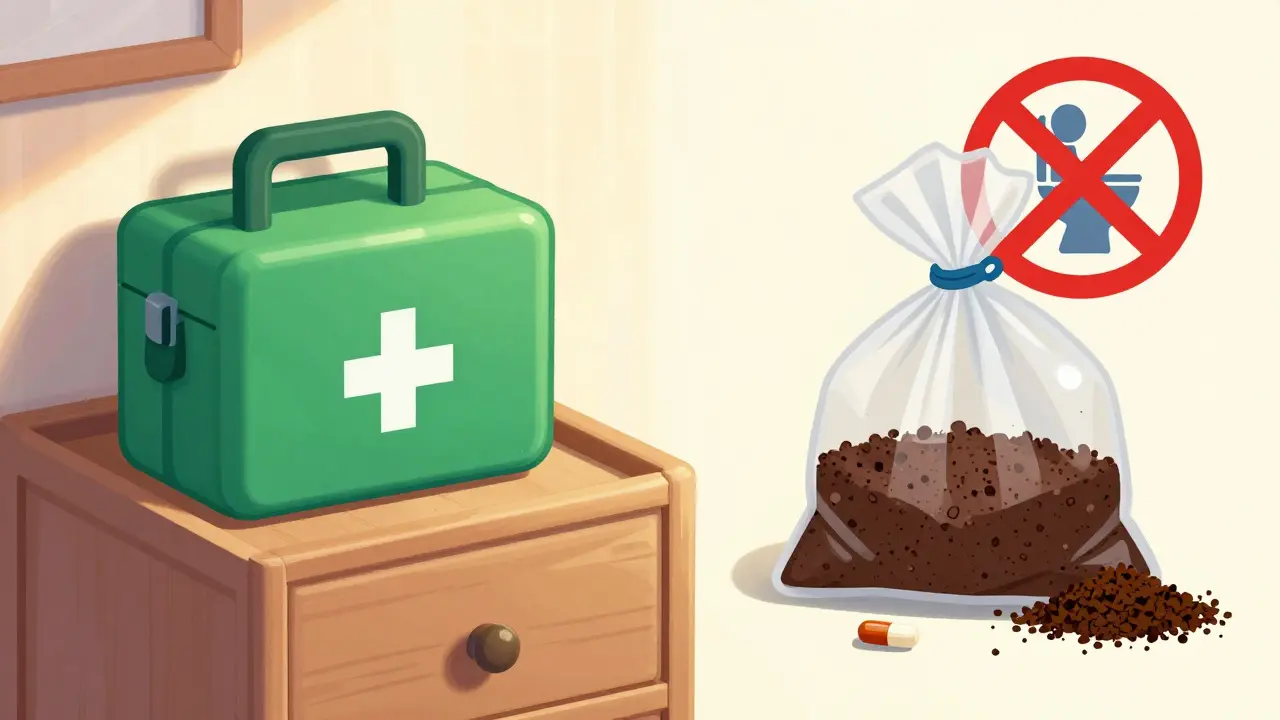
Once you’ve decided to toss something, don’t just throw it in the trash or flush it down the toilet. Flushing contaminates water supplies, and trash bins are accessible to kids and pets. The DEA’s National Prescription Drug Take Back Day events collected over 1 million pounds of expired meds in October 2023 alone, showing a growing awareness of proper disposal.
For most OTC household meds, the EPA recommends mixing them with an unappealing substance like used coffee grounds, cat litter, or dirt in a sealed plastic bag before throwing them in the trash. This makes them less likely to be retrieved and ingested. Check if your local pharmacy or community has a drop-off box for pharmaceutical waste-many do, and it’s the safest option for controlled substances or large quantities.
Build a Routine: The Quarterly Check
The American Red Cross recommends reviewing your first-aid kit annually, but I suggest quarterly. Set a recurring alarm on your phone. Open the kit. Look for three things:
- Discoloration or Odor: If pills look cracked, faded, or smell strange, toss them.
- Expiration Dates: Check the "Exp" date. If it’s passed, refer to the guidelines above.
- Physical Integrity: Are bandages sticky? Is the gauze sterile? Adhesive bandages lose 40% of their stickiness after 18 months, even if unopened.
Don’t let perfection be the enemy of good. An expired ibuprofen tablet won’t kill you, but an expired EpiPen might fail you when you need it most. Prioritize safety-critical items, store everything correctly, and keep your kit fresh. Your future self will thank you when the next cut, bug bite, or allergic reaction happens.
Is it dangerous to take expired Tylenol or Ibuprofen?
Generally, no. Solid pain relievers like acetaminophen and ibuprofen do not typically become toxic when expired. They simply lose potency over time. However, they may not provide full pain relief. Avoid taking them if they look discolored, smell odd, or are significantly past their date (more than 2 years).
Can I use expired eye drops?
No. Eye drops are high-risk because they can harbor bacteria once opened. Most ophthalmologists recommend discarding eye drops 28 days after opening, regardless of the expiration date on the bottle. Using old eye drops can lead to serious eye infections.
How long does hydrogen peroxide last after opening?
Hydrogen peroxide degrades quickly once exposed to air. It remains effective for only about 30 days after opening. After that, it turns into plain water and loses its disinfecting properties. Store it in a dark bottle in a cool place to maximize its short lifespan.
Should I flush expired medications down the toilet?
Only if the medication label specifically instructs you to do so (usually for highly addictive opioids). For most OTC first-aid meds, flushing contaminates water supplies. Instead, mix them with unappealing substances like coffee grounds or cat litter, seal them in a bag, and throw them in the trash, or use a pharmacy take-back program.
Where is the best place to store my first-aid kit?
Avoid bathrooms due to heat and humidity. Store your first-aid kit in a cool, dry place like a bedroom drawer or a closet. Keep medications in their original containers with desiccant packets intact to preserve potency longer.