

Imagine balancing your mental health on a tightrope where shifting your footing slightly could cause you to fall. For many patients managing complex conditions, psychiatric medication combinations aren't just pills; they are precise chemical architectures keeping symptoms at bay. When one medication fails, doctors often add another layer-a practice known as polypharmacy. While this strategy saves thousands from the depths of treatment-resistant depression or severe anxiety, swapping brand-name drugs for generic alternatives can sometimes disrupt this delicate balance. It is a reality that millions face: cost-saving measures that might inadvertently destabilize their recovery.
The Science Behind Combination Therapy
It wasn't always standard practice to stack medications. In the early 2000s, the STAR*D trial conducted by the National Institute of Mental Health changed the game entirely. This massive study tracked patients with major depressive disorder and found a sobering statistic: approximately 30-40% did not respond adequately to their first antidepressant. That number didn't go away when they switched brands; it led clinicians to combine classes. Today, guidelines from the American Psychiatric Association endorse combination therapy as a vital second-line option. The goal isn't just symptom management; it is remission. Studies suggest that adding a second agent can improve remission rates by 15-20% compared to using a single drug alone. This works because different targets require different keys. If an SSRI addresses serotonin, pairing it with something affecting dopamine or norepinephrine can plug holes left open by monotherapy.
| Primary Medication | Augmenting Agent | Clinical Goal |
|---|---|---|
| SSRI/SNRI | Aripiprazole (Abilify) | Treatment-Resistant Depression |
| Olanzapine | Fluoxetine (Prozac) | Bipolar/Mood Stabilization |
| SSRI | Buspirone | Residual Anxiety Symptoms |
| Bupropion | SSRI | Sexual Dysfunction Management |
Understanding Specific Drug Pairings
Not all combinations are created equal. Some have robust approval pathways. Take the pairing of an antidepressant like Escitalopram (Lexapro) with low-dose Aripiprazole. In November 2014, the FDA approved Aripiprazole specifically for adjunctive treatment in Major Depressive Disorder. Clinical trials showed a 24.3% remission rate compared to just 11.2% when placebo was used instead of the antipsychotic. Another classic example is Symbyax, a fixed-dose combination of Olanzapine and Fluoxetine approved in 2003. By combining them into one pill, it reduces the "pill burden"-the sheer number of tablets you must swallow daily. For anxiety, doctors frequently mix Sertraline (Zoloft) with Buspirone. Unlike benzodiazepines which can lead to dependence, Buspirone targets partial serotonin receptors safely to quell residual jitters.
Even side effects can become a strategy. Sexual dysfunction is a notorious complaint of SSRIs. To fix this without quitting the mood stabilizer, clinicians often add Bupropion (Wellbutrin). Research published in the Journal of Clinical Psychiatry indicates this specific combo improves sexual function by 60-70% while maintaining the antidepressant effect. However, mixing chemicals means interacting chemistry. For instance, taking Fluvoxamine (Luvox) alongside Olanzapine increases blood levels of the latter by 54%. That kind of pharmacokinetic shift can mean the difference between feeling well and overdosing.
The Generic Substitution Challenge
This is where the story gets complicated. You likely know that generics are supposed to be identical to brand names. The law requires them to have the same active ingredient with 80-125% bioequivalence. On paper, that sounds safe. In practice, particularly with psychotropics, the math is riskier. The issue lies in the "narrow therapeutic index." Drugs like Lithium Carbonate must stay within a tiny blood level range (0.6-1.2 mmol/L). A slight variance in absorption due to generic formulation differences can push a patient out of safety zones. In 2019, a landmark study analyzing nearly 30,000 patients found those switched to generic SSRIs had a 22.3% higher rate of treatment failure than those staying on brands.
Bioequivalence is the measure of similarity between two drug formulations regarding the rate and extent of absorption. For psychiatric drugs, the standard 80-125% window allows for significant fluctuation. Consider a 2018 case series from the University of British Columbia where three bipolar patients switched from branded lithium carbonate to generic. Within two weeks, despite identical dosing, serum lithium levels dropped significantly, triggering mania recurrence. The body doesn't see the molecule in isolation; it sees how the pill dissolves. Generic manufacturers may use different bead-release technologies. For extended-release Venlafaxine (Effexor XR), altering the bead technology changes the 2:1 ratio of serotonin to norepinephrine reuptake inhibition critical to its efficacy. When you are combining multiple meds, tweaking one variable can cascade into total destabilization.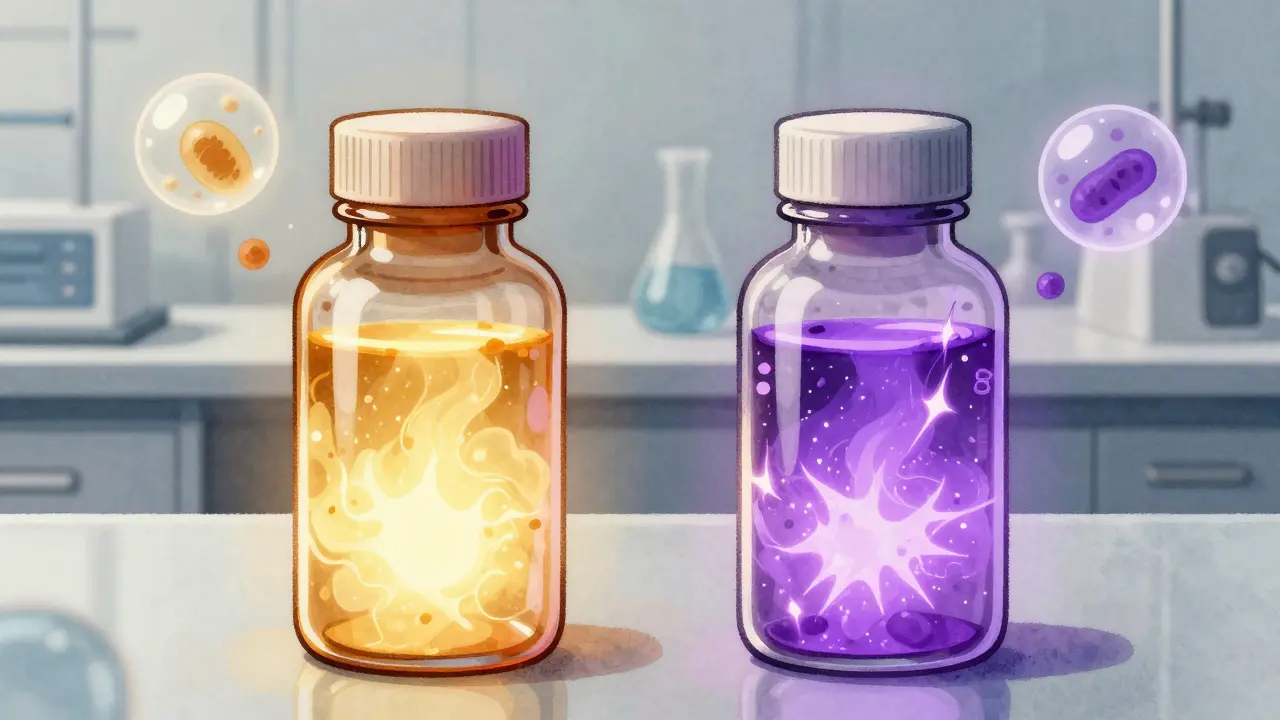
Risks of Switching Formulations
Automatic substitution is often handled by pharmacy software behind the scenes. The prescriber writes the script, and the pharmacist grabs whatever is cheapest in stock. This lack of visibility is dangerous. Dr. Charles Popkin of New York-Presbyterian Hospital stated in 2021 that the accepted bioequivalence window is unacceptable for psychotropic combinations. Patients have voiced this loudly online. Threads discussing generic switches reveal patterns of "breakthrough symptoms"-depression returning aggressively after months of stability. One review noted that switching to a generic version of Abilify made obsessive thoughts return "with full force." Another concerning trend involves generic Bupropion XL. The FDA issued warnings in 2012 regarding inconsistent drug release profiles in certain generic versions. Without the specialized coating of the brand name, patients experience spikes in drug levels followed by crashes, causing mood swings that feel indistinguishable from natural instability. In combination therapy, these fluctuations can interact with other agents, such as mood stabilizers, leading to unexpected toxicity or withdrawal-like states.
Managing Safety Protocols
We can't ban generics, especially considering cost containment pressures are real. Medicaid patients, for example, receive generic psychotropics at much higher rates. The solution lies in better monitoring protocols. The Massachusetts General Hospital Psychopharmacology Education Program recommends a three-step safety process. First, document baseline symptom severity using tools like the Montgomery-Åsberg Depression Rating Scale before any switch. Second, never swap medications during an acute episode; wait for stability. Third, schedule follow-ups strictly within 7-10 days. Small changes happen fast, and catching them early prevents hospitalization. Some regions are adopting stricter laws. California passed legislation requiring pharmacists to notify prescribers when substituting generic psychotropic drugs in patients on multiple prescriptions. Similarly, the Department of Veterans Affairs implemented a policy mandating that patients on combination therapy with narrow therapeutic index drugs stay with the same generic manufacturer for at least 12 months. Preliminary data showed this reduced psychiatric hospitalizations by nearly 19%. As we look toward 2026, the FDA is exploring narrower bioequivalence ranges (90-111%) for complex extended-release formulations to close this gap. Until regulations catch up everywhere, communication remains your best defense.

Patient Decision-Making
If you rely on medication combinations, you hold power over what fills your bottle. Ask your doctor to specify "Dispense as Written" (DAW) if you find stability on a specific brand or generic manufacturer. Conversely, authorized generics are emerging as a middle ground. These are genuine brand-name molecules sold without the brand label, often at lower prices, offering the consistency of the original maker. About 43% of combination therapies now have authorized generic options available. It is also crucial to track lot numbers. Identifying the exact manufacturer (e.g., Teva vs. Mylan) resolved unexplained toxicity in a documented case report involving Lithium and Carbamazepine. Knowing exactly what is inside helps your provider diagnose issues quickly rather than blaming illness progression.
Frequently Asked Questions
Is it safe to switch between generic manufacturers?
While generics pass FDA standards, switching manufacturers carries risks in psychiatry. A 2020 study indicated patients on combination therapy involving Lithium had a 34% higher risk of hospitalization after generic substitution compared to stable monotherapy. Consistency is key for safety.
What is a narrow therapeutic index?
This refers to medications where the dose required for effect is very close to the toxic dose. Lithium and Valproate fall in this category. Minor changes in absorption caused by generic formulation shifts can easily push blood levels out of the safe range.
How do I protect my current medication regimen?
Request the "same manufacturer" status from your pharmacy, ask your doctor for "brand medicine necessary" designation if needed, or inquire about authorized generic options which offer brand-name consistency at lower costs.
Does insurance cover brand-name combinations?
Coverage varies widely. Commercially insured patients access brands at higher rates than Medicaid recipients. Cost-sharing subsidies exist, but you must proactively seek them. Many formularies still prioritize generics regardless of clinical need.
Are there new rules for generic psychotropics?
Yes. As of recently, states like California require notification of prescribing doctors upon substitution. The FDA is also proposing tighter bioequivalence bands (90-111%) for extended-release antidepressants used in combination therapy starting in recent years.