
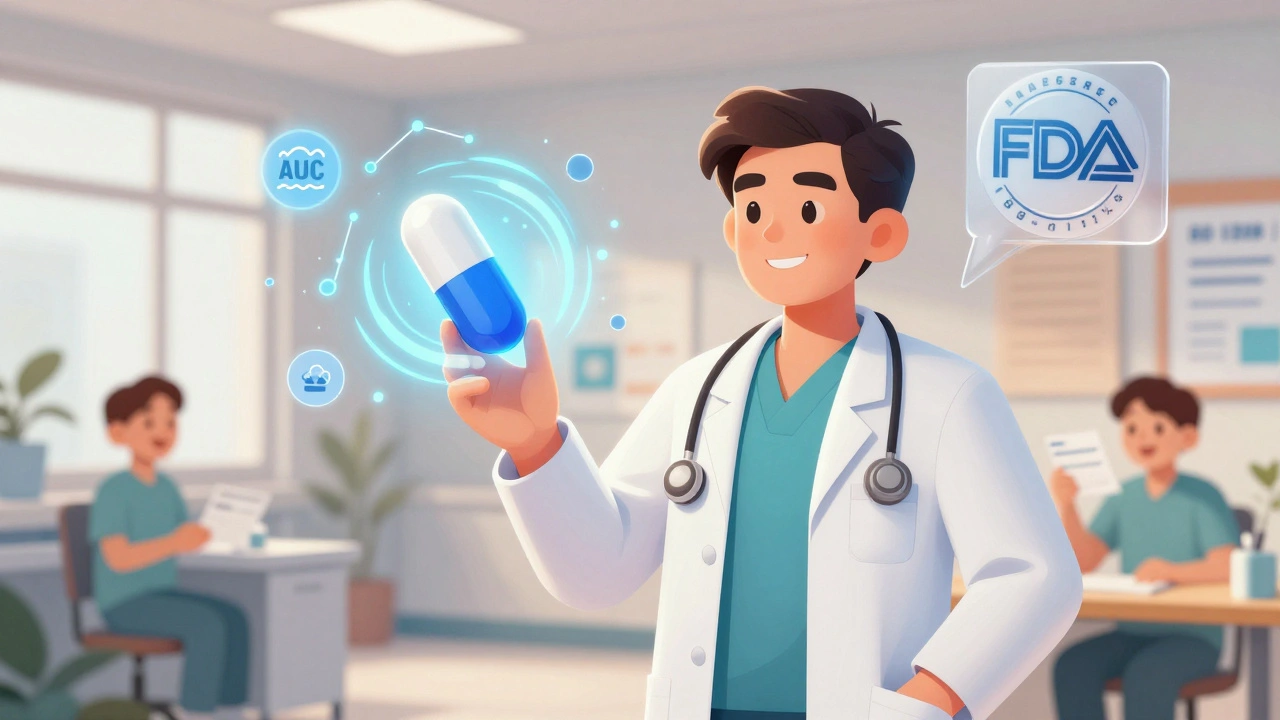
Generic drugs are prescribed in 9 out of 10 U.S. pharmacy fills, yet many clinicians still hesitate to recommend them. Why? It’s not because they’re less effective-it’s because they don’t fully understand how they work, what the data says, or how to talk about them with patients. The gap isn’t in the science. It’s in the education.
What Really Makes a Generic Drug Equivalent?
A generic drug isn’t a copy. It’s not a cheaper version with weaker ingredients. It’s the same medicine, approved under the same strict rules as the brand-name version. The FDA requires that generics have the exact same active ingredient, strength, dosage form, and route of administration. That’s it. No exceptions.The real test? Bioequivalence. To get approval, a generic must show that it delivers the same amount of active ingredient into the bloodstream at the same rate as the brand-name drug. The FDA uses a 90% confidence interval of 80% to 125% for two key measurements: AUC (total exposure) and Cmax (peak concentration). That’s not a 20% margin for error-it’s a tight, scientifically validated window. If a generic falls outside this range, it doesn’t get approved.
And yet, a 2020 survey found that 27% of prescribers believed generics could contain up to 25% less active ingredient. That’s a myth. The FDA doesn’t allow it. The inactive ingredients-fillers, dyes, coatings-can differ. But they’re tested to make sure they don’t affect absorption, safety, or effectiveness. Even if a patient switches from one generic to another, they’re still getting the same therapeutic effect.
Why Do Clinicians Still Doubt Generics?
The problem isn’t the drugs. It’s the messaging. Many doctors were trained to think in brand names. Lopressor. Zoloft. Lipitor. These names stick. Generic names-metoprolol, sertraline, atorvastatin-sound clinical, unfamiliar. In residency, trainees learn generics. But in practice, attending physicians still say, “Prescribe the brand.”That confusion trickles down. A 2022 Reddit thread from a third-year med student revealed the real issue: “I nearly prescribed two doses of metoprolol because my attending said ‘Lopressor twice daily’ without specifying it was the same as the generic I’d just ordered.”
Other misconceptions run deep. Nearly half of prescribers wrongly believe generics must have identical inactive ingredients. Over a third think manufacturing standards are lower. These aren’t just small errors-they shape prescribing habits. A 2017 study found 68% of physicians had at least some concern about generic equivalence, even though the FDA’s approval process is more rigorous than ever.
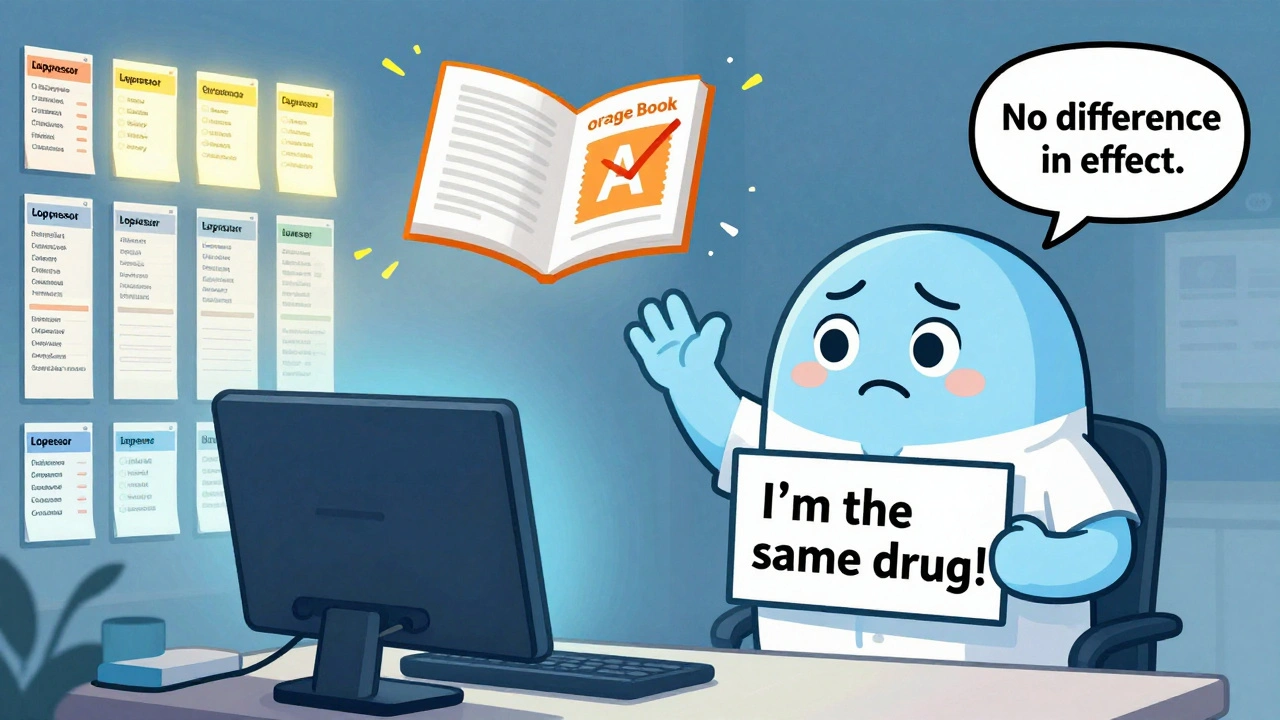
And then there’s the Orange Book. It’s the FDA’s official list of approved drugs with therapeutic equivalence ratings. An “A” rating means interchangeable. A “B” rating means not. Yet, only 22% of clinicians know where to find it-or how to read it. That’s like a mechanic not knowing how to read a diagnostic code.
The Cost and Clinical Impact of Getting It Right
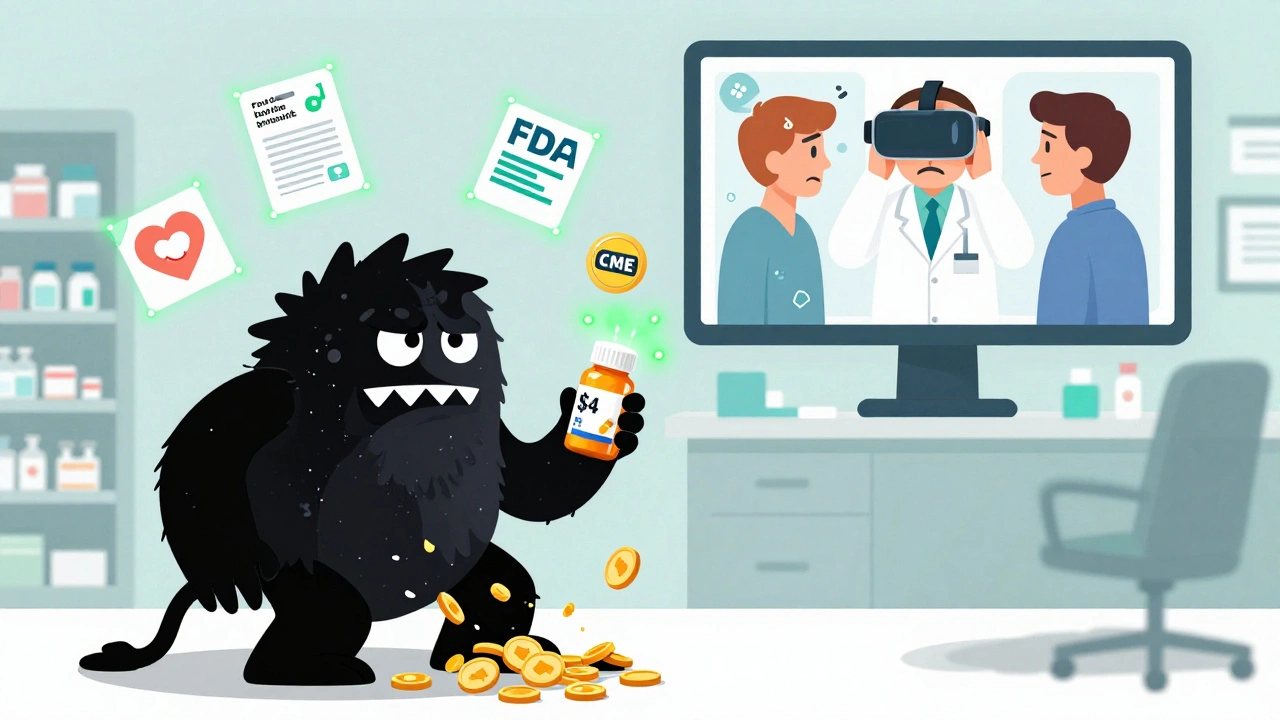
In 2022, generic drugs saved the U.S. healthcare system $2.2 trillion over the past decade. That’s not a rounding error. That’s enough to cover the entire Medicare Part D program for five years.But savings aren’t the only win. Patient adherence improves dramatically when generics are prescribed. Studies show patients are 35% more likely to start-and keep taking-a medication if it’s generic. Why? Cost matters. A $4 generic versus a $150 brand-name drug changes everything for someone choosing between pills and groceries.
And here’s the kicker: patient outcomes improve not just because generics are cheaper, but because clinicians who endorse them see fewer nocebo effects. Harvard Medical School research found that when doctors explicitly told patients, “This generic is exactly the same,” patient-reported side effects dropped by 18%. That’s not placebo. That’s expectation. If a clinician hesitates, the patient picks up on it. And then they stop taking the drug.
Psychiatric medications are a prime example. Antidepressants and antipsychotics often have high discontinuation rates. But when providers confidently prescribe generics, adherence jumps. Same with chronic conditions like hypertension and diabetes. If a patient can’t afford their meds, they won’t take them. Generics fix that.
What Works in Provider Education?
Not all education is equal. Handouts? Webinars? Those help a little. But the real change comes from active, repeated learning.A 2021 JAMA Internal Medicine study compared two groups: one got a PDF about generics. The other got four 90-minute interactive sessions over six months, using real case studies-patients who stopped their meds, patients who blamed side effects on generics, patients who couldn’t afford their prescriptions.
At six months, the interactive group had 42% higher knowledge retention. They were also 29% more likely to prescribe generics on new prescriptions.
Why? Because they practiced. They role-played. They saw the impact. They learned how to answer: “Is this really the same?”
Successful programs embed education into workflow. UCSF Medical Center used EHR prompts to suggest generics at the point of prescribing. Within a year, brand-name statin prescriptions dropped by 37%. No extra meetings. No mandatory training. Just a simple nudge at the right moment.
Some health systems are going further. The FDA’s new virtual reality modules let clinicians simulate conversations with patients who are skeptical. One scenario: a diabetic patient refuses a generic metformin because “it made my cousin sick.” The clinician learns how to respond with data, empathy, and clarity.
Barriers Still Standing in the Way
Time is the biggest enemy. In a 2021 AMA survey, 89% of physicians said they don’t have time to learn more about generics. And with 15-minute visits, who can blame them?But the solution isn’t more hours-it’s smarter integration. AI tools like Medisafe’s EHR alerts now flag when a brand-name drug is being prescribed and suggest a generic alternative. In a 2023 pilot, this increased generic acceptance by 24%.
Another barrier? State laws. Thirty-four states let pharmacists substitute generics without telling the prescriber. But 16 states require “dispense as written” notes. That inconsistency confuses clinicians. They don’t know what’s allowed. They default to the brand to avoid liability.
And then there’s the biosimilar mess. Many providers still think biosimilars are just generics. They’re not. Biosimilars are complex biologic drugs-like insulin or Humira-that can’t be copied exactly. They’re approved under different rules. Only 31% of providers could correctly explain the difference in a 2023 FDA survey. That’s a dangerous gap.
Where to Start: Free, Practical Resources
You don’t need a grant or a committee to get started. The FDA has free, ready-to-use tools:- Generic Drug Facts Handout (148KB PDF): Simple, one-page summary for patients and staff.
- Generic Drugs and Health Equity Handout (958KB PDF): Explains how generics reduce disparities in care.
- Orange Book Online: Searchable database of therapeutic equivalence ratings.
- Generic Drugs Stakeholder Toolkit: Includes talking points, posters, and scripts for patient conversations.
These aren’t marketing materials. They’re clinical tools. The FDA built them with input from prescribers, pharmacists, and patients. Use them in your waiting room. Print them. Email them to your team. Put them in your EHR.
Also check out the Generic Pharmaceutical Association’s (GPhA) free online modules. They’re CME-accredited. No cost. No sales pitch. Just facts.
The Future Is Here
In 2025, Medicare’s Merit-based Incentive Payment System (MIPS) will start measuring generic prescribing rates. That means your performance score-and your reimbursement-could depend on how often you choose generics.Already, UnitedHealthcare is using AI to identify doctors who rarely prescribe generics. Then they send personalized learning nudges: “You prescribed 12 brand-name metformin last month. 98% of your peers switched to generic. Here’s a 5-minute video on why that’s safe.” The result? A 28% increase in generic use.
This isn’t about pushing down costs. It’s about raising quality. When clinicians understand generics, they prescribe better. Patients take their meds. Hospitals save money. Everyone wins.
The data is clear. The tools are free. The time to act isn’t tomorrow. It’s today. Your next prescription could be the one that changes a patient’s life-not because it’s expensive, but because it’s right.
Are generic drugs really as safe and effective as brand-name drugs?
Yes. The FDA requires generics to have the same active ingredient, strength, dosage form, and route of administration as the brand-name drug. They must also meet strict bioequivalence standards-proving they deliver the same amount of medicine into the bloodstream at the same rate. Over 90% of prescriptions in the U.S. are for generics, and they’ve been used safely for decades. The FDA inspects generic manufacturing plants with the same standards as brand-name facilities.
Why do some patients say generics don’t work for them?
Often, it’s not the drug-it’s the expectation. If a patient believes a generic is inferior, they may report side effects or feel it’s less effective, even when it’s not. This is called the nocebo effect. Studies show that when clinicians clearly explain that generics are equivalent, patient-reported side effects drop by up to 18%. Switching between different generic manufacturers can also cause minor variations in how a drug feels, but not in how well it works. If a patient has a true reaction, it’s usually due to inactive ingredients, not the active drug.
Can pharmacists substitute generics without my permission?
It depends on your state. In 34 states, pharmacists can substitute a generic for a brand-name drug without telling you or your prescriber. In 16 states, the prescriber must write “dispense as written” on the prescription to prevent substitution. Always check your local laws. If you have a preference, tell your pharmacist and ask them to note it in your file. You have the right to request the brand-name drug if you choose.
What’s the difference between a generic and a biosimilar?
Generics are exact copies of small-molecule drugs-like metformin or lisinopril. Biosimilars are highly similar versions of complex biologic drugs-like insulin, Humira, or Enbrel. Biologics are made from living cells, so they can’t be copied exactly. Biosimilars must prove they work the same way and have no clinically meaningful differences. They’re not interchangeable by default, and prescribers must specifically prescribe them. Many clinicians confuse the two, but they’re regulated under different rules.
How can I learn more about generics without spending hours in training?
Start with the FDA’s free Generic Drugs Stakeholder Toolkit. It includes printable handouts, patient scripts, and links to the Orange Book. You can also take free CME modules from the Generic Pharmaceutical Association (GPhA)-each takes less than 30 minutes. Embed a simple EHR prompt: “Consider generic alternative?” at the point of prescribing. Small changes like this build knowledge over time without overwhelming your schedule.

Man, I used to be one of those docs who only prescribed brand names out of habit. Then my niece got prescribed generic sertraline and her mom freaked out-thought it was some cheap knockoff. I showed her the FDA bioequivalence data and she cried. Not because she was mad-because she finally understood. That’s when it clicked for me. We’re not just prescribing pills. We’re prescribing trust.
The myth that generics have a 25% variation in active ingredient is so pervasive it’s almost cultural. I’ve seen residents argue this point with attending physicians who’ve been practicing since the 90s. It’s not ignorance-it’s institutional memory. We were taught that brand = quality, and the system never updated us. The Orange Book isn’t just a reference-it’s a relic that needs to be taught like a textbook chapter, not buried in a footnote on the EHR.
And yet, when you actually dig into the data, the variability between different batches of the same brand-name drug is often wider than the accepted range for generics. The FDA doesn’t let generics slip through unless they’re statistically indistinguishable. But we still treat them like second-class citizens. That’s not science. That’s bias dressed up as caution.
The real tragedy? Patients internalize this. They’ll refuse a generic because their aunt’s friend had a bad experience with a ‘fake’ version. We’re not just failing to educate-we’re reinforcing fear through silence.
Until we make bioequivalence a core part of residency curricula-not just a slide in a pharmacology lecture-we’re going to keep losing ground. And no, a PDF handout won’t fix it. You need case studies. Role-play. Patient stories. Real consequences.
And don’t get me started on how pharmacists are forced to substitute without telling anyone. That’s not autonomy. That’s a legal loophole that erodes trust.
Let me tell you about Mrs. Rivera. 78. Hypertensive. On lisinopril. Her daughter was paying $120 a month out of pocket. We switched her to generic. Cost: $4. She cried. Not because she was sad. Because she hadn’t missed a dose in 12 years-and now she could actually afford to keep taking it. That’s not a savings statistic. That’s someone’s life. And we act like generics are a compromise. They’re not. They’re justice.
And yes, I’ve had patients say, ‘It doesn’t feel the same.’ I say, ‘Let’s talk about what ‘feeling’ means. Is it the pill’s color? The shape? The fact that it doesn’t have a logo you recognize?’ Sometimes, it’s just grief for the old version. We owe them more than a prescription. We owe them a conversation.
Okay but real talk-why do we still call them ‘generics’? That word sounds like ‘generic brand’ at Walmart. Like it’s not even real. What if we called them ‘FDA-verified equivalents’? Or ‘bio-identical meds’? The branding is working against us. I’ve had patients refuse them because they think ‘generic’ means ‘not good enough.’ We need a rebrand. Not a marketing campaign. A clinical reframe.
Also, the Orange Book? I had to Google it. Like, actually Google it. Not because I’m dumb-because it’s not linked in my EHR. If we want this to stick, it needs to be in the flow. Not a tab you have to click through five menus to find.
And can we stop pretending biosimilars are generics? I’ve seen ER docs write ‘generic Humira’ and I want to scream. They’re not the same. They’re like comparing a Honda Civic to a Tesla. Same purpose. Totally different engineering.
I work in a VA clinic. 80% of our patients are on generics. Not because we pushed them-because they can’t afford anything else. And guess what? Their labs are better than the private practice patients on brand names. The data doesn’t lie. The fear does.
My advice? Start with one patient. Switch their statin. Watch their cholesterol. Then tell them, ‘This is the exact same drug. I’ve seen the data. You’re not getting less.’ That’s all it takes. Trust isn’t built in grand speeches. It’s built in 90-second conversations during a 15-minute visit.
Let’s be real. The reason doctors don’t prescribe generics isn’t because they don’t understand them-it’s because pharma reps show up with free pens and $50 gift cards for brand names. No one shows up with a free PDF of the Orange Book. The system is rigged. And we’re just the pawns who get blamed when patients don’t take their meds.
Also, the ‘nocebo effect’? That’s just a fancy word for ‘your doctor doesn’t believe in this either.’ If you hesitate, they’ll feel it. And then they’ll stop. Simple as that.
And don’t even get me started on the 16 states that require ‘dispense as written.’ That’s not patient choice. That’s corporate lobbying disguised as law. If I could prescribe by emoji, I’d use 🚫 for brand-name statins.
Oh, so now we’re blaming physicians for not reading the Orange Book? Cute. Let me guess-the FDA didn’t make it searchable by drug name? Or maybe it’s buried under 12 layers of .gov bureaucracy? And yet we expect clinicians to memorize it like the periodic table?
Also, ‘CME modules’? Sure. Because nothing says ‘I care about your time’ like a 30-minute video that ends with ‘click here to claim your credit.’ If this were actually important, it’d be mandatory, automated, and embedded. Not a checkbox.
And biosimilars? Of course 31% of providers can’t explain them. The FDA didn’t even create a simple flowchart. They just threw a 40-page whitepaper at us and said ‘good luck.’
This isn’t education. It’s negligence with a PowerPoint.
One must interrogate the epistemological foundation of bioequivalence. Is 80–125% truly ‘equivalent,’ or merely statistically acceptable? The FDA’s threshold is a mathematical convenience, not a biological truth. A drug that peaks at 125% Cmax may induce unintended receptor saturation-especially in elderly or metabolically compromised patients. The system is built on population averages, yet we prescribe to individuals.
And yet, we ignore the fact that inactive ingredients vary wildly between generics. A dye in one may trigger a subclinical immune response. We call it ‘irrelevant.’ But what if it’s not? What if the ‘equivalence’ is a statistical mirage?
Perhaps the real issue isn’t education-it’s humility. We pretend we know how drugs behave in the body. We don’t. We just have models. And models are always wrong.
Look, I get it. Generics save money. But let’s not pretend this isn’t a cost-cutting scheme disguised as healthcare reform. We’re pushing patients onto cheaper drugs because the system can’t afford to pay for real medicine. And then we act like it’s a win? It’s not. It’s surrender.
And don’t tell me about ‘nocebo effects.’ That’s just gaslighting patients who have legitimate concerns. If someone feels different on a generic, they’re not ‘imagining it.’ They’re experiencing something real-even if we don’t understand why.
Also, why is the FDA the only agency that gets to decide what’s ‘equivalent’? Who gave them that power? And why do we trust them more than our own clinical judgment?
Y’all are overthinking this. I prescribe generics. My patients take them. No drama. If they say ‘it doesn’t work,’ I say ‘try it for two weeks.’ If they still complain? Switch back. Done. No 90-minute seminars needed.
Also, I don’t care if it’s 80% or 125%. If it works, it works. If it doesn’t, I change it. That’s medicine, not math.
generic drugs are just as good as brand name lol
That’s the thing. The last comment? That’s the whole problem. One sentence. No nuance. No context. Just ‘lol.’ That’s what patients hear when we don’t explain. They don’t get the science. They get ‘it’s the same.’ And then they don’t trust it. We’re not just failing to educate-we’re failing to communicate.
My best tool? A printed page. One side: FDA bioequivalence standards. Other side: ‘This is why it’s safe.’ I hand it to them. They read it. They nod. And then they take it. No lecture. Just clarity.