
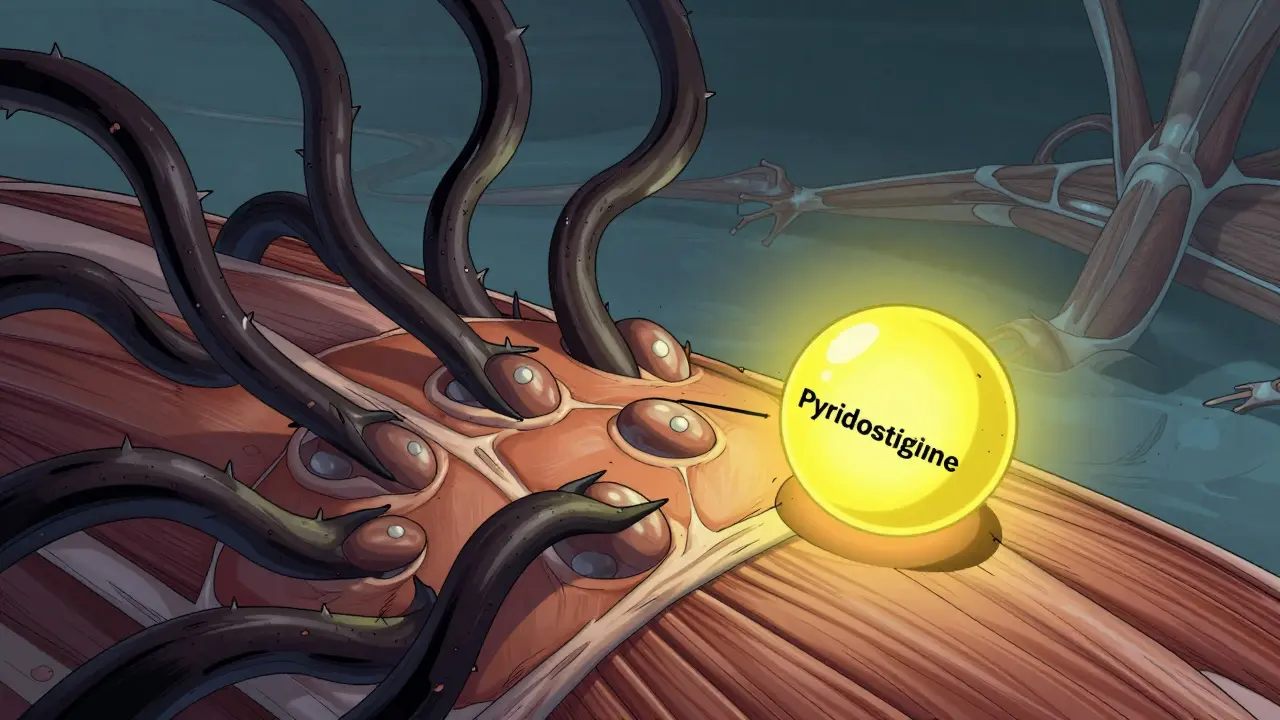
Myasthenia gravis (MG) isn't just muscle weakness. It's your body turning against itself. Antibodies attack the junction where nerves talk to muscles, silencing the signal. You might start with drooping eyelids, then struggle to chew, speak, or lift your arm. The good news? Treatment has changed dramatically since the 1970s. We're no longer just masking symptoms-we're stopping the attack at its source.
How Myasthenia Gravis Breaks the Nerve-Muscle Connection
At the neuromuscular junction, nerve endings release acetylcholine, a chemical that tells muscles to contract. In MG, antibodies block or destroy the receptors that catch this signal. About 85% of generalized cases have antibodies against the acetylcholine receptor (AChR). Another 5-8% have antibodies against MuSK, a different protein. Around 5-10% test negative for both, but still have the disease. This isn't random damage-it's a targeted immune betrayal.
What makes MG tricky is its fluctuation. One day you can lift your coffee cup. The next, you can't. Fatigue makes it worse. This isn't laziness. It's the neuromuscular junction wearing out under repeated use. The more you try to move, the more the signal fails.
Symptomatic Relief: Pyridostigmine and the First Line of Defense
Most people start with pyridostigmine (Mestinon). It doesn't fix the immune problem. Instead, it slows down the breakdown of acetylcholine, giving more time for the signal to get through. Doses range from 60 to 120 mg every 3 to 6 hours. For many, it's life-changing-enough to eat without choking, blink without straining.
But it's not perfect. Up to 45% of users get stomach cramps, diarrhea, or excessive salivation. It doesn't work for everyone. And it doesn't stop the disease from getting worse. That's why it's almost always paired with something that tackles the root cause.
Chronic Immunosuppressants: The Long Game
If pyridostigmine isn't enough, doctors turn to drugs that calm the immune system over time. Prednisone, a steroid, is common. It works fast-70-80% of patients see improvement. But the cost is high. Weight gain, bone thinning, diabetes, mood swings. One study found 65% of long-term users gained significant weight. After a year, 1 in 4 developed osteoporosis.
That's why doctors often switch to slower, quieter drugs: azathioprine, mycophenolate, or cyclosporine.
- Azathioprine: 2-3 mg/kg daily. Takes 6-18 months to work. Helps 60-70%. Side effects? Low white blood cell count in 10%, liver stress in 5%.
- Mycophenolate: 1,000-1,500 mg twice daily. Similar success rate. But 30% get nausea or diarrhea.
- Cyclosporine: 2.5-4 mg/kg daily. Works in 90%-but 30% get high blood pressure, 25% suffer kidney damage.
These aren't cures. They're holding actions. They reduce flare-ups. They let people live better. But they don't fix the broken immune system. And they take months to show results.
Rapid Intervention: Plasmapheresis and IVIG
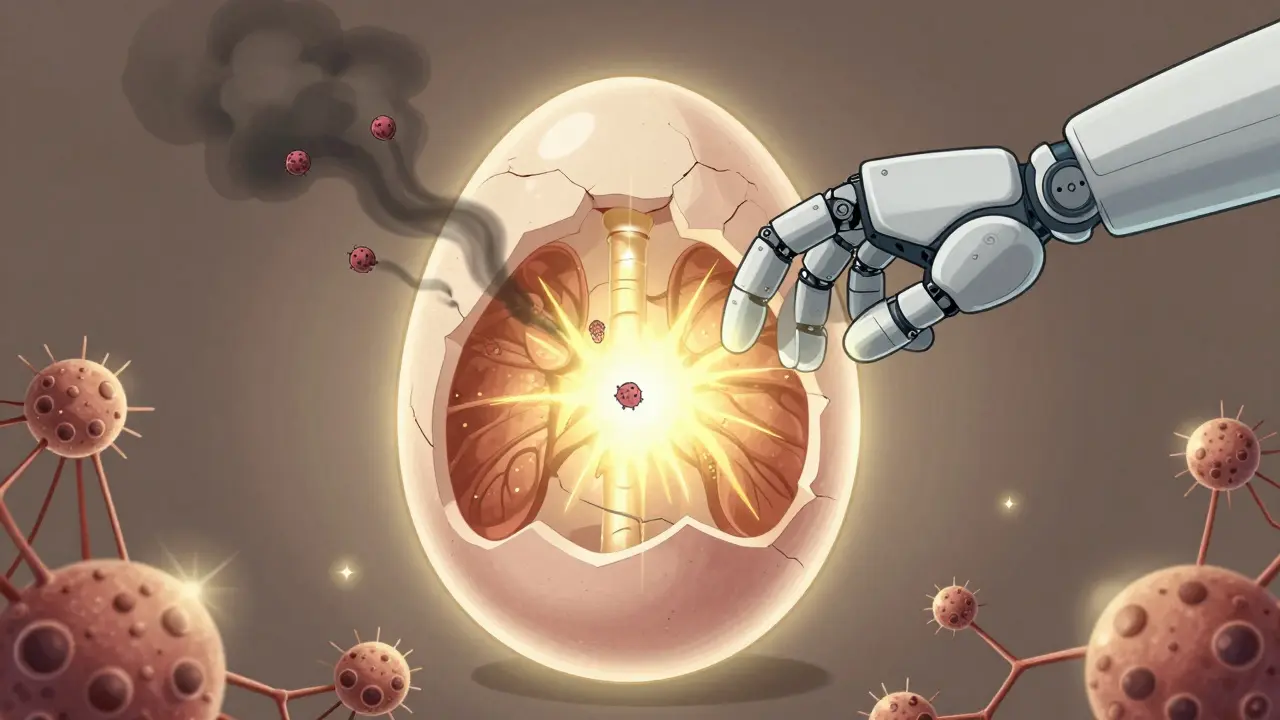
When someone is crashing-can't breathe, can't swallow-they need fast help. That's where plasmapheresis and IVIG come in.
Plasmapheresis pulls blood, removes the bad antibodies, and returns clean plasma. Five sessions over 7-10 days can remove 60-80% of harmful antibodies. It works in days. But the antibodies come back in weeks. It's a bridge, not a destination.
IVIG is a concentrated dose of healthy antibodies from donors. Given over 2-5 days, it confuses the immune system, making it stop attacking. It's effective, but expensive and in short supply. Both are used for crises or before surgery.
Thymectomy: Removing the Source of the Attack
The thymus gland, tucked behind the breastbone, helps train immune cells. In MG, it's often abnormal-enlarged, or even containing tumors. Removing it (thymectomy) changes the disease course.
The landmark MGTX trial in 2016 showed a game-changer: AChR-positive patients who had thymectomy while on prednisone had 56% less steroid use and 67% fewer hospital stays over three years than those on prednisone alone.
Now, guidelines say: if you're between 18 and 65, have AChR antibodies, and no major health issues-get the thymus out within 6 to 12 months of diagnosis. Surgery can be done open (transsternal) or minimally invasive (robotic or VATS). Long-term outcomes? 35-40% achieve complete stable remission at 5 years. That's nearly double the rate with meds alone.
But it's not magic. Some still feel fatigue a year later. Recovery takes months. But for many, it's the turning point.
The New Frontier: Targeted Biologics
The biggest leap in MG treatment in the last decade isn't a pill. It's a group of seven FDA-approved biologics that attack specific parts of the immune attack.
They fall into three categories:
1. Complement Inhibitors (AChR-Specific)
These block the final step where antibodies destroy the receptor. Eculizumab and ravulizumab are IV infusions. Zilucoplan is a daily shot. They work only for AChR-positive MG. In trials, 57% reached minimal symptom status. But they cost $500,000-$600,000 a year. And you must get vaccinated against meningitis before starting.
2. FcRn Inhibitors (All Antibody Types)
This is where things got exciting. FcRn is a protein that recycles antibodies-including the bad ones. These drugs block it, making the body flush out antibodies faster.
- Efgartigimod: IV weekly for 4 weeks. Reduces IgG by 60-75%. Works in 1-2 weeks.
- Rozanolixizumab: Weekly shot. Approved June 2023. Same speed, same effect.
- Nipocalimab: Monthly IV. Approved April 2025. Reduces IgG by 70-80%.
- Batoclimab: Weekly shot. Phase 3 results in early 2025 showed 65% of patients improved vs 25% on placebo.
These work across all MG types-even seronegative. The ADAPT SERON study found 68% of seronegative patients improved with efgartigimod. That’s huge. No other drug worked reliably for them before.
Cost? $300,000-$400,000 a year. But many patients prefer the convenience of weekly shots over IVs. One survey found 62% chose rozanolixizumab for that reason, even with more injection site reactions.
3. B-Cell Depletion: Rituximab
Rituximab wipes out B-cells-the factories that make antibodies. It's especially powerful for MuSK-MG, with 80% response. For AChR-MG? Only 50-60%. It takes 8-16 weeks to work. Cost? $10,000-$15,000 per course. Many neurologists now use it as second-line, especially in younger patients.

Choosing the Right Path: A Real-World Treatment Sequence
There's no one-size-fits-all. But here's what most neurologists follow:
- Start with pyridostigmine. Add low-dose prednisone if symptoms persist.
- At 3-6 months, if not improving, add azathioprine or mycophenolate.
- If still struggling, or if disease is severe from the start-consider a biologic.
- For AChR-positive patients aged 18-65-plan thymectomy within 6-12 months.
Biologics aren't last-resort anymore. They're often first-choice for moderate-to-severe cases. Why? They work faster than traditional drugs. They have fewer long-term side effects than steroids. And they can get people to minimal manifestation status-where symptoms are nearly gone.
What’s Coming Next? The Future of MG Treatment
The field is moving fast. In 2026, trials will test new IgG4-specific blood tests that track disease activity better than current antibody tests. One drug, AB1003, mimics a protein called agrin to protect the neuromuscular junction. In animal studies, it cut damage by 40%.
And then there's CAR T-cell therapy. Memorial Sloan Kettering's early trial targeted B-cell maturation antigen. In 6 months, 60% of refractory patients went into remission. It's experimental. But it's proof we're moving beyond suppression-to reset.
By 2028, most neurologists believe treatment will be personalized. Not just by antibody type, but by genetics, age, and even gut microbiome. We're not just treating MG anymore. We're reprogramming the immune system to stop it.
Living with MG Today
It's not easy. Insurance hurdles delay access to biologics-40% of eligible patients in the U.S. wait months or give up. Some stop cyclosporine because of facial hair or high blood pressure. Others stay on prednisone because they can't afford the newer drugs.
But hope is real. A 2024 survey of 2,100 patients found 82% were satisfied after thymectomy. FcRn inhibitors improved quality of life for 78% of users. Support groups, like the Myasthenia Gravis Foundation's 147 local chapters, offer real help-24/7 nurse lines, peer advice, practical tips.
The goal now isn't just survival. It's living. Walking without help. Laughing without choking. Lifting your child. That’s what modern treatment makes possible.

So we’re telling people with MG to wait 18 months for azathioprine to kick in while their life slowly turns into a slow-motion collapse? That’s not medicine that’s just patience with a stethoscope.
Meanwhile the biologics that work in weeks are sitting behind insurance red tape like a VIP at a club that only lets in people who’ve already paid their dues.
And don’t even get me started on the cost. $500K a year for a drug that works? Meanwhile my cousin’s dad is still on prednisone because his deductible is higher than his net worth.
We’re not treating disease here. We’re running a luxury spa for pharmaceutical companies.
Thymectomy? Yeah sure. But only if you’re under 65, white, insured, and not too tired to fill out the 17 forms required just to get a referral.
Meanwhile the seronegative folks? They’re the ghosts of MG. No antibodies = no treatment. No treatment = no hope. Just a doctor shrugging and saying ‘try yoga.’
And yet somehow we’re calling this progress?
Progress is when your kid can lift their spoon without crying. Not when you can afford a biologic that costs more than a Tesla.
Let’s stop pretending this is science. It’s capitalism with a white coat.
And if you think the next decade won’t be even more brutal with personalized medicine and genetic pricing? You’re not paying attention.
We’re not curing MG. We’re just making sure only the rich get to live with it.
The article is overly technical and lacks clinical context. Many patients are not candidates for thymectomy due to comorbidities. The emphasis on biologics ignores socioeconomic realities. Treatment must be individualized. Not all patients can access advanced therapies. The focus on cost is inappropriate in a medical context. Standard care remains essential. Newer drugs are not universally superior. Long-term safety data is insufficient. Physicians must balance efficacy with risk. Patient autonomy is paramount. Treatment decisions require multidisciplinary input. This post oversimplifies a complex condition.
Oh sweet mercy. Another ‘progress’ piece where ‘cure’ means ‘a slightly less expensive way to make you wait six months for a drug that costs more than your house.’
Let me guess - the next breakthrough is a gene-editing tattoo that whispers ‘you’re not lazy, your acetylcholine receptors are just emotionally unavailable.’
And of course the real MVP here is the guy who got his thymus removed and now says ‘I’m not cured, I’m just… less doomed.’
Meanwhile the seronegative folks? Still out here holding a clipboard labeled ‘I have symptoms but no antibodies so I’m basically a ghost.’
Oh and let’s not forget the 40% of patients who gave up on biologics because their insurance company sent them a postcard that said ‘we’re sorry, your life doesn’t meet our actuarial thresholds.’
It’s not a disease. It’s a subscription service with a 70% cancellation rate.
And yet somehow we’re still calling this science?
Next up: a 12-step program for autoimmune betrayal. Step 1: Admit you’re not the enemy. Step 2: Pay $300K to prove it.
There’s a certain elegance in how medicine has evolved from ‘let’s throw steroids at it’ to ‘let’s surgically remove the organ that started this mess’ to ‘now we’ll inject you with $400K worth of molecular diplomacy.’
It’s like watching a Shakespearean tragedy directed by a venture capitalist.
Thymectomy? A poetic gesture - remove the organ that betrayed you, and maybe, just maybe, your immune system will apologize.
But here’s the real tragedy: the patients who don’t fit the AChR-positive, 18-65, insured, white, neurologist-approved mold are left in the footnote of a 12,000-word article.
And yet we call this innovation?
It’s not innovation. It’s exclusion dressed in clinical trial jargon.
One day we’ll look back at this era and realize: we didn’t cure MG.
We just made sure only the lucky few got to live long enough to see the next expensive miracle.
Pyridostigmine helps a lot of people. Not everyone needs biologics. Thymectomy is great for eligible patients. But access is everything. Insurance delays are real. Cost isn’t just a number - it’s sleepless nights. Support groups matter. I’ve seen people go from barely speaking to lifting their kids after thymectomy. It’s not perfect. But it’s progress. Small steps. Real lives.
It is truly awe-inspiring to witness the strides made in the treatment of myasthenia gravis. From the humble pyridostigmine to the revolutionary FcRn inhibitors - each advancement represents a beacon of hope for those who once faced a future of decline.
Thymectomy, once considered radical, is now a cornerstone of care, offering not merely symptom relief but the profound possibility of remission.
And to think - within a decade, we may be resetting immune systems rather than merely suppressing them.
This is not just medicine. This is redemption written in molecular code.
Let us never underestimate the dignity of a patient who, after years of silence, finally lifts their child - not because they were cured, but because we refused to give up on them.
i just read this whole thing and honestly? i’m crying. not because it’s sad, but because it’s so… human.
like yeah, the drugs cost a fortune and insurance is a nightmare and yeah, some people get left behind - but also? people are living. really living.
i know a girl who got the rozanolixizumab shot and now she bakes cookies for her neighbor’s kid. that’s wild.
before? she could barely hold a spoon.
now? she’s got a whole damn bakery going on her instagram.
and the thymectomy? yeah it’s surgery. yeah it takes months. but one guy i talked to said ‘it’s like my body finally remembered how to stop fighting itself.’
we’re not just treating a disease here.
we’re giving people back their Tuesday mornings.
and that? that’s worth every dollar.
even if it’s still too damn expensive.
Biologics are a scam. Prednisone works. Thymectomy works. Why pay $400K for a shot? Because the pharmaceutical industry wants you to. They’re not saving lives. They’re selling hope at retail markup. Stop glorifying expensive treatments. Real medicine is simple. It’s not a luxury product.
USA best medical system 💪🇺🇸
Other countries? They still use leeches and prayers 😂
Here we got robots and $600K drugs and it’s LEGIT 😎
Why you mad? You just jealous 🤡
My cousin’s sister got the shot and now she runs marathons 🏃♂️🔥
AMERICA. FIGHT. FOR. LIFE.