
When you're deciding what medication to prescribe, the right drug isn't always the most effective one-it's the one your patient can actually afford and get without delays. That’s why checking the formulary before writing a prescription isn’t optional. It’s a critical step that affects adherence, outcomes, and even patient trust.
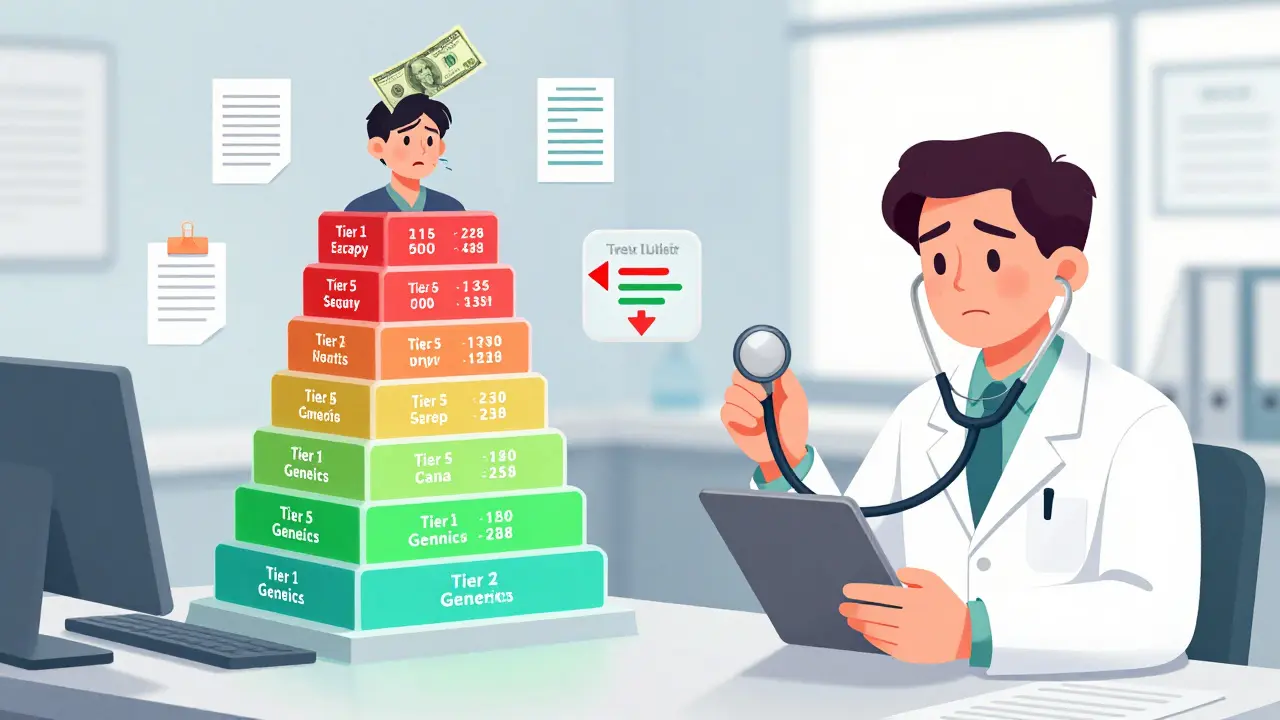
A formulary, also called a Preferred Drug List (PDL), is the official list of medications covered by a patient’s insurance plan. It’s not just a catalog. It’s a dynamic, tiered system designed to balance clinical effectiveness with cost control. Every drug on the list has a tier-usually 3 to 5 levels-that determines how much the patient pays out of pocket. Tier 1 drugs are often low-cost generics. Tier 5? That’s where specialty drugs live, with coinsurance rates that can hit 30% or more. If you prescribe a Tier 4 brand-name drug without checking, you might be handing your patient a $200 monthly bill they didn’t expect.
Understand the Tier System
Not all formularies are identical, but most follow a similar structure. Medicare Part D plans, for example, use five tiers as of 2024:
- Tier 1: Preferred generics-usually $1 to $5 per prescription.
- Tier 2: Non-preferred generics-$10 to $20.
- Tier 3: Preferred brand-name drugs-$40 to $70.
- Tier 4: Non-preferred brands-$80 to $150+.
- Tier 5: Specialty drugs-cost-sharing based on percentage, often over $950/month.
But here’s the catch: a drug like Januvia might be Tier 3 on one Medicare plan, Tier 4 on another, and require step therapy on a third. That’s not a typo. Each insurer builds its own formulary, even within the same program like Medicare Part D. So if you prescribe Januvia without checking the patient’s specific plan, you’re guessing-and guessing wrong often costs patients their medication.
Look for Utilization Management Rules
Formularies don’t just sort drugs by cost-they also control access. Three key codes tell you what stands between your prescription and the pharmacy counter:
- PA (Prior Authorization): You must submit documentation proving medical necessity before the drug is covered. For cancer drugs, 32% of these requests take longer than 48 hours to process.
- ST (Step Therapy): The patient must try and fail on a cheaper, preferred drug first. If you skip this, the claim gets denied.
- QL (Quantity Limit): You can’t prescribe more than a certain amount per month-say, 30 pills instead of 90-without an override.
These rules aren’t arbitrary. They’re designed to reduce waste and encourage cost-effective prescribing. But they can delay care. A 2024 American Medical Association report found that 88% of physicians have seen treatment delays due to prior authorization. Some of those delays led to hospitalizations.
Know Where to Check
There are three reliable ways to check a formulary before prescribing:
- Insurer websites: Most major insurers-Aetna, UnitedHealthcare, Humana-offer searchable formularies on their provider portals. You’ll need the patient’s plan name and county. Aetna’s tool, for example, highlights tier levels and PA requirements in real time. In a 2024 MGMA survey, 74% of providers rated it "very helpful."
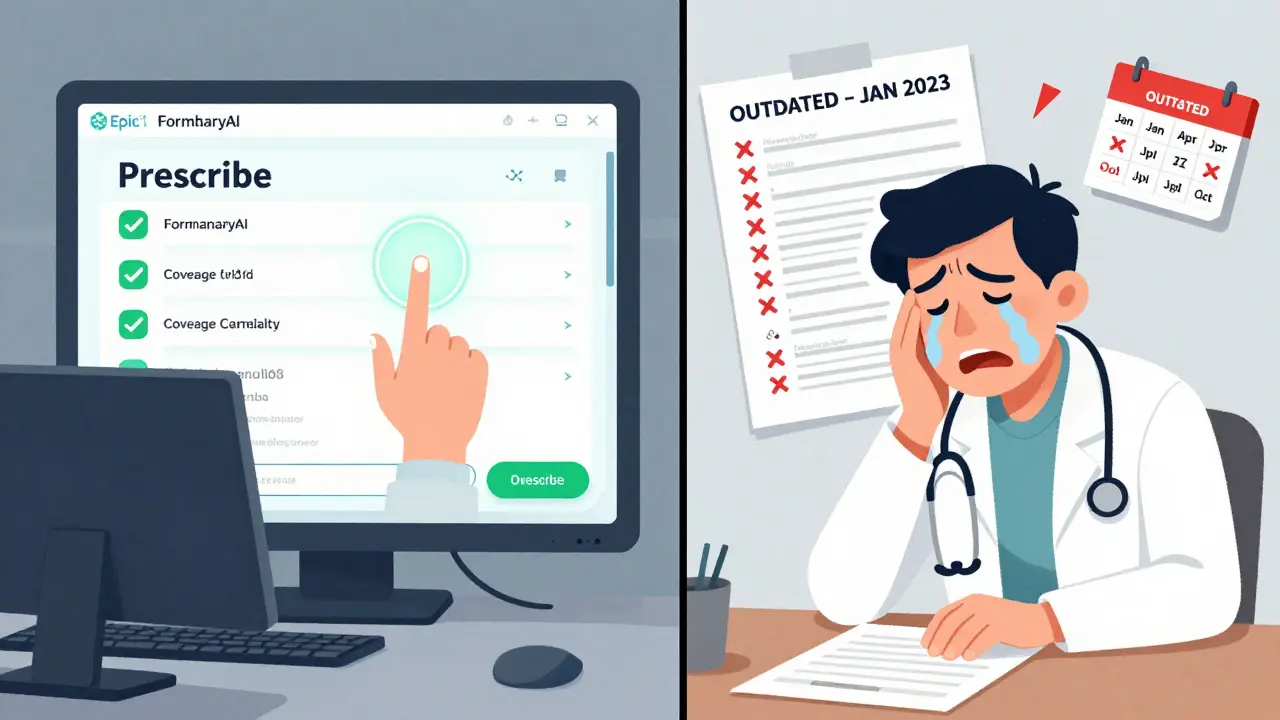
- EHR-integrated tools: If your clinic uses Epic, Cerner, or another major system, check if it has a formulary checker built in. Northwestern Medicine cut prescription abandonment by 42% after adding Epic’s Formulary Check module in late 2023.
- CMS Plan Finder: For Medicare patients, this free tool covers 99.8% of Part D plans. It lets you search by drug name, see tier placement, and even compare plans side by side.
Don’t rely on memory. Don’t ask the patient to check. Don’t assume last month’s list still applies. Formularies change. Medicare plans must give 60 days’ notice for changes that hurt coverage, but many update quarterly. HealthPartners, for example, releases new formularies in January, April, July, and October every year.
Differences Between Insurance Types
Not all formularies work the same way:
- Medicare Part D: Standardized five-tier system. Must cover at least two drugs per therapeutic category. Must offer exceptions and appeals.
- Medicaid: State-run. 42 states use closed formularies-meaning non-listed drugs require prior authorization, even if clinically appropriate.
- Commercial plans: More flexible. UnitedHealthcare uses four tiers. Some have no specialty tier at all. Others bundle pharmacy benefits with medical benefits, making checks more complex.
For example, a drug covered under a commercial plan might be excluded entirely under Medicaid in the same state. If you’re treating a patient who qualifies for both, you need to know which plan is primary. Mixing them up leads to denied claims and frustrated patients.
How to Build a Reliable Workflow
Checking formularies shouldn’t be a last-minute scramble. Here’s how to make it part of your routine:
- Set a time limit: The American College of Physicians recommends 3 to 5 minutes per patient during medication selection. That’s enough to pull up the insurer’s site or EHR tool and verify tier, PA, and ST status.
- Bookmark key pages: Save direct links to the formulary search tools for your most common insurers. For example: UnitedHealthcare’s 2024 Commercial Drug List, Aetna’s Medicare Drug Search.
- Set calendar reminders: Schedule a 15-minute review every quarter to check for formulary updates from your top 5 insurers.
- Use the hotline: If you’re unsure, call the insurer’s provider line. 98% of Medicare Part D plans offer 24/7 support. You can get real-time answers in under 5 minutes.
Small practices lag behind. Only 38% have formal formulary-checking protocols, compared to 79% of large health systems. But you don’t need a big IT budget. A printed formulary guide, updated quarterly, still works. Just make sure it’s the right version. A 2024 formulary is effective January 1, 2024, through December 31, 2024. Anything older is outdated.
What’s Changing in 2025 and Beyond
Big changes are coming. The Inflation Reduction Act’s $2,000 annual out-of-pocket cap for Medicare Part D kicks in January 2025. Insurers are already shifting drugs to lower tiers to stay within budget. By 2025, 73% of Medicare Part D formularies will move more drugs to Tier 1 or 2.
Also, by January 1, 2026, all Medicare Part D plans must implement Real-Time Benefit Tools (RTBT) that push formulary and cost data directly into your EHR. Epic’s FormularyAI, launched in August 2024, already predicts coverage likelihood with 87% accuracy by analyzing 10 million historical prior authorization decisions.
But challenges remain. A December 2023 GAO report found that 28% of Medicare beneficiaries face mid-year formulary changes. That means even if you checked last month, you might need to check again next week.
Why This Matters More Than You Think
Formularies aren’t just about cost-they’re about equity. A 2022 Harvard study found that formularies using real-world evidence (not just clinical trials) improve medication adherence by 15-20%. That means fewer hospital visits, better chronic disease control, and lower long-term costs.
But restrictive formularies can harm patients. Dr. Aaron Kesselheim at Brigham and Women’s Hospital found that overly strict prior authorization rules delay cancer treatments. Patients wait days for approval. Some give up. Others switch to less effective drugs.
Your job isn’t just to prescribe. It’s to ensure the prescription works. That means knowing what’s covered, what’s restricted, and what’s likely to be denied before you write the script. It’s not extra work-it’s better prescribing.
What to Do When a Drug Isn’t Covered
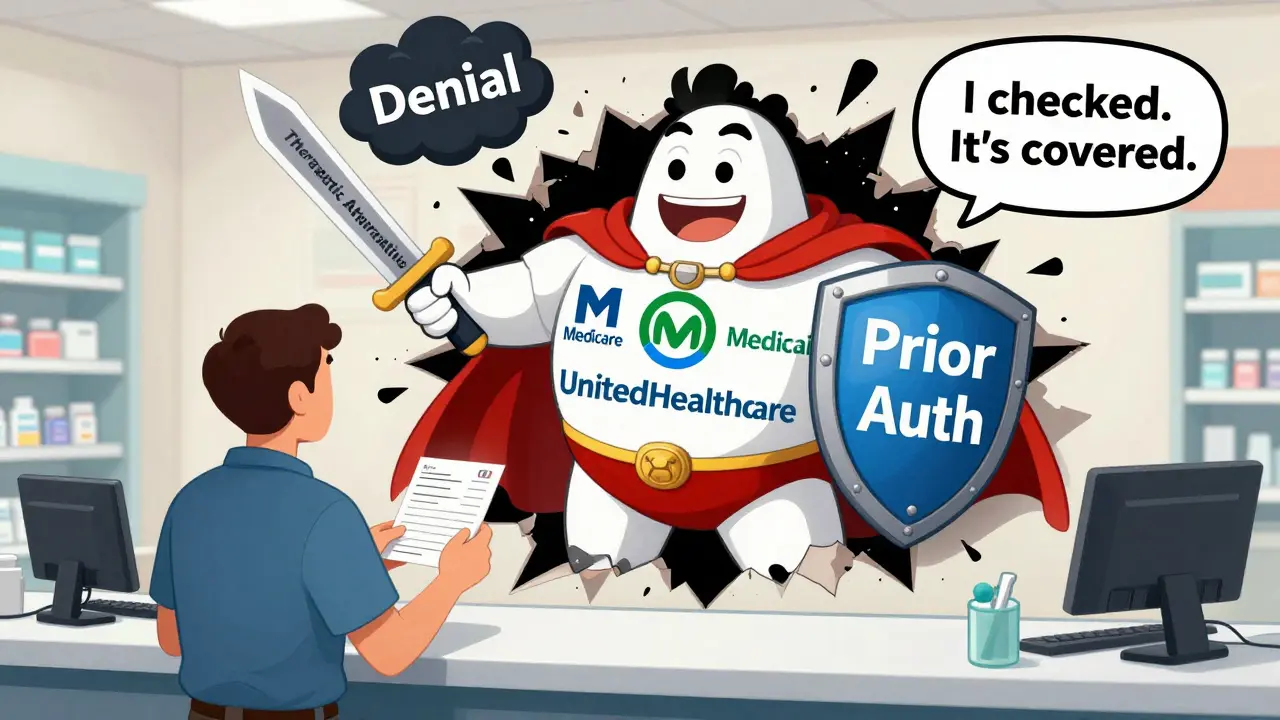
If a drug your patient needs isn’t on the formulary, don’t just switch it. Fight for it.
- Submit a prior authorization request with clinical documentation.
- Use the insurer’s formal exception process. Medicare Part D requires a response within 72 hours for standard requests, 24 hours for urgent cases.
- Ask if there’s a therapeutic alternative on the formulary that’s clinically equivalent.
- If all else fails, contact the patient’s pharmacy benefit manager directly. Sometimes, a phone call from a provider can bypass automated denials.
Remember: formularies are designed to be challenged. They’re not law. They’re guidelines with built-in exceptions. Use them.
What’s the difference between a formulary and a preferred drug list?
There’s no difference. "Formulary" and "Preferred Drug List" (PDL) are used interchangeably. Both refer to the list of medications covered by a health plan, organized by tier and subject to utilization controls like prior authorization. Medicare calls it a formulary. Medicaid often calls it a PDL. Same thing.
Can I prescribe a drug not on the formulary?
Yes-but the patient will likely pay full price unless you get prior authorization. Some insurers allow non-formulary drugs only if you prove medical necessity. Others won’t cover them at all. Always check the plan’s exceptions process before prescribing off-formulary.
How often do formularies change?
Medicare Part D plans must notify patients 60 days before any change that reduces coverage. Many insurers update quarterly-HealthPartners, for example, releases new formularies in January, April, July, and October. Commercial plans may update more frequently. Always verify the effective date on the formulary document.
Why does the same drug have different tiers on different plans?
Each insurer negotiates drug pricing and formulary placement independently. One plan might get a better discount on a brand-name drug and put it in Tier 3. Another might not and put it in Tier 4. It’s not about the drug-it’s about the contract between the insurer and the manufacturer.
Do I need to check formularies for Medicaid patients?
Yes. Medicaid uses state-specific Preferred Drug Lists, and 42 states have closed formularies. That means if a drug isn’t on the list, you need prior authorization-even if it’s the only effective option. Check your state’s DHS or Medicaid provider portal for the current PDL.
What if my EHR doesn’t have a formulary checker?
Bookmark your top insurers’ formulary search pages and create a checklist. Print quarterly updates for your office. Use CMS Plan Finder for Medicare patients. Even a simple spreadsheet with drug names and their tiers across your most common plans can save hours of back-and-forth with pharmacies.
Are there tools that predict if a drug will be covered?
Yes. Epic’s FormularyAI, launched in 2024, analyzes 10 million historical prior authorization decisions to predict coverage likelihood with 87% accuracy. Other EHR vendors are rolling out similar tools. While not perfect, they reduce guesswork and save time during prescribing.
Can pharmacists change my prescription without telling me?
In some cases, yes. Some formularies allow pharmacists to substitute a preferred drug for a non-preferred one under therapeutic interchange rules. But laws vary by state. In most places, the patient must be notified, and you, as the prescriber, must be informed if the substitution is made. Always ask patients if their pharmacist changed their medication.
Final Takeaway
Checking a formulary before prescribing takes minutes. Not checking can cost patients hundreds-or worse, their health. With formularies changing constantly, coverage rules tightening, and new tools emerging, the best prescribers aren’t just the most knowledgeable. They’re the most prepared. Make formulary checks part of your standard workflow. Your patients will take their meds. And they’ll trust you more for it.