
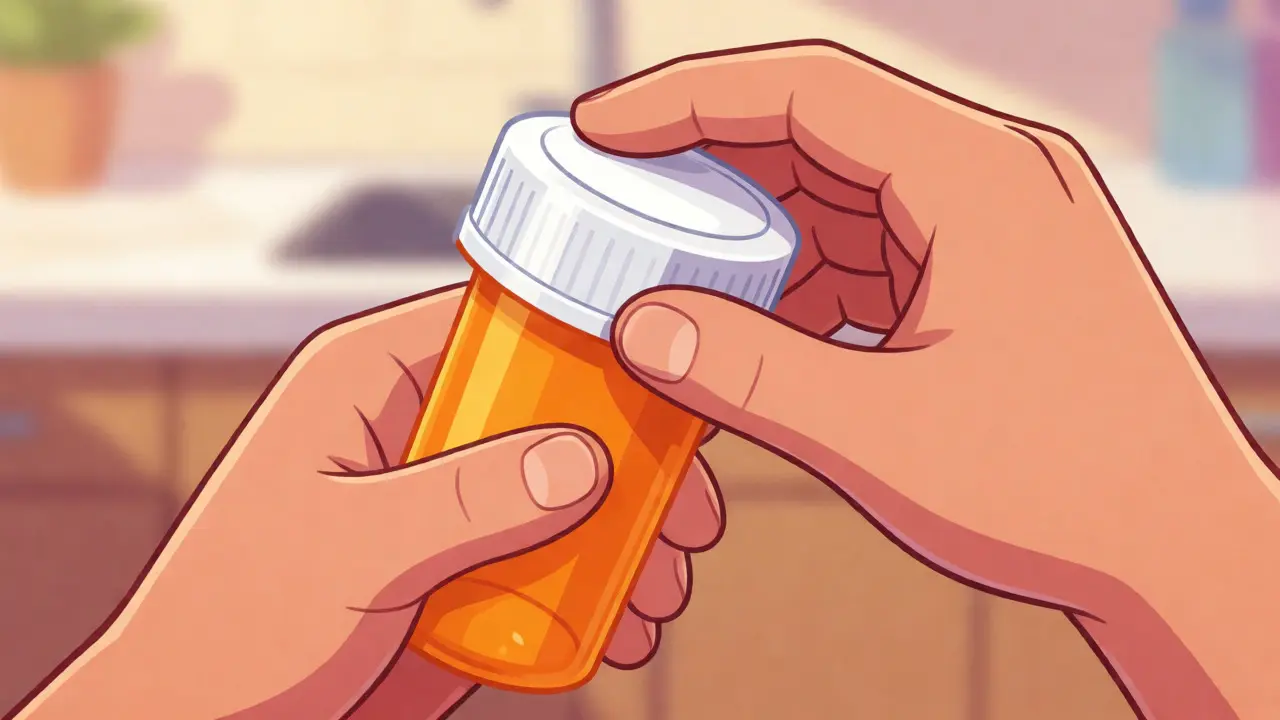
You grab a bottle of cough syrup for your toddler. You twist the cap. It resists. You push down harder, twist again, and finally get it open. You might think that annoying extra step is just bad design or a hassle. But that resistance is a calculated engineering feat designed to keep little hands from getting into dangerous doses of medicine. Child-resistant containers are not magic boxes that make pills impossible to reach. They are specialized closure systems defined by strict federal standards as being difficult for children under five to open within a reasonable time, yet still usable for adults. If you have ever struggled with a pill bottle while holding a crying baby in one arm, you know the frustration. But understanding how these caps work, why they exist, and where their limits lie can change how you store medications at home.
The Origin Story: Why We Need These Caps
Before 1970, child poisoning was a silent epidemic in American households. Between 1961 and 1966, over 5,000 children died from accidental ingestions of household products and medicines. The solution wasn't more supervision; it was better packaging. In December 1970, the U.S. government passed the Poison Prevention Packaging Act (PPPA), which gave the Consumer Product Safety Commission (CPSC) the power to mandate special closures for hazardous substances. This law didn't ban aspirin or iron supplements. It changed how they were sealed.
The goal was simple but ambitious: reduce access without making life impossible for adults. Today, the CPSC regulates about 30 categories of products, including prescription drugs, certain over-the-counter medicines, pesticides, and household chemicals. If a product falls under this list, it must come in packaging that meets specific performance criteria. This isn't a suggestion. It's federal law.
How Child-Resistant Actually Works
When people hear "child-resistant," many mistakenly think it means "child-proof." That distinction matters. Child-resistant packaging significantly impedes a child’s ability to open a container but does not completely prevent it. A determined four-year-old with enough time and persistence can often figure out how to open a standard screw cap. The design relies on requiring two simultaneous, dissimilar motions-like pushing down and turning, or squeezing sides and twisting-that young children lack the coordination and strength to perform together.
Most common designs include:
- Push-and-Turn: You press the cap down against a spring-loaded mechanism before rotating. This is common in prescription vials.
- Squeeze-and-Turn: You pinch opposite sides of the cap to release internal locking tabs before twisting. Often seen on liquid medications.
- Interlocking Designs: More complex mechanisms used in newer pharmaceuticals that require precise alignment to unlock.
These mechanisms are tested rigorously. According to CPSC protocols in 16 CFR 1700.20, a package must stop at least 85% of children aged 42-51 months from opening it within 10 minutes. After a demonstration of how to open it, those same children must still fail to open it again within 5 minutes. For adults, specifically seniors aged 50-70, the bar is different. At least 90% of seniors must be able to open and re-close the package within 5 minutes. This balance between safety and accessibility is the core engineering challenge.
Not All Meds Are Created Equal: Formulation Challenges
You might assume every pill bottle is equally safe. In reality, the type of medication dictates how well the packaging works. Solid oral dosage forms, like tablets and capsules, are the easiest to secure. Standard screw-cap vials for these drugs meet CPSC standards with high effectiveness, around 97.3% in field studies. The solid form doesn't leak, spill, or require complex dispensing mechanisms.
Liquid medications present bigger problems. Liquids can drip if the seal isn't perfect, and the viscosity can interfere with the locking mechanism. Data from FDA enforcement shows that nearly 39% of non-compliant packaging incidents involve liquid formulations. Nasal sprays are even trickier. The CPSC explicitly stated in 2012 that nasal spray pumps themselves are not considered child-resistant unless the pump action or the over-cap includes a CR feature. Only about 22% of nasal spray products met CR requirements without specialized modifications in recent industry analyses.
| Medication Type | CR Compliance Rate | Primary Challenge |
|---|---|---|
| Solid Oral (Tablets/Capsules) | ~97% | Low risk of leakage; easy to seal. |
| Liquid Oral Solutions | ~61% | Viscosity affects seals; spills common. |
| Nasal Sprays | ~22% | Pump mechanism often lacks inherent CR features. |
| Ophthalmic (Eye Drops) | High | Small volume requires precision CR/SF designs. |
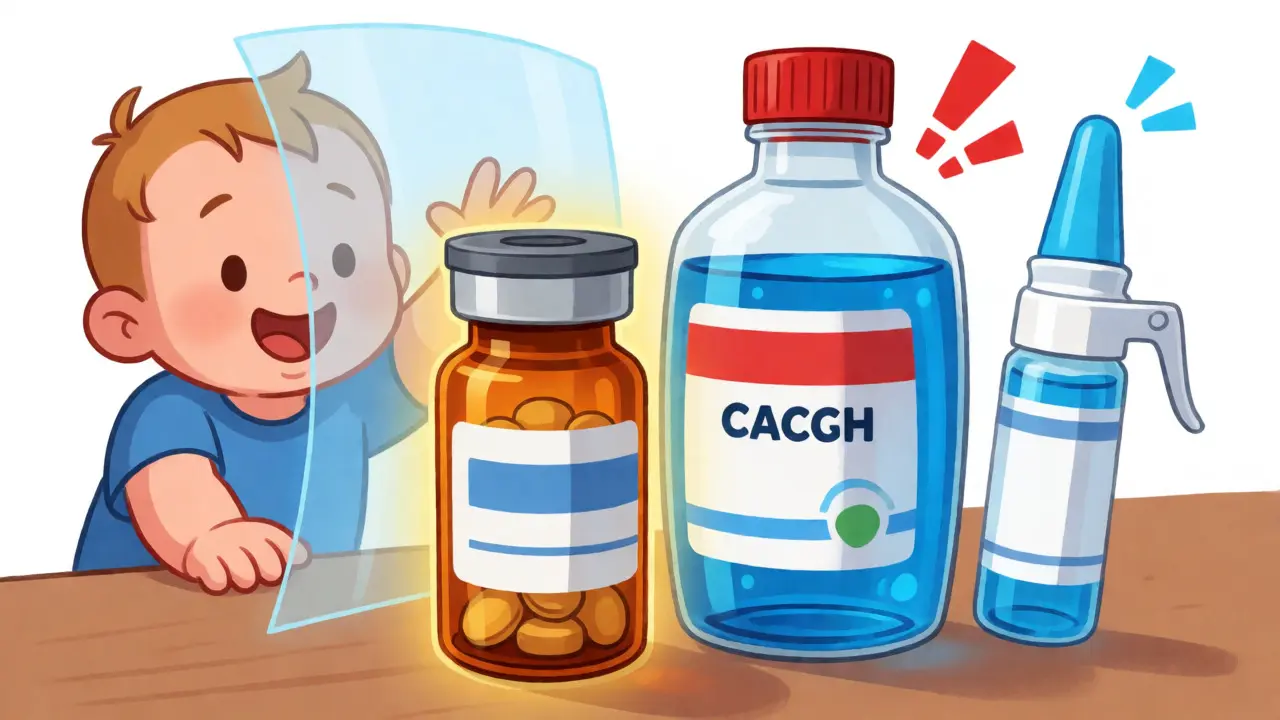
The Senior-Friendly Dilemma
Here is the catch: the same force that keeps a toddler out can keep an arthritic grandparent out too. Senior-friendly (SF) packaging is a regulatory requirement alongside child-resistance, but achieving both simultaneously is difficult. A survey by the Arthritis Foundation found that 68% of respondents with hand impairments struggled to open CR containers. The average force required often exceeds the 5-pound threshold recommended for accessible design.
This has led to a market split. Some manufacturers prioritize child safety so heavily that elderly users struggle. Others optimize for senior ease, sometimes at the cost of marginal child resistance. Newer technologies try to bridge this gap. For example, Aptar Pharma’s Mini+cr system claims a 92% success rate for seniors while maintaining only an 8% success rate for children in certified testing. Compare that to traditional caps, which might offer 98% senior success but drop to 75% child resistance. When choosing medications for older adults, ask your pharmacist if a senior-friendly version is available. It could mean the difference between taking your meds independently and needing help.
Common Failure Points: Where Safety Breaks Down
If CR packaging works so well, why do poison control centers still handle thousands of calls? The answer usually isn't the cap itself-it's human behavior. CPSC data from 2022 reported over 12,800 incidents where children accessed medications despite CR packaging. Nearly 73% of these failures involved improper reclosure. People forget to push the cap down fully. They leave bottles on counters instead of putting them back in cabinets. Or they transfer pills into weekly organizers that aren't child-resistant.
Another issue is wear and tear. Dr. Robert Bass, a CPSC Medical Officer, noted that CR effectiveness drops by about 15% after the first opening. Threads can strip. Locking tabs can break. If a cap feels loose or spins freely without resistance, it’s no longer providing the intended protection. Inspect your bottles regularly. If the mechanism fails, don’t rely on it. Move the contents to a locked cabinet immediately.

Smart Packaging and Future Trends
The future of medication safety is moving beyond plastic and springs. We are seeing the rise of smart packaging that integrates child resistance with digital tracking. In 2023, Aptar Pharma launched SmartDose, an FDA-cleared connected cap that records opening events via Bluetooth with 99.2% accuracy. This helps caregivers monitor adherence while ensuring safety.
Regulations are also evolving. The CPSC is currently reviewing rules for concentrated cannabis edibles, proposing mandatory CR packaging for THC products exceeding 2mg per serving. As vaping and new supplement forms enter the market, the definition of what needs a safety cap continues to expand. The global market for CR packaging is projected to hit $4.87 billion by 2028, driven by aging populations and stricter global regulations. Countries like Brazil and India have recently implemented their own mandatory CR laws, signaling a worldwide shift toward standardized safety protocols.
Practical Tips for Home Safety
You don't need a degree in pharmacology to use these tools effectively. Here is how to maximize safety in your home:
- Never Assume: Just because a bottle has a CR cap doesn't mean it's safe to leave on the nightstand. Always return medications to a high, locked, or out-of-reach storage area.
- Check the Seal: Before leaving the pharmacy, ensure the cap clicks or locks properly. If it feels stiff or broken, ask for a replacement.
- Watch the Reclosure: Make sure the cap is fully seated after every use. A half-turned cap is an open door for a curious child.
- Be Careful with Transfers: Pill organizers are rarely child-resistant. If you use one, keep it in a drawer or cabinet, not on the kitchen counter.
- Consider Alternatives: If you or a family member struggles with dexterity, ask your doctor or pharmacist about blister packs or senior-friendly formulations.
Are child-resistant caps completely child-proof?
No. The term "child-proof" is a misnomer. Child-resistant caps are designed to slow children down, not stop them permanently. Given enough time and determination, most children can eventually figure out how to open them. Always store medications out of sight and reach, regardless of the cap type.
Why do some medications not have child-resistant caps?
Some medications, particularly those taken frequently by elderly patients who live alone, may come in non-CR packaging upon request. This is allowed under the PPPA if the patient signs a waiver acknowledging the risks. Additionally, certain emergency medications like nitroglycerin sublingual tablets or eye drops may use simpler closures to ensure rapid access during urgent situations.
What should I do if my child opens a child-resistant container?
First, check the contents to see how much is missing. Then, call Poison Control immediately at 1-800-222-1222 in the US. Do not wait for symptoms to appear. Even if the child didn't swallow anything, having ingested part of the cap or touched residue can be relevant. Keep the container and any labels handy for the operator.
Can I reuse old child-resistant bottles for other things?
It is generally not recommended. The locking mechanisms can wear out, reducing their effectiveness. Also, residues from previous medications can contaminate new contents. If you must reuse them, test the closure repeatedly to ensure it still requires the dual-motion technique to open. Never use them for small objects like coins or magnets, which pose choking hazards.
Do vitamins and supplements need child-resistant packaging?
Yes, if they contain certain active ingredients like iron, acetaminophen, or ibuprofen above specific concentration thresholds. The PPPA covers many OTC drugs and supplements. However, not all herbal supplements or low-dose vitamins fall under these mandates. Check the label or ask your pharmacist if a specific supplement requires CR packaging.

Interesting read! 🤔 I never really thought about the engineering behind those annoying caps until now. It’s wild that there are strict federal standards for them and not just random design choices by manufacturers. The stats on nasal sprays being only 22% compliant is actually pretty scary 😳 because you’d think every liquid med would be equally safe but apparently viscosity messes with the seals a lot. We need to be way more careful with where we store these things even if they have the fancy locking mechanism because human error seems to be the biggest failure point here honestly.
The US regulations are finally catching up to reality. Other countries should look at this model instead of letting big pharma cut corners on safety packaging just to save pennies per unit. It is pathetic that nearly 40% of non-compliance involves liquids because companies refuse to invest in better sealing tech for viscous fluids. This proves that without strict enforcement, corporations will always prioritize profit over child safety no matter what their marketing says.
You guys are missing the point completely. It’s not just about the cap it’s about the sheer laziness of parents leaving bottles on counters like they’re decorative items. If your kid opens a CR container it’s because you didn’t lock the cabinet or you forgot to push down properly which is basic responsibility not some complex engineering failure. Stop blaming the packaging for your own lack of attention span and start acting like adults who care about keeping their kids alive instead of complaining about how hard it is to twist a bottle while holding a crying baby.
The dialectic between accessibility and security is inherently flawed. We attempt to impose order through mechanical constraints yet entropy always finds a way in via human error. The cap is merely a symbol of our desire to control chaos within the domestic sphere but ultimately it fails because the user interface is hostile to the very demographic it aims to protect most effectively the elderly. Safety is an illusion maintained by compliance not by physics alone.
Lmao nice article but totally ignores the fact that half the seniors can’t open these things anyway 💀🙄 So much for "senior friendly" when 68% struggle? That stat is embarrassing for the industry. 📉 Just lazy design choices wrapped in bureaucratic jargon. 🗑️
This is truly a magnificent exploration of the delicate balance between protective engineering and human usability, reminding us that safety is not merely a static state but a dynamic process requiring constant vigilance and adaptation. When we consider the historical context of the Poison Prevention Packaging Act, we see a profound shift in societal responsibility towards safeguarding the most vulnerable members of our community through technological intervention rather than relying solely on supervision. However, as we move forward into an era of smart packaging and digital integration, we must ensure that these advancements do not create new barriers for those with limited dexterity or cognitive impairments, thereby maintaining the inclusive spirit of public health initiatives. Let us embrace these innovations with hope and caution, striving for a future where medication management is both secure and accessible for all generations involved in the caregiving ecosystem.
I love how detailed this is! It makes me feel so much better knowing that the frustration I feel when opening a pill bottle is actually working as intended to keep my little ones safe. It’s comforting to know that there are specific tests and standards ensuring that these caps aren't just randomly difficult but are scientifically designed to stop toddlers while still allowing adults to access their meds. Knowing that I can ask my pharmacist for senior-friendly versions if my parents struggle is such helpful advice too because sometimes we forget that aging affects our grip strength and coordination in ways we don't notice immediately. Thank you for sharing this information because it really empowers us to make safer choices in our homes without feeling guilty about the inconvenience of the extra steps required to open the containers!
It is imperative that we recognize the systemic failures in current pharmaceutical distribution models where cost-cutting measures often override rigorous safety protocols leading to inconsistent implementation of Child-Resistant features across different product lines and manufacturers alike. The data regarding nasal spray compliance rates indicates a significant regulatory gap that needs immediate legislative attention to prevent accidental ingestions in pediatric populations who are increasingly exposed to these delivery mechanisms in household settings. Furthermore the reliance on consumer behavior for proper reclosure highlights the limitations of passive safety devices and suggests that active monitoring systems like SmartDose could represent the next necessary evolution in medication adherence technology.
We construct barriers to protect life yet simultaneously erect obstacles to living well. The cap is a paradox of care demanding force to preserve existence while potentially excluding those who need it most due to physical decline. Perhaps true safety lies not in the plastic shell but in the community support structures that assist those whom the mechanism inadvertently alienates from independence.
Good points on storage habits. Keeping meds out of sight is key regardless of cap type.