
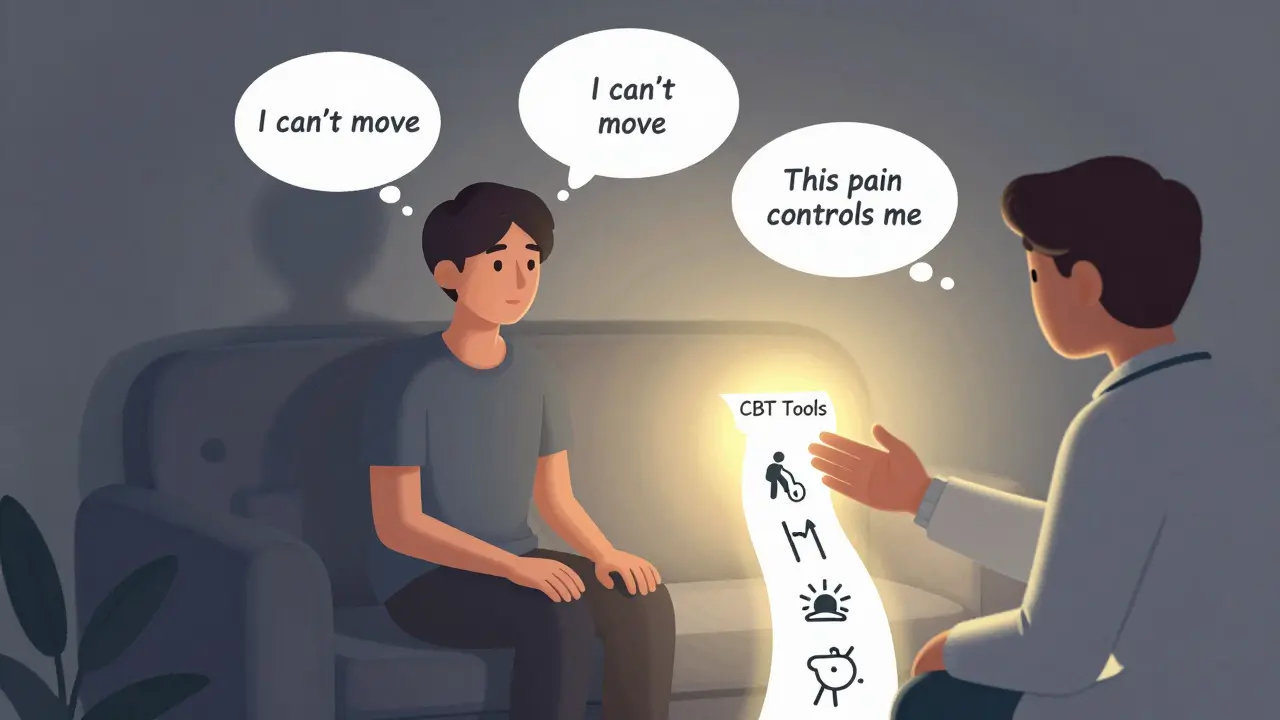
Chronic pain doesn’t just hurt-it wears you down. You might be told it’s "all in your head," but that doesn’t mean it’s imaginary. It means your brain has learned to keep sounding the alarm, even when there’s no real danger. That’s where CBT for chronic pain comes in-not to deny your pain, but to change how you respond to it.
What CBT for Chronic Pain Actually Does
Cognitive Behavioral Therapy for chronic pain (CBT-CP) isn’t about positive thinking or pretending the pain isn’t there. It’s a science-backed method that helps you break the cycle of pain, fear, and avoidance. When you hurt all the time, your brain starts linking movement with danger. You stop walking, stop lifting, stop doing things you used to enjoy. Then you get stiff, weak, and more sensitive to pain. It’s a loop-and CBT-CP is designed to stop it. The therapy targets three main things: how you think about pain, how you feel about it emotionally, and how you act because of it. For example, if you believe "My back will get worse if I move," you avoid activity. That leads to muscle loss, which makes the pain worse. CBT helps you challenge that thought and replace it with something more accurate: "Moving slowly and safely helps my body heal, even if it hurts a little at first."How It Works: The Core Tools
Most CBT-CP programs last between 8 and 16 weekly sessions. Each one builds on the last. Here’s what you’ll actually do:- Pain neuroscience education: You learn how pain works in the nervous system-not just in your spine or joints, but in your brain. This isn’t theory. It’s why your pain flares up after stress, even when nothing physically changed.
- Activity pacing: Instead of doing too much on a good day and crashing for days after, you learn to spread activity evenly. This stops the boom-bust cycle that keeps pain stuck.
- Cognitive restructuring: You write down thoughts like "I’ll never get better" or "This pain controls my life," then examine the evidence. Is it true? Is there another way to see it?
- Relaxation training: Breathing exercises, progressive muscle relaxation, and mindfulness help calm your nervous system. Pain isn’t just physical-it’s tied to stress hormones.
- Behavioral activation: You slowly rebuild activities you’ve given up, starting small. Even walking to the mailbox counts.
What the Research Shows
A 2023 review of 13 studies with over 1,600 people found CBT-CP consistently improved depression and anxiety in chronic pain patients. For pain intensity? The results were mixed. Only 25% of studies showed a big drop in pain numbers on a scale. But here’s what matters more: people felt more in control. They slept better. They moved more. They took fewer painkillers. The STAMP trial in 2024 compared CBT-CP to mindfulness therapy in 254 people with chronic low back pain who were on opioids. Both worked equally well. But CBT-CP had one clear edge: 36% of participants cut their daily opioid use, compared to just 17% in the usual care group. That’s not a small win-it’s life-changing for people trying to break free from addiction.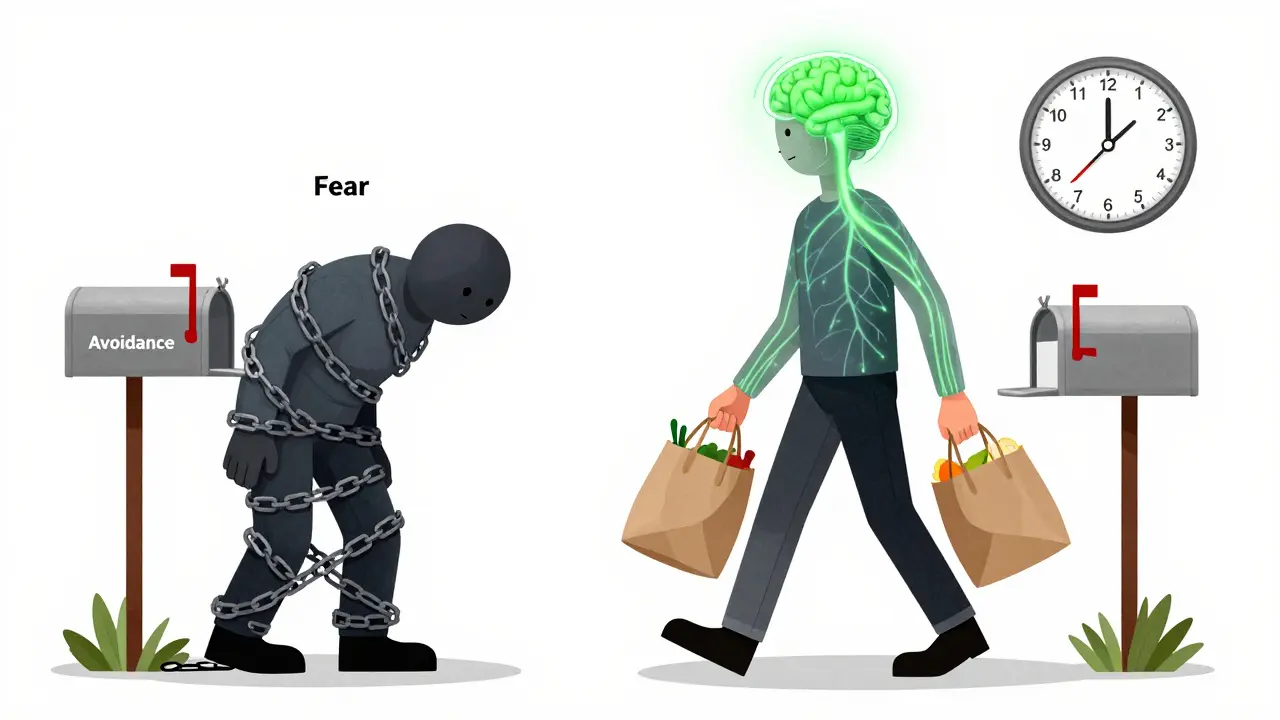
Who Benefits Most-and Who Doesn’t
CBT-CP works best when pain is tied to emotional stress, fear, or long-term disability. People with chronic low back pain, fibromyalgia, or headaches often see the biggest gains. It’s less effective for nerve pain (like diabetic neuropathy) where the damage is more direct. Women make up 65% of CBT-CP patients. That’s not because men don’t need it-it’s because they’re less likely to seek psychological help. And while CBT-CP helps people of all ages, those with higher education and access to consistent care tend to stick with it longer. Some people struggle. One 2023 study found no benefit for certain groups, suggesting CBT-CP might not work for everyone. That’s okay. It’s not magic. But for the majority, it’s the most reliable non-drug tool we have.Real Stories: What Patients Say
On Reddit’s r/ChronicPain, users talk about CBT-CP like this:- "I used to wait for pain to go away before doing anything. Now I move even when it hurts. It’s not about being brave-it’s about being smart."
- "I reduced my oxycodone from 6 pills a day to 2. CBT didn’t make the pain disappear, but it made me feel like I could live with it."
- "The therapist asked me to write down my thoughts. I didn’t think it would help. Then I saw how often I said, ‘I can’t handle this.’ Turns out, I could. I just didn’t believe it."
How to Get Started
If you’re considering CBT-CP, here’s what to look for:- Find a licensed therapist trained in CBT for chronic pain. Not all therapists know this specialty. Ask if they’ve used the VA’s CBT-CP manual or similar protocols.
- Check insurance coverage. Medicare only pays for 10 sessions a year. Most commercial insurers cover 8-12. That’s often not enough. Ask if they’ll extend coverage if you’re making progress.
- Try virtual CBT. Video sessions are just as effective as in-person ones, and they’re easier to fit into your life. A 2021 study showed 30% of people saw real improvement after 3 months of video therapy.
- Combine it with physical therapy. People who did both improved 40% more than those who did CBT alone.

Why It’s Better Than Pills
Opioids don’t fix chronic pain-they mask it. And they come with risks: addiction, tolerance, constipation, drowsiness, and even higher pain sensitivity over time. CBT-CP has no side effects. It doesn’t interact with other meds. It doesn’t require refills. It gives you tools you can use for life. The U.S. Department of Veterans Affairs rolled out CBT-CP nationwide in 2010 because they saw how many veterans were stuck on painkillers with little improvement. Today, 73% of VA patients who finish the program report meaningful gains in daily function.What’s Next for CBT-CP
New tools are making CBT-CP more accessible. Digital apps approved by the FDA now guide users through CBT exercises on their phones. Wearables track movement and send alerts when you’re overdoing it. Some clinics are testing 4- to 6-session versions for people who can’t commit to 12 weeks. The NIH is investing $14.2 million to improve CBT-CP for opioid users. That’s a sign this isn’t going away-it’s getting better.Final Thought: It’s Not About Eliminating Pain
CBT-CP won’t make your pain vanish. But it can stop it from stealing your life. You don’t need to be pain-free to be free. You just need to stop letting pain tell you what you can and can’t do. If you’ve tried pills, injections, and physical therapy-and still feel stuck-CBT-CP isn’t a last resort. It’s the missing piece.Is CBT for chronic pain just talking about my feelings?
No. CBT for chronic pain isn’t therapy for depression or trauma. It’s a structured, skills-based program focused on changing how you think about pain, how you respond to it physically, and how you plan your daily activities. You’ll learn practical tools like pacing, thought challenging, and relaxation-not just talk about emotions.
How long until I see results from CBT for chronic pain?
Most people start noticing changes in 4 to 6 weeks-like sleeping better, moving more easily, or feeling less anxious about pain. But real progress takes time. The full program usually lasts 8 to 12 weeks. The key is consistency. People who complete at least 80% of sessions are over twice as likely to see lasting results.
Can CBT help if I’m still on opioids?
Yes. In fact, CBT is one of the most effective ways to reduce opioid use in chronic pain. The 2024 STAMP trial found 36% of participants on opioids cut their daily dose after CBT, compared to just 17% in the control group. CBT doesn’t force you off meds-it gives you alternatives so you can reduce them safely, with support.
Is CBT for chronic pain covered by insurance?
Coverage varies. Medicare covers up to 10 sessions per year. Commercial insurers like UnitedHealthcare cover 12, while Aetna covers 8. Many plans don’t cover the full 10-12 sessions needed for best results. Always ask your provider if they cover "CBT for chronic pain" specifically-not just general therapy.
Do I need a referral to start CBT for chronic pain?
It depends. Some insurance plans require a referral from your doctor. Others let you book directly with a licensed therapist. Even if you don’t need a referral, it helps to talk to your doctor first. They can rule out new medical causes for your pain and may even recommend a specific provider.
What if I don’t believe CBT will work for me?
Skepticism is normal-32% of patients feel this way at first. Many think, "My pain is real, so how can talking fix it?" But CBT isn’t about denying your pain. It’s about changing how your brain reacts to it. The first session is often a chance to ask questions and see if it feels like a good fit. You don’t have to commit to 12 sessions right away.
Can I do CBT for chronic pain on my own with an app?
Yes, and FDA-cleared apps are now available. They’re not a replacement for therapy, but they’re a great start-especially if you can’t find a therapist nearby. Apps like PainCare and CBT Pain Coach offer guided exercises based on the same protocols used in clinics. But for best results, combine them with occasional sessions with a human therapist.

Man, I tried CBT after my back went full nuclear last year. At first I thought it was just some fancy talk therapy for people who don’t wanna take pills. But after 6 weeks of pacing and writing down my stupid thoughts like "I’ll never walk again" - turns out I was just scared of movement, not broken. Now I hike again. Not pain-free, but pain-managed. 🙌
While I appreciate the clinical overview presented here, I must emphasize that Cognitive Behavioral Therapy for Chronic Pain remains a second-line intervention under current clinical guidelines. The efficacy metrics remain statistically marginal when compared to multimodal biopsychosocial rehabilitation protocols, particularly in populations exhibiting central sensitization syndromes. Without concurrent pharmacological and neurostimulatory adjuncts, outcomes are inconsistent and non-durable.
Oh wow, another one of those "your pain is all in your head" lectures. Real helpful. Thanks for blaming me for my nerve damage. I’m sure my 12 years of chronic pain is just because I didn’t breathe right. 😒
Let me just say - CBT-CP is not a panacea, but it’s the most evidence-based non-pharmacological modality we’ve got in the chronic pain ecosystem. The neuroplasticity component is *critical* - when you rewire the pain matrix via cognitive restructuring and graded exposure, you’re not just "thinking positive," you’re literally altering nociceptive processing in the anterior cingulate and insula. It’s neuroscience, not fluff. And if you’re on opioids? This is your lifeline. Don’t let fear of psychological intervention keep you dependent.
I’ve been doing CBT for chronic migraines for nine months now. I didn’t believe in it at first - I thought it was just a way for insurance companies to save money by not paying for MRIs. But here’s what changed: I stopped waiting for the pain to disappear before I lived. I started walking to the corner store even if my head felt like it was being crushed by a vise. I wrote down every time I thought "I can’t do this" and then challenged it with facts: "You walked to the mailbox last Tuesday. You made coffee yesterday. You are still here." It didn’t make the pain go away, but it stopped the pain from running my life. I still have bad days. But now I have tools. And that’s everything.
My therapist made me track my activity vs. pain levels for weeks. I saw patterns - stress spikes, sleep deprivation, caffeine crashes - things I never connected. I started using pacing like a pro. Five minutes of stretching, then rest. Five more. No boom. No bust. Just steady. I lost 18 pounds because I moved more. I sleep better. I cry less. And I cut my triptans from 12 a month to 2. It’s not magic. It’s work. But it’s worth it.
I used to think if I wasn’t 100% pain-free, I was failing. Now I know: healing isn’t about elimination. It’s about reclaiming agency. And that? That’s power.
So let me get this straight. You’re telling people to stop taking painkillers and just "think better"? That’s what this is? You’re telling people with real injuries to just meditate and walk to the mailbox? This is dangerous. If you have a herniated disc, you don’t need therapy - you need surgery or at least real medicine. Stop pretending talking fixes broken bones.
I’m from the Philippines and we don’t have access to CBT therapists here. But I found a free app called PainCare - it’s not perfect, but the breathing exercises and thought logs helped me stop panicking every time my sciatica flares. I used to scream into pillows. Now I just say, "Okay, pain, you’re here. I’m still going to make tea." Small wins, right?
CBT for pain? Yeah right. I read the STAMP trial summary. 36% cut opioids? That’s because they were already trying to quit. CBT didn’t cause it. They just got lucky. Also, 25% of studies showed no pain reduction? So why are we pushing this like it’s gospel? And who’s funding this? Pharma? Insurance? Someone’s making money off this. Don’t be fooled.
Pain is real. But suffering? That’s the story we tell ourselves. CBT doesn’t erase the signal - it changes the interpretation. Simple. Powerful. Not magic. Not blame. Just… rewiring.
Been doing CBT for 6 months. Still have pain. Still use meds sometimes. But now I dance in my kitchen while making pancakes. 🕺🥞 I didn’t think I’d ever do that again. Thank you, science.
The literature is methodologically flawed. Most CBT-CP trials lack adequate blinding, have high attrition rates, and conflate functional improvement with pain reduction. The NIH’s $14.2M investment is a misallocation of resources when neuromodulation and targeted biologics show far greater promise. This is behavioral placebo with a fancy acronym.
I’m a vet. VA gave me CBT after my IED injury. I thought it was dumb. Now I teach it to other guys at the VA clinic. We don’t talk about feelings. We talk about pacing, thought logs, and how to get out of bed without crying. It’s not perfect. But it’s better than opioids. And I’m alive because of it.
you guys are all just delusional. pain is pain. you cant think your way out of a broken spine. this is just another way for therapists to make money off depressed people. i dont believe in any of this. just give me a pill.
My mother had fibromyalgia for 20 years. She tried everything - acupuncture, opioids, laser therapy, crystals (yes, really). Then she did CBT. She didn’t get cured. But she got her life back. She started gardening again. She hugged me without wincing. She laughed. That’s not nothing. That’s everything. If this helps even one person stop feeling like a burden - do it.
CBT? More like CBT: Can’t Be Trusted. Pain is physical. End of story.