

Antihistamine Safety Checker
Check Antihistamine Safety
Safety Information
Select an antihistamine above to see detailed safety information
When you’re pregnant and your nose is stuffed up, your eyes are itchy, or your skin is breaking out in hives, the last thing you want is to suffer through it. But the moment you think about reaching for an allergy pill, a voice in your head says: Is this safe for my baby? You’re not alone. Millions of pregnant people face this same question every year. The good news? Not all antihistamines are risky. Some have been used safely for decades. Others are newer, with data that’s still growing-but still reassuring. The key isn’t avoiding all medication. It’s choosing the right one.
First-Generation vs. Second-Generation Antihistamines: What’s the Difference?
Not all antihistamines are the same. They fall into two main groups: first-generation and second-generation. The difference isn’t just about how strong they are-it’s about how they affect your body.
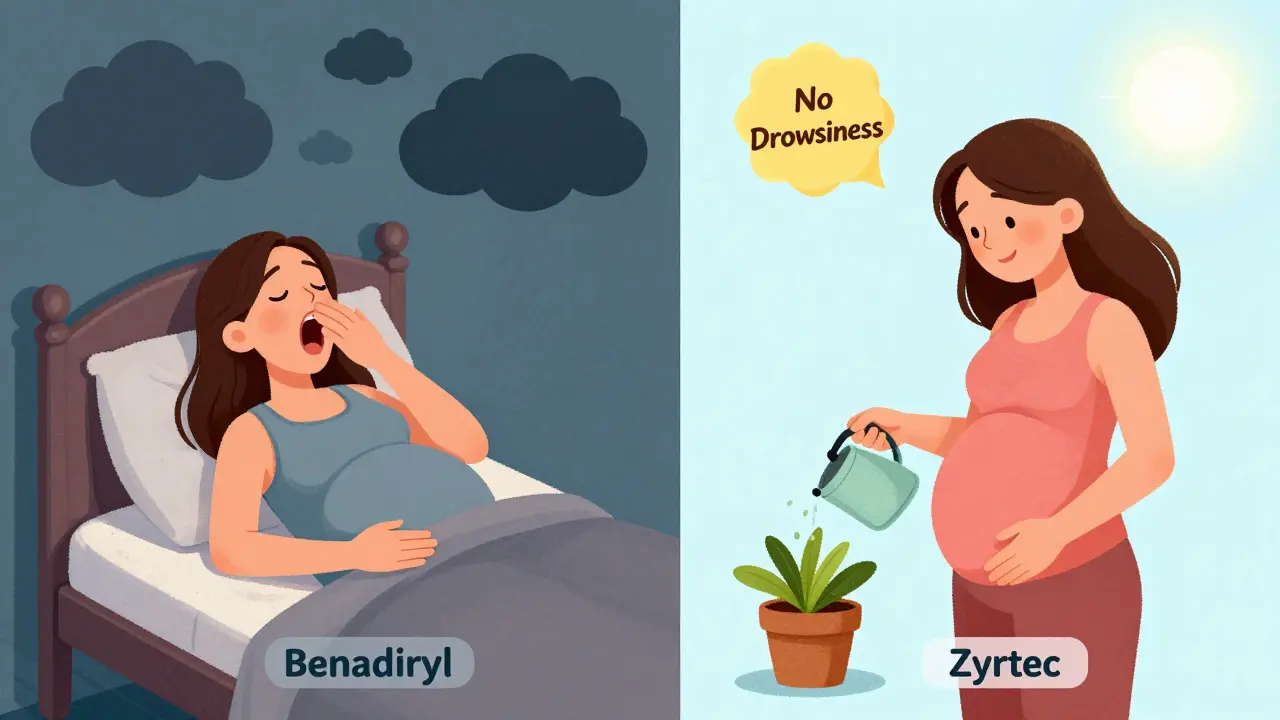
First-generation antihistamines like chlorpheniramine (ChlorTrimeton), diphenhydramine (Benadryl), and dexchlorpheniramine cross the blood-brain barrier. That’s why they make you sleepy. They’ve been around since the 1940s and 1950s. Millions of pregnant women have taken them without a clear link to birth defects. Studies from the American Academy of Family Physicians and the American College of Obstetricians and Gynecologists both give them a safety rating of B-meaning there’s evidence supporting their use, even if it’s not perfect.
But here’s the catch: drowsiness isn’t just annoying. It can make it harder to drive, care for other kids, or even get through your workday. And if you’re already tired from pregnancy, adding more sleepiness doesn’t help.
Second-generation antihistamines like loratadine (Claritin), cetirizine (Zyrtec), and fexofenadine (Allegra) were designed to avoid the brain. They don’t cause drowsiness in most people. That’s a big win. But they’re newer. Less data exists on their use in pregnancy-though what we have is mostly positive. The Mayo Clinic, ACOG, and ACAAI all point to loratadine and cetirizine as top choices for mild to moderate allergy symptoms during pregnancy. The CDC’s National Birth Defects Prevention Study looked at 14 different antihistamines and found no consistent pattern of birth defects linked to these two.
Which Antihistamines Are Safest During Pregnancy?
If you’re trying to pick the safest option, here’s what the experts agree on:
- Loratadine (Claritin, Alavert) - First-line choice for mild symptoms. No increased risk of miscarriage, preterm birth, or major birth defects in multiple studies.
- Cetirizine (Zyrtec) - Also first-line. Data from over 1,000 pregnancies shows no significant risk. It’s the most studied second-generation antihistamine in pregnancy.
- Chlorpheniramine - The most recommended first-generation option. Used since the 1950s. Safe in all trimesters, but expect drowsiness.
- Diphenhydramine - Safe, but stronger sedation. Best for occasional use, like trouble sleeping from allergies.
What about others? Fexofenadine (Allegra) has less data, but no red flags. Hydroxyzine (Atarax) is a first-generation antihistamine, but studies have shown a possible link to conotruncal heart defects-though only in very small numbers. Most doctors avoid it unless absolutely necessary.
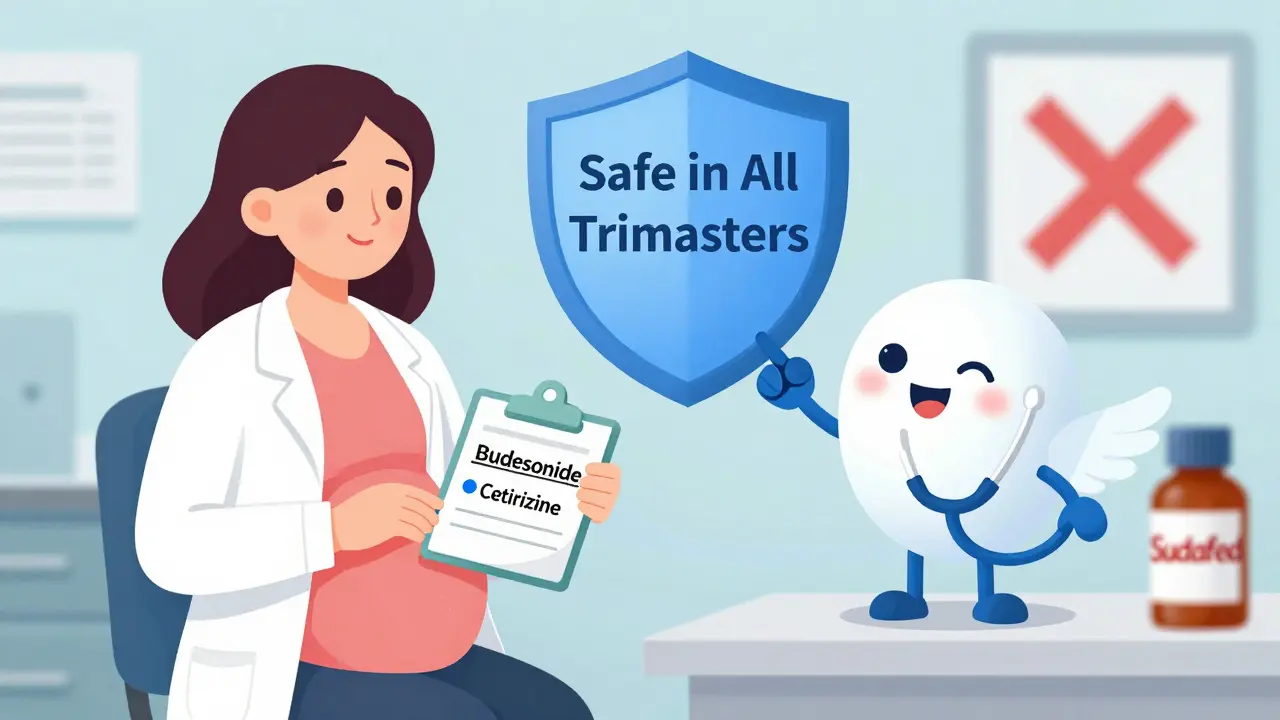
The ACOG’s March 2025 update says it clearly: chlorpheniramine, loratadine, and cetirizine are the safest bets. For moderate to severe symptoms, they recommend combining one of these with a nasal steroid spray like budesonide (Rhinocort), fluticasone (Flonase), or mometasone (Nasonex). These sprays don’t enter your bloodstream much, so they’re considered safe in all trimesters.
What About Decongestants? Don’t Make This Mistake
Many allergy meds combine antihistamines with decongestants-like pseudoephedrine (Sudafed). That’s where things get risky.
Pseudoephedrine is linked to a small but real increase in abdominal wall defects, like gastroschisis, when taken during the first trimester. The ACOG says: Don’t use it in the first 3 months. The Mayo Clinic agrees. Even if your symptoms are bad, wait until after week 12.
After the first trimester, it may be used cautiously-30 to 60 mg every 4 to 6 hours, no more than 240 mg total per day. But only if you don’t have high blood pressure. And even then, use the lowest dose for the shortest time.
Always check the label. Many “allergy + cold” products hide pseudoephedrine under names like “maximum strength” or “24-hour relief.” If you’re unsure, ask your pharmacist. Better safe than sorry.
When Should You Skip Antihistamines Altogether?
Not every sneeze needs a pill. If your symptoms are mild-just a runny nose or occasional itch-you might not need medication at all. Try these non-drug fixes first:
- Use a saline nasal spray or neti pot to flush out allergens
- Keep windows closed during high pollen season
- Wash your hair before bed to remove pollen
- Use HEPA filters in your bedroom
- Wear sunglasses outdoors to block pollen from your eyes
For skin itching from eczema or hives, moisturizing with fragrance-free creams and avoiding hot showers can help. Cold compresses reduce swelling and itch.
But if your allergies are keeping you from sleeping, eating, or breathing-then the risks of not treating them outweigh the risks of medication. Untreated allergic rhinitis can lead to sinus infections. Severe eczema can cause skin infections. And uncontrolled asthma during pregnancy? That’s dangerous for both you and your baby.
Don’t suffer in silence. If your symptoms are affecting your daily life, talk to your doctor. There’s a safe option for you.
What Does the Data Really Say? The Truth About Birth Defects
You’ve probably heard conflicting things. One study says antihistamines are safe. Another says they might raise the risk of heart defects. So what’s going on?
The CDC’s National Birth Defects Prevention Study analyzed over 14 antihistamines and 64 types of birth defects. Results were mixed. Some studies found small, possible links-like hydroxyzine and heart defects-but those were based on only a handful of cases. Others found no connection at all.
The problem? Most studies are retrospective. They look back at women who already had babies with birth defects and ask, “Did you take antihistamines?” That’s not perfect. People forget what they took. Or they took multiple meds. Or they had other risk factors.
Prospective studies-where researchers follow pregnant women from the start-are rare. That’s why we still don’t have perfect data on newer antihistamines like levocetirizine or desloratadine. But the overall pattern is clear: the vast majority of antihistamine use in pregnancy does not lead to birth defects.
ACAAI and AAFP both state that the evidence doesn’t show an increased risk of major malformations with any of the commonly used antihistamines. The risk, if any, is very small-far smaller than the risks of uncontrolled allergies.
What Should You Do If You Took an Antihistamine Before Knowing You Were Pregnant?
Many women take allergy meds before they even know they’re pregnant. If you took loratadine, cetirizine, or chlorpheniramine in the first few weeks? Don’t panic.
Most major birth defects happen between weeks 3 and 8. But antihistamines don’t act like birth defects triggers. They don’t cause damage in the way that thalidomide or isotretinoin do. The data shows no spike in defects among women who took these meds before realizing they were pregnant.
If you’re worried, talk to your OB-GYN. They’ll likely reassure you. No extra testing is needed unless there’s another reason for concern.
Final Guidance: What to Remember
- Don’t avoid treatment because you’re scared. Untreated allergies can hurt you and your baby more than the meds.
- Loratadine and cetirizine are your best first choices. They’re non-sedating and well-studied.
- Chlorpheniramine is safe too-if you can handle the drowsiness.
- Avoid pseudoephedrine in the first trimester. Check labels carefully.
- Nasal steroid sprays (budesonide, fluticasone) are safe and often more effective than pills for congestion.
- Try non-drug methods first for mild symptoms.
- Always talk to your doctor or pharmacist before starting any new medication-even if it’s “over-the-counter.”
Pregnancy isn’t the time to guess. But it’s also not the time to suffer. With the right information, you can manage your allergies safely-and sleep better, breathe easier, and feel like yourself again.
Is Zyrtec safe during pregnancy?
Yes, cetirizine (Zyrtec) is considered safe during pregnancy. Multiple studies involving over 1,000 pregnant women show no increased risk of birth defects, miscarriage, or preterm birth. It’s one of the most recommended second-generation antihistamines by the Mayo Clinic, ACOG, and ACAAI. It doesn’t cause drowsiness in most people, making it a preferred choice for daily use.
Can I take Benadryl while pregnant?
Diphenhydramine (Benadryl) is generally considered safe during pregnancy, especially for occasional use. It’s a first-generation antihistamine with decades of use and no clear link to birth defects. But it causes strong drowsiness, which can affect daily function. It’s not ideal for regular use, but it’s fine for nighttime relief if allergies are keeping you awake.
Is Claritin safe in the first trimester?
Yes, loratadine (Claritin) is safe to use in the first trimester. It’s one of the most studied antihistamines in early pregnancy and has not been linked to any major birth defects. It’s non-sedating and effective for mild to moderate allergy symptoms. Many doctors recommend it as a first-line option from the start of pregnancy.
What’s the best allergy medicine for pregnancy congestion?
For congestion, nasal steroid sprays like budesonide (Rhinocort), fluticasone (Flonase), or mometasone (Nasonex) are the most effective and safest options. They work locally in the nose and don’t enter your bloodstream much. If you need extra relief, combine them with loratadine or cetirizine. Avoid oral decongestants like pseudoephedrine in the first trimester.
Can antihistamines cause miscarriage?
There is no strong evidence that antihistamines like loratadine, cetirizine, or chlorpheniramine increase the risk of miscarriage. Large studies, including those from the CDC and ACOG, have not found a connection. The risk of miscarriage from untreated severe allergies-like poor sleep, stress, or infections-is likely higher than any risk from these medications.
Are there any antihistamines to avoid during pregnancy?
Yes. Avoid hydroxyzine (Atarax) unless absolutely necessary-some small studies suggest a possible link to heart defects. Also avoid any product containing pseudoephedrine during the first trimester due to a small risk of abdominal wall defects. Always check labels for hidden decongestants in combination allergy-cold products.

Okay but like… why are we still debating this? 🤦♂️ We’ve had Zyrtec and Claritin on the market for decades, and not one study has shown a spike in defects-unless you count the one from 2003 that had 12 participants and a typo in the methodology. 😅 I took cetirizine all three trimesters, slept like a baby, and my kid now plays piano at 4. 🎹👶
Y’all need to stop freaking out over OTC meds like they’re nuclear waste 😭 I was terrified during my first pregnancy too-until my OB handed me a printout from ACOG and said, ‘Kelly, your anxiety is worse than the antihistamine.’ So I took loratadine daily, used a neti pot, and cried less. My daughter is now a healthy 7-year-old who hates broccoli but loves science. 🌱❤️ You’re not failing your baby by taking care of yourself. You’re doing the bravest thing: choosing peace.
As a nurse who’s helped over 200 pregnant patients with allergies, I see this fear every day. But here’s the truth: untreated rhinitis leads to poor sleep, which raises cortisol, which increases risk of preterm labor. Meanwhile, loratadine? Zero increase in risk. I always tell my patients: ‘If you’re not sleeping, you’re not thriving.’ And if you’re not thriving? Neither is your baby. Don’t let fear of a 0.1% theoretical risk stop you from living. 🤝
So let me get this straight-we’re terrified of a pill that’s been taken by millions of pregnant women since the 90s, but we’re cool with breathing in secondhand smoke or eating sushi? 🤔 Also, pseudoephedrine is bad in the first trimester? Cool. So is being a human being who occasionally wants to breathe through their nose. 🙃 Just use the nasal spray. Done. Next.
Chlorpheniramine = sleepy. Zyrtec = fine. Avoid Sudafed. Done.
It’s amusing how laypeople treat ACOG guidelines like sacred scripture while ignoring the fact that ‘Category B’ is essentially a fancy way of saying ‘we don’t have enough data to say it’s dangerous, so we’ll let you risk it.’
I took Zyrtec in my first trimester and was terrified I’d ruined everything. But after my anatomy scan showed perfect organs and my OB said, ‘You did great,’ I cried for 20 minutes. If you’re reading this and feeling guilty-you’re not alone. But you’re also not a bad mom for wanting to feel okay.
Y’all are overcomplicating this like it’s a pharmacokinetics final. The real issue? Pharma companies don’t test on pregnant women-so we’re stuck with retrospective data. But that doesn’t mean it’s unsafe. It just means we’re working with imperfect info. So use the top 3: loratadine, cetirizine, chlorpheniramine. Skip the pseudoephedrine. Use the nasal spray. And stop Googling at 3am. 🛑
Actually, the 2023 JAMA Pediatrics meta-analysis showed a 1.4x relative risk of oral clefts with first-gen antihistamines when used in the first 8 weeks-though absolute risk remains under 0.5%. Also, fexofenadine’s placental transfer coefficient is 0.18, lower than cetirizine’s 0.23. So if you’re optimizing for fetal exposure, prioritize fexofenadine over Zyrtec. Just saying.