
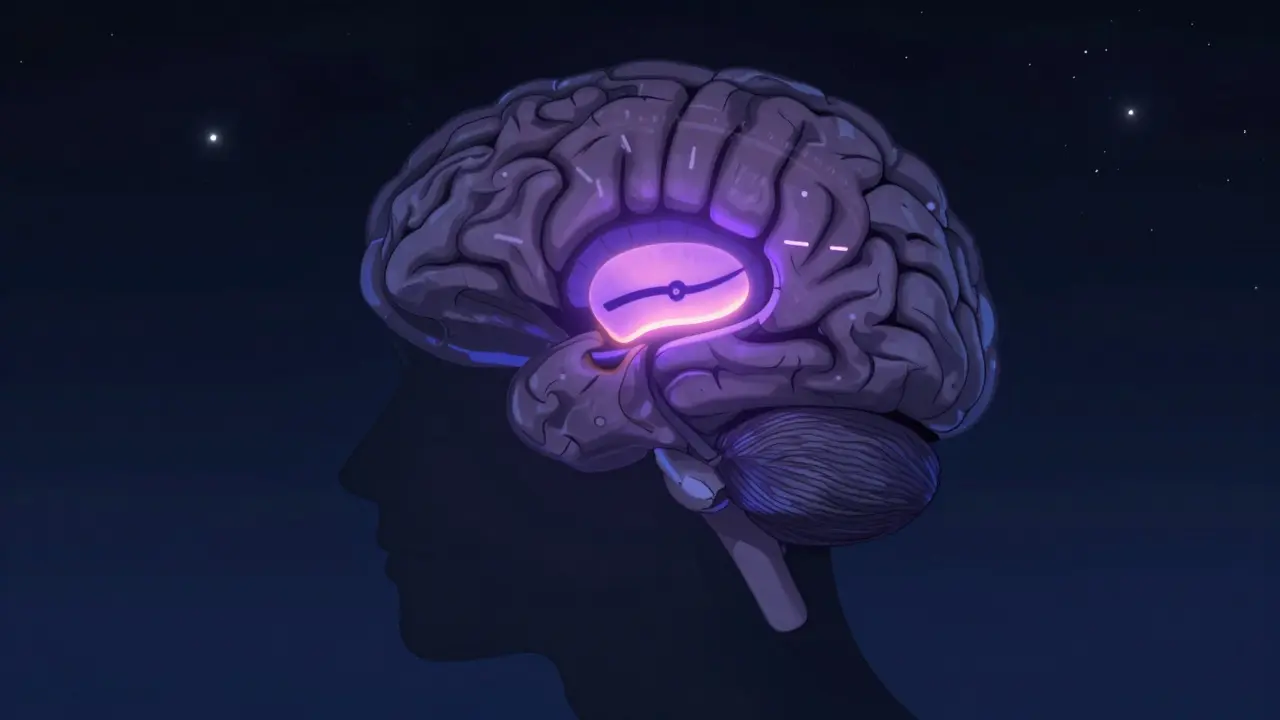
Most of us treat Melatonin, a naturally occurring neurohormone synthesized from the amino acid tryptophan that serves as the primary regulator of circadian rhythms in humans, like a switch. You flip it on at night, and you fall asleep. But that’s not how it works. Melatonin isn’t a sedative; it’s a signal. It tells your body, “It’s dark out, time to wind down.” When you use it correctly, it can fix your internal clock. Use it wrong, and you might just feel groggy or confused about when you’re actually supposed to be sleeping.
If you’ve been tossing and turning, staring at the ceiling, or struggling with jet lag after a long flight, you’ve probably heard about melatonin. It’s everywhere now. In the U.S., sales hit $1.17 billion in 2022 alone. But before you grab the biggest bottle on the shelf, you need to understand what this hormone actually does, why less is often more, and who actually benefits from taking it.
How Your Body Makes and Uses Melatonin
To understand the supplement, you first have to understand the natural process. Your body produces melatonin primarily in the pineal gland, a small endocrine gland located in the brain's epithalamus responsible for secreting melatonin. This tiny gland sits deep in your brain and acts like a biological antenna for light.
Here is the mechanism in plain English:
- The Darkness Signal: As soon as the sun goes down, your pineal gland starts pumping out melatonin. Levels usually start rising between 9 PM and 10 PM.
- The Peak: Concentrations peak between 2 AM and 4 AM. In healthy adults, these levels range from 50 to 150 picograms per milliliter (pg/mL).
- The Morning Drop: When morning light hits your eyes, specifically blue wavelengths between 460-480 nanometers, production stops completely.
This cycle is controlled by your master clock, the suprachiasmatic nucleus (SCN), a region in the hypothalamus that serves as the body's master circadian clock. The SCN receives direct input from your eyes. If you stare at your phone in bed, that blue light tricks your SCN into thinking it’s still daytime. The result? Your pineal gland shuts off melatonin production, and you stay awake.
Melatonin binds to two specific receptors in the SCN: MT1 and MT2. Research published in the Journal of Pineal Research shows that melatonin has a five-fold greater affinity for MT1 receptors. When it binds there, it suppresses neuronal firing, essentially lowering your core body temperature by about 0.3 to 0.5°C. That drop in temperature is what makes you feel sleepy. MT2 receptors, on the other hand, are responsible for shifting your entire schedule forward or backward.
Supplement vs. Prescription Sleep Aids
You might wonder why you wouldn’t just take a prescription pill like zolpidem (Ambien) or eszopiclone (Lunesta). The difference lies in how they work. Benzodiazepines and "Z-drugs" force your brain to relax by enhancing GABA neurotransmission. They knock you out. Melatonin nudges your biology.
| Feature | Melatonin | Z-Drugs (e.g., Ambien) |
|---|---|---|
| Mechanism | Circadian timing signal | GABAergic sedation |
| Sleep Onset Improvement | Average 7 minutes faster | 20-30 minutes faster |
| Side Effects | Vivid dreams, mild headache | Next-day grogginess, dependence risk |
| Best For | Jet lag, shift work, delayed sleep phase | Severe insomnia, sleep maintenance |
| Regulation (U.S.) | Dietary supplement (DSHEA) | Prescription medication |
A 2013 Cochrane review found that while melatonin only improves sleep onset latency by an average of 7.06 minutes compared to placebo, it does so without the heavy side effects associated with prescription drugs. You won’t wake up feeling like you were drugged, but you also won’t fall asleep instantly if your underlying issue isn't related to your circadian rhythm.
Who Actually Benefits From Melatonin?
Melatonin is not a cure-all for every type of sleep problem. Its effectiveness depends entirely on why you aren’t sleeping. Based on clinical guidelines and user data, here is where it shines and where it falls flat.
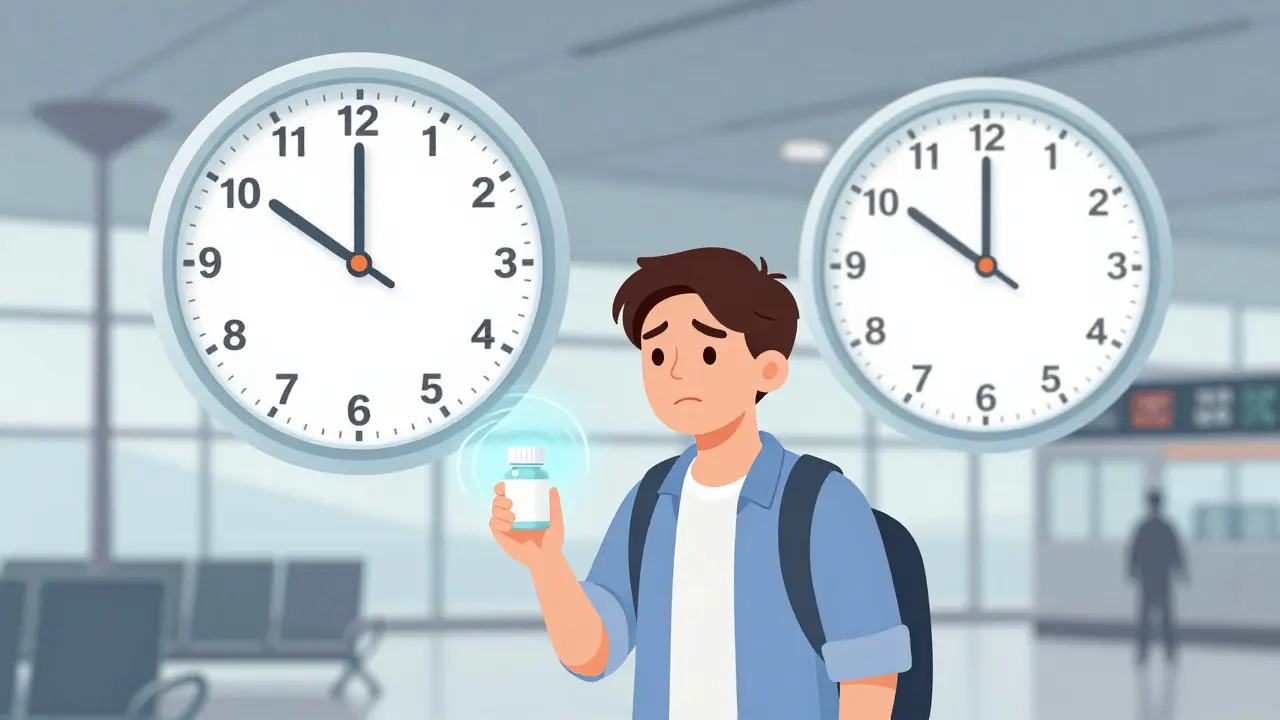
Jet Lag: This is the gold standard for melatonin use. If you fly east across three or more time zones, your internal clock is ahead of local time. Taking melatonin at the new local bedtime helps reset your SCN to the new time zone. Users on communities like Reddit report adjusting in two days instead of five. For westward travel, the evidence is weaker, but taking it upon arrival can still help stabilize sleep.
Delayed Sleep Phase Syndrome (DSPS): If you naturally want to go to bed at 2 AM and wake up at 10 AM, you likely have DSPS. Melatonin can advance your sleep onset by about 40 minutes and shift your endogenous secretion by roughly 1.2 hours. The key here is timing-you must take it several hours before your current bedtime, not right when you want to sleep.
Shift Work Disorder: About 47% of shift workers report using melatonin. It helps signal darkness during the day, though bright light exposure at work remains the most critical factor for staying alert.
General Insomnia: Here is the hard truth: if your insomnia is caused by anxiety, pain, or stress, melatonin likely won’t help much. The American Academy of Sleep Medicine does not recommend it for general insomnia due to insufficient evidence. Only 39% of users reporting general insomnia saw significant benefit in recent community analyses.
The Dosing Problem: Less Is More
This is where most people mess up. In the United States, melatonin is sold as a dietary supplement under the 1994 Dietary Supplement Health and Education Act (DSHEA). This means manufacturers don’t have to prove efficacy or safety before selling it. ConsumerLab testing in 2022 found that melatonin content in popular supplements ranged from 83% to 478% of what was listed on the label.
Worse, the doses are wildly exaggerated. Physiological levels in your blood peak around 0.1 to 0.3 mg. Yet, walk into any pharmacy, and you’ll see bottles of 5 mg or even 10 mg pills. Dr. Neil Stanley, a UK sleep expert, warns that doses exceeding 0.5 mg often provide no additional benefit while increasing the risk of side effects like next-day drowsiness, vivid nightmares, and headaches.
When you flood your system with 10 mg, you aren’t getting better sleep; you’re potentially desensitizing your MT1 and MT2 receptors. Over 40% of biohackers reported diminished effectiveness after four to eight weeks of continuous high-dose use. Start small. The American Academy of Sleep Medicine suggests starting with 0.3 to 0.5 mg. If that doesn’t work, move up to 1 mg. Rarely do you need more than 3 mg.

Timing Is Everything
Taking the right dose at the wrong time can make things worse. Because melatonin affects the phase of your circadian rhythm, timing determines whether you shift your clock earlier or later.
- To Fall Asleep Earlier: Take melatonin 2 to 3 hours before your desired bedtime. This advances your rhythm. If you want to sleep at 10 PM but currently sleep at midnight, take it at 7 PM or 8 PM.
- To Stay Awake Later: Taking melatonin in the morning delays your rhythm. This is useful for westward jet lag but dangerous if you’re trying to fix a late-night schedule.
- The Danger Zone: Taking melatonin too late (after 10 PM for most adults) can cause a phase delay, pushing your sleep time even later. You might feel sleepy immediately, but your body will think it’s the middle of the night, making it harder to wake up.
For precise timing, some specialized clinics offer Dim Light Melatonin Onset (DLMO) testing. This measures exactly when your body starts producing melatonin in low light, allowing for personalized dosing schedules. For most people, however, sticking to a consistent window 2-3 hours before target bedtime works well.
Safety, Regulation, and Future Outlook
Melatonin is generally safe for short-term use. However, long-term viability is still being studied. The FDA issued warning letters to 15 manufacturers in 2022 for making unapproved drug claims, such as treating autism or anxiety. While research is ongoing-NIH currently funds trials looking at melatonin for Alzheimer’s and post-COVID sleep disturbances-it remains a supplement, not a regulated drug in the U.S.
In Europe, the approach is stricter. The European Medicines Agency approved Circadin, a 2 mg prolonged-release formulation, as a prescription medication for insomnia in patients over 55. This highlights the divergence in regulatory philosophy: the U.S. treats it as a consumer choice, while Europe treats it as a medical intervention requiring oversight.
As we move toward more personalized medicine, experts like Dr. Jamie Zeitzer at Stanford predict that melatonin’s role will evolve. We are seeing the development of selective receptor agonists like tasimelteon (Hetlioz), which targets non-24-hour sleep-wake disorder with greater precision. Eventually, over-the-counter melatonin might be replaced by formulations that target specific pathways without the blunt-force impact of current supplements.
Until then, treat melatonin as a tool for alignment, not a hammer for unconsciousness. Respect your body’s natural chemistry, keep the dose low, and time it right.
How much melatonin should I take for jet lag?
For jet lag, especially when traveling east, start with 0.5 mg to 1 mg taken at your destination's local bedtime. Continue this for 2-3 days after arrival. Do not exceed 3 mg, as higher doses increase the risk of next-day grogginess without improving adjustment speed.
Is melatonin safe for long-term daily use?
Short-term use is widely considered safe. Long-term daily use data is limited, and some users report diminished effectiveness after 4-8 weeks, possibly due to receptor desensitization. It is generally recommended to use melatonin cyclically or only when needed for circadian shifts rather than as a permanent nightly crutch.
Why are melatonin doses in the US so high?
In the U.S., melatonin is regulated as a dietary supplement, not a drug. Manufacturers can set their own doses without FDA approval for efficacy. Consequently, many products contain 5-10 mg, which far exceeds the physiological peak of 0.1-0.3 mg produced by the human body. Independent testing shows these labels are often inaccurate anyway.
Can melatonin help me fall asleep faster if I have anxiety?
Probably not. Melatonin regulates circadian timing, not anxiety or stress-induced arousal. If your inability to sleep is driven by racing thoughts or worry, melatonin may induce mild drowsiness but will not address the root cause. Cognitive behavioral therapy for insomnia (CBT-I) is more effective for anxiety-related sleep issues.
What are the common side effects of melatonin?
Common side effects include next-day drowsiness (reported by 28% of users), vivid dreams or nightmares (22%), and headaches (15%). These side effects are significantly more common when taking doses above 1 mg or taking the supplement too close to bedtime.