
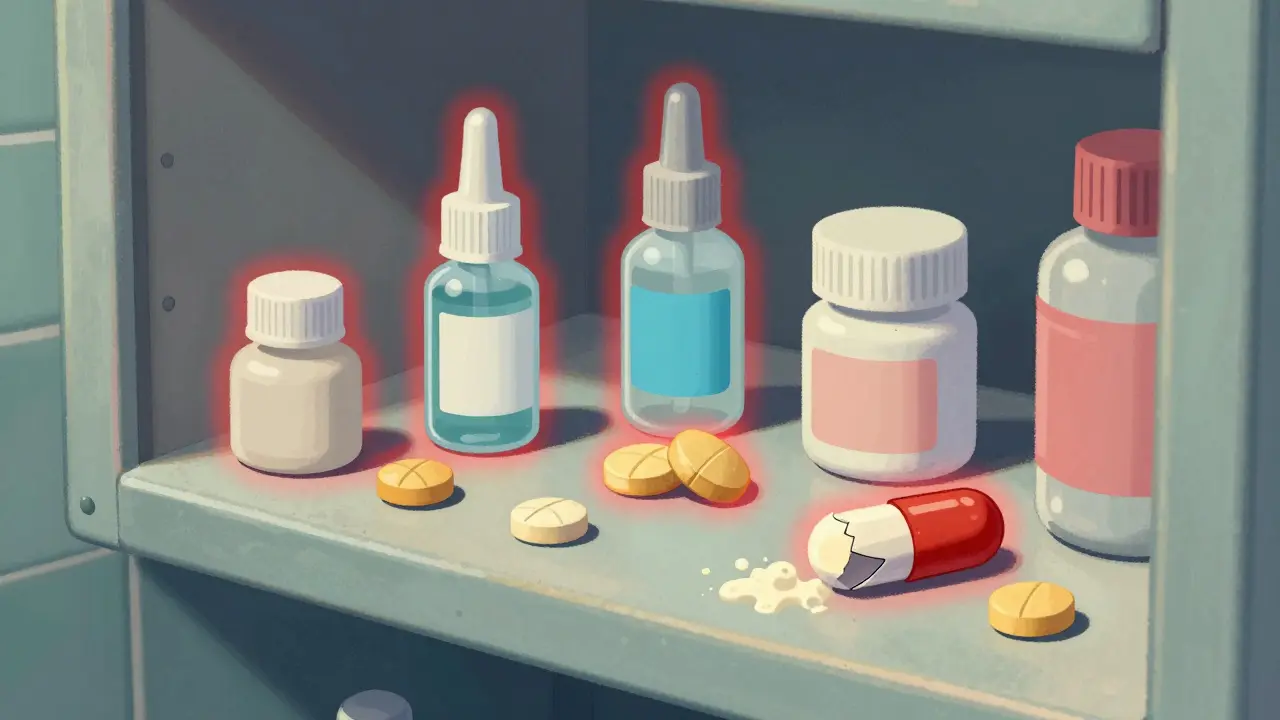
Every year, millions of people take expired medications without realizing the risks. You might find an old bottle of antibiotics in your medicine cabinet, or a bottle of painkillers past its printed date. It’s easy to assume, "It’s probably still fine." But expired drugs don’t just lose potency-they can physically change in ways that make them unsafe. The key is knowing what to look for: color, odor, and texture. These aren’t just signs of age-they’re red flags that tell you the medicine may no longer be safe to use.
What Happens to Medications After They Expire?
Expiration dates aren’t arbitrary. They’re based on real stability testing done by manufacturers under controlled conditions. The U.S. Food and Drug Administration (FDA) requires these tests to ensure drugs remain safe and effective until the date printed on the label. After that, chemical breakdowns begin. Some ingredients degrade into new compounds. Others absorb moisture, react with light, or separate into layers. The result? Physical changes you can see, smell, or feel.
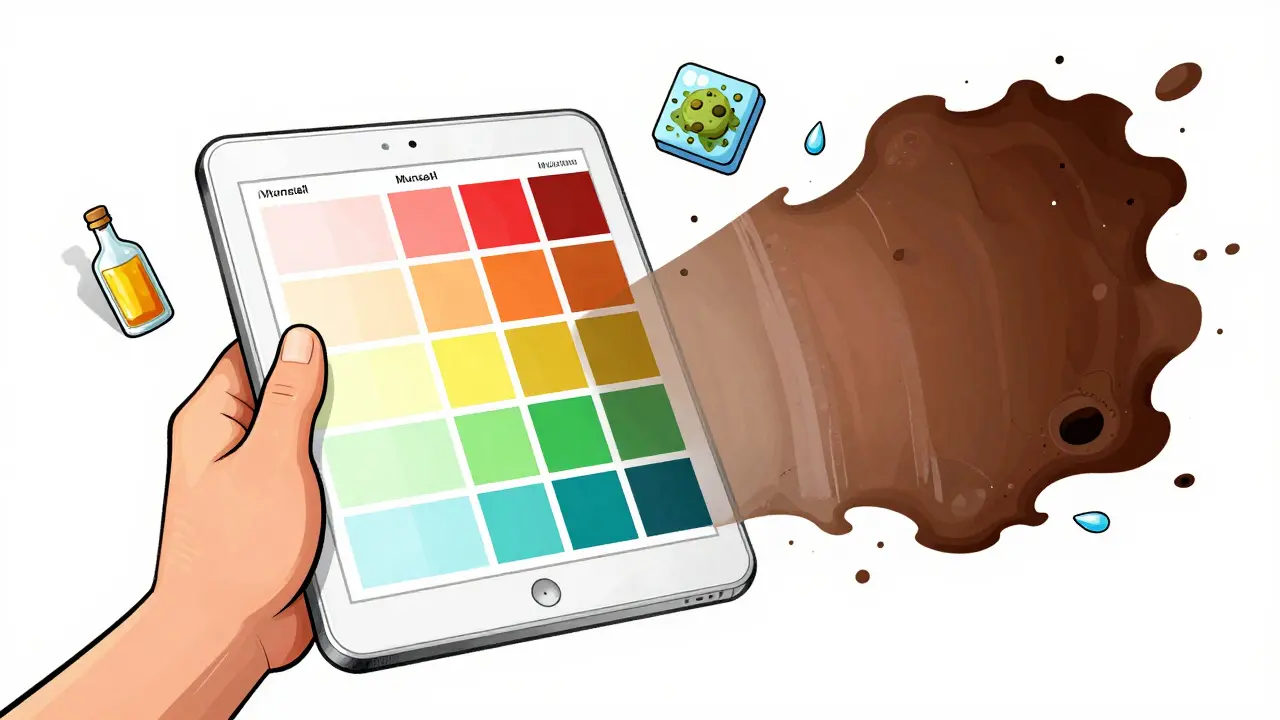
According to NASA’s 2011 study of pharmaceuticals in space, discoloration was the most common sign of degradation-seen in nearly 70% of expired solid dosage forms. Tetracycline antibiotics, for example, turn from white to yellow or brown as they break down. This isn’t just cosmetic. That color change signals chemical reactions that can make the drug less effective-or even toxic.
Color Changes: The Most Obvious Warning Sign
Color is the easiest thing to check. But it’s also the most misunderstood. Not every shade shift means danger-but many do.
- White tablets turning yellow, brown, or gray? That’s a red flag. Tetracycline, doxycycline, and aspirin are especially prone to this.
- Capsules or tablets with dark spots or streaks? That’s often mold or chemical separation.
- Clear liquids like eye drops or injectables turning cloudy or yellow? That’s a major warning. Nitroglycerin, for example, turns from clear to yellow-brown when it degrades-losing its ability to treat chest pain.
- Creams or ointments with unusual discoloration, like orange or green tints? That’s rare, but when it happens, it’s almost always due to microbial contamination.
Human eyes aren’t perfect. Studies show we only catch about 65% of color changes without tools. That’s why institutions like the University of Wisconsin’s RARC program use Munsell color charts-standardized color references-to compare pills against known samples. If your pill looks off, even slightly, don’t guess. Compare it to a fresh one or check the FDA’s Drug Expiration Database for reference images.
Odor: Smell Can Save Your Life
Medications shouldn’t smell bad. If they do, something’s wrong.
Most pills and capsules are odorless. If you open a bottle and smell vinegar, ammonia, or something musty, stop. That’s not normal. It usually means the active ingredient has broken down into acidic or volatile byproducts. Amoxicillin capsules, for instance, can develop a sour or rancid odor when moisture gets in and causes the powder inside to ferment.
Liquids and creams are even more sensitive. A fishy smell in eye drops? That’s bacterial growth. A sharp, chemical odor in a topical gel? Could be solvent evaporation or decomposition. In forensic labs, odor is one of the first indicators used to flag suspect drugs. If it smells wrong, it is wrong.
Texture: When Medicine Feels Off
Texture changes are harder to notice-but just as dangerous.
Tablets should be hard and uniform. If they crumble easily, feel sticky, or have a chalky residue on your fingers, they’ve absorbed moisture. That’s bad. Moisture speeds up chemical breakdown and can make pills unsafe.
Capsules? They should be smooth and intact. If the contents inside are clumped together like wet sand, or if the capsule shell is cracked or swollen, discard it. Hygroscopic drugs like amoxicillin or iron supplements are especially vulnerable.
Creams and ointments should be smooth and consistent. If you see oil floating on top, water pooling at the bottom, or the texture has turned grainy or rubbery, that’s phase separation. Clotrimazole cream and mupirocin ointment have been shown to separate after just 880 days past expiration. The separated layers don’t deliver the right dose-and may irritate skin or eyes.
Liquids should be clear and free of particles. If you see floating specks, cloudiness, or sediment, don’t use it. USP standards say sterile liquids must have fewer than 6,000 particles per container. You don’t need a lab to spot large chunks or cloudy haze. If it looks like it has dirt in it, it’s unsafe.
When Physical Changes Don’t Mean Danger (And When They Do)
Not every change is a disaster. Some drugs naturally darken over time. For example, some iron supplements turn slightly darker as they oxidize-but still remain safe. But here’s the catch: you can’t tell the difference without a reference.
That’s why comparison matters. Always keep a current, unopened bottle of the same medication for reference. If you can’t, check the manufacturer’s website or the FDA’s database. Many pharmaceutical companies provide images of what their products look like when they degrade.
And remember: physical changes don’t always match chemical degradation. Some drugs lose potency before they change color. Others look fine but contain harmful breakdown products. That’s why the FDA warns: if a drug looks, smells, or feels wrong, don’t risk it-even if it’s just one month past the date.
How to Check Your Medications at Home
You don’t need a lab to spot dangerous changes. Here’s how to do it right:
- Take the medication out of its container and place it on a clean, white surface under bright, natural light.
- Look closely: Is the color uniform? Are there spots, streaks, or discoloration?
- Smell it: Does it smell like anything unusual-vinegar, mold, chemicals?
- Touch it: If it’s a tablet, gently press it. Does it crumble? Is it sticky? If it’s a cream, rub a small amount between your fingers. Is it smooth, or is it grainy, oily, or separated?
- Compare: If you have a fresh bottle, compare side by side. If not, look up the drug online for expected appearance.
For high-risk medications-like insulin, epinephrine, or heart medications-don’t rely on visual checks alone. If in doubt, throw it out. These drugs can fail silently, and the consequences are life-threatening.
What to Do With Expired or Degraded Medications
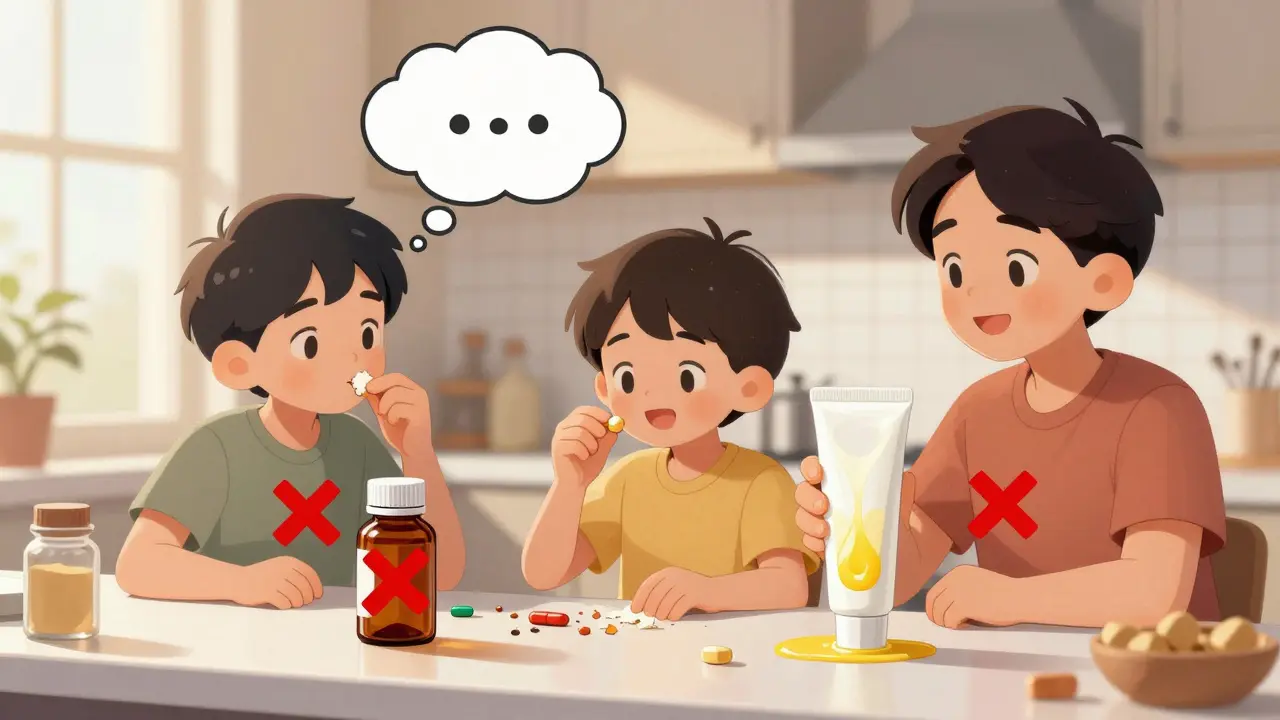
Never flush most medications down the toilet or throw them in the trash. The FDA recommends drug take-back programs. Many pharmacies and police stations offer free disposal bins. If none are available, mix the medication with coffee grounds or cat litter in a sealed container before tossing it. This prevents accidental ingestion by children or pets.
And don’t keep old meds “just in case.” The risk of using degraded drugs far outweighs the convenience. A 2019 FDA report found that a hospital kept using expired morphine that had developed crystals-mistaking them for normal. Fourteen patients suffered adverse reactions.
Future of Drug Safety: Tools Are Coming
While visual checks are still the most accessible method, technology is catching up. Portable Raman spectrometers can now identify drug composition in seconds with 87% accuracy. Pfizer’s Visual Stability AI, currently in testing, can predict expiration by analyzing microscopic texture changes with 94% accuracy.
But until those tools are in every home, your eyes, nose, and fingers are your best defense. The World Health Organization still calls simple visual inspection the most practical way to spot degraded medicines in low-resource areas. That’s because the signs are real, visible, and consistent.
You don’t need to be a pharmacist to protect yourself. You just need to pay attention.
Can I still use a pill if it’s one month past its expiration date?
Expiration dates mark when the manufacturer guarantees full potency and safety. Some medications may remain stable for a short time after, but there’s no reliable way to know without lab testing. If the pill shows any change in color, odor, or texture-even slight-discard it. For critical medications like heart drugs, insulin, or epinephrine, never take expired ones, even by a day.
Why do some pills turn yellow?
Yellowing is often caused by oxidation or chemical breakdown. Tetracycline antibiotics are notorious for turning yellow or brown as they degrade. This isn’t just cosmetic-it means the active ingredient has broken down into less effective or potentially harmful compounds. Avoid using any yellowed antibiotics.
Is it safe to use expired eye drops?
No. Eye drops are sterile liquids. Once expired, they can grow bacteria or fungi. Even if they look clear, they may be contaminated. Cloudiness, discoloration, or particles are clear signs of spoilage. Using expired eye drops can cause serious eye infections, including corneal ulcers. Always replace them on time.
Can refrigeration extend a drug’s shelf life?
For some medications, yes-but only if the label says to refrigerate. Refrigeration slows chemical breakdown, but it doesn’t reset the clock. If a drug is expired, refrigerating it won’t make it safe. Always follow the storage instructions on the label. Moisture from the fridge can also damage some pills, causing them to absorb water and degrade faster.
How do I know if my cream has separated?
Look for oil floating on top, water pooling at the bottom, or a grainy texture. If the cream feels thin in some spots and thick in others, or if it doesn’t mix back together when stirred, it has separated. This means the active ingredients are no longer evenly distributed. Using it could mean you’re getting too much or too little of the drug. Discard it.
Are generic drugs more likely to degrade than brand-name ones?
No. Generic drugs must meet the same FDA standards for stability and potency as brand-name versions. The difference is usually in inactive ingredients, which can affect how the drug looks or feels. For example, a generic version might have a different binder that makes it crumble more easily. Always check for changes regardless of brand.
Final Advice: When in Doubt, Throw It Out
There’s no such thing as a harmless expired drug. The risks-reduced effectiveness, unexpected side effects, or even poisoning-are real. Your body doesn’t know the difference between a pill that’s one day past its date and one that’s five years old. It only responds to what’s in it.
Check your medicine cabinet every six months. Look at each bottle. Smell it. Feel it. Compare it. If anything seems off, don’t take it. Your health isn’t worth the gamble.

Based on the FDA’s Stability Testing Guidelines (ICH Q1A(R2)), the physicochemical degradation pathways for solid oral dosage forms are well-characterized. Discoloration in tetracycline derivatives is indicative of epimerization and oxidative cleavage, not merely aesthetic degradation. The formation of anhydrotetracycline and other toxic byproducts has been quantified via HPLC in multiple peer-reviewed studies. Visual inspection alone is insufficient for risk stratification-laboratory confirmation is warranted when potency is critical.
lol so now the government wants us to become drug inspectors 🤡😂 next they’ll make us test our toothpaste for fluoride decay 😭🫠
I’ve been taking expired ibuprofen for years and still running marathons. If it ain’t broke don’t fix it. Stop scaring people over a date on a bottle. My grandpa took penicillin from the 70s and lived to 98. Coincidence? I think not.
India’s rural population relies heavily on expired meds due to supply chain gaps. In villages, pharmacists often repackage expired drugs with new labels-this isn’t negligence, it’s survival. The WHO recognizes this as a systemic failure, not individual recklessness. We need affordable access, not fear-mongering about color changes.
If it looks weird, smells weird, or feels weird-toss it. Simple.
Let’s be brutally honest: most people treat their medicine cabinets like hoarders’ dens. You keep that 2012 Zoloft because ‘it might come in handy’-but you haven’t seen a therapist since 2015. The real issue isn’t degradation-it’s emotional attachment to pharmaceutical ghosts. That bottle isn’t medicine anymore. It’s a relic of your past anxiety. Burn it. Grieve. Move on.
It is imperative to underscore that the expiration date constitutes a legally binding guarantee of both therapeutic efficacy and microbiological integrity, as stipulated under Title 21 CFR § 211.137. Any deviation from the established physicochemical parameters constitutes a violation of current Good Manufacturing Practices (cGMP), irrespective of perceived visual or olfactory integrity.
Bro, I took a 7-year-old Xanax that turned brown and it worked better than the new batch. Maybe the old stuff had more magic in it? 🤷♂️
Wait-so if my amoxicillin capsules are sticky and smell like sour milk… but the expiration date is only 3 months past… and I’ve had no side effects… does that mean it’s *probably* safe? Or is that just me being reckless? I mean, I’ve eaten expired yogurt before and lived…
NASA studied drugs in space? That’s cute. But did they test them after being left in a hot car in Phoenix for 6 months? No. So your ‘70% degradation’ stat is meaningless. Real-world conditions > lab conditions. Also, I’ve got a 10-year-old EpiPen that still works-just saying.
i just check if it still looks like the pill on the bottle. if it does i take it. if it looks like dirt i dont. its not that hard
While the empirical observations regarding discoloration, odor, and textural alteration are indeed compelling, one must exercise caution in extrapolating these phenomenological indicators as universally diagnostic of chemical instability. The variance in excipient composition across generic formulations introduces confounding variables that are not accounted for in the referenced FDA database. For instance, the hygroscopic properties of microcrystalline cellulose versus lactose monohydrate may produce differential textural degradation profiles independent of active pharmaceutical ingredient (API) integrity. Thus, the heuristic model presented herein, while intuitively accessible, lacks the methodological rigor required for clinical decision-making.
America’s medical system is broken. We pay $200 for a bottle of pills that expire in 12 months. Then we’re told to throw them out. Meanwhile, in Germany, they’re good for 5 years. Why? Because they don’t treat medicine like a fast-fashion brand. We’re being scammed. Stop blaming the patient. Fix the system.
There is a profound philosophical tension here between the Western biomedical paradigm, which insists on quantifiable, expiration-bound certainty, and the more holistic, context-sensitive approaches found in traditional systems of medicine. In Ayurveda, for instance, the potency of a herb is not solely determined by its chemical composition, but by its energetic signature, the season of harvest, and the intention behind its preparation. While modern pharmacology rightly demands reproducibility, we risk losing a deeper understanding of healing when we reduce medicine to mere chemical stability curves. Perhaps the answer lies not in discarding expired drugs, but in cultivating a more nuanced relationship with time, decay, and the body’s own capacity to adapt.