
Medication Sexual Side Effects Risk Calculator
How likely are sexual side effects from your medication?
Based on clinical data from the article, estimate your risk and discover evidence-based solutions.
Your Estimated Risk
Switch medications
Dose adjustment
Add-on treatments
Counseling
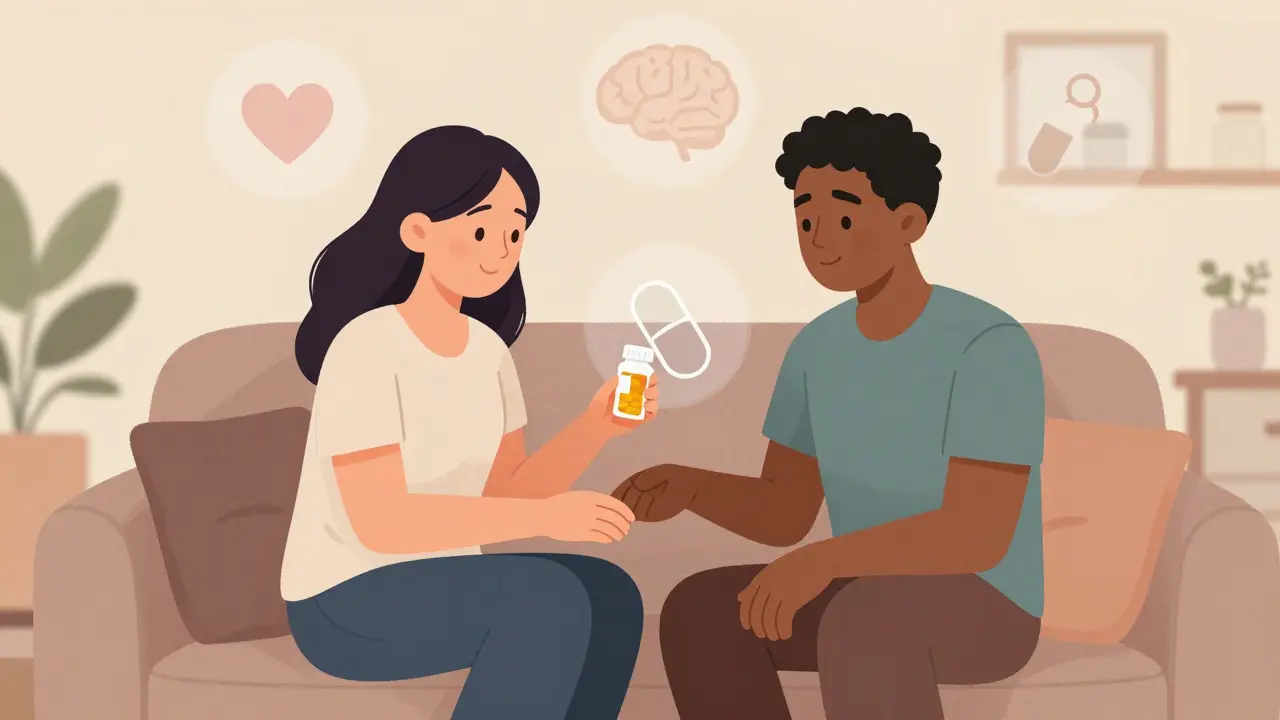
It’s not uncommon to feel embarrassed talking about sex, especially when it’s tied to something as personal as medication. But here’s the truth: sexual side effects from medications are one of the most common reasons people stop taking their prescriptions-especially antidepressants. And yet, most patients never hear about this risk until it’s already happening. If you’ve noticed a drop in libido, trouble getting or keeping an erection, delayed orgasm, or pain during sex after starting a new drug, you’re not alone. And more importantly, you don’t have to just live with it.
Why This Happens
Many medications-especially antidepressants-affect chemicals in the brain that control mood, but also sex. Selective serotonin reuptake inhibitors (SSRIs) like fluoxetine, sertraline, and paroxetine are the most common culprits. Studies show that between 58% and 70% of people taking these drugs experience some form of sexual dysfunction. That’s more than half. Symptoms vary: men might struggle with erections or delayed ejaculation; women often report low desire, dryness, or trouble reaching orgasm. The problem isn’t just physical. It’s emotional. Relationships strain. Self-esteem dips. And because the original reason for taking the medication-like depression or anxiety-is still there, the whole recovery process can stall.Here’s the twist: up to half of people with untreated depression already have sexual problems before they even start medication. That makes it harder to know if the issue is the illness or the drug. But that doesn’t mean you should ignore it. In fact, the opposite is true. Addressing this early can save your treatment-and your relationship-with your medication.
What Works: Evidence-Based Solutions
There’s no one-size-fits-all fix, but research gives us clear options. And the best part? Many of them are simple, safe, and don’t require you to quit your medication.- Switching medications: If you’re on an SSRI and having trouble, switching to bupropion (Wellbutrin) or mirtazapine (Remeron) can cut sexual side effects from 60% down to 5-10%. This works for about 65-70% of people who try it.
- Dose adjustment: Sometimes, lowering the dose just a little helps. About 25-30% of people see improvement without losing the antidepressant’s benefits.
- Drug holidays: Taking a break from your medication for 2-3 days before planned sexual activity can help-especially with short-acting drugs. But be careful: this carries a 15% risk of relapse, and it won’t work if your medication builds up in your system over time.
- Add-on treatments: For men with erectile issues, sildenafil (Viagra) or tadalafil (Cialis) can help, but only about 55-60% of the time. For orgasm problems? Not so much. They’re not a magic bullet.
- For women: There’s less research, but some find relief with vaginal moisturizers, lubricants, or low-dose estrogen creams (if appropriate). Talk to your provider-this isn’t talked about enough.
- For antipsychotics: If you’re on a drug that raises prolactin (like risperidone), switching to aripiprazole can fix sexual side effects in 75% of cases.
Non-drug approaches matter too. Scheduling sex for times when the medication’s effect is weakest-like right after waking up-helps about 35% of people. Couples therapy? If the issue is causing tension, it improves outcomes in half the cases.

How Counseling Makes a Difference
Talking about this isn’t just helpful-it’s essential. Studies show that when providers bring it up upfront, patients are far more likely to stay on treatment. In fact, one study found that 82% of patients who had a clear conversation about sexual side effects at the start reported higher satisfaction with care, compared to only 47% who didn’t.Effective counseling isn’t about scare tactics. It’s about honesty and options. Good providers say things like: “About 6 out of 10 people on this medication notice changes in their sex life. It doesn’t mean it will happen to you, but we’ll watch for it.” Then they give you a plan: “If it happens, we have three ways to fix it. Let’s check in at 4 weeks.”
Too often, patients wait months before speaking up. The National Alliance on Mental Illness found that 73% of people who had sexual side effects didn’t tell their doctor for an average of 4.2 months. Why? Embarrassment. Fear they’d be judged. Or worse-thinking nothing could be done. But that’s outdated thinking. We have tools now. And your provider should know them.
What You Should Ask Your Provider
Don’t wait for them to bring it up. Take charge. Here’s what to say:- “What are the chances this medication will affect my sex life?”
- “Are there alternatives with fewer sexual side effects?”
- “If I notice changes, what can we do about it?”
- “Can we schedule a follow-up in 4 weeks to check on this?”
- “Do you use a tool like the ASEX scale to track this?”
The Arizona Sexual Experience Scale (ASEX) is a quick 5-minute questionnaire that helps track changes in desire, arousal, orgasm, and satisfaction. It’s not fancy, but it works. If your provider doesn’t know what it is, ask them to learn. It’s part of the 2022 American Psychiatric Association guidelines.
What’s New and What’s Coming
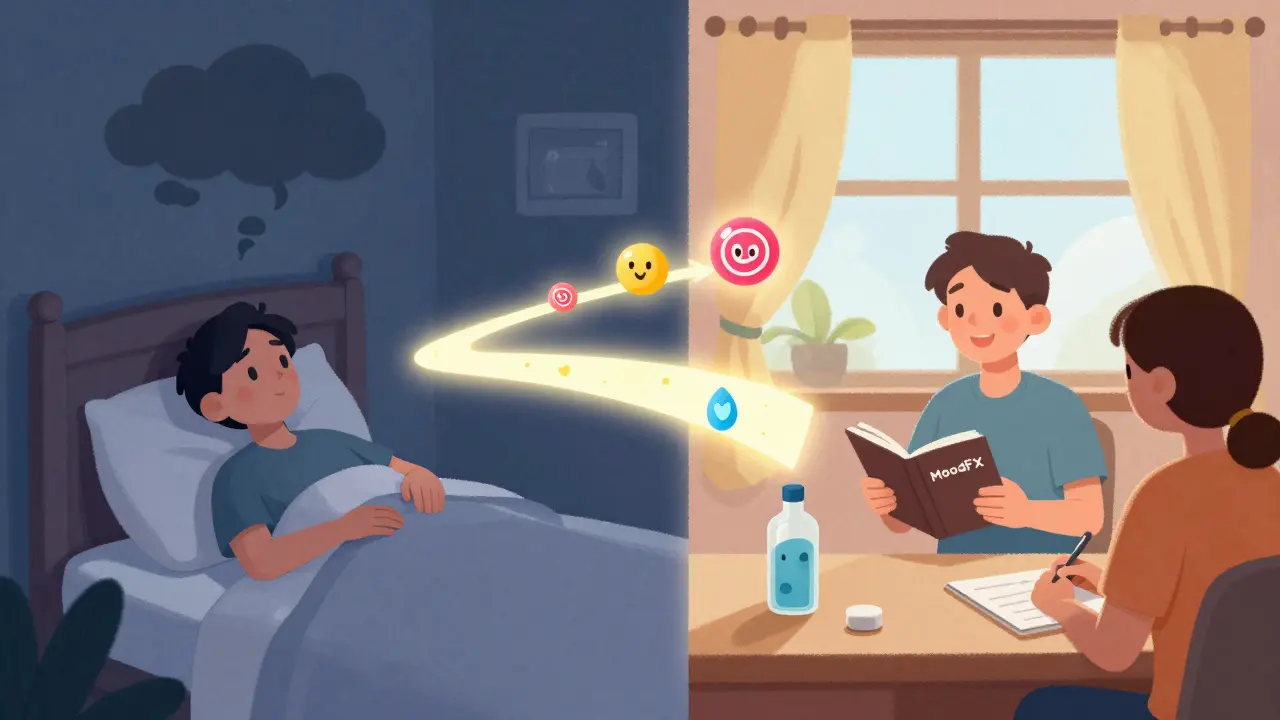
The field is changing fast. In 2023, the American Psychiatric Association added a full section to its depression guidelines just for managing sexual side effects. Digital tools like the MoodFX app now let you log mood and sexual function together-127,000 people have used it since 2022. And there’s real hope on the horizon: a new drug in phase 3 trials (NCT04891234) is designed specifically to block SSRI-induced sexual dysfunction without reducing its antidepressant effect. Results are expected in mid-2024.But progress isn’t even. Research still focuses heavily on men. Only 12% of clinical trials on sexual dysfunction include women as a primary focus. And LGBTQ+ patients report being 28% less likely to have these conversations with providers. These gaps need to close.
What You Can Do Right Now
If you’re on medication and noticing changes:- Don’t stop cold turkey. That can trigger withdrawal or relapse.
- Write down what’s changed-desire, timing, pain, orgasm. Be specific.
- Bring it up at your next appointment. Say: “I’ve noticed changes in my sex life since starting this. Can we talk about options?”
- Ask if your provider has a plan for managing this. If they say, “It’s normal,” ask: “What’s the next step if it doesn’t get better?”
- Consider seeing a sexual health counselor. They’re trained to handle this without judgment.
Remember: this isn’t weakness. It’s a side effect. And like nausea, dizziness, or weight gain, it’s something your treatment plan should account for. The goal isn’t perfect sex. It’s recovery-and that includes your whole life.
Do all antidepressants cause sexual side effects?
No. SSRIs like fluoxetine and sertraline have the highest rates-50-70% of users report issues. But bupropion (Wellbutrin) and mirtazapine (Remeron) have much lower rates, around 5-10%. Some people even find their sex life improves on these medications. It depends on the drug, not just the class.
Can I use Viagra or Cialis to fix orgasm problems?
Not really. PDE5 inhibitors like sildenafil (Viagra) and tadalafil (Cialis) help with erectile dysfunction in about 55-60% of men. But they don’t help with delayed orgasm or lack of desire. In fact, using them without addressing the root cause can lead to frustration and discontinued use. They’re not a cure-all.
Why don’t doctors talk about this more?
Many providers feel uncomfortable discussing sex, especially in short appointments. A 2021 survey found 64% of medical residents felt unprepared to talk about sexual side effects. Time is tight-average visits are 15-20 minutes. But guidelines now require routine screening. If your provider doesn’t bring it up, ask. You’re entitled to that conversation.
Is this only a problem for people on antidepressants?
No. Antipsychotics, blood pressure meds (like beta-blockers), hormonal treatments, and even some anti-seizure drugs can cause sexual side effects. SSRIs are the most common, but they’re not the only ones. Always ask about sexual side effects when starting any new medication.
Will my sex life return to normal if I stop the medication?
Often, yes-but not always. For most people, sexual function improves within weeks after stopping the drug. But if the underlying condition (like depression or anxiety) returns, sexual problems may come back too. That’s why switching to a different medication or adjusting the dose is usually safer than quitting cold turkey.
Can counseling really help, or is it just talk?
Yes, counseling helps-and it’s backed by data. When providers proactively discuss sexual side effects and offer solutions, patient adherence improves by 32%. Couples therapy specifically improves outcomes in 50% of cases where relationship strain has developed. It’s not just about talking-it’s about creating a plan. And having a plan makes all the difference.
Are there any apps or tools I can use to track this myself?
Yes. The MoodFX app, launched in 2022, lets you track mood, sleep, and sexual function together. Over 127,000 people have used it. It’s not a replacement for professional care, but it helps you spot patterns and gives you concrete data to bring to your provider. Other tools like the ASEX questionnaire are free and can be printed and filled out in minutes.

SSRIs wrecked my sex life for 18 months
Switched to Wellbutrin cold turkey because my doc didn’t warn me
Now I’m back to normal and actually enjoy intimacy again
Why don’t more doctors say this upfront
Look I get it but let’s be real here - this whole narrative is built on pharma-funded studies that overstate the problem to sell more drugs
Most people who complain about sexual side effects are just lazy or have underlying relationship issues
And don’t get me started on the ‘couples therapy’ suggestion - that’s just another $$$ trap
Also Viagra? Come on - it’s a bandaid for a systemic problem caused by overmedicating depression
The real solution is lifestyle - sleep, diet, exercise - not popping pills to fix pills
Interesting that the ASEX scale is mentioned but not explained in detail
Is it validated across cultures? What about non-binary or trans individuals?
Also, the 12% of trials focused on women - is that because of biological differences or just research bias?
And what about people on SSRIs who never had sexual issues before? Does the drug create dysfunction or just reveal pre-existing ones?
Worth digging into the longitudinal studies
Y’all need to stop suffering in silence
Trust me - I’ve been there
Asking your doctor about sex isn’t awkward - it’s brave
And guess what? They’ve heard it all before
One conversation changed my whole life
Don’t wait 4.2 months like the stats say
Text them today. Say ‘I need help.’
You got this 💪
While the general recommendations are empirically supported, the omission of pharmacokinetic variability across ethnic populations is a significant oversight
SSRIs such as paroxetine demonstrate CYP2D6 polymorphism-dependent metabolism, which disproportionately affects South Asian and East Asian populations
Consequently, dose adjustments and alternative agents like mirtazapine may require recalibration based on genetic profiling
Furthermore, the efficacy of sildenafil in non-Caucasian males remains underdocumented in peer-reviewed literature
Recommendation: Integrate pharmacogenomic screening prior to SSRI initiation where feasible
Did you know the FDA approved a new antidepressant last year that doesn’t cause sexual side effects?
They just didn’t tell you
Because the big pharma lobby doesn’t want you switching
They make billions off people suffering in silence
And now they’re pushing ‘counseling’ like it’s a cure
It’s not - it’s a distraction
Ask yourself: Who benefits if you stay on this drug?
Not you
Oh wow another feel-good article that ignores the real issue
Let me guess - the author works for a pharmaceutical company
They want you to think you have options when really you’re trapped
Switching to Wellbutrin? Sure - if you’re lucky
But what if you have treatment-resistant depression?
Then you’re stuck with the SSRI and the sexual dysfunction
And now they want you to pay for couples therapy?
And apps?
And ASEX scales?
It’s all a money machine
Meanwhile, your partner leaves you because you can’t get hard
And your doctor says ‘it’s normal’
Yeah - normal for them to profit
Not normal for you to suffer
Why are we letting foreign drug companies dictate American mental health policy?
These studies all come from Europe and India
They don’t understand American values
Our bodies are not their lab rats
And now they want us to use apps and scales and counseling?
Real Americans don’t need to talk about sex with strangers
We fix this ourselves
Or we stop taking the drugs
That’s the American way
I appreciate the comprehensive overview and the emphasis on proactive communication between patients and providers.
It is imperative that clinicians adopt a standardized, evidence-based approach to addressing sexual dysfunction as part of routine psychiatric care.
The inclusion of the ASEX scale and the mention of pharmacological alternatives reflect a commendable alignment with current clinical guidelines.
Furthermore, the recognition of non-pharmacological interventions such as scheduling and behavioral therapy underscores a holistic model of care that is both patient-centered and clinically sound.
This is precisely the kind of nuanced, data-driven discourse that should be promoted in public health education.
They don’t want you to know this but every single one of these ‘solutions’ is just a way to keep you on the drug longer
Switching meds? They just switch you to another one that costs more
Dose adjustment? That’s when they upsell you on ‘monitoring services’
Drug holidays? That’s when you get withdrawal and they charge you for detox
Couples therapy? That’s two sessions a week at $200 each
And the app? It sells your data to advertisers
And the new trial drug? It’ll cost $1,200 a month when it launches
They’re not helping you - they’re monetizing your shame
Wake up
They’re not your doctors
They’re your accountants
It is a well-documented fact that sexual dysfunction associated with SSRIs is not a side effect but rather a pharmacological endpoint of serotonergic modulation
Moreover, the assertion that 58–70% of users experience dysfunction is misleading without stratification by gender, age, and baseline sexual function
Furthermore, the recommendation to use sildenafil ignores the contraindications with nitrates and cardiovascular comorbidities
Additionally, the claim that counseling improves adherence by 32% is derived from a single cohort study with a small sample size and no control group
One must exercise caution in accepting these assertions without critical appraisal of the underlying methodology